

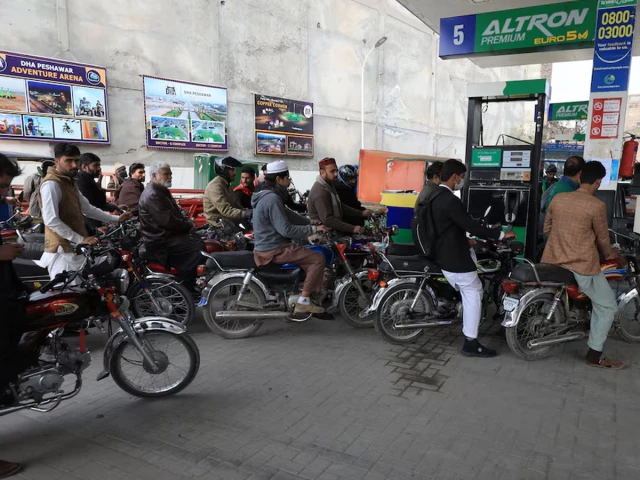
The federal government has reduced petrol prices by Rs1 per litre while increasing the price of high-speed diesel (HSD) by Rs2 for the latest pricing period ending November 23, as global oil market volatility continues to influence domestic fuel costs.
According to a notification issued by the Oil and Gas Regulatory Authority (OGRA), petrol will now cost Rs322 per litre, while high-speed diesel will sell at Rs357 per litre.
The latest adjustment follows a Rs1 per litre increase in petrol announced just a day earlier for November 20, highlighting frequent changes in domestic fuel prices under the government’s daily pricing mechanism.
Global Oil Market Volatility Drives Frequent Price Adjustments
On November 2, the government announced that oil refineries would absorb an estimated Rs15 billion in monthly costs to keep domestic petrol prices Rs15 per litre below international market rates. The measure came amid rising global oil prices and uncertainty surrounding the US-Israeli war on Iran.
Earlier, on July 17, the government introduced a daily petroleum pricing mechanism, replacing the previous weekly review system. Under the revised arrangement, authorities review and announce fuel prices daily to respond more quickly to fluctuations in international oil markets.
PSX UNICEF Children’s Rights: Only 3% of Listed Firms Disclose Explicit Commitments, Report Finds
Renewed tensions between the United States and Iran have added to concerns about global oil supplies, contributing to uncertainty in energy markets.
Government Introduces Targeted Petrol Relief
Meanwhile, Prime Minister Shehbaz Sharif announced a targeted fuel relief programme on September 13 to reduce the impact of rising petrol prices on lower-income consumers.
The proposed scheme offers a subsidy of Rs100 per litre for motorcycles, three-wheeler rickshaws and cars with engine capacities of up to 800cc. The government estimates that around 11.8 million people will benefit from the initiative.
Under the programme, approximately 10 million motorcycle users and 800,000 rickshaw owners will receive relief on up to 20 litres of petrol each month. This will provide a maximum monthly benefit of Rs2,000 per beneficiary.
Additionally, around one million owners of cars with engine capacities of up to 800cc will qualify for subsidies on 30 litres of petrol per month, offering maximum monthly relief of Rs3,000.
Fuel Conservation Measures Restrict Business Hours
As fuel costs continued to put pressure on consumers and the economy, the government also reinstated austerity and fuel conservation measures on September 17.
The restrictions require shops, markets, shopping malls, bazaars, departmental stores, grocery stores and other retail outlets to close by 9pm throughout the week, according to a Cabinet Division notification.
Furthermore, marriage halls, marquees and other commercial event venues must close by 10pm. Restaurants, cafes, eateries and food outlets can operate until 11pm. However, takeaway and home delivery services remain exempt from these restrictions.
Standalone fruit and vegetable shops can also remain open until 11pm under the notified arrangements.
The government introduced these measures to conserve energy and limit fuel consumption as international oil market uncertainty continues to affect Pakistan’s domestic energy costs.
You may also like
-
Pakistan Offshore Oil Exploration: Turkish Seismic Vessel Oruç Reis Arrives in Karachi
-
Pakistan Cotton Arrivals: Crop Receipts Rise 5.66% to 5.13 Million Bales Amid Quality Concerns
-
Inflation Doubled in Four Months as Energy Shock Hit Households
-
Fiscal Agreement: Centre and KP Sign Deal for Rs157 Billion Annual Contribution
-
Nishat Group Shows Interest in Pakistan’s Proposed New Port