
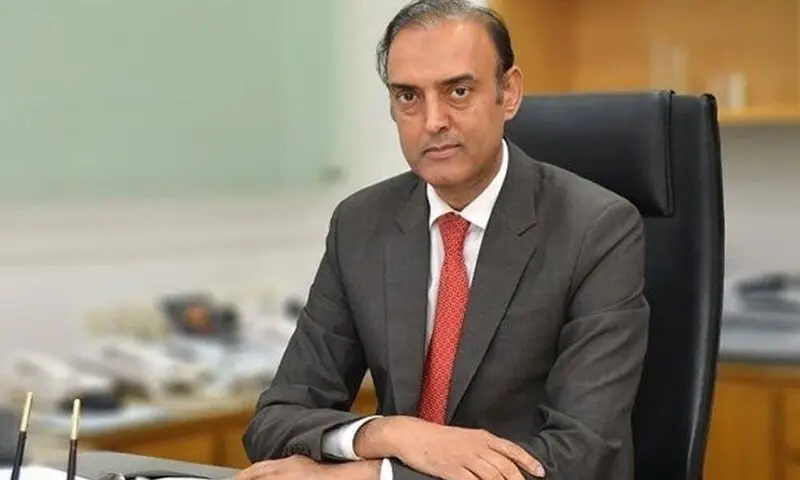
KARACHI: State Bank of Pakistan (SBP) Governor Jameel Ahmad has stressed the importance of strengthening economic resilience, improving export competitiveness and implementing structural reforms to achieve sustainable economic growth and prevent recurring financial instability.
Speaking at Standard Chartered Bank’s Annual Global Research Briefing in Karachi, the governor said Pakistan had made significant progress in restoring macroeconomic stability but needed to build on these improvements through consistent policies, stronger institutions and export-oriented economic development.
The event was attended by Standard Chartered Pakistan Chief Executive Officer Adil Salahuddin, Standard Chartered Bank Global Geopolitical Strategist and Senior Economist Philippe Dauba-Pantanacce, and representatives of the corporate and financial sectors.
Addressing the challenges facing emerging economies, Ahmad highlighted the increasing frequency of global economic disruptions, including fluctuations in international commodity prices, geopolitical tensions and climate-related events.
He observed that developing economies were particularly vulnerable to external shocks because of their dependence on international markets, energy imports and global financial conditions.
According to the governor, countries with stronger fiscal positions, adequate foreign exchange reserves, credible economic policies and resilient institutions are better equipped to manage such challenges.
Reflecting on Pakistan’s economic difficulties during fiscal years 2021–22 and 2022–23, Ahmad said the government and central bank had implemented difficult but necessary policy adjustments to restore stability.
These measures included tighter monetary policy, fiscal consolidation and temporary administrative restrictions aimed at managing foreign exchange outflows.
He noted that the policy response, supported by assistance from multilateral and bilateral development partners, helped stabilise economic conditions and rebuild confidence.
The governor emphasised that economic resilience should not be measured solely by the accumulation of fiscal and foreign exchange buffers.
He said maintaining credible policies, ensuring market flexibility and developing effective institutions were equally important for responding to changing economic conditions.
Pakistan’s improved macroeconomic fundamentals have strengthened its ability to withstand external pressures, he observed.
Comparing recent developments with earlier economic challenges, Ahmad said the country was better positioned to manage the effects of the ongoing Middle East conflict than it had been during the economic pressures associated with the Russia-Ukraine crisis.
The governor also highlighted improvements in Pakistan’s key economic indicators, particularly inflation, external account stability and economic activity.
He said average inflation remained close to the central bank’s target range during FY26, reflecting the effects of earlier stabilisation measures.
Pakistan’s Mango Exports Decline 36% to 78,000 Tonnes Amid Middle East Tensions
Although inflation had recently increased, the SBP expected it to gradually ease towards the medium-term target range.
Ahmad also projected that Pakistan’s current account deficit would remain within 0% to 1% of gross domestic product (GDP), indicating a relatively contained external financing gap.
He added that foreign exchange reserves and fiscal buffers continued to strengthen, improving the country’s capacity to absorb potential external shocks.
Economic activity was also showing signs of recovery, with real GDP growth reaching 3.7% during FY26.
The governor expressed optimism that economic growth would improve further during the current fiscal year as stabilisation gains supported business activity and investment.
He said these positive developments were increasingly being recognised by international credit rating agencies, multilateral development partners and foreign investors.
However, Ahmad cautioned that maintaining macroeconomic stability alone would not guarantee sustainable long-term growth.
He emphasised the need for structural reforms that could increase productivity, strengthen export competitiveness and encourage investment in sectors capable of generating foreign exchange earnings.
The governor identified Pakistan’s recurring boom-and-bust economic cycles as a major challenge requiring long-term policy solutions.
He said overcoming these cycles would depend on increasing exports, improving domestic savings, expanding productive investment and developing deeper financial markets.
Greater export competitiveness would help Pakistan strengthen its external position and reduce its vulnerability to fluctuations in international financing conditions.
Similarly, higher domestic savings and investment could support economic expansion while reducing dependence on external borrowing.
Ahmad also highlighted the importance of the private sector in driving sustainable economic development.
He urged businesses and financial institutions to contribute actively to strengthening Pakistan’s economic structure by supporting investment, productivity and export-oriented activities.
Concluding his remarks, the governor reaffirmed the commitment of the government and the SBP to improving the economy’s resilience against increasingly frequent supply shocks.
He said continued macroeconomic discipline, credible policies and private-sector participation would be essential for translating Pakistan’s recent stabilisation gains into durable, inclusive and export-led economic growth.
You may also like
-
Pakistan’s Mango Exports Decline 36% to 78,000 Tonnes Amid Middle East Tensions
-
Selling Pressure Persists! KSE-100 Extends Losing Streak Below 177,000
-
Preferential Trade Access Database Can Help Pakistani Exporters Unlock Tariff Advantages, Reach New Markets Kamal Sheharyar
-
Industrialists’ Proposals Should Guide Development Projects in Industrial Areas Altaf Sario
-
Pakistan’s Revenue Falls to 15.6% of GDP in FY26
1 thought on “Pakistan Economic Growth: SBP Governor Calls for Export-Led Reforms and Stronger Economic Resilience”
Comments are closed.