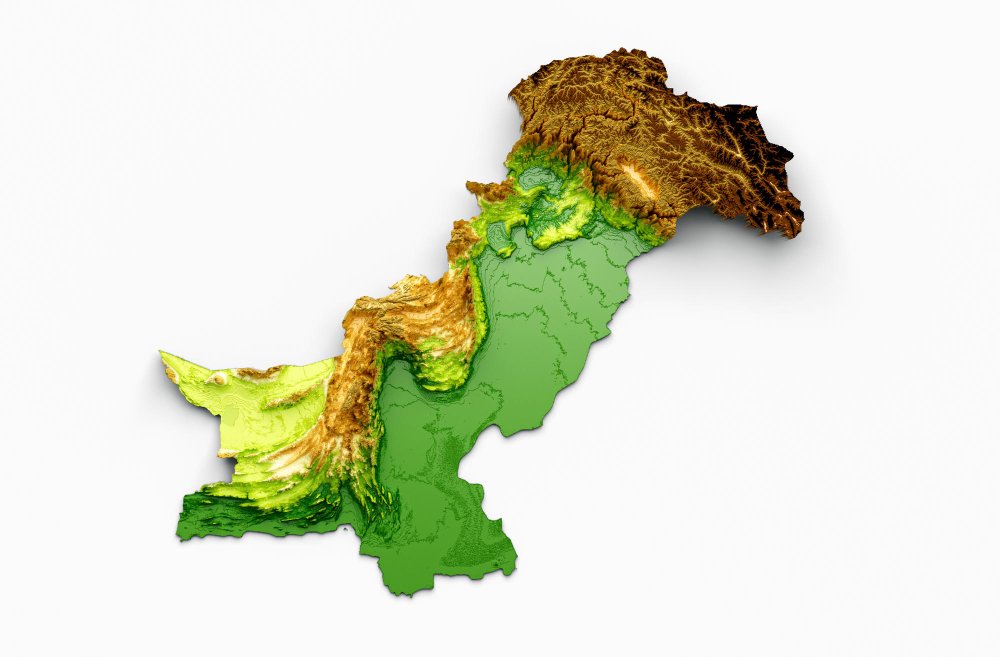
Pakistan’s debate over creating new provinces must move beyond politics and administrative convenience. The Fiscal Implications of More Provinces could be far more consequential than the political arguments currently dominating the discussion. A smaller province may improve representation and bring government closer to citizens. But it can also create another permanent layer of government, increase administrative costs and deepen dependence on federal transfers. That is why Pakistan needs to answer a blunt economic question before redrawing its provincial map: Can the country afford more provincial governments? Fiscal Implications of More Provinces Start With Federal Dependence Pakistan’s existing provinces already rely heavily on federal transfers. During July to March FY2025-26, provincial revenue reached Rs7.22 trillion. Of this amount, Rs5.63 trillion came through federal transfers, while provincial own-source revenue stood at Rs1.14 trillion, according to the Pakistan Economic Survey 2025-26. In simple terms, around 78 percent of provincial revenue during the period came from federal transfers. There is a positive development. Provincial own-source revenue increased by 28.3 percent, while provincial tax revenue rose by 25.8 percent. But the larger picture remains uncomfortable. Pakistan is discussing the possibility of creating additional provinces while its existing provinces are still struggling to generate enough revenue from their own economic bases. Creating a boundary does not create a tax base. Fiscal Implications of More Provinces Put the NFC Under Pressure The 11th National Finance Commission, constituted in August 2025 under Article 160 of the Constitution, provides an important opportunity to address this problem. The NFC determines how federal resources are distributed between the federation and provinces and examines wider questions surrounding grants, borrowing and intergovernmental fiscal relations. More provinces would inevitably raise difficult questions. Would the existing provincial share of the divisible pool simply be divided among more provinces? Would the horizontal distribution formula have to be rewritten? Should population continue to dominate the formula, or should revenue generation, development needs and economic capacity receive greater weight? These questions cannot be postponed. The danger is that political demands for new provinces could emerge first, while the fiscal bill arrives later. A New Province Does Not Automatically Create New Revenue A financially viable province needs a strong economic base. Industrial activity, formal employment, agriculture, property transactions, services, natural resources and exports all contribute to potential revenue generation. A proposed province with a weak formal economy and significant infrastructure deficits could become heavily dependent on federal transfers for decades. That would not necessarily make the province administratively wrong. But it would make its fiscal design critical. PIDE research has argued for a more performance-oriented NFC framework that encourages provincial revenue mobilization and fiscal responsibility. This principle deserves serious attention. If provinces receive substantial federal resources but have limited incentives to raise their own revenue, creating more provinces could multiply the problem rather than solve it. The Real Cost Could Be Permanent Government Spending The most overlooked issue in the debate may be recurring expenditure. Establishing a province would require reorganizing government departments, employees, offices, assets and institutions. Those costs would be significant, but they would largely be transitional. The bigger burden would come afterward. Every new province would require a permanent administrative structure, including government departments, senior officials, public institutions and support staff. It would also carry pension obligations and other long-term liabilities. During July to March FY2025-26, provincial current expenditure stood at Rs4.47 trillion, compared with Rs1.61 trillion in development expenditure. The figures do not establish what a new province would cost. However, they highlight a serious concern: government spending is already heavily weighted toward recurring obligations. Adding another layer of administration without controlling recurrent expenditure could leave less money available for schools, hospitals, infrastructure and economic development. Pakistan Needs a Fiscal Test Before Creating Any New Province The government should require a Provincial Fiscal Impact Statement before approving any serious proposal for a new province. The assessment should calculate own-source revenue potential, expected NFC transfers, salaries, pensions, administrative expenditure, development requirements and long-term liabilities. It should also examine the financial consequences over at least 10 and 20 years. Three scenarios should be mandatory. The first should represent a realistic base case. The second should test a weaker economy with slower revenue growth and higher expenditure. The third should examine the potential benefits of stronger investment, formalization and revenue collection. Most importantly, the assessment must examine the impact on the federation as a whole. A province that depends heavily on the national divisible pool does not operate financially in isolation. More Provinces May Not Be the Only Answer There is another uncomfortable question policymakers should address. If the objective is better governance and stronger representation, does Pakistan really need another full provincial bureaucracy? Stronger local governments could potentially bring decision-making closer to citizens without creating another expensive layer of administration. PIDE’s research on fiscal devolution has highlighted Pakistan’s incomplete decentralization and the need for stronger and more predictable financial arrangements for local governments. This deserves greater attention because administrative restructuring should ultimately be judged by outcomes. Citizens need better schools, hospitals, roads, water systems, policing and municipal services. They do not necessarily need more government offices. Fiscal Responsibility Must Accompany Fiscal Devolution If Pakistan creates additional provinces, fiscal devolution must come with fiscal responsibility. Every new province should have clearly defined revenue responsibilities, expenditure limits, borrowing rules and transparent reporting requirements. Federal transfers should not become an unconditional substitute for provincial tax collection. A stronger fiscal framework could even link federal transfers and future borrowing capacity to measurable improvements in revenue mobilization and financial management. That would force provincial governments to become accountable for the resources they generate rather than relying primarily on resources collected elsewhere. The 11th NFC Should Set the Rules Before the Map Changes The debate over new provinces should not be reduced to slogans about representation or administrative efficiency. The Fiscal Implications of More Provinces deserve the same level of attention as constitutional, political and administrative considerations. Pakistan’s economic reality is clear. Existing provinces remain heavily dependent on federal transfers, recurrent expenditure