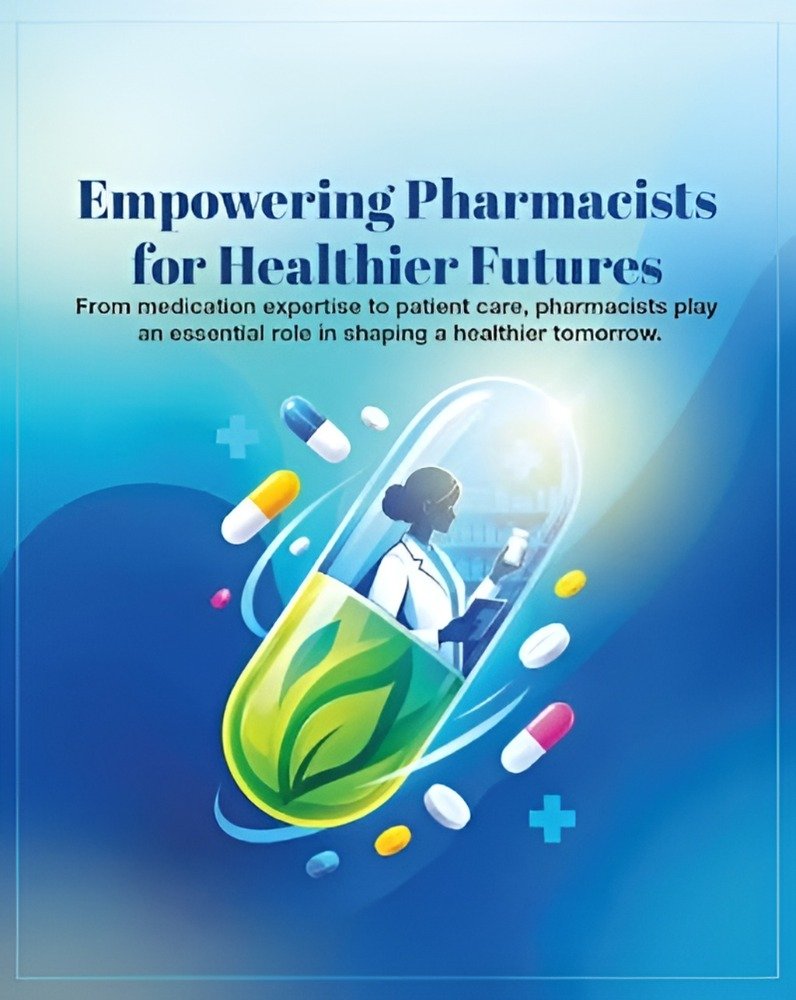
Empowering Pharmacists for Healthier Futures: From Medicines Experts to Partners in Patient Care
Healthcare is becoming increasingly complex. The growing burden of chronic diseases, polypharmacy, high-risk medicines, antimicrobial resistance, technological transformation and increasing patient expectations require healthcare professionals to work beyond traditional boundaries. Within this changing environment, pharmacists have a vital and expanding role, not only as experts in medicines, but also as integral members of the healthcare team and advocates for patient safety and better health outcomes. The theme of World Pharmacists Day 2026, “Empowering Pharmacists for Healthier Futures,” provides an important opportunity to recognise this evolving role. The International Pharmaceutical Federation (FIP) emphasises that pharmacists need the competencies, professional recognition and supportive working environments necessary to contribute fully to healthcare systems. FIP also highlights pharmacists’ contributions to prevention, access to care, medicines optimisation, health system resilience and sustainability. Pharmacists: The Guardians of Safe and Effective Medication Use Medicines can transform lives, but their inappropriate or unsafe use can also cause significant harm. The World Health Organization (WHO) identifies medication-related harm as a major patient safety challenge, with errors potentially occurring throughout the medication-use process, from prescribing and transcribing to dispensing, administration and monitoring. WHO therefore emphasises coordinated action involving patients and healthcare professionals, including pharmacists, to promote safer medication practices. Pharmacists are uniquely positioned to strengthen safety across this continuum. Their responsibilities include reviewing prescriptions, identifying drug interactions and contraindications, supporting appropriate medicine selection and dosing, managing high-alert medications, preventing dispensing errors, monitoring adverse drug reactions, conducting medication reconciliation, supporting antimicrobial stewardship and educating patients about the safe and effective use of their medicines. Importantly, medication safety is not simply a pharmacy responsibility. It is a shared responsibility across the healthcare system. Pharmacists therefore serve as a critical link connecting prescribing, dispensing, administration, monitoring and patient understanding. From Dispensing Medicines to Optimising Patient Care The modern pharmacist’s contribution extends well beyond the traditional image of dispensing medicines. Through clinical pharmacy and pharmaceutical care, pharmacists actively participate in medicines optimisation, ensuring that every patient receives the right medicine, at the right dose, through the right route, for the appropriate duration, with appropriate monitoring and follow-up. In hospitals, pharmacists can contribute to multidisciplinary ward rounds, medication reconciliation, therapeutic drug monitoring, antimicrobial stewardship, formulary management, medication-use evaluations, patient counselling and transitions of care. In ambulatory and community settings, pharmacists can support chronic disease management, health promotion, preventive care, adherence and patient education. This transformation places the patient, not simply the medicine, at the centre of pharmacy practice. Partners in the Healthcare Team The complexity of modern healthcare makes collaboration indispensable. Pharmacists should be recognised as partners with physicians, nurses, allied health professionals and other members of the healthcare team, working collaboratively towards a shared objective: achieving the safest and most appropriate outcome for every patient. A physician may determine the diagnosis and therapeutic strategy; a nurse plays a central role in medication administration and ongoing patient assessment; and the pharmacist contributes specialised expertise in medicines, their benefits, risks, interactions, monitoring requirements and appropriate use. When these perspectives are integrated, the healthcare team is better positioned to identify risks and make informed, patient-centred decisions. Effective interprofessional collaboration also requires mutual respect, open communication and a culture in which every professional feels empowered to raise medication safety concerns. Such a culture can help transform individual expertise into collective patient safety capability. Empowerment Is an Investment in Healthier Futures Empowering pharmacists requires more than acknowledging their importance. It means investing in competency-based education, continuing professional development, technology, appropriate staffing, clinical integration, professional recognition, supportive policies and opportunities to practise to the full extent of their knowledge and skills. FIP’s 2026 campaign specifically calls for enabling environments that allow pharmacists to make their full contribution to health systems. For healthcare organisations, this means creating systems in which pharmacists are actively involved in medication governance, quality improvement, patient safety programmes and clinical decision-making. For healthcare professionals, it means strengthening collaboration and recognising the complementary expertise of each discipline. For pharmacists themselves, it means embracing continuous learning, clinical leadership, innovation and accountability. A Shared Commitment to the Future World Pharmacists Day 2026 is therefore more than a celebration of a profession. It is a reminder of what can be achieved when pharmacists are empowered to contribute fully to patient care. An empowered pharmacist is a medicines expert, patient advocate, safety champion, educator, collaborator and healthcare leader. When pharmacists are empowered, medicines can be used more safely and effectively. When pharmacists work as genuine partners with other healthcare professionals, patient care becomes more coordinated and comprehensive. And when healthcare systems invest in pharmacists, they invest in stronger, safer and more resilient healthcare. The future of healthcare requires collaboration, innovation and a relentless commitment to patient safety. Empowering pharmacists today is an essential step towards creating healthier futures for patients, communities and healthcare systems worldwide. About Author: Syed Ali Jasim Rizvi Manager, Pharmacy Services at AKUH Off-Campus H