Auto

Same Platform, Different Price: What Explains the Rs1 Million Gap for SUV buyers in Pakistan?
Auto

Same Platform, Different Price: What Explains the Rs1 Million Gap for SUV buyers in Pakistan?

Karachi : Pakistan’s fast-evolving SUV market is beginning to see a new layer of competition — not just between brands, but within the same global automotive groups. Read More: https://theboardroompk.com/the-magnum-ice-cream-company-appoints-mert-turgut-as-general-manager-pakistan/ A case in point is the comparison emerging between the Chery Tiggo 7 PHEV and the Jaecoo J7 two different brands under the umbrella of Chery, a Chinese automobile giant. At first glance, the two vehicles appear to target similar buyers — modern SUV customers looking for electrification, performance, and technology. But a closer look reveals a more nuanced reality as both vehicles are built on closely related platforms, share core engineering, and deliver near-identical hybrid performance — yet are priced differently in the Pakistani market, almost 1 million rupees difference. The Tiggo 7 PHEV enters as a C-segment plug-in hybrid built on Chery’s latest Super Hybrid architecture. It combines a 1.5TGDI engine with an 18.3 kWh battery and a dedicated hybrid transmission, producing strong power output and delivering up to 90 km of pure electric range and a combined range of around 1,200 km. These are numbers that place it firmly among the most capable electrified SUVs currently available locally. The Jaecoo J7, meanwhile, is part of Chery’s newer sub-brand strategy aimed at more design-led and lifestyle-oriented positioning. While it introduces a distinct exterior identity — more rugged, upright, and off-road inspired — its underlying engineering DNA remains closely aligned with Chery’s existing hybrid platforms. This is not unusual in the global auto industry. Shared platforms across different brands — often referred to as “badge engineering” — are common practice. In Pakistan, however, where price sensitivity remains a key factor, such comparisons are beginning to influence buying decisions more directly. With an estimated price gap of close to Rs 1 million between the two, the Tiggo 7 PHEV positions itself as a high-value proposition — offering comparable hybrid technology, performance output, and core features at a more accessible entry point. For many buyers, especially those transitioning from conventional petrol SUVs, this difference is not marginal — it materially impacts affordability and ownership economics. Beyond pricing, the Tiggo7 also aligns closely with current market realities. With fuel prices remaining elevated and unpredictable, plug-in hybrid vehicles offer a practical middle ground — enabling daily commutes on electric power while retaining the flexibility of a combustion engine for longer journeys. Industry observers note that as more global brands introduce sub-brands and overlapping product lines, consumer awareness around platforms, powertrains, and real-world value is increasing. Buyers are no longer evaluating vehicles purely on exterior styling or badge perception, but increasingly on underlying engineering and cost efficiency. In that context, the Tiggo 7 PHEV’s positioning becomes clearer. It is not merely competing on features or design — it is competing on value for technology. As Pakistan’s hybrid segment expands, such intra-group comparisons are likely to become more common. And, for consumers, the key question may no longer be which vehicle looks different — but which one delivers more for what they pay.

Auto

For the First Time, Middle-Class Cars Take Lead as SUVs Lose Ground in Pakistan

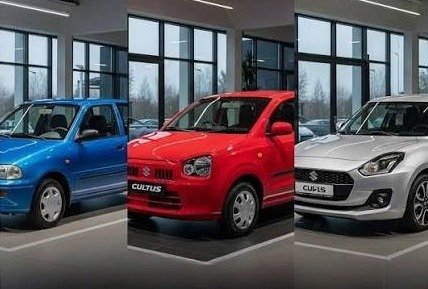
Pakistan’s automobile market is witnessing a notable shift as passenger cars tighten their grip on overall sales, signaling changing consumer priorities in a price-sensitive environment. Latest industry data shows passenger cars now account for around 63% of total sales, up from 58% a year earlier, reflecting a steady move away from larger, more expensive SUVs. Affordability Driving Consumer Choices The rise of models like Toyota Corolla and Yaris highlights how affordability is shaping buying decisions. With inflationary pressures still weighing on household budgets, many consumers appear to be opting for practical and fuel-efficient vehicles instead of premium SUVs. Industry analysts say lower interest rates have supported auto financing, but rising ownership costs—including fuel, maintenance, and insurance—are pushing buyers toward smaller cars. Even among buyers who previously preferred SUVs, there is growing evidence of a shift toward more economical options. This trend is particularly visible in urban centers, where congestion and fuel costs make compact cars more attractive for daily use. SUVs Face Growing Competition While SUVs remain popular, their dominance is increasingly being challenged. The segment is facing pressure not only from affordability concerns but also from intensifying competition among brands offering feature-rich vehicles at competitive prices. New entrants and aggressive pricing strategies have fragmented the SUV market, reducing the dominance of traditional models. As a result, some consumers are delaying purchases or reconsidering their options altogether. Analysts believe that unless price points stabilize or incomes improve significantly, passenger cars will continue to gain ground. The shift underscores a broader transformation in Pakistan’s auto market, where value-for-money is becoming the decisive factor in purchase decisions.

Nishat Group Achieves 5,000 Units Milestone for Omoda & Jaecoo in Pakistan
Auto

Nishat Group Achieves 5,000 Units Milestone for Omoda & Jaecoo in Pakistan

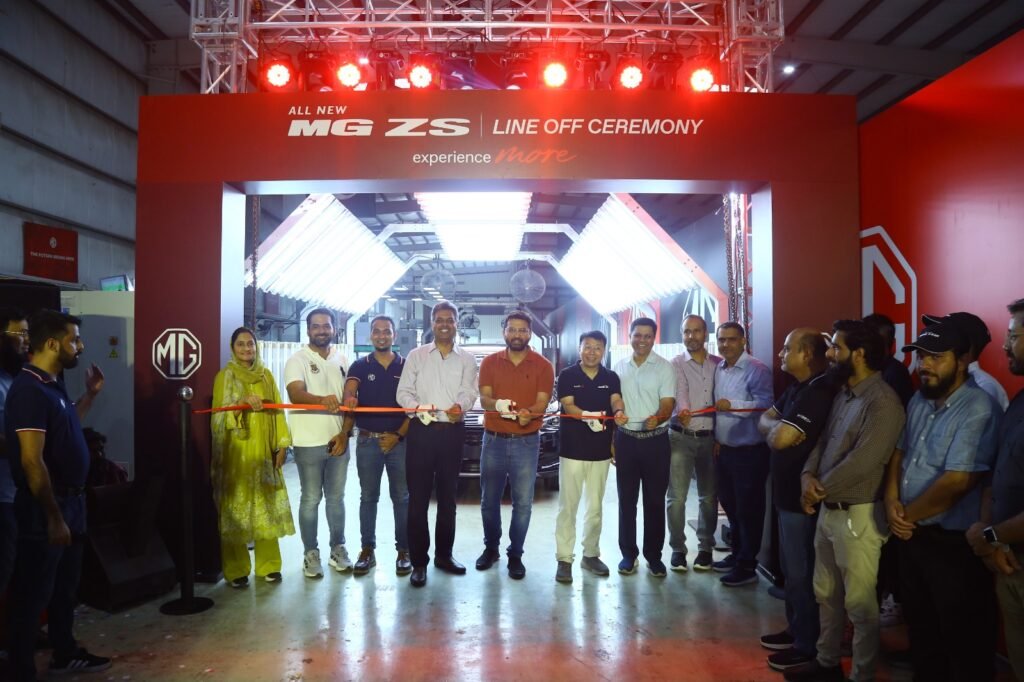
Faisalabad (April 16, 2026): Nishat Group has reached a significant milestone with its subsidiary NexGen Auto Pvt. Ltd, the official partner of Omoda & Jaecoo in Pakistan, celebrating the successful and record breaking “5,000 Units Line Off Ceremony” for its premium automotive brand, Omoda & Jaecoo. The ceremony took place at the company’s advanced manufacturing facility near Faisalabad, marking a strong response from the local market and reflecting the brand’s rapid growth since its launch in Pakistan. Omoda & Jaecoo, globally recognized as the fastest growing automotive brand in the world, has achieved close to one million sales within just three years. This global success is now being mirrored in Pakistan, where the brand continues to gain traction among consumers. The milestone includes the local production of the Jaecoo J5 HEV and Jaecoo J7 PHEV, both of which have recorded strong bookings and sales nationwide. The performance highlights increasing consumer confidence in the brand’s innovation, performance, and premium positioning. Industry experts view this achievement as a positive development for Pakistan’s automotive landscape, reflecting growing investment in advanced manufacturing and localized production. Nishat Group reaffirmed its commitment to strengthening Pakistan’s automotive industry through operational excellence and global collaboration, while further expanding the footprint of Omoda & Jaecoo in the country. The production of 5,000 units represents not only a key operational milestone but also signals the brand’s alignment with a globally proven success story, as it continues to grow its presence in Pakistan’s evolving mobility market.

Chery Master Pakistan Sets A New Industry Benchmark with Tiggo 8 & Tiggo 9 PHEV CKD Line-Off in 5 Days
Auto

Chery Master Pakistan Sets A New Industry Benchmark with Tiggo 8 & Tiggo 9 PHEV CKD Line-Off in 5Days

KARACHI: Chery Master Pakistan has achieved the record-breaking CKD line-off of Tiggo 8 PHEV and Tiggo 9 PHEV within a span of five days, marking a defining milestone in its back-to-back rollout of plug-in hybrid models and setting a new industry benchmark for how quickly advanced vehicles are brought to market in Pakistan. Chery Master Pakistan has launched three globally benchmark plug-in hybrid models in the local market within a span of four months, establishing Pakistan’s largest plug-in hybrid CKD lineup. Delivered at a critical time when rising fuel costs and limited charging infrastructure make plug-in hybrids the only practical solution without range anxiety, this rollout has translated into record-setting early deliveries, further reinforced by the CKD line-off of Tiggo 9 PHEV within just five days of Tiggo 8 PHEV. Backed by the manufacturing strength of Master Auto Engineering and supported by Chery Automobile’s core technical team, the line-off reflects execution at speed while maintaining global engineering precision and quality standards. With Start of Volume Production underway, vehicles are undergoing rigorous validation across Pakistan’s driving conditions. Positioned as Pakistan’s first premium plug-in hybrid E-SUV, Tiggo 9 PHEV stands as the flagship of Chery’s PHEV lineup and a category-defining product, combining high performance, advanced safety and elevated comfort. Alongside Tiggo 8 PHEV and Tiggo 7 PHEV, it forms part of a continuous rollout, bringing Chery’s world’s best plug-in hybrid technology closer to Pakistani customers at an unprecedented pace. Powered by Chery Super Hybrid technology, it delivers up to 170 km of electric driving and up to 1,400 km total range. With 610 horsepower, 920 Nm of torque, and all-wheel drive, it offers performance and efficiency suited for both daily commuting and long-distance travel. With running costs as low as PKR 2 to 10 per kilometre, it enables fuel-free daily driving while eliminating range anxiety and reducing reliance on charging infrastructure. Inside, it features a 15.6-inch infotainment display, 14-speaker Sony audio system, front-row massage seats, and heated and ventilated seating across both the first and second rows. Safety is a key strength, with 10 airbags, Level 2 Plus ADAS with over 27 functions, and automatic parking, positioning it among the safest and most advanced SUVs in Pakistan. Following the highly successful launch of Tiggo 7 PHEV, this milestone builds on an exceptional market response, with strong customer demand reflecting a clear shift toward plug-in hybrid mobility in Pakistan.Commenting on the achievement, Samir Malik, CEO of Master Auto Engineering, said: “This is a proud moment for us. What we are building is not just a product lineup, but a shift in how quickly global technologies can reach Pakistani customers. What we have achieved reflects a new level of speed, precision and execution in the local industry. By combining global capability with local manufacturing strength, we are accelerating this transition while ensuring these solutions remain practical and relevant for Pakistan.” In Pakistan, Chery is introduced by Master Auto Engineering, part of the Master Group with over 60 years of industrial and automotive legacy. The Group is a leader in Pakistan’s automobile industry, with Procon Engineering in auto parts manufacturing and Master Motor in commercial and passenger vehicles, ranking among Pakistan’s largest automotive groups, in partnership with Chery Automobile, China’s No.1 automotive exporter for 23 consecutive years. With volume production underway, Tiggo 9 PHEV marks the next phase, reflecting a new operating pace for the industry and reinforcing Chery Master Pakistan’s back-to-back execution strategy in bringing Pakistan closer to global mobility standards. Social Media Visual Headline: A New Industry Benchmark Tiggo 8 & Tiggo 9 PHEV CKD Line-Off in 5 Days

PHEVs Gain Ground Over EVs in Emerging Markets, Pakistan Sees Early Shift
Auto, Editor pick

PHEVs Gain Ground Over EVs in Emerging Markets, Pakistan Sees Early Shift

Karachi, April 16: As the global push toward electric vehicles (EVs) gathers pace, emerging markets are charting a different course, with plug-in hybrid electric vehicles (PHEVs) increasingly emerging as the more practical solution. The trend is becoming evident in Pakistan, where market dynamics, infrastructure gaps, and cost considerations are shaping consumer preferences. The shift comes amid China’s rise as the world’s largest car exporter, surpassing Japan and Germany, driven largely by its dominance in new energy vehicles, including EVs and hybrid models. While developed economies continue to move toward full electrification, countries like Pakistan face structural challenges that make immediate EV adoption less viable. Industry data shows that electrified vehicles now account for a growing share of China’s auto exports. However, in markets with limited charging infrastructure and inconsistent power supply, PHEVs are being positioned as a transitional technology bridging the gap between conventional internal combustion engines and fully electric mobility. Pakistan reflects this transition clearly. With fuel prices remaining high and volatile, consumers are increasingly prioritizing running costs over upfront vehicle prices. A conventional petrol vehicle with an average fuel efficiency of around 10 kilometers per litre results in significantly higher per-kilometer costs compared to hybrid and plug-in hybrid alternatives, particularly in urban driving conditions. At the same time, constraints around EV adoption persist. Charging infrastructure remains underdeveloped, while concerns over driving range and usability continue to influence purchasing decisions, especially outside major urban centers. These factors have created a favorable environment for PHEVs, with early market indicators suggesting growing traction. Recent activity points to strong consumer interest in plug-in hybrid offerings, particularly within the SUV segment. Chinese automaker Chery’s entry into Pakistan underscores this shift. Its Tiggo PHEV lineup including the Tiggo 7, Tiggo 8, and flagship Tiggo 9 has generated robust initial demand, with bookings and customer interest reportedly exceeding expectations, according to industry sources. The range caters to multiple consumer segments, from urban buyers seeking fuel efficiency to families and premium customers looking for a balance of performance, technology, and cost savings. Market analysts note that the appeal of PHEVs lies in their dual capability: the ability to operate in electric mode for daily commutes while retaining conventional fuel for longer journeys. This flexibility is particularly suited to Pakistan’s current infrastructure and usage patterns. Globally, PHEVs are increasingly viewed as a bridge technology, especially in regions where EV ecosystems are still evolving. China’s export strategy appears aligned with this approach, focusing on scalable hybrid solutions adaptable to diverse markets. For Pakistan, this suggests a gradual transition toward electrification. Rather than an immediate shift to fully electric vehicles, the country’s automotive evolution is likely to be driven by plug-in hybrids in the near to medium term, enabling steady adoption while addressing economic and infrastructure constraints. As the transition unfolds, analysts believe consumer behavior shaped by fuel economics and practicality may ultimately prove more decisive than policy measures in defining the future trajectory of mobility in Pakistan.

Mega Motor Company (MMC) and TPL insurance collaborate to launch MMC Cares for BYD Owners in Pakistan
Auto, Editor pick

Mega Motor Company (MMC) and TPL insurance collaborate to launch MMC Cares for BYD Owners in Pakistan

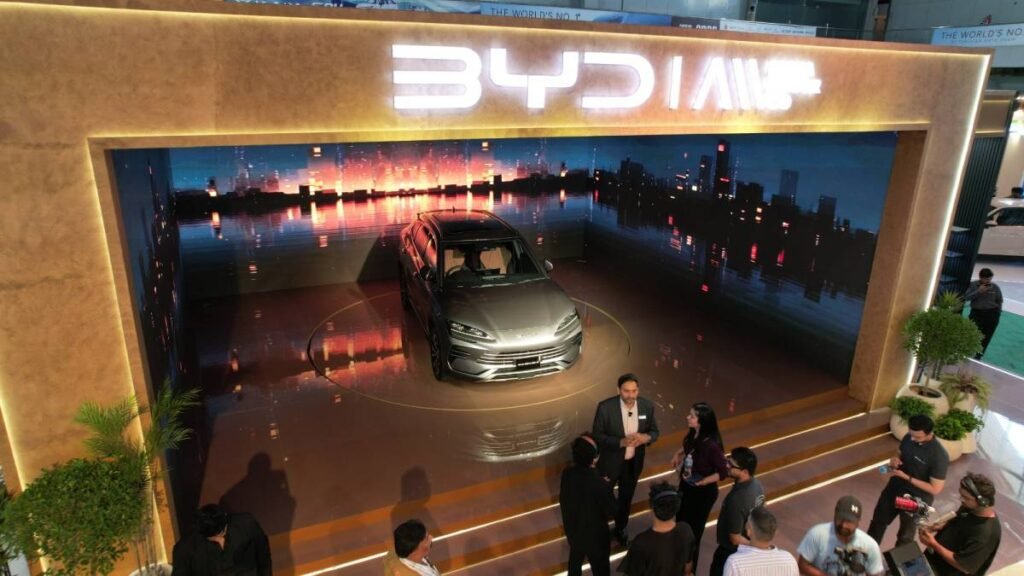
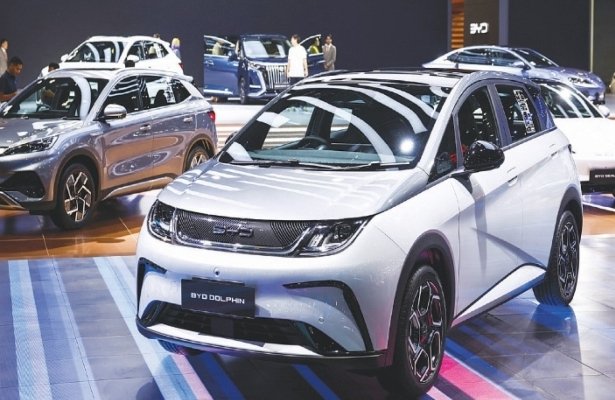
Karachi: Mega Motor Company (MMC), the official partner of the world’s no.1 NEV brand, BYD in Pakistan has entered into a strategic partnership with TPL Insurance, one of Pakistan’s leading general insurance providers, to introduceMMC Care, a comprehensive protection plan designed exclusively for BYD owners nationwide. Read More: https://theboardroompk.com/pakistan-highlights-economic-reforms-at-imf-world-bank-meetings-2026/ Through this partnership, TPL Insurance will offer a comprehensive and customized insurance plan designed to cater to the technologically advanced BYD New Energy Vehicles (NEVs). MMC Care offers BYD owners financial protection against a range of unforeseen circumstances, including accidents, theft, damage, and unexpected breakdowns. The policy is structured to reduce the burden of repair costs and eliminate the uncertainty of arranging assistance during emergencies, ensuring that support is readily available when it is needed most. Danish Khaliq, VP Sales & Strategy, BYD Pakistan – MMC added, “Leading the NEV transition in Pakistan, this partnership reflects MMC’s commitment to delivering a safe, reliable, and customer-first experience tailored to the country’s evolving mobility landscape. Our collaboration with TPL Insurance marks another milestone, enabling a more holistic ownership experience for BYD customers. A vehicle is a significant investment, and with MMC Care program, our goal is to ensure that customers can protect that investment with confidence.” Mr. Syed Ali Hassan Zaid, COO of TPL Insurance said, “We are excited to collaborate with MMC to introduce specialized insurance offerings for BYD vehicle owners. As the automotive landscape evolves, particularly with the rise of electric vehicles, it is essential to provide protection solutions that are equally innovative and forward looking.” MMC Care is accessible to both new and existing BYD customers, offering flexibility and ease of enrollment at any stage of vehicle ownership. This strategic alliance reflects a shared vision to enhance customer value through integrated offerings, while supporting the growth of Pakistan’s automotive and insurance sectors.

Pakistan Auto Policy 2026: Government Moves to Boost Local Auto Parts Manufacturing
Auto

Pakistan Auto Policy 2026: Government Moves to Boost Local Auto Parts Manufacturing

Pakistan Auto Policy 2026 is set to reshape the country’s automotive sector as the government intensifies efforts to promote local manufacturing and reduce reliance on imports. The initiative comes after a high-level meeting chaired by Special Assistant to the Prime Minister Haroon Akhtar Khan with auto parts manufacturers to discuss policy reforms aimed at strengthening the domestic automotive ecosystem. Read More: https://theboardroompk.com/k-electric-hesco-loadshedding-exemption-govt-relieves-karachi-hyderabad-from-peak-hour-power-cuts/ The meeting, attended by Secretary Industries Saif Anjum, CEO of the Engineering Development Board Hammad Mansoor, and other stakeholders, focused on boosting localisation, improving competitiveness, and encouraging investment in emerging automotive technologies. Pakistan Auto Policy 2026 Focuses on Localisation A key objective of Pakistan Auto Policy 2026 is to increase the localisation of auto parts manufacturing. Officials emphasized that promoting domestic production will help reduce import bills, strengthen the supply chain, and support industrial growth. Haroon Akhtar Khan reiterated that local production of automotive components remains central to government policy. He noted that expanding domestic manufacturing capacity would create jobs, encourage investment, and build resilience in the auto sector. Secretary Saif Anjum informed participants that the ministry is compiling a comprehensive inventory of auto parts that can be produced locally. This inventory will guide industry stakeholders on opportunities for domestic manufacturing over the next five years. Protection for Local Manufacturers Under Pakistan Auto Policy 2026 The government plans to provide policy protection to locally manufactured components to encourage industry growth and import substitution. This protection is expected to support domestic suppliers, improve economies of scale, and gradually reduce vehicle prices for consumers. Rather than presenting figures in table format, officials explained that the policy roadmap includes gradual localisation targets, phased reduction in imports, and structured incentives for domestic manufacturers. These measures aim to build a competitive ecosystem that benefits both producers and buyers. Electric Vehicle Components Get Special Attention Pakistan Auto Policy 2026 also places strong emphasis on electric vehicle parts manufacturing. The government is considering special incentives to encourage investment in EV components, recognizing the global shift toward cleaner mobility. Haroon Akhtar Khan urged local manufacturers to adopt electric vehicle technologies to remain competitive internationally. He highlighted that early adaptation would allow Pakistani companies to tap export markets and align with global automotive trends. These EV-focused incentives are expected to include tax facilitation, technology support, and investment-friendly policies designed to attract both local and foreign investors. Broad-Based Policy to Reduce Vehicle Prices The upcoming auto policy is designed to strengthen Pakistan’s domestic automotive ecosystem while reducing vehicle prices through targeted interventions. Increased localisation is expected to lower production costs, minimize currency pressure, and stabilize supply chains. Officials emphasized that reducing reliance on imported components can help make vehicles more affordable for Pakistani consumers. This approach also supports long-term industrial development. Stakeholder Consultation Under Leadership of Shehbaz Sharif The government confirmed that Pakistan Auto Policy 2026 will be developed through extensive consultations with all stakeholders. The aim is to create a practical, inclusive framework that supports industry growth and boosts export potential. Haroon Akhtar Khan directed the Engineering Development Board to continue engaging with industry players to ensure effective implementation. According to a report by Associated Press of Pakistan, this collaborative approach is expected to produce a balanced and forward-looking automotive policy. Pakistan Auto Policy 2026 Expected Impact Pakistan Auto Policy 2026 is expected to deliver multiple benefits. Increased localisation will strengthen domestic manufacturing, EV incentives will promote technological advancement, and policy protection will help local suppliers scale operations. Over time, these steps may reduce vehicle prices and enhance export opportunities. The initiative signals the government’s commitment to transforming Pakistan’s automotive sector into a competitive, innovation-driven industry capable of meeting domestic demand and entering global markets.

Pakistan Auto Sells 15,531 Vehicles in March 2026, up 40% YoY
Auto, Breaking News

Pakistan Auto Sells 15,531 Vehicles in March 2026, up 40% YoY

Pakistan’s auto industry posted a robust recovery in March 2026, with total sales reaching 15,531 units, marking a 40% year-on-year increase. Read More: https://theboardroompk.com/pakistan-unveils-1-billion-ai-push-to-power-next-gen-digital-infrastructure/ Broad-Based Growth Across Segments The surge was driven by macroeconomic stability, lower interest rates, and improved demand conditions. Passenger car sales jumped 45% YoY to 11,755 units, while LCVs and pickups grew a modest 27% YoY to 3,776 units. Cumulatively, 9MFY26 sales stood at approximately 144,000 units, up 43% YoY. Industry experts attribute the momentum to easier financing and rising consumer confidence following months of sluggish demand. Short-term volatility persisted, however, as March figures were 9% lower month-on-month due to seasonal factors. Positive Momentum in Key Categories Charts tracking multi-month trends confirm a clear uptrend in cars and LCVs since the start of the calendar year. The recovery reflects broader economic improvements, including stable inflation and better availability of imported kits. Analysts note that the sector’s resilience remains intact despite global headwinds. With demand conditions continuing to improve, the coming months could see sustained double-digit growth if policy support persists. Local assemblers are also ramping up production to meet pent-up orders, particularly in the sedan and compact SUV segments. The latest data from Intermarket Securities highlights how sectoral tailwinds are translating into tangible volume gains, positioning the industry for a stronger fiscal year ahead. According to Intermarket Securities Ltd: Auto sales in March 2026 stood at 15,531 units, rising a robust 40% YoY but down 9% MoM, taking 9MFY26 sales to c. 144K units, up 43%. The YoY growth is primarily driven by sectoral tailwinds including macroeconomic stability, lower interest rates, and relatively better demand conditions. Passenger car sales increased 45% YoY to 11,755 units, while LCVs and Pickup segment posted a modest growth of 27% YoY to 3,776 units. INDU: Indus Motors posted a 24% YoY growth (flat MoM), selling 3,873 units in Mar 26. The Corolla, Yaris and Cross portfolio posted robust growth of 32% YoY to 3,145 units, while the Fortuner and Revo segment declined 3% YoY to 728 units, mainly due to increased competition from new cars launched at the start of the year. Overall, the company’s market share dropped 3ppt YoY to 25%. HCAR: Honda posted a sharp growth of 63% YoY (10% MoM) to 2,324 units, primarily led by its sedan segment which grew by 71% YOY, while the SUV segment posted a growth of 18% YoY, HCAR’s market share improved by 2ppt YoY to 15% in Mar 26. SAZEW: Sazgar recorded 4-wheeler sale of 1,733 units, up 34% YoY in Mar 26. Sequentially, however, the sales dropped 11% MoM, The Company’s market share improved 3ppt YoY to 11% in Mar 26. SAZEW rolled out the test unit of TANK 500 in Apr 26 which shall provide a further support the volumes in upcoming months. Moreover, SAZEW’s three-wheeler sales improved 10% YoY to 2,159 units during the month. Tractor: Tractor sales saw a sharp 98% YoY growth (63% MoM) to 3,008 units this month as deliveries for the Punjab tractor scheme neared completion. With the scheme’s impact subsiding, sales volumes are expected to normalize going forward. MTL’s market share dropped 10ppt YoY to 51%, while AGTL’s market share improved to 49% during Mar 26. Trucks: Trucks segment continues to benefit from relatively improved economic activity YoY along with stricter enforcement of Axle Load regime. Volumes are up 38% YoY to 488 units. GHNI’s volumes grew by 47% to 376 units in Mar 26. Meanwhile, GAL’s sales reached 340 units, up 3.9x YOY. Despite intensifying competition, volumetric growth across listed auto OEMs remains robust, underscoring resilient underlying demand; however, we flag key overhangs to the sector’s near-term outlook, including pending regulatory clarity on the New Energy Vehicles (NEV) policy, rising competition from Chinese OEMs, and potential supply-side disruptions stemming from escalating Middle East tensions, which could impact shipping routes and delay CKD kit procurement for local assemblers.

Chery Master Pakistan Starts Early Deliveries of Tiggo 8 PHEV
Auto, Editor pick

Chery Master Pakistan Starts Early Deliveries of Tiggo 8 PHEV

KARACHI: April 10: Chery Master Pakistan has commenced deliveries of its Tiggo 8 Plug-in Hybrid Electric Vehicle (PHEV) to pre-registered customers, as per the April 2026 delivery timeline, the company said on Friday. Read More: https://theboardroompk.com/pakistan-oil-gas-sector-reports-three-discoveries-in-march-2026-amid-isreal-us-war-on-iran/ The Tiggo 8 PHEV was opened for advance bookings in January 2026 at an introductory price of Rs10,999,000 but following the strong demand, the price was revised to Rs11,299,000 effective February 1, 2026. The early rollout marks a key milestone for Chery Master Pakistan, reflecting execution on committed delivery timelines and readiness across production, supply chain, and aftersales infrastructure. The company said the deliveries are aligned with its “HELLO CHERY” customer-first approach, focused on technology-led ownership and service readiness from day one. Positioned as Pakistan’s only 7-seater plug-in hybrid in the D-SUV segment, the Tiggo 8 PHEV is powered by Chery Super Hybrid (CSH) technology. The vehicle produces 496 horsepower and 735 Nm of torque, offering an electric-only range of up to 90 kilometres and a combined driving range of approximately 1,200 kilometres. The SUV integrates a range of premium and technology features, including a three-row cabin configuration, advanced infotainment system, and Sony sound system. Interior highlights include a “Queen Co-Pilot” zero-gravity passenger seat with massage functionality, heating and ventilation options, and a cabin with 78.9% soft-wrap materials. A driver-focused audio system is also included. On safety, the Tiggo 8 PHEV carries a five-star global safety rating and is equipped with 10 airbags along with advanced driver assistance systems (ADAS), positioning it among the more feature-rich offerings in its category. To support deliveries, the company has established a nationwide 3S dealership network comprising 10 operational outlets, with plans to expand to 20 locations by 2027. Chery entered the Pakistani market through a partnership with Master Auto Engineering, part of the Master Group, which has over six decades of manufacturing experience in the country. The collaboration agreement was signed in May 2025.Globally, Chery operates in more than 120 countries with a user base exceeding 18.5 million and has remained China’s largest automobile exporter for 23 consecutive years. The early deliveries come as Pakistan’s auto market increasingly shifts towards hybrid and electrified mobility, driven by rising fuel costs and evolving consumer demand.

Tesla eyes smaller, cheaper EV to revive mass-market push
Auto

Tesla eyes smaller, cheaper EV to revive mass-market push

Tesla is developing a new smaller and more affordable electric vehicle (EV), marking a potential shift back toward mass-market offerings as competition intensifies globally. The planned model is expected to be a compact SUV, smaller than the company’s existing lineup, and priced below its current entry-level vehicles, according to sources familiar with the matter. Compact design, lower cost strategy Sources indicate the new vehicle will measure roughly 4.28 metres in length, significantly shorter than the Model Y, and will incorporate cost-saving measures such as a single motor, a smaller battery, and a lighter frame. Production is likely to begin in Shanghai, with plans to expand manufacturing to the United States and Europe at a later stage. The project is still in early development, and timelines for commercial launch remain uncertain. The move suggests Tesla may be revisiting its long-standing ambition of delivering more affordable EVs, a segment increasingly dominated by Chinese automakers offering competitively priced alternatives. Strategic shift amid slowing demand The development comes at a time when Tesla is facing pressure from slowing EV demand and rising competition. The company has not launched a completely new mainstream passenger vehicle since the Model Y in 2020, relying instead on incremental updates and cost-reduced variants. Tesla had earlier scrapped plans for a widely anticipated low-cost EV project in favour of focusing on robotaxis and artificial intelligence initiatives. However, the latest development may signal a recalibration of priorities as vehicle sales remain the company’s primary revenue driver. Analysts believe that introducing a cheaper model could help Tesla regain market share and boost volumes, particularly in price-sensitive markets where competition is intensifying.

Scroll to Top