Uncategorized

Al-Ghazi Tractors Produces 600,000th Unit at Dera Ghazi Khan Plant, Marking 40-Year Milestone in Pakistan This image has an empty alt attribute; its file name is WhatsApp-Image-2026-04-16-at-6.23.35-PM-818x1024.jpeg Four Decades of Manufacturing for Pakistan's Farmers Lahore, 16 Apr, 2026 — Al-Ghazi Tractors marked a defining milestone in Pakistan's industrial history, celebrating the production of its 600,000th tractor at a ceremony held at its manufacturing facility in Dera Ghazi Khan, the same plant where the company first began production over four decades ago. Read More: The milestone tractor produced during the ceremony was a Ghazi 640, Al-Ghazi Tractors' most celebrated model and a name synonymous with reliability among Pakistani farmers for generations. Spanning over 3.9 million square feet, the Dera Ghazi Khan facility has been the backbone of Al-Ghazi Tractors' operations since 1983. The ceremony brought together company leadership to mark what stands as one of the most significant production achievements in Pakistan's agricultural machinery sector. Al-Ghazi Tractors manufactures more than 92% of its tractor components locally, a figure that reflects both the depth of its manufacturing infrastructure and its contribution to Pakistan's industrial base. Established as a subsidiary of the Al-Futtaim Group, with Case New Holland as both a strategic shareholder and technical collaborator, the company has spent 42 years building tractors engineered specifically for Pakistan's agricultural conditions. "Reaching 600,000 tractors is not just a production number, it is a reflection of the trust millions of Pakistani farmers have placed in us over the decades," said Yasin Seker, Chief Executive Officer of Al-Ghazi Tractors. "Every tractor that has left our plant represents a commitment to quality, a livelihood supported, and a step forward for Pakistan's agricultural economy." Pakistan's agricultural sector employs nearly 40% of the national workforce and contributes approximately 24% of GDP. Al-Ghazi Tractors' nationwide distribution network ensures that farmers in even the most remote districts have access to both the machinery and the after-sales support they need. "Our vision is to make Al-Ghazi Tractors a symbol of success, not only for our company and shareholders, but for every farmer we serve and every community we touch," Mr. Seker added. About Al-Ghazi Tractors Limited: Al-Ghazi Tractors Limited (AGTL) is Pakistan's leading agricultural tractor manufacturer, a subsidiary of the Al-Futtaim Group, and operates in technical collaboration with Case New Holland. Listed on the Pakistan Stock Exchange, AGTL has manufactured tractors at its Dera Ghazi Khan facility since 1983.
Uncategorized

Al-Ghazi Tractors Produces 600,000th Unit at Dera Ghazi Khan Plant, Marking 40-Year Milestone in Pakistan

Four Decades of Manufacturing for Pakistan’s Farmers Lahore, 16 Apr, 2026 — Al-Ghazi Tractors marked a defining milestone in Pakistan’s industrial history, celebrating the production of its 600,000th tractor at a ceremony held at its manufacturing facility in Dera Ghazi Khan, the same plant where the company first began production over four decades ago. The milestone tractor produced during the ceremony was a Ghazi 640, Al-Ghazi Tractors’ most celebrated model and a name synonymous with reliability among Pakistani farmers for generations. Spanning over 3.9 million square feet, the Dera Ghazi Khan facility has been the backbone of Al-Ghazi Tractors’ operations since 1983. The ceremony brought together company leadership to mark what stands as one of the most significant production achievements in Pakistan’s agricultural machinery sector. Al-Ghazi Tractors manufactures more than 92% of its tractor components locally, a figure that reflects both the depth of its manufacturing infrastructure and its contribution to Pakistan’s industrial base. Established as a subsidiary of the Al-Futtaim Group, with Case New Holland as both a strategic shareholder and technical collaborator, the company has spent 42 years building tractors engineered specifically for Pakistan’s agricultural conditions. “Reaching 600,000 tractors is not just a production number, it is a reflection of the trust millions of Pakistani farmers have placed in us over the decades,” said Yasin Seker, Chief Executive Officer of Al-Ghazi Tractors. “Every tractor that has left our plant represents a commitment to quality, a livelihood supported, and a step forward for Pakistan’s agricultural economy.” Pakistan’s agricultural sector employs nearly 40% of the national workforce and contributes approximately 24% of GDP. Al-Ghazi Tractors’ nationwide distribution network ensures that farmers in even the most remote districts have access to both the machinery and the after-sales support they need. “Our vision is to make Al-Ghazi Tractors a symbol of success, not only for our company and shareholders, but for every farmer we serve and every community we touch,” Mr. Seker added. About Al-Ghazi Tractors Limited: Al-Ghazi Tractors Limited (AGTL) is Pakistan’s leading agricultural tractor manufacturer, a subsidiary of the Al-Futtaim Group, and operates in technical collaboration with Case New Holland. Listed on the Pakistan Stock Exchange, AGTL has manufactured tractors at its Dera Ghazi Khan facility since 1983.

PSCTF delegation visit North Karachi Association of Trade and Industry
Uncategorized

PSCTF delegation visit North Karachi Association of Trade and Industry

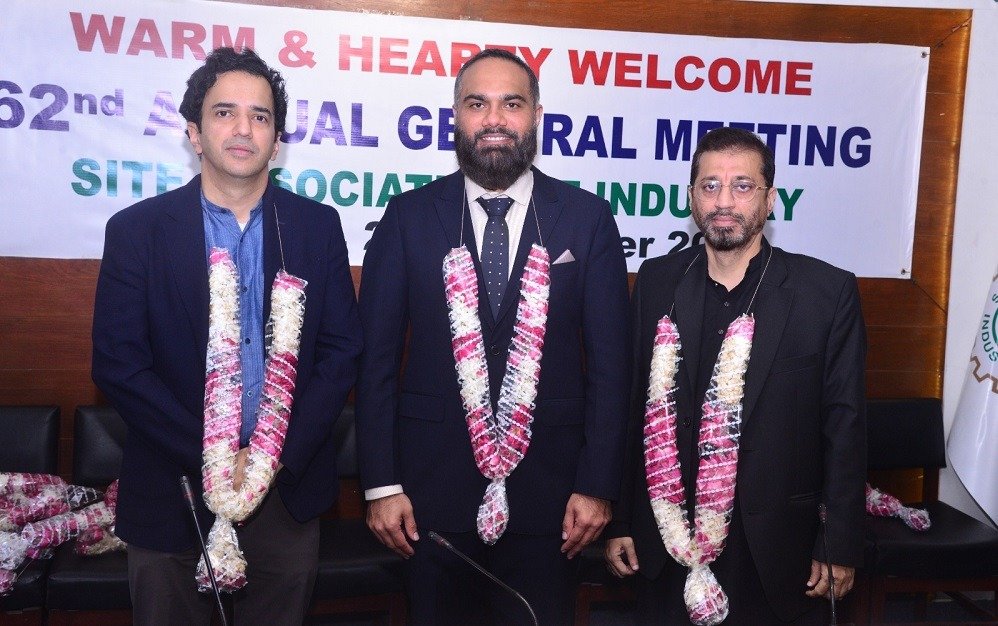
A delegation from the Pakistan SADC Chamber Trade Federation (PSCTF), led by President Sindh Chapter Mr. Muhammad Shoaib Qadri, visited the North Karachi Association of Trade and Industry (NKATI) on Friday, 10 April 2026. The delegation, including senior vice president Pakistan Chapter Syed Moizuddin and president Balochistan Chapter & Women Wing Ms. Noor Afshan Baloch, held a productive meeting with NKATI President Mr. Faisal Moiz and his team. PSCTF extended an invitation to NKATI and its members to attend the Pak-Africa Trade and Investment Conference, scheduled for 13 May 2026 in Karachi. Both sides also discussed signing an MoU to strengthen trade and investment cooperation between Pakistan and Africa. It was agreed that NKATI’s Africa-focused subcommittee will collaborate closely with PSCTF. NKATI also invited PSCTF to participate in an upcoming seminar, where PSCTF will present its vision, achievements, and future plans, and further engage members for the conference. A draft MoU was shared and will be finalized soon. Mr. Haroon Sikandar has been nominated as NKATI’s focal person, while Ms. Noor Afshan Baloch will represent PSCTF.

Pakistan’s US-Iran Ceasefire Triumph Saves World: Business Seeks Immediate Relief
Uncategorized

Pakistan’s US-Iran Ceasefire Triumph Saves World: Business Seeks Immediate Relief

KARACHI: Chairman Businessmen Group (BMG) Zubair Motiwala, while terming the US-Iran ceasefire as the biggest achievement after Pakistan’s independence, said that the development had brought immense pride and prestige to Pakistan because it was Pakistan which had effectively saved the world from the possibility of a much larger conflict. Speaking at an urgent meeting held on Wednesday, Zubair Motiwala stated that Prime Minister Shehbaz Sharif, Field Marshal Asim Munir and Deputy Prime Minister Ishaq Dar deserved the highest level of national and international appreciation for their exceptional statesmanship, visionary leadership and extraordinary diplomatic efforts in securing the ceasefire. He said that at a time when the world was moving dangerously close to a catastrophic conflict, Pakistan’s leadership displayed remarkable wisdom, courage and maturity by taking the initiative to bridge differences between the two sides and pave the way for peace. On behalf of Karachi and the entire business community of Pakistan, he extended heartfelt congratulations and paid glowing tribute to Prime Minister Shehbaz Sharif, Field Marshal Asim Munir and Deputy Prime Minister Ishaq Dar for bringing immense pride, prestige and honor to Pakistan on the global stage. He remarked that although many countries had been attempting to find a solution, it was Pakistan that ultimately took the lead, emerged as the most credible mediator and succeeded in accomplishing what many considered impossible. He observed that the entire world was now taking Pakistan more seriously because the country had demonstrated its ability not only to deal with internal challenges but also to play a meaningful role in resolving major international crises. He expressed optimism that the 15-day ceasefire would continue beyond the initial period and gradually evolve into a durable peace arrangement, opening up opportunities for regional economic integration, relaxation of sanctions on Iran and stronger trade ties between neighboring countries. Referring to the Iran-Pakistan gas pipeline project, Zubair Motiwala stressed that the United States should now permit Pakistan to move forward with this essential energy corridor because Pakistan’s long-term growth and industrial competitiveness depended heavily on affordable and uninterrupted energy supplies. He said that if Pakistan was able to import gas and electricity from Iran, energy prices in the country could become regionally competitive, possibly even lower than those in Bangladesh, thereby creating far-reaching positive impacts on industrial production, exports and the overall economy. Referring to the difficulties faced by industries during the past month due to geopolitical tensions, high freight costs, shipping disruptions and rising energy prices, he said that the business community was now in a position to present practical proposals for economic and industrial recovery. Zubair Motiwala stressed that the government must focus on reducing the cost of doing business to levels comparable with competing countries because Pakistani industries would not be able to compete internationally if domestic production costs remained significantly higher. He pointed out that the world was passing through an intense price war and Pakistan had no option but to rationalize taxes, utility tariffs and regulatory costs in order to protect exports and industrial activity. In this regard, he emphasized the urgent need to reinstate the zero-rated sales tax mechanism at the input stage for export-oriented sectors including textiles, leather, surgical instruments, carpets and sports goods, noting that these sectors account for nearly 80 to 85 percent of Pakistan’s exports. He said that replacing zero-rating with a refund-based system had created severe liquidity problems for exporters due to long delays in refund payments and the heavy financial burden of blocked working capital. Restoring zero-rating, he said, would improve liquidity, reduce financing costs and strengthen the international competitiveness of Pakistani products. Zubair Motiwala also proposed that customs duties and taxes should be assessed on Ex-Works value instead of the prevailing Cost and Freight basis. Referring to electricity tariffs, he said that Pakistan’s industrial electricity rates remained highly uncompetitive at approximately 14 to 16 US cents per kilowatt hour, which significantly increased production costs. He pointed out that although the federal government had introduced the Incremental Consumption Package and released around Rs7 billion for Karachi under the scheme, the benefit had not yet reached industrial consumers, while the total pending relief was estimated at approximately Rs33 billion. He urged the government to immediately disburse the pending relief and establish a transparent mechanism to ensure direct transfer of benefits to consumers. He further noted that industrial gas tariffs had risen substantially while supply inconsistencies continued to disrupt production. Gas, he said, was a critical input for export-oriented industries and the current pricing structure was seriously undermining competitiveness. He clarified that the business community was not demanding subsidized gas, but only that gas should be supplied strictly on a cost-of-service basis and should not be treated as a revenue-generation tool. Zubair Motiwala also highlighted that rising global shipping costs and insurance premiums had sharply increased logistics expenses for exporters. He stressed the need to reintroduce freight subsidy schemes so that exporters could continue to maintain market access, competitive pricing and contractual commitments in international markets. Chairman BMG assured that Karachi Chamber’s business community stood fully united with the government of Pakistan and would continue to support every national effort in the larger interest of the country. He reiterated that the business community was not seeking subsidies because it understood the government’s fiscal limitations, but was merely demanding corrective measures that could make Pakistani exports competitive in international markets and help re-energize the national economy. Vice Chairman BMG Anjum Nisar, in his remarks, said that the same national spirit witnessed during the Pakistan-India conflict had once again emerged in the wake of the US-Iran ceasefire. He stated that it was a matter of immense pride that media across the world had acknowledged Pakistan’s role in achieving the ceasefire and no country could be found which was not appreciating Pakistan for this historic accomplishment. He added that Pakistan had not only helped save one country but had contributed to saving humanity and civilization from a devastating war. Vice Chairman BMG Jawed Bilwani stressed that Pakistan must learn from this

Textile Sector Sounds Alarm: APTMA Seeks 30-Day Fix for Export-Delaying Issues
Uncategorized

Textile Sector Sounds Alarm: APTMA Seeks 30-Day Fix for Export-Delaying Issues

The All Pakistan Textile Mills Association (APTMA) has urgently called on the government to form an emergency task force to tackle escalating bottlenecks at ports and customs, which are severely hampering the textile industry’s operations and export performance. Read More: https://theboardroompk.com/foreign-office-rebuts-claims-pakistan-could-threaten-us-territory/ In a letter to Adviser to the Prime Minister Dr. Syed Tauqeer Hussain Shah, APTMA Chairman Kamran Arshad described the situation as “deeply alarming and rapidly deteriorating,” warning that daily delays are causing exporters to lose orders, workers to face job risks, and the nation to forfeit valuable foreign exchange. Systemic Delays and Inefficiencies Highlighted APTMA pointed to prolonged clearance times averaging 10 days—far exceeding the global standard of 2-3 days—due to excessive scanning under the National Logistics Cell regime, multi-step examinations, and grounding of containers. Issues include indiscriminate scrutiny without risk-based targeting, overlapping checks by multiple agencies like Customs Intelligence and Post Clearance Audit, and failures in the faceless assessment system, leading to arbitrary valuations, disputes, and technical glitches in WeBOC. Terminal congestion at facilities like KICT and SAPT, equipment shortages, and delays from the Plant Protection Department for key inputs such as cotton and jute further compound the problems, resulting in demurrage, detention charges, and supply chain disruptions. Call for Immediate Task Force Intervention The association proposed an emergency task force involving the Federal Board of Revenue, Ministry of Commerce, Ministry of Finance, APTMA, and trade representatives to resolve these issues within 30 days. It emphasized the need for mandatory service timelines at terminals with penalties for non-compliance, WTO-compliant risk-based processes, and elimination of overlapping regulations to restore efficiency. APTMA stressed that the textile sector, contributing around 60% of national exports and employing over 15 million directly, faces irreversible damage if delays persist, risking permanent order losses to competitors like Bangladesh, Vietnam, and Turkey. These challenges come amid broader pressures on exporters, with cumulative monthly losses in millions from penalties, production halts, and higher costs. The plea underscores the critical role of timely customs and port facilitation in sustaining Pakistan’s export growth trajectory and industrial competitiveness.

Rising Complaints Over Hidden Mobile Charges– PTA Issues Fresh Warning
Uncategorized

Rising Complaints Over Hidden Mobile Charges– PTA Issues Fresh Warning

The Pakistan Telecommunication Authority (PTA) has issued a fresh public advisory alerting millions of mobile users across the country to a surge in unauthorized activations of Value Added Services (VAS), leading to unexpected and often unnoticed deductions from prepaid and postpaid mobile balances. Read More: https://theboardroompk.com/govt-may-rationalize-car-sales-tax-from-25-to-18-in-new-auto-policy-to-boost-sector-affordability/ In its March 3, 2026, notice shared widely on social media and official channels, the PTA highlighted rising consumer complaints about services such as caller tunes (ring back tones), horoscope updates, missed call alerts, daily SMS bundles, quiz contests, mobile games, and infotainment alerts being subscribed without proper user consent. The regulator stressed that no VAS can legally activate without explicit confirmation — typically via sharing a One-Time Password (OTP) or dialing a specific USSD code. If neither step has occurred, any active subscription is deemed unauthorized and invalid.“Consumers are advised to remain vigilant,” the PTA stated. “Regularly check your mobile balance and review active subscriptions to detect any unexplained charges early.” Common VAS deductions often occur in small daily or weekly amounts, making them easy to overlook until significant balance erosion happens. The advisory outlines clear steps for affected users: Immediately contact the telecom operator (Jazz, Telenor, Zong, or Ufone) to lodge a complaint and secure a reference number. Operators are required to resolve valid issues within prescribed timelines. If dissatisfaction persists, escalate the matter through PTA’s Complaint Management System (CMS) at www.pta.gov.pk or via the dedicated mobile app.Major operators, including Telenor Pakistan, promptly shared the PTA advisory on their official X accounts, reinforcing the message to their subscribers. Public reaction has been mixed — while many appreciate the heads-up, others criticize persistent auto-activations and call for stricter enforcement against telecom companies rather than repeated consumer warnings. This latest alert underscores PTA’s ongoing commitment to consumer protection in Pakistan’s booming telecom sector, where VAS remain a key revenue stream but have long faced scrutiny over transparency and consent practices. Users are urged to treat OTPs cautiously and avoid sharing them with unknown sources to prevent such fraud.

Over 20,000 Flights Cancelled: Middle East War Hammers Airlines and Tourism
Uncategorized

Over 20,000 Flights Cancelled: Middle East War Hammers Airlines and Tourism

LONDON/CHICAGO/SYDNEY: The airline and tourism sectors are grappling with massive disruptions from the intensifying U.S. and Israeli strikes on Iran, which have triggered widespread airspace closures and flight cancellations across the Middle East. Read More: https://theboardroompk.com/ccp-clears-way-for-institutional-real-estate-investment-ise-towers-restructuring-gets-green-signal/ Major hubs like Dubai—the world’s busiest international airport—Doha, and Abu Dhabi remain closed or heavily restricted for a fourth consecutive day. Massive Flight Cancellations Reported Flightradar24 data shows over 21,300 flights canceled at seven key airports since the strikes began. Tens of thousands of passengers are stranded in the Gulf, rushing to secure limited repatriation flights amid ongoing explosions in Tehran and Beirut. Governments, including the UAE and U.S., have launched emergency operations: the UAE plans over 80 repatriation flights, while the U.S. facilitates charters for nearly 3,000 citizens. Airline Responses and Stock Impacts Emirates, flydubai, and Etihad operate only limited repatriation services. Delta Air Lines paused New York-Tel Aviv flights through March 22, issuing rebooking options and waivers through March 31. Virgin Atlantic resumed Heathrow-Dubai and Riyadh routes. Global airline stocks tumbled: Southwest down ~1%, Alaska Air ~2%, European carriers like Wizz Air, IAG, Lufthansa, and Air France-KLM down 5-8%, Ryanair 2.2%, Qantas 1.8%, and Asian airlines like Japan Airlines 6.4% and Korean Air 10.3%. Fuel Costs and Economic Strain Oil prices have surged about 30% year-to-date, raising jet fuel expenses. Analysts note a 10% fuel cost hike could add $1 billion to Delta’s 2026 bill. Cargo disruptions, including FedEx contingency measures, may cost billions. Travel consultant Paul Charles called it “the biggest shutdown since COVID,” with tourism losses potentially reaching billions if prolonged. Broader Travel Fallout Demand surges for alternative routes, like Hong Kong-London, driving up prices. Stranded travelers face uncertainty, with some unable to return home, work, or school. The conflict narrows slim Europe-Asia corridors, complicating global connectivity. Analysts highlight varying carrier impacts based on hedging, cargo exposure, and rerouting capabilities. As the situation evolves, the industry braces for prolonged challenges, with governments urging caution and airlines adapting amid security concerns.

SpaceX Prepares Confidential IPO Filing as Early as March, Eyes $1.75 Trillion+ Valuation
Uncategorized

SpaceX Prepares Confidential IPO Filing as Early as March, Eyes $1.75 Trillion+ Valuation

Elon Musk’s SpaceX is reportedly preparing to file confidentially for an initial public offering (IPO) as early as March 2026, according to Bloomberg News sources. This move could lead to one of the largest listings in history, with a potential valuation exceeding $1.75 trillion. Read More: https://theboardroompk.com/pakistan-stock-market-decline-deepens-as-kse-100-slides-below-168100-ahead-of-imf-review/ The confidential filing would submit draft registration documents to the U.S. Securities and Exchange Commission (SEC) privately. If approved, it paves the way for a public debut, potentially in June 2026. SpaceX has not officially confirmed the plans, and sources note that timelines or decisions could still shift. Starlink Fuels Massive Growth Starlink, SpaceX’s satellite internet service, drives much of the company’s momentum. It contributes 50% to 80% of revenue, supporting strong profitability—around $8 billion in profit on $15-16 billion revenue last year. New initiatives include direct-to-device connectivity and a branded phone, expanding global reach. The Starship program also advances, with a new version test launch planned for March featuring hundreds of upgrades. Strategic Context and Market Buzz The potential IPO follows SpaceX’s recent all-stock acquisition of Musk’s xAI, boosting the combined entity’s value to $1.25 trillion earlier this year. Analysts see this as part of a blockbuster 2026 IPO wave, alongside possible listings from OpenAI and Anthropic. A successful debut could raise significant capital for ambitious goals like rapid Starship flights and space exploration. However, regulatory reviews, market conditions, and execution risks remain factors. Investors watch closely as SpaceX transitions from private to public amid its dominance in reusable rockets and broadband.

Insurance Reforms Pakistan: ADB & SECP Drive Future-Ready Insurance Sector
Uncategorized

Insurance Reforms Pakistan: ADB & SECP Drive Future-Ready Insurance Sector

Insurance Reforms Pakistan are rapidly gaining momentum as policymakers and global partners align to reshape the country’s financial safety net. In a significant development, a high-level delegation from the Asian Development Bank (ADB), led by Country Director Emma Fan, visited the Securities and Exchange Commission of Pakistan (SECP) headquarters in Islamabad to explore transformative reforms in the insurance sector. Read More: https://theboardroompk.com/israel-and-us-launch-pre-emptive-strikes-on-iran-explosions-rock-tehran/ The meeting, chaired by SECP Chairman Dr. Kabir Ahmed Sidhu, signals a renewed push toward modernizing Pakistan’s insurance landscape one that could redefine how individuals, businesses, and public assets are protected in the years ahead. Why Insurance Reforms Pakistan Matter Now Despite being a key pillar of financial stability, Pakistan’s insurance sector remains underdeveloped, with low penetration compared to regional peers. This gap has long exposed individuals and industries especially agriculture and infrastructure to significant financial risks. Insurance Reforms Pakistan aim to bridge this gap by introducing forward-thinking policies that encourage innovation, accessibility, and resilience. With support from global institutions like ADB and the International Monetary Fund (IMF), the country is now positioning itself for a structural shift in risk management. Key Highlights of Insurance Reforms Pakistan At the core of discussions was a new insurance law currently under review at the Ministry of Law. This proposed legislation is expected to bring sweeping changes across multiple dimensions: The reforms seek to open up the insurance market, making it more competitive and attractive for both local and international players. Simplified regulations will reduce barriers to entry, fostering innovation and investment. A strong emphasis is being placed on digitalization. From digital claims processing systems to satellite-based risk assessments, technology is set to play a central role in improving efficiency, transparency, and customer experience. The proposed reforms will strengthen supervisory powers, ensuring better protection for policyholders. This is a critical step toward building trust in a sector where skepticism has historically limited growth. Insurance Reforms Pakistan and Agricultural Protection One of the most impactful elements of Insurance Reforms Pakistan is the focus on agriculture a sector that forms the backbone of the country’s economy. Instead of traditional fragmented approaches, SECP has proposed establishing a consortium of insurers to underwrite agricultural risks collectively. This model is expected to improve risk-sharing and expand coverage. Additionally, crop insurance is being extended beyond loan-taking farmers to include non-loanee farmers, a move that could significantly widen financial inclusion in rural areas. Public-private partnerships will play a key role in scaling these initiatives effectively. Building Resilience Through Mandatory Insurance Another notable proposal under Insurance Reforms Pakistan is the introduction of mandatory catastrophe insurance for critical public infrastructure. This includes assets vulnerable to natural disasters such as floods, earthquakes, and extreme weather events. By integrating modern tools like real-time data sharing and satellite monitoring, authorities aim to create a more responsive and efficient claims ecosystem. This shift is not just about protection it’s about building long-term economic resilience. The Bigger Picture: Collaboration and Global Support The collaboration between SECP and ADB reflects a broader international commitment to strengthening Pakistan’s financial systems. Development partners are actively supporting disaster risk financing frameworks, ensuring that the country is better equipped to handle economic shocks. For Pakistan, this is more than regulatory reform it’s a strategic transformation. By aligning with global best practices, Insurance Reforms Pakistan could unlock new opportunities for investment, innovation, and sustainable growth. What Lies Ahead? As discussions progress and policies take shape, the success of Insurance Reforms Pakistan will depend on execution, stakeholder alignment, and public awareness. If implemented effectively, these reforms could: • Increase insurance penetration nationwide• Strengthen financial inclusion• Protect critical sectors from economic shocks• Enhance investor confidence The road ahead is ambitious but necessary.

MCB Islamic Bank Appoints Hammad Khalid as President & CEO
Uncategorized

MCB Islamic Bank Appoints Hammad Khalid as President & CEO

Lahore – MCB Islamic Bank Limited has appointed Mr. Hammad Khalid as its new President and Chief Executive Officer. The Board of Directors of MCB Islamic Bank has approved Mr. Khalid’s appointment in line with its strategic vision and governance framework. His appointment reflects the Bank’s commitment to strengthening leadership and driving sustainable growth in an evolving financial landscape. Mr. Khalid has been associated with MCB Islamic Bank as a Director on the Board since June 2022, during which time he contributed to the Bank’s strategic planning and governance oversight. Mr. Khalid is a member of the Institute of Chartered Accountants of Pakistan (ICAP) and brings over 16 years of experience with MCB Bank Limited. Most recently, he served as Chief Financial Officer, where he led strategic decision-making, capital management and regulatory compliance, while representing the Bank at national and international forums. His expertise in financial governance, risk management and banking operations has been instrumental in driving sustainable growth and institutional resilience. In addition to his executive experience, Mr. Khalid holds board positions at 1LINK (Pvt.) Limited, MCB NBCO Azerbaijan and MCB Exchange, reflecting his broad leadership experience across the financial services industry.

Karachi's Circular Railway Set for Comeback with ADB Loan, Technical Support
Uncategorized

Karachi’s Circular Railway Set for Comeback with ADB Loan, Technical Support

The Karachi Circular Railway (KCR) revival project has gained fresh momentum. Read More: https://theboardroompk.com/difc-pakistan-digital-authority-to-host-first-overseas-dubai-fintech-summit/ Chief Minister Murad Ali Shah met with an Asian Development Bank (ADB) delegation to secure support. This long-delayed urban transport initiative aims to ease severe traffic in Pakistan’s largest city. Revival Agreement with ADB The Sindh government and ADB agreed to push forward the KCR revival. CM Shah requested technical and financial assistance from the bank. ADB’s Country Director Emma Fenn supported the idea in principle. She advised submitting required documents for formal board approval. The meeting focused on accelerating key transport projects in Sindh. Broader Transport Modernization Plans include launching electric bus services in Karachi, Hyderabad, Sukkur, and Larkana.These aim to reduce fuel dependency and improve air quality. KCR will act as a feeder to existing Bus Rapid Transit (BRT) lines.CM Shah called KCR a “lifeline for Karachi” beyond just transport. He highlighted benefits like lower congestion, reduced emissions, and economic growth. A proposed $3 billion ADB pipeline for 2026-29 covers transport and other sectors. The government will submit a formal proposal for electric buses soon. This shift follows stalled past efforts, including under CPEC.

Scroll to Top