

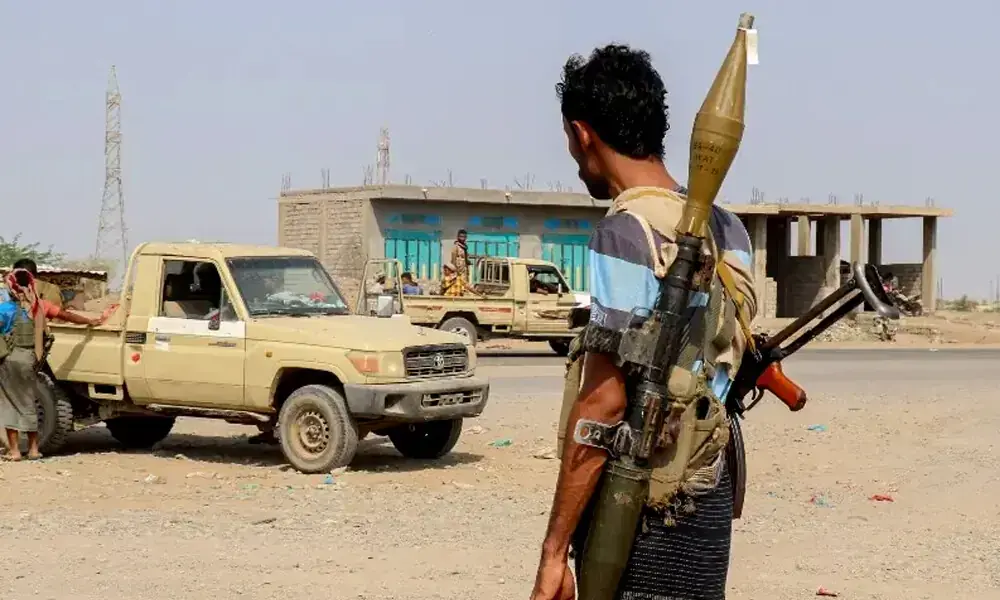
RIYADH: The Saudi-led military coalition fighting Yemen’s Houthi movement announced air strikes on the strategic Red Sea port of Hodeidah on Friday, November 20, 2026, as tensions escalated following Houthi attacks on Saudi Arabia and warnings of further strikes against the kingdom’s infrastructure.
The coalition said its operation targeted military capabilities allegedly used by the Houthis to transport weapons, ballistic missiles and other military equipment through the port.
The strikes followed a warning from Saudi-led forces urging civilians to evacuate the area ahead of the operation.
Hodeidah is one of Yemen’s most important maritime facilities and serves as a major entry point for food, fuel and humanitarian supplies destined for Houthi-controlled northern Yemen.
The latest military developments have intensified concerns about the country’s humanitarian situation and the potential disruption of commercial shipping in the Red Sea.
The escalation comes amid renewed fighting in Yemen, which has unfolded alongside the broader regional conflict involving Iran.
Saudi-Led Coalition Targets Hodeidah Port
According to the Saudi-led coalition, Friday’s operation was intended to destroy military infrastructure and logistical capabilities allegedly used by Houthi forces.
Coalition officials said the targeted facilities supported weapons smuggling and the transportation of ballistic missiles.
The coalition maintained that the strikes were directed at military capabilities rather than civilian port operations.
Yemen’s information minister said Hodeidah remained fully operational following the attack and that the movement of commercial goods would continue.
However, the immediate extent of damage to the port and surrounding facilities was not independently established in the supplied account.
The port’s importance to northern Yemen makes any disruption particularly sensitive.
Large sections of the population depend on imported food, fuel and essential supplies, while humanitarian organisations rely on functioning transportation networks to deliver assistance.
Further military activity around Hodeidah could therefore raise concerns about supply chains and humanitarian access.
Houthis Warn Airlines to Avoid Saudi Airspace
Following the coalition’s warnings and military operations, the Houthis threatened additional attacks against Saudi Arabia.
Houthi military spokesperson Yahya Saree issued a warning to international airlines, urging them to avoid Saudi airspace because of planned military operations.
He indicated that the group’s attacks could begin within hours.
Saree said the warning did not apply to airspace surrounding the Muslim holy cities of Makkah and Madina.
The statement raised concerns about potential disruptions to civilian aviation and international air travel.
The Houthis have previously targeted Saudi airports and other infrastructure during periods of intensified fighting.
The latest warning followed reports that the group had struck a major skyscraper in Riyadh on Thursday.
The incident added to concerns about the vulnerability of civilian and commercial infrastructure during the renewed conflict.
Houthi Movement Threatens Saudi Red Sea Ports
The Houthis also warned shipping companies and port workers to evacuate facilities along Saudi Arabia’s Red Sea coastline.
Saree urged employees and individuals near the ports to leave the areas immediately.
He also called on shipping operators to move their vessels away from the threatened facilities.
The warnings followed earlier Houthi statements threatening retaliation if Saudi-led forces attacked Hodeidah.
The group identified Saudi ports and energy infrastructure among its potential targets.
Such threats have implications for maritime security because the Red Sea is an important transportation route connecting international markets through the Suez Canal.
Disruptions affecting commercial ports, vessels or shipping routes could increase operational risks for maritime companies.
The immediate response of international shipping operators to the latest warnings was not detailed in the report.
Ballistic Missiles Intercepted Near Jazan
The Saudi-led coalition subsequently announced that its air defence systems had intercepted and destroyed two ballistic missiles launched towards Jazan province in southern Saudi Arabia.
Nikhil Gupta Sentenced to 19 Years in US Prison Over Sikh Separatist Murder Plot
According to the coalition, debris from the intercepted missiles fell in the Shuqaiq area.
The Houthis separately claimed to have attacked a power station in Shuqaiq and a port facility in Jazan.
The extent of any damage to the reported targets was not independently confirmed.
Shuqaiq is located along Saudi Arabia’s southwestern Red Sea coast and contains important infrastructure.
The Houthi claims and coalition statements reflect the continuing exchange of military operations between the two sides.
The coalition also announced additional operations in Yemen targeting Houthi missile and drone capabilities.
It said an operation had been conducted in the capital, Sanaa, while military activity in Saada and Taiz remained ongoing.
The coalition described the operations as part of efforts to reduce the Houthis’ ability to launch further attacks.
Yemen Conflict Intensifies Amid Wider Regional War
The latest escalation follows the resumption of major fighting in Yemen in July 2026.
The renewed hostilities have taken place alongside the wider conflict involving Iran and US-led military operations in the region.
According to the report, Houthi forces have made territorial advances in Yemen, capturing areas previously controlled by the internationally recognised government and allied groups.
Saudi Arabia has continued supporting forces aligned with Yemen’s internationally recognised government.
The kingdom has conducted air strikes against Houthi positions while the group has launched attacks against Saudi oil facilities, airports and commercial buildings.
The exchange of attacks has increased pressure on civilian infrastructure and raised concerns about the wider regional consequences of the conflict.
Saudi Arabia has been involved in Yemen’s civil war for more than a decade.
The conflict reached a prolonged military stalemate in 2022, but renewed fighting in 2026 has intensified instability.
Riyadh Airport Attacks Disrupt International Travel
The report also highlighted the effects of earlier Houthi strikes on Saudi Arabia’s transportation and commercial activities.
Attacks on Riyadh’s main airport in October reportedly caused fatalities and led to the cancellation of most international flights.
The security situation has also affected the kingdom’s plans to host major international events.
According to the supplied report, Saudi Arabia postponed or cancelled several high-profile events, including football’s AFC Asian Cup.
These disruptions demonstrate how the conflict has extended beyond military installations to affect transportation, tourism and international activities.
The latest warnings against Saudi airspace could create further uncertainty for airlines operating in the region.
However, the report did not establish whether additional flight restrictions or cancellations had been introduced following Friday’s threats.
Houthis Advance Along Yemen’s Red Sea Coast
The renewed conflict has also altered territorial control inside Yemen.
According to the report, Houthi forces have expanded their presence along the country’s Red Sea coastline.
Saudi-backed forces aligned with the internationally recognised government reportedly withdrew from several positions over the weekend to strengthen defences around Aden.
Aden serves as the temporary capital of Yemen’s internationally recognised government.
The reported territorial changes could affect the military balance between the Houthis and government-aligned forces.
They also increase the strategic importance of coastal facilities and transportation routes.
Control of ports and coastal territory can influence military logistics, commercial shipping and access to humanitarian supplies.
Humanitarian and Maritime Security Concerns Grow
The renewed fighting has intensified concerns about Yemen’s humanitarian situation.
Years of conflict have damaged infrastructure, disrupted economic activity and left large sections of the population dependent on humanitarian assistance.
Military operations around ports and transportation facilities carry particular risks because these locations support the delivery of essential goods.
Although Yemeni officials said Hodeidah remained operational after Friday’s strikes, continued attacks could threaten the reliability of supply routes.
The exchange of threats involving Saudi ports and civilian aviation also raises concerns about the possibility of further regional disruption.
For international shipping companies, security conditions in the Red Sea remain an important operational consideration.
For Saudi Arabia, attacks targeting airports, energy infrastructure and commercial facilities present additional security and economic challenges.
The latest escalation highlights the difficulty of containing the Yemen conflict while wider regional hostilities continue.
With the Saudi-led coalition conducting operations against Houthi positions and the Houthis threatening further attacks, the immediate outlook remains uncertain.
The situation will depend on subsequent military developments, the effectiveness of defensive operations and any diplomatic efforts aimed at reducing hostilities.
For now, the strikes on Hodeidah and the threats against Saudi infrastructure mark another serious escalation in a conflict that continues to affect Yemen’s civilian population and regional security.
You may also like
-
Trump Executive Order Restricts Federal Contractors From Sharing Information With Congress
-
Autonomous Weapons Regulation: UN Talks End Without Binding Agreement on ‘Killer Robots’
-
Nikhil Gupta Sentenced to 19 Years in US Prison Over Sikh Separatist Murder Plot
-
Global Energy Crisis: IEA Warns Middle East Conflict Poses Historic Threat to Energy Security
-
Nuclear Arms Control: Trump Says Agreement With China and Russia Will Be Difficult Despite Talks