
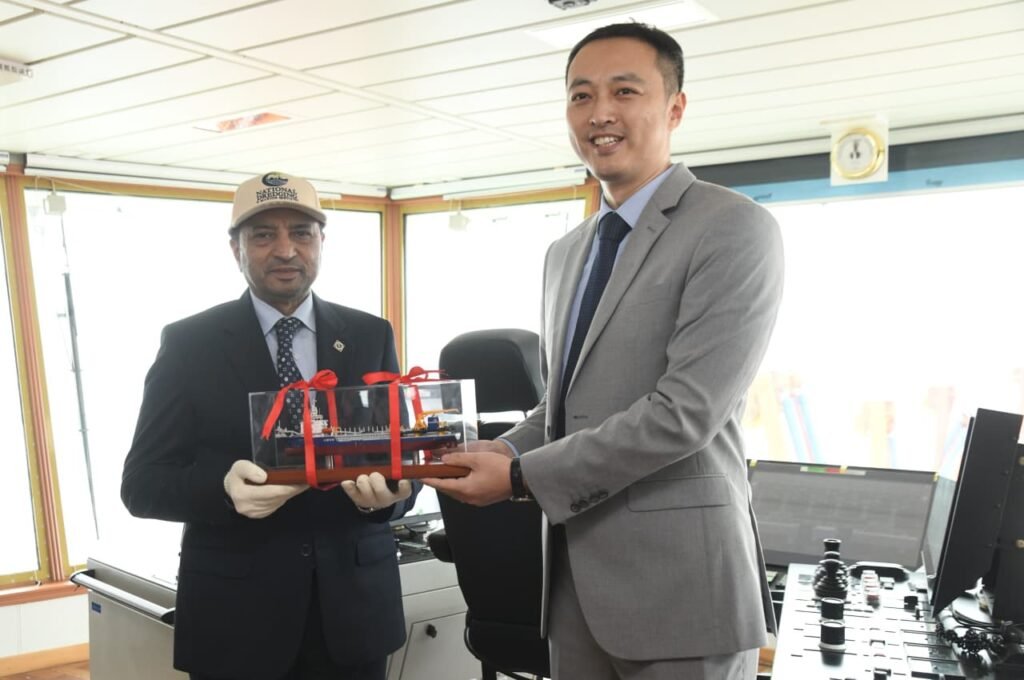
Pakistan has taken a potentially important step toward strengthening its maritime economy as NDMS dredging operations officially begin at Karachi Port. The initiative is designed to maintain the required depth of the port’s navigation channels and improve access for larger commercial vessels.
The development comes at a time when Pakistan is seeking to increase port activity, attract international shipping and reduce the cost of maritime trade. However, the real economic impact of the project will depend on whether the new national dredging capability can deliver consistent performance, competitive costs and timely maintenance.
The National Dredging and Marine Services, or NDMS, is a joint venture involving the National Logistics Corporation, Karachi Port, Port Qasim and Gwadar Port. Its establishment follows recommendations from the Prime Minister’s Task Force on Maritime Reforms, with the broader objective of developing domestic capacity in dredging and marine services.
Karachi Port Dredging Could Open the Door to Larger Ships
Under the new project, NDMS will conduct dredging in the Karachi Harbour Approach Channel, Tipu Sultan Channel and South Wharf Basin.
Dredging is critical for a commercial port because sediment accumulation can gradually reduce the depth of navigation channels. If channels become too shallow, larger vessels may face restrictions, forcing them to reduce their cargo loads or use alternative ports.
The authorities believe that maintaining adequate channel depth at Karachi Port will enable larger ships to reach the port more efficiently. This could increase cargo-handling capacity and potentially strengthen Karachi’s position as a major regional trade gateway.
The economic argument is significant. More efficient access for larger vessels could reduce shipping inefficiencies, support higher cargo volumes and help Pakistan conserve foreign exchange by developing greater domestic capability in a strategically important maritime service.
NDMS Dredging Operations Already Expanded to Port Qasim
The Karachi Port project is not NDMS’s first operational assignment. The organization reportedly began dredging at Port Qasim in May this year.
The expansion to Karachi Port therefore signals an attempt to move beyond the traditional dependence on external contractors for specialized dredging work. If NDMS successfully develops sufficient technical expertise, equipment and operational capacity, Pakistan could eventually retain more maritime service expenditure within the country.
But this is also where the government’s claims deserve closer scrutiny.
Establishing a national dredging company is only the first step. The bigger question is whether NDMS can compete with established international dredging companies on cost, technology, efficiency and project delivery. Without transparent performance benchmarks, savings and operational improvements cannot simply be assumed.
Why Karachi Port Dredging Matters for Pakistan’s Trade
The formal launch ceremony for the Karachi project also included the signing of a dredging agreement between NDMS and the Karachi Port Trust.
The project’s immediate objective is straightforward: maintain the required depth of Karachi Port’s maritime routes. Its wider implications, however, could extend across Pakistan’s logistics and trade sectors.
A deeper and properly maintained navigation channel can improve the port’s ability to handle larger vessels. Greater vessel capacity can support higher cargo volumes and potentially improve the economics of importing and exporting goods.
For Pakistan, where maritime trade carries a substantial share of international commerce, even modest improvements in port efficiency can have consequences for businesses, consumers and foreign exchange flows.
The Missing Numbers Behind the Maritime Ambition
The launch of NDMS dredging operations is being presented as a major achievement for Pakistan’s maritime sector, but the government and port authorities should provide more measurable information.
How much will the project cost? How much foreign exchange is expected to be saved? What additional vessel capacity will Karachi Port gain? What is the targeted dredging volume and completion timeline? Most importantly, how will NDMS performance be measured against international contractors?
These questions matter because maritime infrastructure projects can consume substantial public resources. A national capability should not be judged merely by its establishment. It should be judged by whether it delivers cheaper, faster and more reliable services.
If NDMS can meet these benchmarks, Karachi Port’s dredging project could become an important foundation for a stronger domestic maritime services industry. If not, the initiative risks becoming another institutional expansion without delivering the efficiency gains Pakistan’s trade sector urgently needs.
NDMS Dredging Operations Could Strengthen Pakistan’s Maritime Future
The beginning of dredging at Karachi Port is nevertheless a significant development. Combined with the earlier operation at Port Qasim, it indicates that Pakistan is attempting to build domestic expertise in a sector that directly affects port efficiency and international trade.
The real test begins now. Successful NDMS dredging operations could improve vessel access, support larger ships, increase port activity and reduce reliance on foreign service providers.
For Pakistan’s maritime economy, the opportunity is substantial. But turning that opportunity into measurable economic gains will require transparency, professional management, modern equipment and strict performance accountability.