
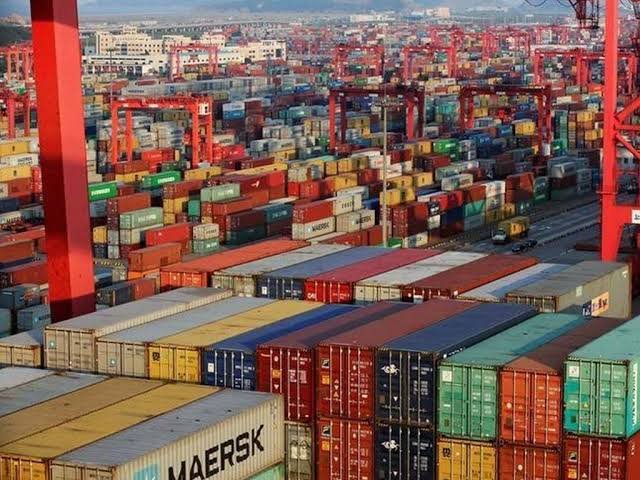
Karachi: Pakistan Customs is planning to rely more heavily on newly installed scanning facilities to reduce physical examination of cargo and speed up clearance at Karachi’s terminals.
Chief Collector Customs Appraisement Wajid Ali, speaking at an interactive meeting with the Karachi Chamber of Commerce & Industry (KCCI), said scanners were specifically installed to minimise unnecessary physical inspections. Customs is coordinating with the Federal Board of Revenue (FBR) to ensure cargo is not subjected to repeated examinations where scanning facilities are available.
Focus on Faster Cargo Clearance
Wajid Ali said Customs would strengthen risk-management mechanisms to prevent cargo backlogs, particularly at the Karachi International Container Terminal (KICT).
He stressed that closer coordination between Customs, terminal operators and the business community would be essential to improve cargo movement and reduce clearance delays.
According to the Chief Collector, regular engagement with businesses helps authorities identify practical problems that may not become apparent through internal meetings or official directives.
He added that resolving genuine operational issues quickly would benefit businesses while also improving clearance times, revenue collection and overall trade facilitation.
Customs Considers Defined Processing Timelines
The meeting also discussed the need for clearly defined timelines and measurable performance benchmarks for Customs procedures.
Wajid Ali acknowledged that businesses are generally required to meet statutory deadlines, while corresponding timelines are not always established for processes where companies are waiting for action from Customs.
He agreed that introducing clearer timelines should be considered at the policy level and could provide businesses with greater predictability.
ADR Mechanism to Be Strengthened
On the Alternative Dispute Resolution Committee (ADRC), Wajid Ali said amendments had been made to the relevant law and that a broader committee had been constituted under the leadership of a retired judge.
The committee includes representatives from both Customs and the business community.
He emphasised the need to make the mechanism fully operational so that disputes can be resolved more quickly and businesses can avoid lengthy litigation.
Business Community Calls for More Automation
Former KCCI President Zubair Motiwala welcomed the Customs leadership’s responsiveness but stressed that greater automation and clearly defined timelines were necessary to remove remaining bottlenecks.
He particularly called for modernising the duty-calculation process, arguing that routine calculations should be handled through automated systems instead of requiring repeated approvals and unnecessary human intervention.
According to Motiwala, greater automation could reduce processing times, minimise human errors and give businesses more certainty.
He also welcomed the Green Channel mechanism and urged Customs to further expand technology-based facilitation for compliant businesses.
KCCI Seeks More Customs Officers
KCCI President Rehan Hanif also called for an increase in the number of Additional Collectors of Customs (ADCs).
He said the shortage of ADCs was increasing the workload on existing officers and sometimes required businesses to approach senior officials for matters that could otherwise be handled at the ADC level.
Hanif also suggested that examination assignments should be completed without unnecessary disruption when Customs officers are transferred or rotated.
He proposed that once an examination is assigned, it should preferably be completed by the same officer or formally handed over to another officer to maintain continuity.
More Transparency in Classification Decisions
KCCI also urged Customs to upload Classification Committee decisions online on a timely basis.
Making these decisions readily available could improve transparency and provide businesses with greater certainty when determining the appropriate classification of imported goods.
The chamber also called for the ADRC to become fully operational with suitable representation from Customs and the business community.
Calls to Restore Small-Vessel Export Operations
Rehan Hanif further requested reconsideration of the discontinuation of small-vessel and launch operations for exports.
He argued that such vessels could provide an alternative logistics channel during potential regional disruptions affecting conventional maritime operations.
The discussions reflect a broader push by Pakistan’s business community for greater automation, faster customs clearance, predictable procedures and technology-driven trade facilitation at Karachi’s major terminals.