
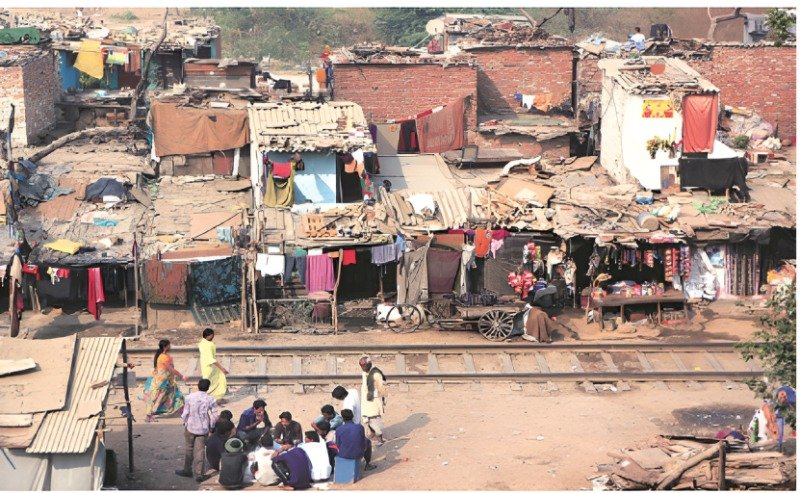
Pakistan’s poverty rate has risen to 28.9 percent in 2024-25, reversing earlier progress and highlighting the challenges facing household incomes, employment and public investment. The increase marks a reversal of the decline recorded over the previous decade, as economic disruptions and natural disasters have placed additional pressure on vulnerable communities.
READ MORE: https://theboardroompk.com/ccp-approves-citi-pharmas-acquisition-of-pakheim-international-pharma/
Monetary poverty fell from 29.5 percent in 2013-14 to 24.3 percent in 2015-16 and 21.9 percent in 2018-19 before climbing again.
Economic Disruptions Contribute to Rising Poverty
Planning Minister Ahsan Iqbal attributed the reversal to political instability, repeated disruptions in development policies, economic crises, the Covid-19 pandemic and severe flooding. According to the minister, these factors weakened job creation and constrained public investment in education, healthcare and infrastructure.
Economic growth of just 2 percent in the April-June quarter remained below the population growth rate of 2.6 percent. This gap limits the potential for per capita income improvements and makes it harder for households to keep pace with rising living costs.
The figures highlight the importance of sustained economic expansion that generates employment and improves household purchasing power.
Development Spending Faces Mounting Pressure
The federal Public Sector Development Programme (PSDP) allocation remains close to Rs1 trillion for 2026-27. In 2017-18, an allocation of the same nominal amount represented 19.6 percent of the federal budget and 2.5 percent of gross domestic product.
Maintaining that historical share today would require development spending of more than Rs3 trillion, illustrating how inflation and population growth have reduced the real capacity of public investment.
Iqbal has described the current stabilisation phase as “borrowed and stunted.” He has urged the prime minister to prioritise policies that encourage investment and employment, arguing that economic growth must consistently exceed population growth to support meaningful poverty reduction.
Government Reviews Multidimensional Poverty Measurement
Alongside the rise in monetary poverty, the government is reviewing Pakistan’s Multidimensional Poverty Index (MPI) in collaboration with the University of Oxford’s Oxford Poverty and Human Development Initiative.
Officials are considering whether the revised framework should include additional indicators covering climate vulnerability, gender inequality, digital exclusion, youth deprivation, nutrition, stunting, insecurity, early childhood development and migration.
The updated assessment will draw on the ongoing Pakistan Social and Living Standards Measurement Survey 2026-27. Officials will need reliable data and credible measurement methods to determine whether the proposed indicators can be incorporated into the index.
A broader framework could help policymakers identify forms of deprivation that income-based measures alone may not fully capture.
Constituency-Level Poverty Estimates Under Consideration
Authorities are also considering poverty estimates for national and provincial assembly constituencies using data from the 2023 census. A pilot project could help identify development gaps at a more local level and guide resources towards underserved communities.
The proposed approach is intended to improve the targeting of development spending rather than evaluate individual legislators. The public release of constituency-level estimates remains under consideration.
Earlier multidimensional poverty assessments identified Pakistan’s 20 poorest districts: 11 in Balochistan, five in Sindh, three in Khyber Pakhtunkhwa and one in Punjab. These findings helped inform targeted federal spending.
Extending poverty analysis to constituency-level data could provide policymakers with more detailed information for allocating funds, provided the estimates are methodologically sound and suitable for local comparisons.
World Bank Highlights Pakistan’s Regional Poverty Burden
A World Bank report noted that Pakistan accounts for half of the poorest population across the Middle East, North Africa, Afghanistan and Pakistan region, underscoring the scale of the country’s poverty challenge.
The rise in the national poverty rate, alongside constraints on development spending and the gap between economic and population growth, has renewed attention on how poverty is measured and addressed.
The government’s review of the Multidimensional Poverty Index and potential constituency-level estimates could help identify vulnerable populations more precisely. However, translating improved measurement into poverty reduction will also depend on sustained investment, employment generation and policies that strengthen household incomes.
You may also like
-
PSO Other Expenses Jump 310% on Doubtful Debts
-
Government Plans Major Shift in LPG Pricing Formula
-
Qist Bazaar Celebrates Five Years of Advancing Retail and Financial Inclusion in Pakistan
-
JS Bank Reports 67% YoY Growth in Profit After Tax for 9M 2026
-
National Foods Margins Squeeze Sharply Amid Geopolitical Tensions