

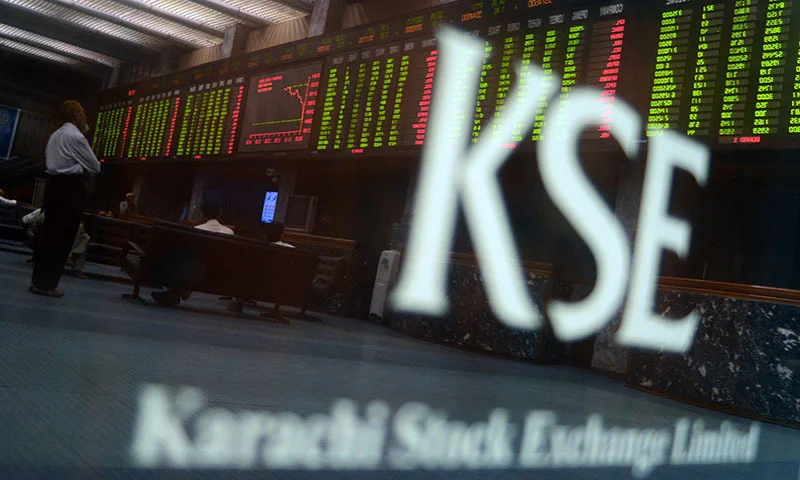
Pakistan’s benchmark KSE-100 Index closed at 177,383 points on Friday. It lost 1,223 points on Wednesday before recovering 1,088 points over the next two sessions.
According to AKD Research’s weekly market report issued on November 20, the index recorded a 0.3% weekly decline.
Average daily trading volume (ADTV) fell 21% week-on-week to one billion shares. The decline reflected weaker investor participation.
Political and Geopolitical Developments Weigh on Market Sentiment
Domestic political uncertainty remained a key concern for investors. Discussions surrounding a proposed referendum on new provinces also influenced market sentiment.
International developments added further pressure. These included continued exchanges between the United States and Iran. Houthi attacks on Saudi Arabia also attracted investor attention.
Meanwhile, the first trilateral summit involving the United States, Russia and China took place in Shenzhen.
Tom Brady Eyes Chelsea Investment Through Clearlake Capital
Global oil prices also moved lower during the week. Brent crude fell 5% week-on-week to $91.6 per barrel by Friday.
Expectations of a global supply surplus contributed to the decline. Crude shipments through the Strait of Hormuz also recovered towards pre-war levels.
Pakistan Records Current Account Surplus
Pakistan’s external account showed signs of improvement in October 2026. The country recorded a current account surplus of $39 million.
This compared with a deficit of $307 million in the same month last year.
Consequently, the cumulative current account deficit narrowed 20% year-on-year to $850 million during the first four months of FY27.
Foreign investment also recorded positive growth. Net foreign direct investment (FDI) increased 22% year-on-year to $936 million during July-October FY27.
Meanwhile, the State Bank of Pakistan’s foreign exchange reserves increased by $15 million week-on-week. Reserves reached $21.6 billion as of November 13.
The reserves provided import cover of approximately 3.1 months.
Fuel Prices and Industrial Activity Show Changes
The government reduced domestic fuel prices during the week. Petrol became cheaper by Rs9 per litre, while high-speed diesel declined by Rs5.
Following the adjustment, petrol stood at Rs323 per litre. Diesel prices reached Rs355 per litre.
Industrial activity also showed improvement. Large-scale manufacturing (LSM) output increased 2.5% year-on-year in September 2026.
During the first quarter of FY27, manufacturing output grew 2.1% compared with the same period last year.
Auto Financing Maintains Growth Momentum
Consumer auto financing continued its upward trend in October. Financing increased 32% year-on-year to Rs417 billion.
The latest increase marked the sector’s 23rd consecutive month of growth.
The fertiliser sector recorded mixed performance. Urea offtakes surged 39% year-on-year to 487,000 tonnes in October.
However, DAP offtakes declined 8% to 202,000 tonnes during the same month.
Power generation also recorded growth. Electricity production increased 9% year-on-year in October 2026.
KSE-100 Recovery Limits Weekly Losses
AKD Research attributed the market’s weekly performance to a combination of domestic political uncertainty and geopolitical developments.
Changing macroeconomic indicators also influenced investor behaviour.
Although the KSE-100 Index recovered most of its midweek losses, lower trading volumes highlighted continued caution among investors.
The benchmark ultimately closed at 177,383 points, recording a 0.3% decline for the week.
You may also like
-
NBP Inaugurates AI and Robotics Lab at Abbottabad Public School
-
IFC Plans $1.3 Billion Smart Meters Project Across Five Power Companies in Pakistan
-
FBR Makes Electronic Production Monitoring Mandatory for Leather and Paper Manufacturers
-
NEPRA Allows DESCO to Buy Electricity Directly From Lucky Cement
-
Ufone Telenor Xiaomi Partnership Aims to Accelerate 5G Smartphone Adoption in Pakistan