

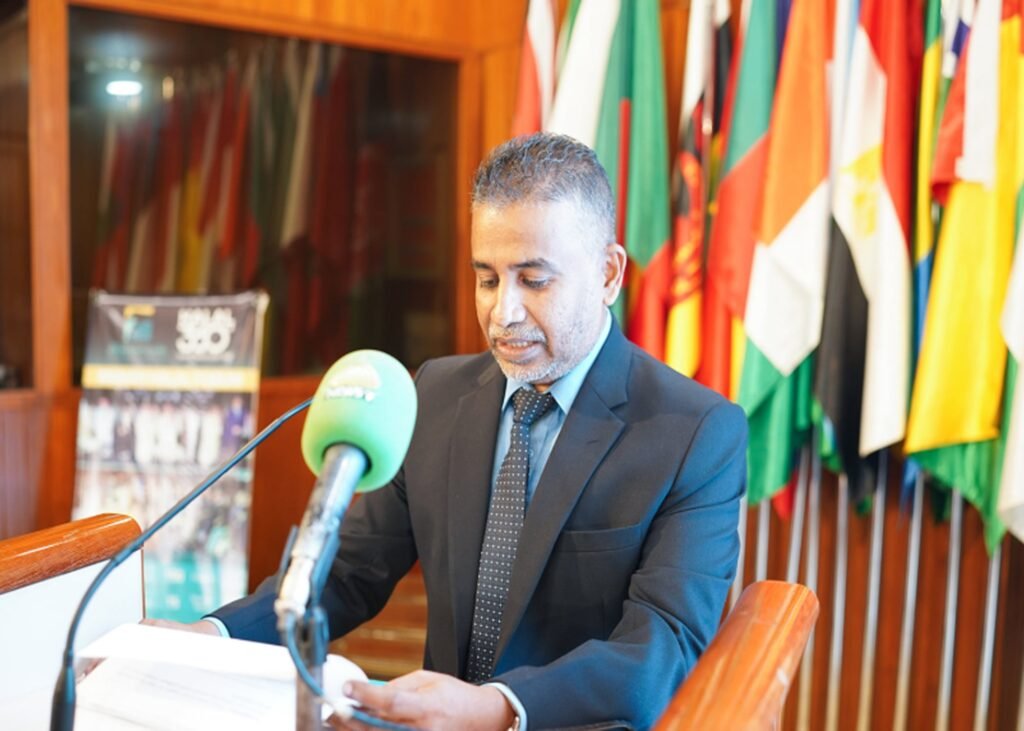
KARACHI: Sri Lanka has invited Pakistani exporters to expand their presence in its nearly $19 billion import market by taking greater advantage of the existing Free Trade Agreement (FTA), with opportunities identified in textiles, rice, cement, pharmaceuticals and other industrial sectors.
Sri Lankan Consul General Sanjeewa Pattiwilla made the remarks during a meeting with industrialists and business representatives at the SITE Association of Industry (SAI) in Karachi, where discussions focused on strengthening bilateral trade, attracting investment and addressing barriers affecting commercial relations.
The envoy said Pakistan and Sri Lanka maintained longstanding economic ties and possessed complementary strengths in several industries, particularly textiles, garments, construction materials and pharmaceuticals.
He highlighted the importance of preferential market access arrangements, including GSP and GSP+, in supporting export-oriented industries.
According to Pattiwilla, Pakistani woven fabrics have become an important raw material for Sri Lanka’s garment manufacturers, many of which export finished apparel to European markets.
He also noted that several Pakistani companies had already established manufacturing facilities in Sri Lanka, reflecting existing investment links between the two countries.
The consul general encouraged Pakistani businesses to explore additional opportunities in Sri Lanka’s industrial and consumer markets.
Agriculture was identified as another promising area for expanding bilateral trade.
Pattiwilla said Sri Lanka had permitted imports of up to 6,000 metric tonnes of rice from Pakistan, while Pakistani Basmati rice was gaining popularity among Sri Lankan consumers.
He explained that the Sri Lankan government issues rice import tenders every six months, creating recurring opportunities for Pakistani exporters.
The envoy urged businesses to monitor these tenders and strengthen their participation in the Sri Lankan market.
He also invited Pakistani entrepreneurs and investors to attend Sri Lanka Expo 2027, scheduled for January 2027.
The exhibition is expected to provide a platform for exploring commercial partnerships, investment opportunities and potential business collaborations.
Pattiwilla suggested that a Pakistani business delegation visit Sri Lanka to identify practical opportunities for increasing trade and investment.
He also highlighted growing commercial activity between Karachi and Colombo ports, emphasising the importance of maintaining trade flows in both directions.
Responding to a proposal from former SITE Association president Majyd Aziz, the consul general agreed to work towards facilitating cement imports from Pakistan.
The discussions also covered the longstanding defence relationship between Pakistan and Sri Lanka.
Pattiwilla appreciated the support extended by the Government of Pakistan and its armed forces, describing defence cooperation as an important component of bilateral relations.
AlphaX Brings Zero-Fee Crypto Trading to Pakistan
Earlier, SITE Association President Abdul Hadi welcomed the Sri Lankan consul general and emphasised the need to strengthen economic engagement between the two countries.
He noted that textiles accounted for a major share of bilateral trade and described Pakistan as Sri Lanka’s second-largest trading partner within the South Asian Association for Regional Cooperation (SAARC).
Hadi called for efforts to increase bilateral trade beyond $500 million, arguing that the existing relationship offered considerable potential for further expansion.
He said the SITE Association of Industry would continue facilitating engagement between Pakistani and Sri Lankan business communities.
The association president also proposed organising regular business exhibitions in both countries to encourage direct interaction between manufacturers, exporters and potential investors.
Such initiatives, he suggested, could help businesses identify new markets and develop long-term commercial partnerships.
Nadeem Polani, Chairman of the SITE Association’s Diplomatic Affairs Committee, raised concerns about difficulties faced by new Pakistani traders seeking to participate in Sri Lankan government tenders.
He urged both governments to address these challenges and improve access to procurement opportunities.
Polani also called for greater market access for Pakistani textile exporters.
He noted that high freight charges continued to increase costs for exporters despite the existence of the bilateral free trade agreement.
According to Polani, Pakistan was already exporting oranges, Basmati rice and engineering goods to Sri Lanka, providing a foundation for further diversification.
He stressed that reducing logistical costs and improving trading conditions could help increase export volumes.
Junaid-ur-Rehman, Convener of the committee, emphasised the importance of removing non-tariff barriers that restrict commercial activity between the two countries.
He highlighted Pakistan’s capabilities in textiles, surgical instruments and pharmaceuticals, identifying these industries as potential sources of additional exports.
He argued that improving market access for such products could help increase the overall volume of bilateral trade.
Junaid-ur-Rehman also proposed initiatives to encourage more Sri Lankan tourists to visit Pakistan, suggesting that tourism could provide another avenue for strengthening bilateral ties.
Former SITE Association president Majyd Aziz called for a review of the Pakistan-Sri Lanka Free Trade Agreement, which has been operational since June 2005.
He said the agreement should be revisited to improve its effectiveness and ensure that businesses in both countries could benefit more fully from preferential trading arrangements.
Aziz also proposed establishing a sister-port relationship between Colombo Port and Karachi Port or Port Qasim.
The proposed arrangement, modelled on sister-city partnerships, could encourage closer institutional cooperation between port authorities and support trade facilitation.
The meeting highlighted the importance of improving shipping connectivity, reducing freight costs and addressing regulatory challenges affecting bilateral commerce.
Participants agreed that the existing FTA provided a useful framework for trade but that additional measures were needed to translate available opportunities into stronger commercial activity.
Several other business representatives participated in the discussions, including SITE Association Vice President Sheheryar Salim Shah, All Pakistan Textile Processing Mills Association Chairman Muhammad Rizwan Lakhany, Ahmed Azeem Alvi, Muhammad Hussain Moosani and Aman Allawala.
The participants raised questions concerning trade opportunities and business challenges, which were addressed by the visiting consul general.
The SITE Association presented a commemorative shield to Pattiwilla in recognition of his visit.
Senior Vice President Muhammad Farhan Ashrafi delivered the vote of thanks.
The meeting concluded with renewed emphasis on expanding Pakistan-Sri Lanka trade through stronger private-sector engagement, improved market access and closer institutional cooperation.
While no specific new trade agreement or investment commitment was announced, the discussions identified several areas for follow-up, including rice exports, cement trade, textile market access and participation in business exhibitions.
The proposals to review the existing FTA and strengthen maritime connectivity could also become important considerations for future bilateral economic engagement.
With Sri Lanka offering access to a substantial import market, Pakistani exporters were encouraged to explore opportunities beyond traditional products and develop stronger commercial partnerships across a wider range of industries.
You may also like
-
PSX UNICEF Children’s Rights: Only 3% of Listed Firms Disclose Explicit Commitments, Report Finds
-
FBR Tax Administration: FPCCI Warns Sales and Income Tax Split Could Expand Informal Economy
-
AlphaX Brings Zero-Fee Crypto Trading to Pakistan
-
Emirates Tops TIME’s Inaugural World’s Best Airlines 2027 Rankings
-
Commerce Minister Jam Kamal Khan Calls for Stronger Trade and Investment Ties with South Africa