
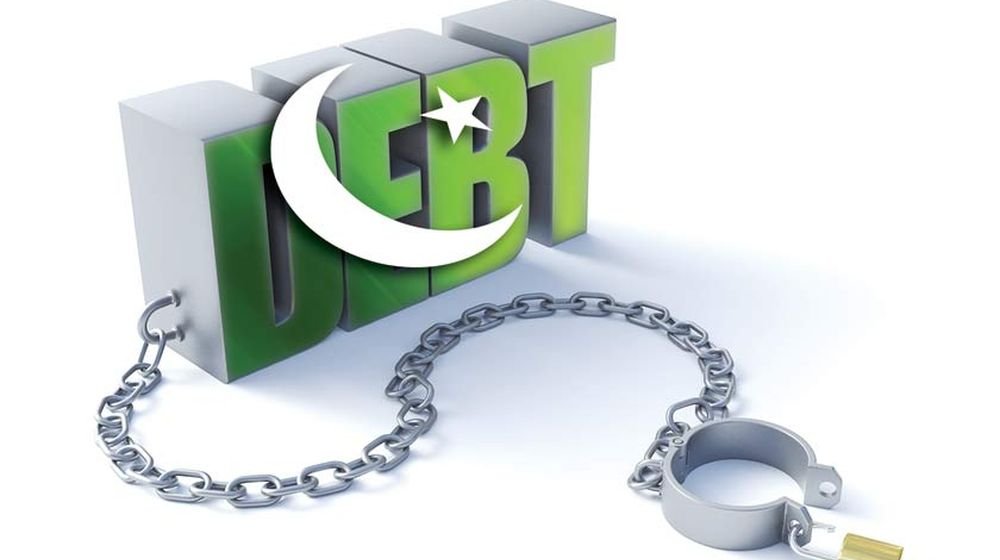
Pakistan’s total external debt increased by 4% to $135.11 billion at the end of 2025, with China accounting for $22.42 billion of its bilateral obligations, according to the World Bank’s International Debt Report 2026. The report also highlights significantly higher interest rates and shorter repayment periods attached to new borrowing commitments from private creditors compared with official lenders.
The report, which provides country-level external debt statistics for 2025, shows that Pakistan’s outstanding external liabilities have nearly doubled over the past decade, rising from $68.67 billion in 2015 to $135.11 billion in 2025.
Of the total, public and publicly guaranteed debt, including International Monetary Fund (IMF) credit and Special Drawing Rights (SDR) allocations, accounted for $107.08 billion. Private nonguaranteed debt stood at $17.58 billion, while short-term debt amounted to $10.45 billion. Public and publicly guaranteed obligations represented approximately 79% of the country’s total external debt.
The creditor-wise breakdown shows that multilateral institutions accounted for $56.83 billion of Pakistan’s public and publicly guaranteed debt, followed by bilateral creditors with $42.44 billion and private creditors with $7.81 billion.
China was the largest separately identified bilateral creditor, with outstanding obligations of $22.42 billion, equivalent to approximately 53% of Pakistan’s total bilateral debt recorded in the report. Another $8.17 billion was classified under multiple lenders, while $11.85 billion was owed to other bilateral creditors.
Among multilateral lenders, the World Bank’s International Development Association (IDA) accounted for $19.21 billion, while the Asian Development Bank held $16.83 billion in outstanding debt. A further $20.79 billion was owed to other multilateral creditors, bringing the total multilateral debt stock to $56.83 billion.
The report also highlights a significant gap between the borrowing terms offered by official creditors and those available from private lenders. New external borrowing commitments from official creditors carried an average interest rate of 3.6% in 2025, compared with 8.6% for commitments from private creditors.
Official financing commitments had an average maturity of 16 years and a grace period of four years. In contrast, private financing commitments had an average maturity of just three years and a grace period of one year. These figures reflect the terms of new borrowing commitments made during 2025, rather than the conditions attached to Pakistan’s entire outstanding external debt.
NBP Exchange Rates: National Bank of Pakistan Issues Friday Currency Bulletin
Pakistan’s external debt stock was equivalent to 34% of its gross national income (GNI) in 2025, with the World Bank reporting a 5.3% decline in this ratio compared with the previous year.
However, external debt remained more than three times the country’s annual exports, with the external debt-to-exports ratio standing at 324%, an increase of 3% in the report’s comparative measure. The debt service-to-exports ratio stood at 33%, reflecting principal and interest payments relative to export earnings, although the indicator declined by 16.1%.
Debt servicing as a proportion of gross national income was reported at 3%, down 22.9% in the comparative measure.
The World Bank classified Pakistan as a lower-middle-income economy and a blended borrower. The country had a population of 255.2 million and gross national income of approximately $398.21 billion, according to the report.
Pakistan’s figures form part of a broader assessment showing that external debt across low- and middle-income countries increased by 5.5% to a record $9.4 trillion in 2025, marking the largest annual increase since 2021.
The report found that borrowing costs remained particularly high for countries eligible for International Development Association financing. Average interest rates on new commitments from private creditors to these countries reached 8.2%, the highest level since the late 1980s.
Total debt service payments by low- and middle-income countries also increased for the fifth consecutive year, reaching $1.4 trillion in 2025.
Between 2022 and 2025, these countries paid approximately $436.1 billion more in debt servicing than they received in new financing. However, long-term debt transfers turned positive in 2025, recording a net inflow of $45.4 billion.
The World Bank further reported that the depreciation of the US dollar accounted for 28.2% of the increase in public and publicly guaranteed external debt across low- and middle-income countries in 2025, as liabilities denominated in other currencies rose in dollar terms.
You may also like
-
Shabbir Tiles, by House of Habib, grapples with weak tile demand, size shift and rising costs
-
Textile Processing Industry Faces Gas and Water Shortages and Rising Electricity Costs, Says Rizwan Lakhani
-
NBP Exchange Rates: National Bank of Pakistan Issues Friday Currency Bulletin
-
Gold Prices: Bullion Falls 1.1% as Oil Rebound Fuels Inflation Concerns
-
OIC Trade: Jam Kamal Calls for Stronger Economic Cooperation and Financing Access
1 thought on “Pakistan Debt: External Liabilities Rise 4% to $135.11 Billion, World Bank Reports”
Comments are closed.