
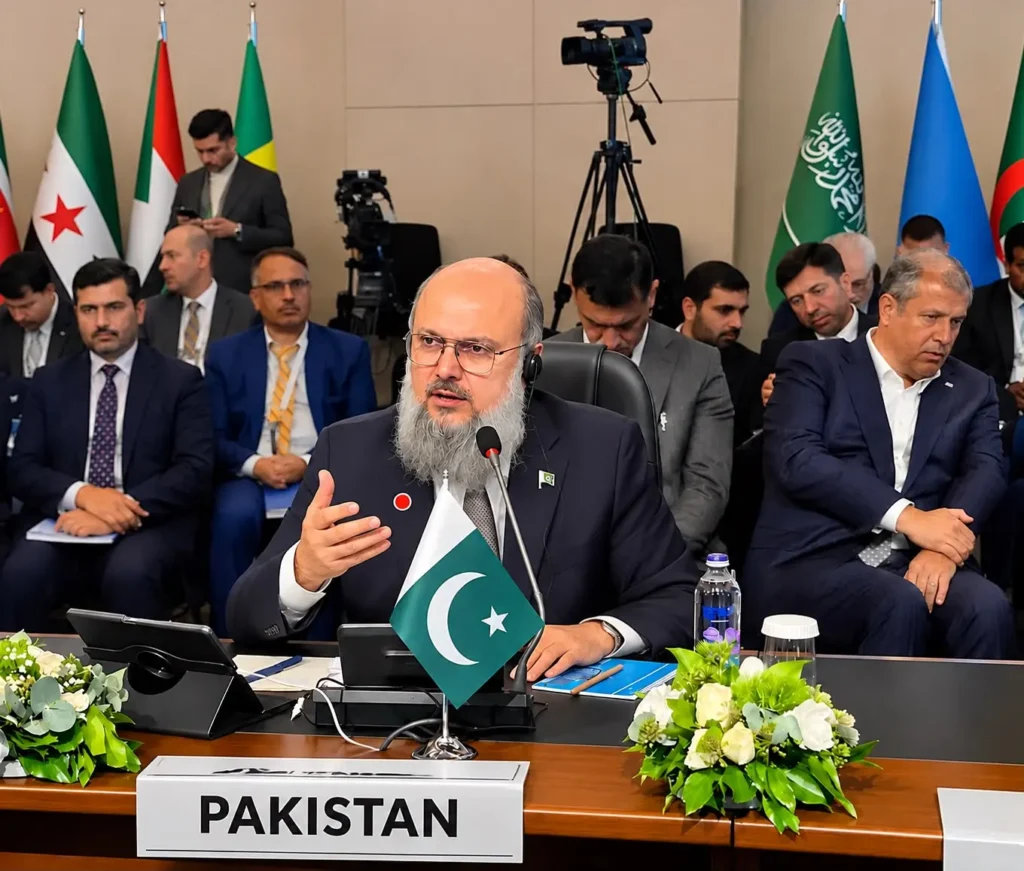
Federal Minister for Commerce Jam Kamal Khan has called for stronger economic solidarity among member states of the Organization of Islamic Cooperation (OIC), urging coordinated efforts to improve trade financing, expand intra-OIC trade and strengthen economic partnerships.
Speaking on behalf of OIC member states at the closing session of the 42nd Ministerial Session of the Standing Committee for Economic and Commercial Cooperation (COMCEC) in Istanbul, the minister highlighted the growing importance of collective action amid geopolitical tensions, supply chain disruptions, financial vulnerabilities and rising protectionism.
The high-level gathering was chaired by Vice-President of Türkiye Cevdet Yılmaz. Jam Kamal said OIC countries possessed significant economic potential, strategic geographical advantages, human resources and natural resources that could generate shared prosperity through stronger partnerships and coordinated policies.
He acknowledged that member states had made considerable progress in sustainable development, technological advancement and economic prosperity over the decades. However, he stressed that emerging global challenges required closer cooperation and practical solutions tailored to the circumstances of Islamic countries.
Reviewing the session’s discussions, the minister identified several priority areas for collective action, including intra-OIC trade, transport connectivity, sustainable tourism, agricultural productivity, food security, poverty alleviation and digital transformation.
He emphasised that affordable, diversified and sustainable trade financing was essential for improving export competitiveness, expanding international trade and accelerating economic growth. However, exporters, particularly micro, small and medium-sized enterprises (MSMEs), continued to face difficulties accessing suitable financing because of fragmented regulatory frameworks, high collateral requirements, transaction costs and lengthy administrative procedures.
To address these barriers, Jam Kamal outlined five priority areas for closer cooperation among OIC member states. These include strengthening and harmonising national legal, regulatory and supervisory frameworks to facilitate cross-border transactions and improve access to trade financing.
He also called for a wider range of financing instruments, stronger export credit guarantee mechanisms and innovative financial arrangements suited to exporters, particularly MSMEs and technology-driven enterprises.
Oil Prices: Crude Set for 12% Weekly Drop Despite Middle East Supply Risks
Highlighting the potential of Islamic finance, the minister urged member states to promote Shariah-compliant trade financing through stronger institutional capacity, risk-sharing arrangements, Islamic export credit insurance and closer cooperation among Islamic financial institutions.
Digital transformation was another key priority. Jam Kamal stressed the need to integrate customs and banking systems, expand electronic trade documentation and develop single-window platforms. These measures, he said, could reduce transaction costs, simplify procedures and improve the efficiency of cross-border trade.
The minister also called for better access to financing for MSMEs, particularly women- and youth-led businesses. He highlighted the importance of targeted financing facilities, credit guarantees, financial literacy programmes, technical assistance and stronger market connections.
He said implementing these measures within the national legal and regulatory frameworks of member states could strengthen export capacity and promote trade among OIC countries.
Jam Kamal urged COMCEC to continue helping member states turn policy recommendations into practical and measurable results through its project support mechanisms, analytical work and institutional cooperation.
He further described the private sector as a key partner in promoting investment, innovation, industrial development and employment, encouraging stronger engagement among business communities across OIC countries to unlock opportunities for trade, investment and joint economic initiatives.
On agriculture and food security, the minister called for greater cooperation in agricultural research, technology transfer, resilient food systems and investment in sustainable agricultural value chains. He said these efforts were important to addressing emerging challenges and strengthening long-term food security.
Concluding his remarks, Jam Kamal urged OIC member states to maintain close coordination, deepen partnerships and pursue practical initiatives that translate collective commitments into tangible economic and developmental benefits.
He expressed hope that the forthcoming 43rd COMCEC Session would build on the progress achieved and further advance the shared economic and development objectives of OIC member states.
You may also like
-
Shabbir Tiles, by House of Habib, grapples with weak tile demand, size shift and rising costs
-
Textile Processing Industry Faces Gas and Water Shortages and Rising Electricity Costs, Says Rizwan Lakhani
-
Pakistan Debt: External Liabilities Rise 4% to $135.11 Billion, World Bank Reports
-
NBP Exchange Rates: National Bank of Pakistan Issues Friday Currency Bulletin
-
Gold Prices: Bullion Falls 1.1% as Oil Rebound Fuels Inflation Concerns
1 thought on “OIC Trade: Jam Kamal Calls for Stronger Economic Cooperation and Financing Access”
Comments are closed.