

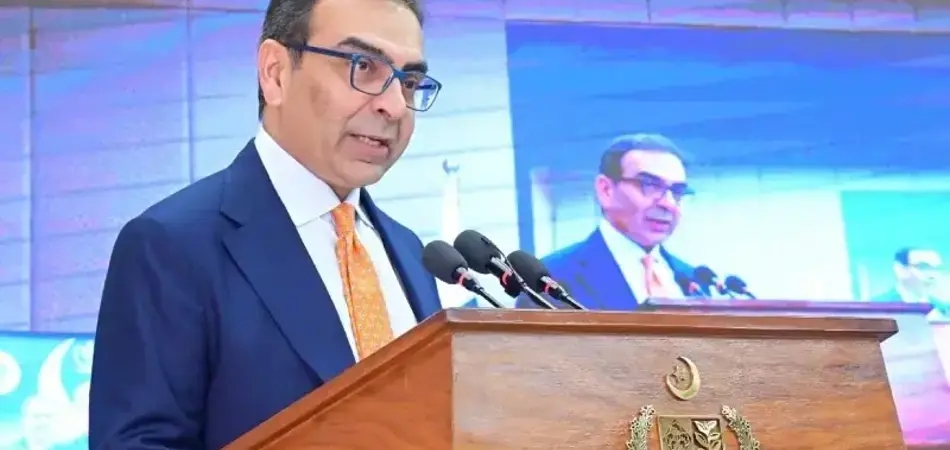
Pakistan is working on 17 major privatisation projects, including nine power distribution companies (DISCOs), three major airports, financial institutions and insurance businesses. Prime Minister’s Adviser on Privatisation and Privatisation Commission Chairman Muhammad Ali shared the details during a visit to the Korangi Association of Trade and Industry (KATI).
He said privatisation aims to improve the efficiency of public sector entities, reduce financial losses and make better use of national resources. It would also help ease the financial burden on the national exchequer.
Muhammad Ali said the government remained committed to a transparent, merit-based process that serves the national interest. He added that the process would protect institutional capacity, employees’ legitimate rights and public services.
DISCO Privatisation Bids Expected in 2027
Muhammad Ali said due diligence for the privatisation of Faisalabad Electric Supply Company (FESCO), Gujranwala Electric Power Company (GEPCO) and Islamabad Electric Supply Company (IESCO) was underway.
The government expects to invite bids in the first quarter of 2027. It will take up the privatisation of Hyderabad Electric Supply Company (HESCO) and Sukkur Electric Power Company (SEPCO) in later phases.
The government also aims to issue a Request for Proposals (RFP) in the same quarter for outsourcing operations at Islamabad International Airport.
He cited the privatisation of Pakistan International Airlines (PIA) and First Women Bank as examples of progress achieved through cooperation among stakeholders.
M-6 Motorway Sections Target $700 Million Investment
The Privatisation Commission chairman also outlined investment plans for two sections of the Hyderabad–Sukkur M-6 Motorway.
The Hyderabad–Tando Adam and Tando Adam–Nawabshah sections are expected to attract a combined investment of around $700 million. The government is structuring the projects under a 25-year concession model.
It has also proposed $156 million in viability gap funding for the first section.
Muhammad Ali said investors could assess risks and make decisions accordingly. However, he identified uncertainty in the business environment as the biggest obstacle to attracting investment.
He stressed that bidders for power distribution companies must receive clear information about future investment requirements and multi-year tariff arrangements.
Energy and Tax Reforms Key to Industrial Growth
Muhammad Ali said Pakistan needed fundamental reforms in the energy and taxation sectors to improve the competitiveness of its industries and businesses.
He described privatisation, market liberalisation, effective regulation and infrastructure investment as interconnected measures. Together, these steps could improve energy sector performance while protecting consumers.
He added that a fair and stable taxation system would give businesses greater confidence to plan long-term investments.
KATI Calls for Transparent Privatisation
Earlier, KATI President Sheikh Umer Rehan said privatisation should go beyond transferring public sector ownership to private investors.
He argued that the process should improve institutional efficiency, reduce losses, preserve national assets and strengthen the economy. He also called for transparency, merit-based decisions and protection of employees and public interests.
IG Sindh Orders Swift Action on Traders’ Complaints, Wrongful FIR in Larkana
Sheikh Umer Rehan credited Muhammad Ali with playing a key role in negotiations with Independent Power Producers (IPPs). He said revised power purchase agreements had helped prevent substantial future financial liabilities.
He put the estimated economic savings from these agreements at around Rs3,600 billion, describing the outcome as a major achievement.
The KATI president said Pakistan needed a strong industrial sector to build a resilient economy. He called for closer government and private sector cooperation to generate investment, increase production and exports, and create jobs.
He also urged the government to expand Public-Private Partnerships (PPPs) in Sindh. Potential areas include industrial infrastructure, roads, water supply, drainage, waste management, energy and transport.
Business Leaders Seek Pakistan Railways Freight Revival
KATI Deputy Patron-in-Chief Zubair Chhaya highlighted the financial difficulties facing Pakistan Railways. He said the suspension of freight services had caused losses for both the railway system and the wider economy.
He urged the government to restore freight operations so industrialists and exporters could transport goods at lower costs.
According to Chhaya, an operational freight network could also reduce diesel import expenses, ease road congestion and help prevent traffic accidents.
He suggested that the government could consider handing Pakistan Railways to private investors or industrialists. Their management expertise, he said, could help restore the institution’s financial performance.
Chhaya also stressed the importance of political stability, consistent policies and good governance in meeting privatisation targets. He said the current process showed greater professional involvement and practical progress.
KATI Stresses Independent Valuation and Oversight
KATI member Rehan Javed called for independent assessments of the assets, liabilities and market value of loss-making public sector entities before privatisation.
He said the government should select investors through open and competitive bidding. An effective monitoring system should also remain in place after the transfer of ownership to protect institutional performance, service quality and public interests.
Javed further proposed joint government and private sector projects to improve infrastructure in industrial areas. Better facilities, he said, could encourage investment, industrial activity and employment.
The meeting was attended by KATI office-bearers, former chairmen, industrialists and association members, including Deputy Patron-in-Chief Zubair Chhaya, Senior Vice President Farrukh Qandhari, Vice President Nasir Sheikh, former NEPRA chairman Tauseef H. Farooqi and other business representatives.
You may also like
-
Pakistan Oil Production Remains Flat as Gas Output Rises 6% Year-on-Year
-
Pakistan Seeks Stronger Trade and Investment Ties with Africa, Central Asia
-
PARCO Tax Return Delay Threatens Government’s Rs25 Billion Windfall Tax Plan
-
NHA Shortlists Three Bidders for 64.6km Hyderabad-Sukkur Motorway Section
-
Pakistan to Invite Bids for FESCO, GEPCO and IESCO Privatisation in Q1 2027