
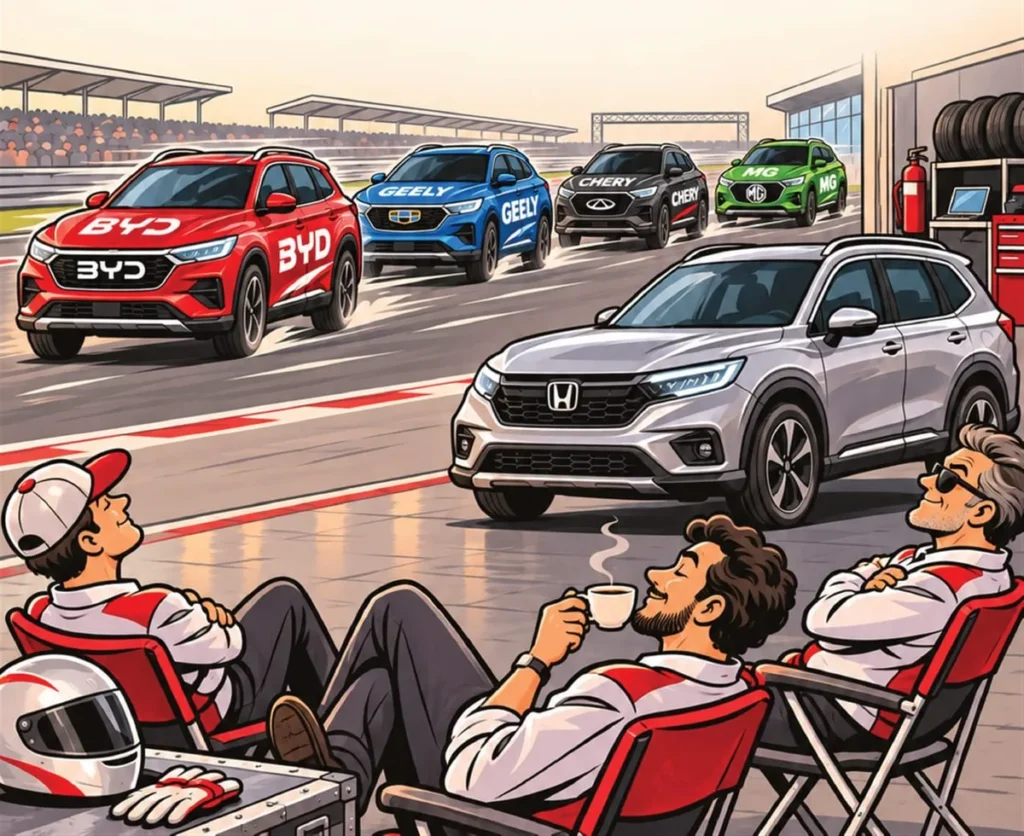
In 2016, Pakistan’s automobile sector was dominated by the Big Three: Honda, Toyota and Suzuki. The market was buzzing with the arrival of Honda’s Civic-X, a major launch at a time when new car models were relatively rare.
Back then, introducing a new generation of a popular vehicle was a significant event. Major automakers typically took three to five years or longer to introduce new models, creating considerable anticipation among buyers. With limited competition, new launches often generated strong demand and sold quickly.
Honda’s Civic-X was introduced partly in response to Toyota’s launch of the 11th-generation Corolla in 2014. Although Honda introduced another Civic generation in 2022, Toyota has continued with the same Corolla generation, relying mainly on facelifts and product updates.
For years, this approach worked for Pakistan’s established automakers. Limited model launches and relatively little competition allowed the Big Three to maintain their dominant positions.
However, Pakistan’s automotive landscape has changed considerably. South Korean manufacturers Kia and Hyundai have established successful operations, while the arrival of Chinese automakers has introduced an unprecedented level of competition.
Buyers now have access to a much wider selection of vehicles across different powertrain technologies, including internal combustion engines (ICE), hybrids, battery electric vehicles (EVs), range-extended electric vehicles (REEVs) and plug-in hybrids.
Currently, around 10 major groups are selling Chinese vehicles in Pakistan, with at least two more expected to enter the market. Together, these companies represent more than 20 brands, while reports suggest a similar number of additional models could be introduced over the next six months.
The intensity of competition has also pushed established South Korean-linked manufacturers to expand their portfolios through Chinese partnerships.
Nishat Group, through NextGen Auto, introduced Omoda and Jaecoo in August 2025. Meanwhile, Lucky Motor Corporation entered an official partnership with China’s Guangzhou Automobile Group (GAC), bringing its Aion and Hyptec brands to Pakistan.
Despite these developments, the response from Pakistan’s traditional Big Three has remained relatively limited.
Suzuki recently introduced the hybrid Fronx, while Toyota has relied on product updates and vehicles such as the Corolla Cross to maintain its market position. Honda Atlas Cars, meanwhile, has largely limited its recent passenger-car changes to minor updates to the City and Civic.
The lack of a more substantial product strategy has raised questions about Honda Atlas’s position in an increasingly competitive market. The company has yet to introduce a Chinese sub-brand or announce a comparable expansion into the growing range of new automotive technologies.
Gold Prices: Bullion Edges Higher After More Than One-Year Low
This raises an important question: has Honda Atlas decided that competing in Pakistan’s increasingly crowded automotive market is no longer worth the investment, or is the company waiting for market conditions to stabilise before making its next move?
Another possibility is that Honda is taking a cautious approach while assessing consumer demand, pricing pressures and the long-term sustainability of the growing number of Chinese automotive brands.
Whatever the reason, Pakistan’s automobile market is entering a new phase in which established brand recognition alone may no longer be enough. Product variety, technology, pricing and the ability to respond quickly to changing consumer preferences are becoming increasingly important.
For Honda Atlas, the challenge will be determining how to remain competitive as Chinese automakers continue to reshape the choices available to Pakistani car buyers.
You may also like
-
Peugeot 2008: Lucky Motor Suspends New Bookings Amid Shift to Hybrid Vehicles
-
Auto Policy: Pakistan’s New Plan Favours Car Owners, Leaves Majority Behind
-
Indus Motor Sales: Toyota Assembler Records 10% Decline in October
-
Pakistan Auto Policy Ghandhara Delays T9 Hunter PHEV Launch, Plans D-Max ADAS Upgrade
-
GM Settlement: $220 Million Deal Raises Questions Over Drivers’ Personal Data