
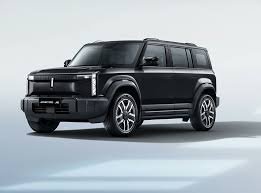
Pakistan’s electric vehicle market is preparing for another major milestone as Jaecoo J6 REEV Pakistan has officially been confirmed for launch in July 2026. After introducing the fully electric Jaecoo J6 EV to local customers, NexGen Auto is now bringing the country’s first Jaecoo Range-Extended Electric Vehicle (REEV), a move that could reshape consumer interest in long-distance electric mobility.
The announcement comes at a time when Pakistani motorists are increasingly looking for vehicles that combine lower running costs with the flexibility to travel long distances without worrying about charging infrastructure. The Jaecoo J6 REEV appears designed to address exactly that concern.
Jaecoo J6 REEV Pakistan Brings Extended Driving Freedom
Unlike a conventional electric vehicle, the Jaecoo J6 REEV Pakistan combines battery-powered driving with a petrol-powered range extender. This technology allows drivers to enjoy the benefits of electric mobility while significantly reducing the fear of running out of battery during longer journeys.
The SUV is equipped with a 33.67 kWh battery pack alongside a 1.5-litre petrol engine that functions as a generator to recharge the battery rather than directly powering the wheels. This setup enables the vehicle to deliver 252 horsepower and 300 Nm of torque through a rear-wheel-drive system, offering strong performance while maintaining energy efficiency.
Impressive Driving Range Could Appeal to Pakistani Buyers
One of the biggest attractions of the Jaecoo J6 REEV Pakistan is its claimed driving range.
According to available specifications based on NEDC testing standards, the SUV can travel up to 190 kilometres solely on electric power. Once the range extender is utilized, the combined driving range reaches approximately 800 kilometres.
For many Pakistani consumers, this combination could eliminate one of the biggest obstacles to EV adoption—range anxiety. Drivers would be able to complete daily urban commutes using electricity while relying on the petrol-powered range extender for longer highway trips.
This dual capability may prove particularly attractive in cities where charging infrastructure continues to develop.
NexGen Auto Strengthens Its Electric Vehicle Portfolio
The arrival of the Jaecoo J6 REEV Pakistan signals NexGen Auto’s growing commitment to expanding Pakistan’s electrified vehicle market.
With the fully electric Jaecoo J6 EV already available, introducing the REEV variant gives buyers another option depending on their driving habits and charging accessibility. The strategy reflects a broader global shift toward electrified mobility while addressing practical concerns specific to emerging markets.
Industry observers believe range-extended electric vehicles could serve as an important transition technology for countries where charging networks are still expanding.
Launch Scheduled for July 2026
NexGen Auto has confirmed that the Jaecoo J6 REEV Pakistan will officially launch in July 2026.
However, the company has not yet announced the exact launch date, booking schedule, or official pricing. These details are expected to be revealed closer to the market introduction.
Potential buyers and automotive enthusiasts are now closely watching for further announcements, particularly regarding pricing, warranty coverage, and booking availability, all of which are expected to influence the SUV’s competitiveness in Pakistan’s growing electric vehicle segment.
Can the Jaecoo J6 REEV Change Pakistan’s EV Market?
The introduction of the Jaecoo J6 REEV Pakistan could become one of the most significant automotive launches of 2026. By combining electric driving with extended range capability, the SUV offers a practical solution for consumers who want lower fuel costs without sacrificing long-distance convenience.
As competition intensifies in Pakistan’s electric vehicle sector, the success of the Jaecoo J6 REEV will likely depend on competitive pricing, after-sales support, and consumer confidence in emerging electrified technologies. If these factors align, the model could accelerate the country’s transition toward cleaner and more efficient transportation.