
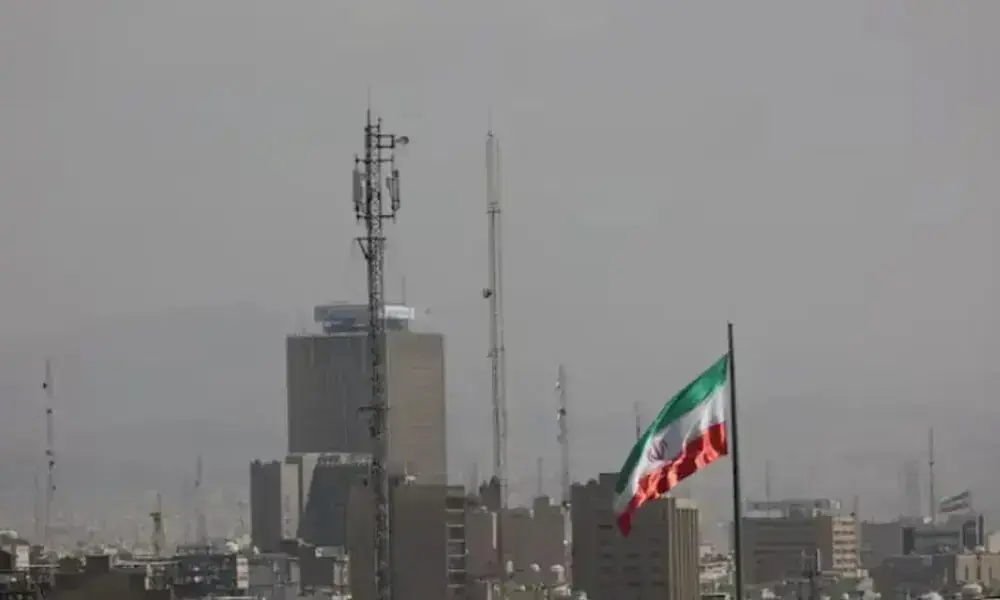
Iranian President Masoud Pezeshkian said on Tuesday that a return to war would benefit “no one”, following reports of US strikes on Qeshm island in the Strait of Hormuz.
The reported attacks came as the United States prepared for midterm elections. The vote was widely viewed as a test of President Donald Trump’s political standing amid public concerns over the war and rising inflation.
Iranian officials issued contrasting messages after the reported strikes. Chief negotiator Mohammad Bagher Ghalibaf said the country was ready for battle, while Deputy Foreign Minister Kazem Gharibabadi asserted Iran’s right to legitimate self-defence.
Pezeshkian, however, said his government remained committed to resolving the crisis through dialogue.
He also said Iran’s supreme leader had recently granted the government new powers to negotiate issues that were previously off-limits.
Reported US Strikes Target Qeshm Island
Reports by The Wall Street Journal, CNN, The New York Times and other media outlets said US forces struck Qeshm island in the Strait of Hormuz.
Unnamed US officials described the operations as defensive. The Wall Street Journal reported that the attacks were the latest in a series of undeclared strikes.
Iranian state news agency IRNA reported five explosions in quick succession on the island. Some residents also reported seeing two aircraft flying overhead.
US Central Command had not immediately responded to an AFP request for comment.
The US and Israel launched their war against Iran with a major wave of strikes in late February. The conflict has remained at a stalemate for months.
An Israeli military spokesperson told AFP that Israel was not involved in the latest reported strikes.
Trump Signals Possibility of an Agreement
The reported Qeshm strikes came hours after Trump indicated that an agreement with Iran could be possible.
“Iran wants a settlement, as soon as possible,” he wrote on his Truth Social platform.
Ghalibaf said Washington now had the opportunity to prevent further escalation.
“The ball is now in America’s court to prevent war,” he said during a televised speech.
He added that Iran remained prepared for confrontation but had also provided the US with what he described as a strong and rational response.
Qatar Continues Mediation Efforts
Qatar said it remained hopeful that Washington and Tehran could reach an interim agreement.
The Gulf state has been facilitating indirect negotiations between the two sides.
Foreign Ministry spokesman Majed Al Ansari said both parties remained committed to the process. He added that Doha was facilitating the exchange of proposals and that both sides were reviewing the ideas presented.
“We remain hopeful that there is still a chance for a deal to take place,” Al Ansari said.
Oil Prices Rise as Investors Assess Iran War Developments and US Midterm Results
Iranian Foreign Minister Abbas Araghchi also confirmed on Monday that indirect negotiations were underway.
He told state media that consultations had become intensive because of the seriousness of the situation.
US Vice President JD Vance said he and Trump remained optimistic about reaching an agreement.
“We’ve certainly made some progress. We’ll see if we can make some more,” Vance told reporters on Monday.
Iran Offers to Reopen Strait of Hormuz
A senior Iranian official said Tehran was prepared to reopen the Strait of Hormuz within two days, provided Washington accepted its longstanding demands.
The strait is a major route for international oil and gas shipments. Its disruption has raised concerns across global energy markets.
Iran proposed a seven-day plan in September to reopen the waterway. The conditions included ending the war on all fronts, unfreezing Iranian assets and lifting oil sanctions.
The proposal also called for an end to the counter-blockade of Iranian ports.
Foreign Ministry spokesman Esmaeil Baqaei said the possibility of implementing the plan within two days demonstrated Iran’s willingness to pursue an agreement.
Tehran Renews Warnings of Retaliation
Trump continued issuing warnings to Iran in the days before the US elections.
On Sunday, he said Washington might have to give Iran “the hammer” at an unspecified time.
On Saturday, he also said the United States still needed to “take care” of one or two targets. These included Pickaxe Mountain in central Iran, which is suspected of being a nuclear site.
Tehran denies that the location is a nuclear facility.
Iranian officials have repeatedly warned of wide-ranging retaliation if the United States resumes military operations.
Tensions were also reflected in a large billboard installed in central Tehran, according to AFP journalists.
The billboard displayed an image of Trump alongside the words: “We will kill Trump”.
The latest developments leave diplomatic efforts facing significant challenges. Both sides have indicated some willingness to negotiate, but military threats and disagreements over the terms of a settlement continue to complicate the process.
You may also like
-
Ukraine Attack: Russian Drone Strike Injures Three in Dnipro
-
South Korea: Government to Monitor US AI Policies and Tariff Changes After Midterms
-
US Democrats: Can They Deliver Lower Costs After Sweeping Midterm Victory?
-
JD Vance: Vice-President Blames Iran War for Republican Midterm Defeat
-
Trump Tariffs: Democrats’ Congress Victory Unlikely to Reverse Trade Policies
1 thought on “Iran Says It Seeks Dialogue as Reported US Strikes Raise Fears of Renewed War”
Comments are closed.