
Pakistan’s car market has expanded beyond the limited choices that dominated showrooms a decade ago. Since around 2018, new manufacturers and international brands have entered the market, giving buyers access to a wider range of vehicles.
Customers can now choose from Korean SUVs, Chinese plug-in hybrids, electric hatchbacks and brands that previously had little presence in Pakistan.
Lucky Motor Corporation lists 12 nameplates across Kia, Peugeot and its newer GAC partnership. BYD’s local partner offers five models, while Nishat lists 15 nameplates across Hyundai, Omoda, Jaecoo and iCAUR.
The growing number of brands has introduced a wider selection of vehicles into a relatively small market. More launches are also expected in the coming months.
New Vehicle Launches Expand Market Competition
Arif Habib Limited estimated in May that around 23 vehicles would enter the market between June and December 2026. The expected launches included nine electric vehicles and 11 plug-in hybrids.
Colgate-Palmolive Buys P&G Port Qasim Factory After Exit
However, the estimate covered new introductions and different versions of vehicles. It did not represent 23 entirely separate models.
The expanding pipeline reflects the growing presence of new energy vehicles and international manufacturers in Pakistan. It also points to a more competitive market, where buyers have more options across different vehicle categories.
Parts Manufacturers Face Volume Uncertainty
The growing choice presents a challenge for local automotive parts manufacturers.
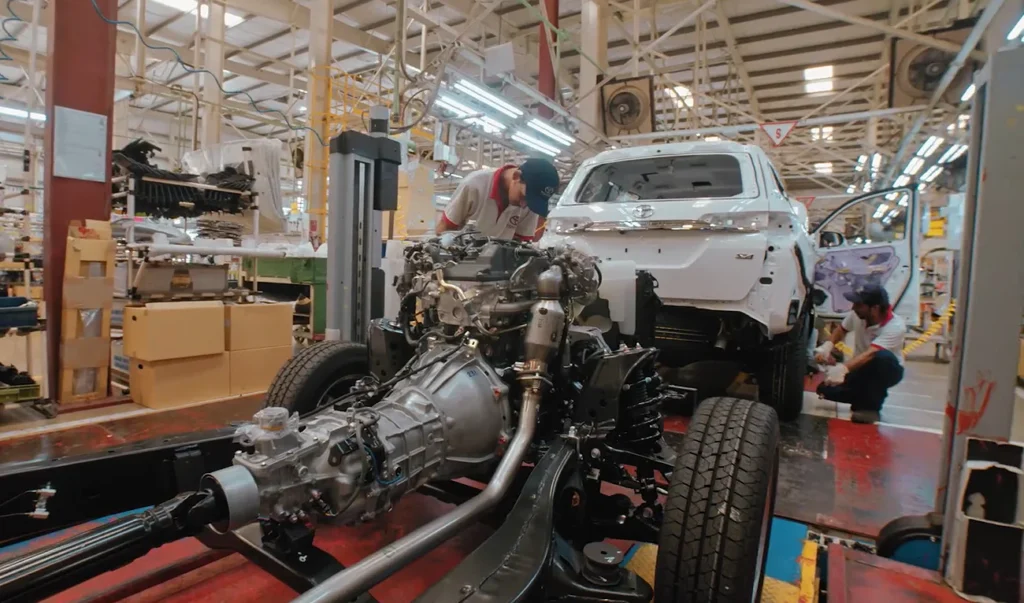
Producing components such as bumpers and wiring harnesses requires significant investment in tooling and manufacturing capacity. Suppliers need confidence that a vehicle model will sell enough units over several years to recover those costs.
Previously, a small number of dominant models generated relatively predictable demand. This allowed parts manufacturers to plan production and invest in local tooling with greater certainty.
The market has since become more fragmented. Demand is now spread across a larger number of nameplates, including electric and hybrid vehicles whose long-term sales prospects remain uncertain.
Parts suppliers must therefore assess which models are likely to achieve sustainable sales before committing resources to local production.
More Showroom Choices, but Localization Remains Uncertain
The arrival of new brands and vehicle technologies has given Pakistani buyers more choices than ever before. However, the expanding market has not necessarily made investment decisions easier for local suppliers.
The central question remains whether individual models can maintain sufficient sales volumes over several years.
Without that certainty, parts manufacturers may hesitate to invest in specialised tooling for newly launched vehicles.
As a result, Pakistan’s automotive market is becoming more diverse at the showroom level, while the future of local parts production continues to depend on which models establish lasting demand.
You may also like
-
Tesla Cybertruck Production to Slow in 2027 as Sales Fall Short of Targets
-
LEPAS L6 EV: Global Driving Tour Impresses International Automotive Ambassadors
-
Auto Parts Industry Faces Crisis Over New Energy Vehicle Policy
-
Nissan Rogue Hybrid: 2027 Model Delivers Strong Performance and Challenges Toyota and Honda
-
Pakistan Auto Policy Ghandhara Delays T9 Hunter PHEV Launch, Plans D-Max ADAS Upgrade
1 thought on “Pakistan’s Car Market Offers More Choice but Parts Localization Remains Uncertain”
Comments are closed.