
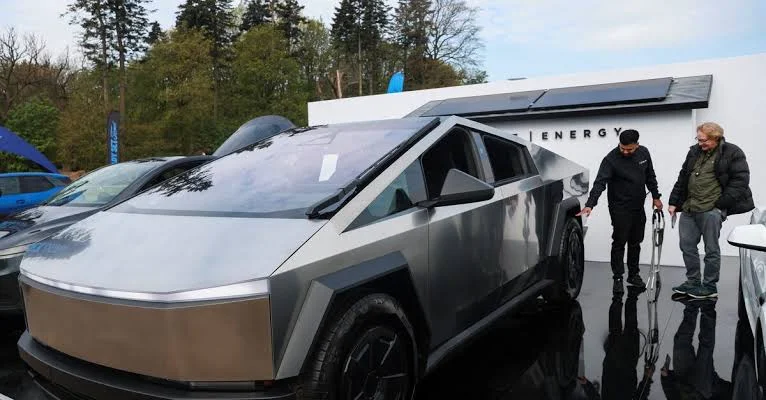
Tesla plans to scale back Cybertruck production at its Texas factory around mid-2027 as the electric vehicle maker prepares to increase production of its Cybercab robotaxi.
The move reflects the company’s growing focus on autonomous transportation as Cybertruck sales remain well below the ambitious targets set when the vehicle was unveiled.
Cybertruck Sales Fall Below Expectations
US Cybertruck sales reached 20,237 units in 2025, a 48% decline from the previous year, according to automotive industry data.
The figure remains far below the annual target of 250,000 units once projected when Tesla began developing the pickup. The company unveiled the Cybertruck in 2019 and started deliveries in late 2023.
The vehicle’s distinctive angular stainless-steel design attracted attention but also limited its appeal in some markets. Its unconventional exterior presented regulatory challenges in Europe, where pedestrian-impact requirements prevented its entry.
Former Aston Martin chief Andy Palmer said maintaining production of a vehicle that consistently misses its sales targets rarely makes commercial sense.
SECP Seeks Export Records from Seven Banks in SE Fruits IPO Probe
The Cybertruck has remained available in only a limited number of markets. Quality concerns and repeated recalls have also weighed on demand.
Tesla Shifts Production Capacity Towards Cybercab
Tesla CEO Elon Musk described the Cybertruck as the best vehicle the company has built and characterised the planned production reduction as the end of an era.
He said the change would free up manufacturing capacity for the Cybercab, Tesla’s autonomous taxi model. The vehicle features butterfly doors and does not include conventional driving controls.
Tesla began offering limited paid rides using a small Cybercab fleet in Austin earlier this year.
Cybertruck programme lead engineer Wes Morrill said the pickup had also served as a technology platform, with lessons from its development contributing to Tesla’s newer vehicles.
Future of Cybertruck Production Remains Uncertain
It remains unclear whether Tesla will continue manufacturing the Cybertruck at other facilities after reducing output in Texas.
The Texas factory is currently the only known production site equipped to manufacture the vehicle’s specialised components.
The planned shift highlights Tesla’s effort to prioritise autonomous vehicles and robotaxi services as it reassesses conventional models that have struggled to achieve their expected sales volumes.
You may also like
-
LEPAS L6 EV: Global Driving Tour Impresses International Automotive Ambassadors
-
Auto Parts Industry Faces Crisis Over New Energy Vehicle Policy
-
Nissan Rogue Hybrid: 2027 Model Delivers Strong Performance and Challenges Toyota and Honda
-
Pakistan Auto Policy Ghandhara Delays T9 Hunter PHEV Launch, Plans D-Max ADAS Upgrade
-
GM Settlement: $220 Million Deal Raises Questions Over Drivers’ Personal Data