
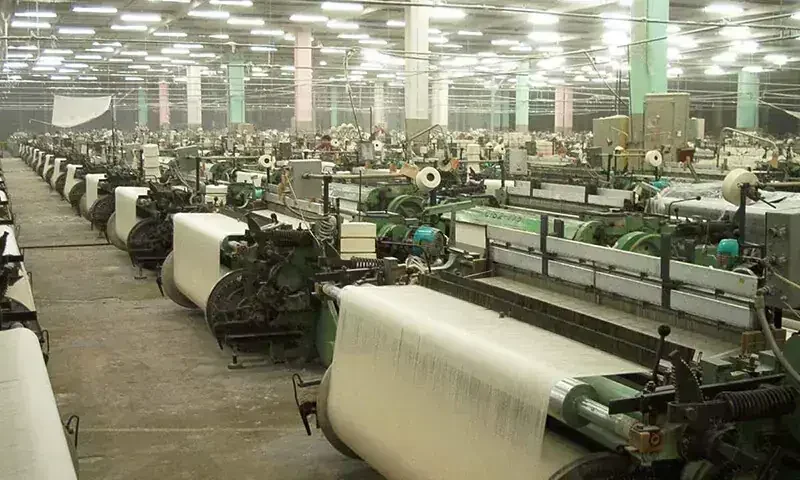
Pakistan’s textile exports recorded marginal growth of 0.3% in fiscal year 2025-26, down sharply from 7.4% in the previous year. Weak international demand, declining unit values and higher freight and insurance costs weighed on export performance.
The State Bank of Pakistan’s (SBP) Governor’s Annual Report 2025-26 said exports remained subdued across several major textile categories. Cotton cloth, knitwear, bedwear and towels all recorded contractions.
Readymade garment export growth also slowed to 3.9% from 15.9% a year earlier.
The slowdown reflects mounting pressure on Pakistan’s largest export-oriented industry as international competition, supply-chain disruptions and weaker global demand constrain export earnings.
Lower Unit Values and Weak Demand Weigh on Exports
The SBP attributed the weak performance to limited growth in export volumes and declining realised unit values.
Lower global cotton prices reduced unit values across most major textile products. Meanwhile, softer demand in the United States and higher freight and insurance costs particularly affected bedwear and towel exports.
Finland-Pakistan Business Summit 2026 Aims to Open New Avenues for Business Cooperation
Performance varied across individual textile categories, with cotton yarn exports recording growth despite weakness in downstream products.
Cotton Yarn Exports Rise 12.4%
Cotton yarn exports increased by 12.4% during FY26, reversing the contraction recorded in the previous year.
According to the SBP, weaker demand from apparel and home-textile exporters encouraged yarn producers to focus more on international markets.
However, this growth contrasted with declining exports of value-added products, including knitwear, bedwear and towels.
The divergence highlights the uneven performance of the textile value chain, with upstream yarn exports performing better than several downstream categories.
Overall Goods Exports Fall 6%
The textile slowdown contributed to a broader decline in Pakistan’s goods exports.
Overall exports fell 6% during FY26, marking the sharpest decline since FY23. The SBP cited sluggish global demand, lower unit values, US reciprocal tariffs, geopolitical tensions and regional trade disruptions as key factors.
Non-textile exports also recorded a significant decline, mainly because food exports fell by nearly 30%.
Rice exports dropped to $2.3 billion from $3.4 billion in FY25, reflecting stronger competition in international markets.
Export Competitiveness Remains a Challenge
The SBP report also highlighted weaker lending to major export-oriented sectors, including textiles and wearing apparel, amid slowing export activity.
The subdued performance raises concerns about Pakistan’s ability to maintain its position in international textile markets. Competing exporters are seeking to attract buyers through competitive pricing, product diversification and more efficient supply chains.
The contrast between rising cotton yarn exports and stagnating value-added textile categories also highlights the need to strengthen downstream production.
Improving the competitiveness of higher-value products remains important for expanding export earnings and strengthening Pakistan’s position in global textile markets.
You may also like
-
Pakistan’s Export Decline Reaches Six-Year Low Despite Currency Stability
-
Pakistan’s Fiscal Stability Masks Weak Revenue Mobilisation
-
Finland-Pakistan Business Summit 2026 Aims to Open New Avenues for Business Cooperation
-
Pakistan’s Banking Sector Channels 63.3% of Assets to Government, Raising Concerns Over Business Financing
-
Industrial Growth Slows to 3.3% in FY26 Amid Q4 Contraction