

Pakistan and the Maldives are working to strengthen trade and economic ties. Both countries are targeting May 2027 to launch direct flights, subject to the completion of necessary arrangements.
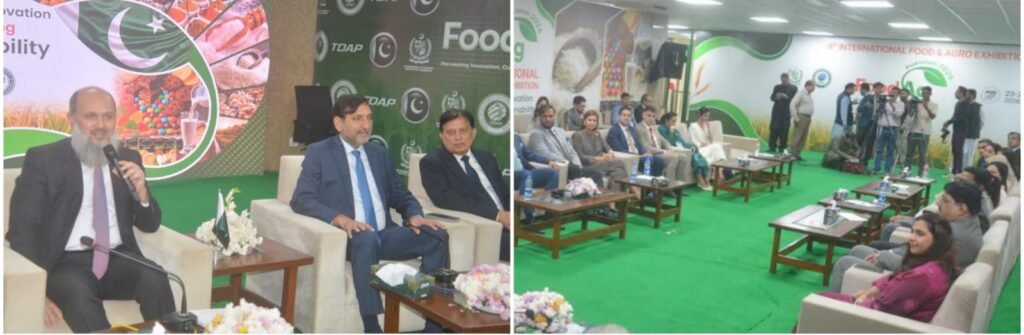
Federal Minister for Commerce Jam Kamal Khan discussed the proposed connectivity with Maldivian Minister of Economic Development, Transport and Trade Mohamed Saeed. Their meeting took place on the third day of FoodAg Pakistan 2026 at Karachi Expo Centre.
The discussions covered aviation, maritime links, bilateral trade, tourism, investment, healthcare and skills development. The chief executive of the Maldivian national airline also attended.
Direct Flights and Shipping Links Under Discussion
The Maldivian delegation indicated that it was targeting May 2027 for direct flights between the two countries. However, the launch will depend on the completion of required arrangements.
Jam Kamal Khan welcomed the proposal. He said direct flights and commercially viable shipping services could improve business exchanges, tourism and trade.
He also stressed the importance of reliable connectivity. In particular, regular transport links could help businesses develop stronger supply chains and expand market access.
The minister referred to the recent visit of the Maldivian President to Pakistan. He reaffirmed Pakistan’s commitment to becoming a long-term economic partner of the Maldives.
Pakistan Eyes Wider Export Opportunities
The meeting highlighted opportunities for Pakistani exports to the Maldivian market.
These include food and agricultural products, pharmaceuticals, textiles, leather and construction materials. Pakistan could also supply other industrial goods.
However, the minister stressed the need to meet the quality standards and requirements of the Maldivian hospitality industry.
Both sides also discussed investment opportunities in the Maldives’ tourism sector. Particular attention went to halal tourism and Shariah-compliant resort development.
The Maldivian delegation invited Pakistani investors to explore opportunities under its tourism diversification strategy. It also highlighted more flexible investment arrangements for halal tourism within its island resort model.
Healthcare and Skills Development on Agenda
Healthcare emerged as another area for cooperation. The two sides discussed medical tourism, healthcare partnerships and the potential contribution of Pakistani doctors, nurses and medical institutions.
Meanwhile, human resource development and vocational training also featured in the discussions.
K-IV Water Project Karachi’s Major Supply Scheme Expected to Be Completed by June 2027
The Maldivian side highlighted demand for skilled workers in healthcare and hospitality. It also shared plans to introduce training hotels.
In response, Jam Kamal Khan proposed specialised training programmes through Pakistani institutions. These programmes could match the requirements of Maldivian hotels and resorts.
As a result, the cooperation could create employment opportunities for skilled Pakistani workers.
Maritime Trade and Investment Facilitation
The federal minister also discussed commercially viable maritime and logistics links between Pakistan, the Maldives and East African markets, including Tanzania.
He noted that regular shipping services would require sufficient cargo movement in both directions. Therefore, stronger trade flows would be important for sustaining these connections.
The meeting also covered the role of the Special Investment Facilitation Council (SIFC) in supporting investment and business partnerships.
In addition, the proposed engagement with Pakistan International Airlines and other aviation stakeholders could help advance direct air connectivity.
The ministers exchanged souvenirs as a gesture of friendship. The Pakistani side also presented locally produced olive oil and salt to showcase the country’s value-added agricultural and mineral products.
Jam Kamal Visits FoodAg Exhibition
Following the bilateral meeting, Jam Kamal Khan toured exhibition halls and stalls at FoodAg 2026. He interacted with exhibitors, entrepreneurs and representatives of participating organisations.
He also visited the Board of Investment (BOI) Balochistan stall. There, he reviewed products and investment opportunities from the province.
Later, the minister attended the Global Cuisine Show. The event highlighted Pakistan’s culinary heritage and food culture. It also showcased opportunities to promote Pakistani food products in international markets through culinary diplomacy.
Minister Calls for Result-Oriented Export Strategy
Jam Kamal Khan also held an interactive session with Pakistan’s Trade and Investment Officers (TIOs).
He urged officers to adopt a focused, market-driven approach to export promotion. He said they must understand their assigned markets and identify product-specific opportunities.
Furthermore, he called on them to assess market gaps and address regulatory and institutional barriers affecting exports.
The minister stressed the need for close coordination between the Ministry of Commerce, the Trade Development Authority of Pakistan (TDAP) and other relevant institutions.
He said export growth requires more than identifying potential markets. It also depends on reliable market intelligence, competitive products and effective institutional coordination.
He urged TIOs to act as proactive facilitators for Pakistani businesses. Their role, he added, should include turning overseas opportunities into concrete trade and investment partnerships.
FoodAg Pakistan 2026 continues to provide a platform for Pakistani producers and international buyers. The latest engagements also reflect efforts to expand exports, attract investment and strengthen Pakistan’s economic partnerships.
You may also like
-
FoodAg 2026 Senate Commerce Committee Reviews Pakistan’s Agricultural Export Potential
-
Pakistan-China Energy Cooperation Both Countries Move to Fast-Track LPG and MoGas Projects
-
Italy-Sindh Partnership Cooperation to Modernise Pakistan’s Marble Industry
-
Mashreq NEO BIZ Partners with IBL to Support Pakistan’s Micro, Small and Medium Enterprises
-
US to Announce New Tariffs on China, EU and Japan