
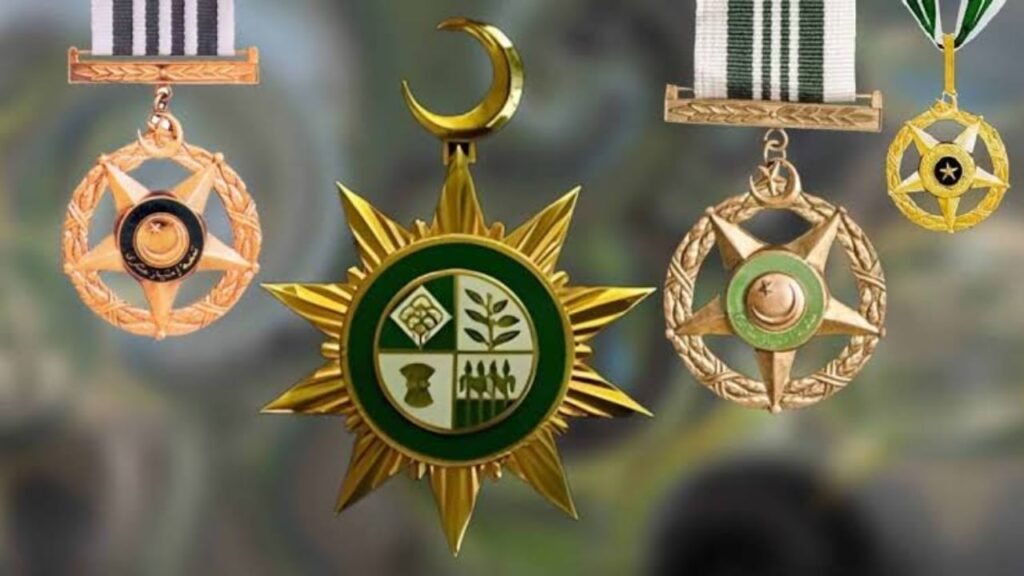
Pakistan civil awards have come under an unusual constitutional challenge after Lahore-based citizen activist Ashba Kamran issued a formal final notice to President Asif Ali Zardari, demanding the immediate withdrawal of awards announced on August 14, 2026.
The awards are scheduled to be formally conferred on Pakistan Day, March 23, 2027. Kamran argues that some awards granted to sitting civil servants and political office-holders for what she describes as routine official responsibilities violate constitutional and legal principles governing national decorations.
The challenge is significant because it targets the awards before their formal conferment, leaving the presidency and government with months to respond.
Kamran, who operates an accountability platform called The Pen That Questions, Voice of Constitution, Spirit of Accountability, issued the notice on August 15, 2026. She claims that she had already submitted a representation to the President’s office in August 2025 but received no meaningful response.
Pakistan Civil Awards and Article 259(2)
At the heart of the dispute is Article 259(2) of Pakistan’s Constitution. Kamran argues that the provision restricts civil awards to categories including gallantry, armed forces merit, academic distinction and genuine public service.
Her interpretation is particularly contentious. She maintains that “public service” should refer to extraordinary and altruistic contributions rather than the ordinary duties performed by individuals who already receive salaries and hold official positions.
The notice also reportedly relies on the Decorations Act, 1975, arguing that national decorations should not effectively become rewards for administrative rank, seniority or routine government employment.
This raises a broader question that goes beyond the 2026 list: Should performing the duties attached to a government position be sufficient grounds for receiving one of Pakistan’s highest national recognitions?
That question deserves a transparent public answer.
Conflict of Interest Allegation Raises Bigger Questions
Kamran’s criticism becomes sharper when she connects official awards with political and administrative patronage.
Her argument is that rewarding sitting executive functionaries for ordinary official responsibilities could create the perception that the state is using national honours as a mechanism for institutional recognition rather than rewarding exceptional service.
She has also invoked Article 5(2), which establishes obedience to the Constitution and law as an obligation. Her notice therefore places responsibility directly on the presidency to examine whether the challenged awards comply with the constitutional framework.
However, the activist’s interpretation remains an allegation and legal argument, not a judicial determination. Whether Article 259(2) legally excludes the specific recipients named in the 2026 awards list would ultimately depend on the applicable law, nomination criteria and, if challenged in court, judicial interpretation.
Two Demands Before Pakistan Day 2027
Kamran has made two principal demands.
First, she wants the awards announced on August 14, 2026 to be revoked before their formal conferment on March 23, 2027, particularly those given to sitting ministers and civil servants for routine official functions.
Second, she wants the Cabinet Division to formally clarify that routine administrative duties cannot qualify as public service for future civil award nominations.
The notice has also been copied to the Cabinet Secretary and Cabinet Division.
Pakistan Civil Awards System Faces a Credibility Test
The most important issue is not simply whether individual awards are cancelled. It is whether Pakistan’s civil awards system has sufficiently transparent standards to distinguish exceptional public service from normal official performance.
If the government believes the challenged awards fully comply with constitutional and statutory requirements, it has an opportunity to explain the legal basis publicly. If the nominations relied primarily on routine responsibilities, the criticism becomes harder to dismiss.
The seven-month gap before March 23, 2027 also makes this an accountability test rather than a post-event controversy. The presidency and Cabinet Division now have substantial time to review the objections, publish their position and settle the dispute before the medals are formally presented.
For Pakistan civil awards to retain public credibility, exceptional national recognition must be seen as something earned through exceptional contribution, not simply attached to the office a person happens to hold.