
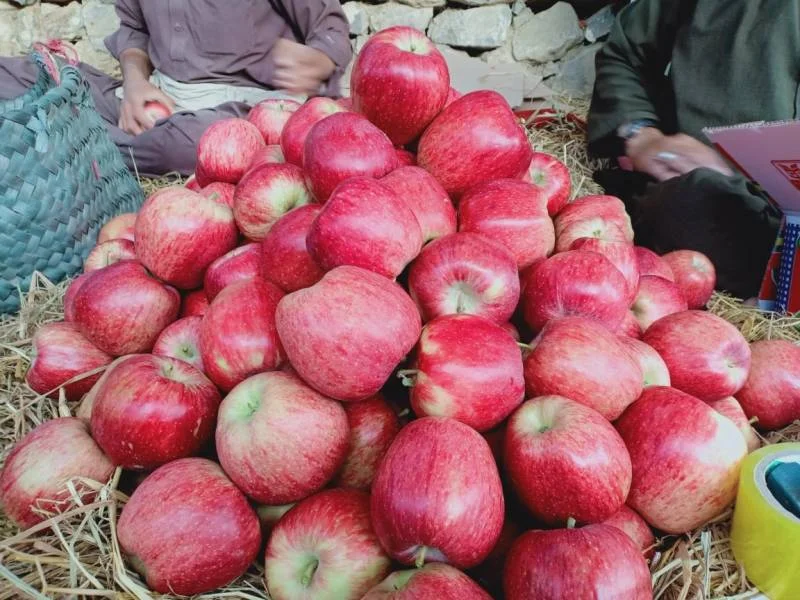
Balochistan accounts for nearly all of Pakistan’s apple production. The province produced 798,143 tonnes in 2023-24, representing 94.6% of the national harvest.
Pakistan’s total apple production reached 844,114 tonnes during the year. Khyber Pakhtunkhwa contributed the remaining 45,971 tonnes, or 5.4%.
The figures were shared in a LinkedIn post by Bilal I Gilani, Executive Director of Gallup Pakistan. They are based on statistics from the Ministry of National Food Security and Research.
According to the official tables, production from Punjab and Sindh falls under a small “Others” category. The figures do not include Gilgit-Baltistan and Azad Jammu and Kashmir.
Balochistan Dominates Pakistan’s Apple Production
The figures highlight Balochistan’s central role in the country’s apple industry. Its highland climate and elevation provide suitable conditions for growing apples.
As a result, markets in Karachi, Lahore and Peshawar depend heavily on supplies from the province. Much of the fruit sold across the country comes from Balochistan’s orchards.
Uzbekistan Offers Technical Cooperation to Pakistan in Seeds, Horticulture and Livestock
However, this concentration also creates supply risks. A strong harvest can support markets nationwide. Conversely, poor weather, water shortages or transport disruptions could affect supplies across the country.
Apple Output Rises Despite Declining Orchard Area
Pakistan’s apple production has become more productive over recent years. National output increased by 49% between 2017-18 and 2023-24.
Meanwhile, the area under apple cultivation declined by 18%. It fell from 88,600 hectares to 72,700 hectares.
Despite the smaller cultivated area, yields nearly doubled. Average production rose from 6.4 tonnes per hectare to 11.6 tonnes.
These figures indicate that farmers are producing more apples from less land. However, the data does not specify which factors drove the improvement.
Heavy Reliance on One Province Creates Supply Risks
Pakistan’s dependence on Balochistan makes the province especially important for the national fruit supply.
Therefore, disruptions affecting its orchards or transport routes could influence availability in markets elsewhere. Water shortages and poor harvests could also put pressure on supplies.
The figures come from the Ministry of National Food Security and Research’s Fruit, Vegetables and Condiments Statistics. They show rising productivity despite a decline in the area under apple cultivation.
You may also like
-
Mobilink Bank Acquisition: Signs Deal to Buy 82.51% Stake in Apna Microfinance Bank
-
Mining Investment: Jam Kamal Khan Seeks Global Partnerships to Unlock Pakistan’s Mineral Wealth
-
PTA flags peak-hour slowdown risk as several ISPs, including Gerry’s IT, breach utilisation cap
-
Power Distribution Privatisation: Government Proposes Two-Tier Business Model
-
Electricity Tariff: NEPRA Approves Revised Incremental Package at Rs25.30 per Unit