
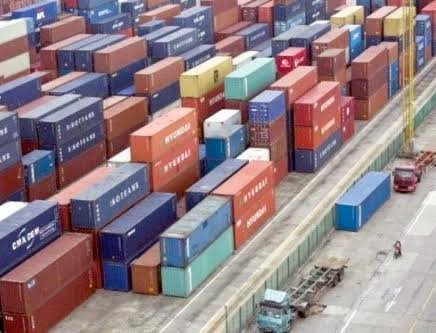
Pakistan’s goods exports contracted 6% in fiscal year 2025-26, marking the sharpest decline since FY23. The fall came despite a slight appreciation of the rupee and stronger foreign exchange reserves, as weak global demand, lower export prices and trade disruptions affected external sales.
The State Bank of Pakistan’s (SBP) Governor’s Annual Report 2025-26 attributed the decline to a combination of domestic and international pressures. Sluggish global demand and lower unit values reduced export receipts during the year.
US reciprocal tariffs, supply-chain disruptions linked to the Middle East conflict and the closure of Pakistan’s western borders further constrained export volumes.
Food Exports Lead the Decline
The contraction was concentrated in non-textile goods, particularly food and other manufactured products. Textile exports, meanwhile, recorded only marginal growth.
Food exports fell by nearly 30%, with rice accounting for a significant share of the decline.
Rice exports dropped to $2.3 billion in FY26 from $3.4 billion a year earlier, reflecting stronger competition in international markets.
PTA Finalises Licensing Framework for Satellite-Based In-Flight Telecommunication Services
Sugar exports fell to zero from $0.4 billion in FY25 after the government restricted exports over concerns about domestic shortages.
Vegetable exports also declined sharply due to lower international prices, the loss of key regional markets and trade disruptions with Afghanistan.
Textile Exports Record Marginal Growth
Textile exports increased by just 0.3% during FY26, compared with 7.4% growth in the preceding year.
Exports of cotton cloth, knitwear, bedwear and towels contracted. Meanwhile, readymade garment export growth slowed to 3.9% from 15.9%.
Cotton yarn exports provided some support, increasing by 12.4% during the year.
The SBP noted that weaker demand from apparel and home-textile exporters encouraged yarn producers to focus more on international markets.
Foreign Exchange Reserves Improve Despite Export Weakness
The decline in exports came alongside an improvement in Pakistan’s external buffers.
According to the SBP, foreign exchange reserve accumulation and a broadly manageable external account contributed to a slight appreciation of the exchange rate during FY26.
The central bank’s foreign exchange reserves reached $18.4 billion by the end of the fiscal year. It also reduced its forward liabilities by $1.6 billion.
Despite the wider goods trade deficit, the current account deficit remained manageable, supported by strong workers’ remittances and ICT exports.
The SBP also made net foreign exchange purchases of $8.1 billion during the year.
Export Competitiveness Remains a Challenge
The 6% contraction highlights Pakistan’s exposure to weak international demand, price competition and disruptions in regional and global trade.
Although stronger reserves and currency stability supported the country’s external position, they did not translate into higher export receipts.
The performance points to continuing challenges in sustaining export growth and strengthening Pakistan’s competitiveness across major international markets.
You may also like
-
Pakistan’s Fiscal Stability Masks Weak Revenue Mobilisation
-
Textile Exports Stagnate as Pakistan Loses Competitiveness
-
Finland-Pakistan Business Summit 2026 Aims to Open New Avenues for Business Cooperation
-
Pakistan’s Banking Sector Channels 63.3% of Assets to Government, Raising Concerns Over Business Financing
-
Industrial Growth Slows to 3.3% in FY26 Amid Q4 Contraction