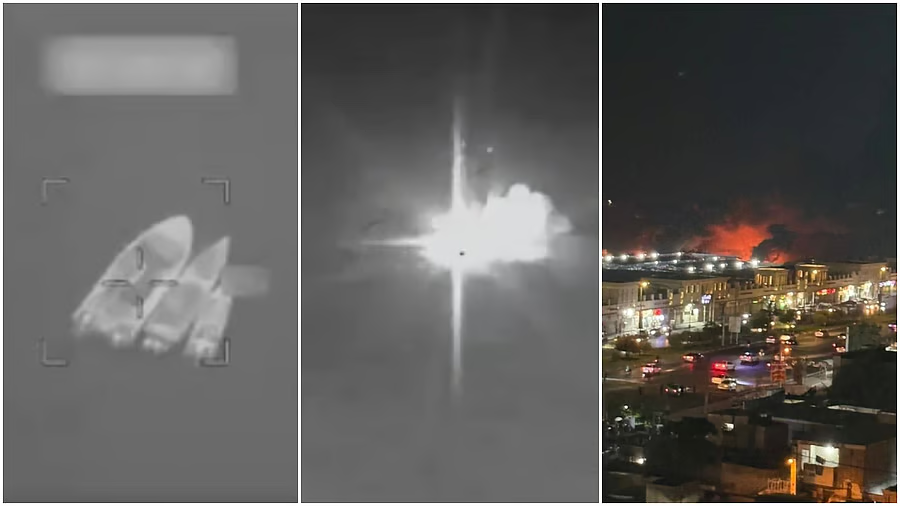
Escalation in US-Iran Conflict: American Strikes Target Iranian Defences After Jordan Incident
The US Central Command (CENTCOM) has concluded its eighth consecutive night of airstrikes on Iran, targeting military coastal surveillance and air defence facilities. The operation follows an Iranian attack that reportedly killed two US military personnel in Jordan, with one additional service member still missing. US Strikes Aim to Degrade Iranian Military Capabilities The strikes, ordered by President Donald Trump, began at 6:00 p.m. on Saturday. According to US officials, the operation is intended to further weaken Iran’s ability to threaten commercial shipping in the Strait of Hormuz and to respond to the attack attributed to Iran-backed forces that resulted in US military casualties in Jordan. CENTCOM stated that the operation successfully struck key Iranian military facilities involved in coastal surveillance and air defence. The latest action represents another escalation after the collapse of an interim ceasefire last week. Iranian Response and Regional Tensions Intensify Iran’s Islamic Revolutionary Guard Corps (IRGC) claimed responsibility for strikes targeting US assets across Kuwait, Bahrain, and Jordan, including radar installations and military aircraft. Iranian commanders warned that any further US military action would be met with what they described as a “devastating response.” Explosions were reported near Sirik, Shadegan, and Qeshm Island. Iranian state media said there were no major casualties in some affected areas, although emergency response teams were deployed. Kuwait reported intercepting missiles and drones, with injuries among emergency responders. Diplomatic Fallout Grows Supreme Leader Ayatollah Mojtaba Khamenei criticized the United States, describing its commitments as unreliable. Iran’s Foreign Ministry accused Washington of attempting to assert control over the strategically important Strait of Hormuz. The US Defence Secretary reiterated Washington’s determination following the deaths of American service members. According to US officials, total US military fatalities in the conflict have now reached 16, while more than 420 personnel have been wounded. Regional and International Concerns Mount Broader security alerts have been issued across the Gulf region, including in Saudi Arabia, as tensions continue to rise. The European Union and Gulf states have called on Iran to avoid actions that disrupt maritime navigation through the Strait of Hormuz, one of the world’s most critical energy shipping routes. Former US defence officials have noted that the recent shift toward targeting inland military infrastructure appears aimed at isolating Iran’s coastal defence network while limiting broader regional escalation. Strait of Hormuz Remains at the Centre of the Crisis The continuing confrontation has heightened concerns over regional stability and global energy security, with the Strait of Hormuz remaining the focal point of military and diplomatic tensions. Analysts warn that any prolonged disruption to shipping through the strategic waterway could significantly impact global oil markets, increase freight costs, and place additional pressure on energy-importing economies worldwide.