
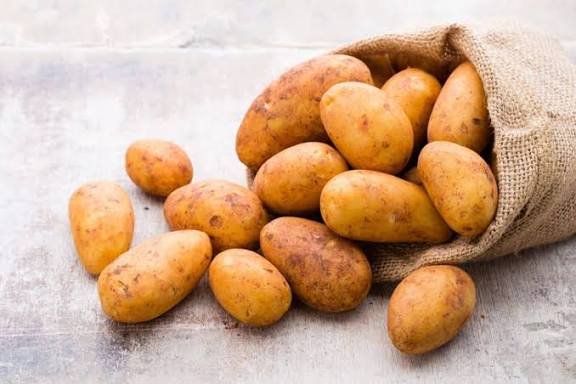
Scientists at the Potato Research Institute (PRI) in Sahiwal have developed four new high dry matter potato varieties, marking a significant step toward strengthening Pakistan’s growing potato processing industry and reducing reliance on imported potato seeds.
The newly developed potato lines are expected to support the production of value-added products such as French fries and potato chips while providing farmers with varieties better suited to Pakistan’s climatic conditions.
According to Potato Research Institute Director Dr Rana Aftab Iqbal, the four new potato lines have a dry matter content exceeding 22 percent, making them suitable for industrial processing.
The newly developed lines are L 5-2, FD 74-30, FD 35-36, and FD 74-50.
High Dry Matter Potato Varieties To Support Food Processing Industry
Experts say potatoes with higher dry matter content absorb less oil during processing, resulting in crispier potato chips and higher-quality French fries.
Dr Aftab explained that conventional table potato varieties generally have lower dry matter content, making them less suitable for large-scale industrial processing.
He noted that table potato varieties with low dry matter content cannot efficiently be processed into value-added products such as chips and French fries.
Established in 2009, the Potato Research Institute has developed 12 table potato varieties. Among them, Punjab, Sadaf, and Ruby contain dry matter levels ranging between 20 percent and 22 percent.
However, the newly developed varieties are expected to provide even greater benefits for Pakistan’s expanding food processing industry.
Rising Demand For Processing Potatoes
Pakistan’s fast-growing urban population and changing consumer preferences have increased demand for processed potato products.
As the country’s fast-food industry continues to expand, the need for potato varieties specifically developed for industrial processing has also grown significantly.
Higher dry matter potatoes are considered essential for producing premium-quality French fries and potato chips while improving processing efficiency.
Imported Potato Seeds Continue To Dominate
For many years, farmers in Punjab have preferred potato varieties that produce higher yields per acre.
Although these varieties offer better production volumes, their relatively low dry matter content limits their suitability for industrial processing.
As a result, many food processors have relied on imported potato varieties, particularly those originating from the Netherlands.
According to Dr Aftab, growers have widely cultivated imported varieties including Lady Rosetta, Hermes, Alverstone, Venus, Sante, and Asterix.
These imported varieties remain popular because they possess the characteristics required for commercial potato chips and French fries production.
However, dependence on imported seeds has increased production costs and raised concerns over long-term sustainability.
Agricultural experts believe locally developed varieties can help reduce reliance on foreign seeds while improving productivity and lowering costs.
Locally Developed Varieties Better Suited To Pakistan
Researchers believe locally developed potato varieties offer significant advantages because they are specifically bred for Pakistan’s environmental conditions.
Dr Aftab said domestic varieties are better able to withstand drought, frost, and high temperatures compared with imported alternatives.
He also noted that several factors influence potato dry matter content, including cultivation practices, harvesting time, and fertiliser application.
According to researchers, potash fertilisers play a particularly important role in improving the quality of potatoes intended for industrial processing.
Agricultural specialists believe combining improved seed varieties with modern farming techniques can significantly enhance the value of Pakistan’s potato crop.
Pakistan Has Strong Potential In Global Potato Market
Dr Ahmad Din, Assistant Professor at the National Institute of Food Science and Technology in Faisalabad, said Pakistan has considerable potential to become a major supplier of processed potato products in international markets.
Although Pakistan produces nearly 10 million tonnes of potatoes annually and ranks among the world’s leading potato-producing countries, it has yet to fully benefit from rising global demand for processed potato products.
According to Dr Ahmad, the widespread cultivation of low dry matter potato varieties remains one of the key challenges.
He explained that potato varieties with dry matter content exceeding 20 percent are ideal for French fries production because they absorb less oil while delivering better texture and appearance.
Currently, processors continue relying heavily on imported varieties such as Sante, Lady Rosetta, Cardinal, and Asterix.
New Varieties Could Reduce Import Dependence
Agricultural experts believe the introduction of these new high dry matter potato varieties could encourage greater investment in Pakistan’s food processing sector while creating new income opportunities for farmers.
The development is also expected to reduce dependence on imported potato seeds, improve domestic processing capacity, and strengthen Pakistan’s competitiveness in regional and international markets.