
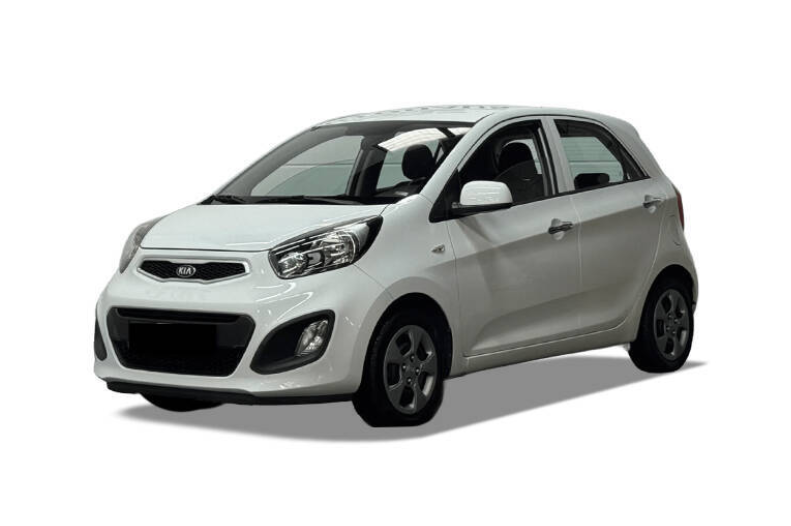
The Kia Picanto discontinued in Pakistan story has emerged quietly, but its implications for the local automobile market are significant. Lucky Motor Corporation appears to have ended the local production and booking cycle of the compact hatchback, with the model disappearing from Kia Pakistan’s official vehicle lineup and customers reportedly unable to place new orders.
What makes the development particularly notable is the absence of a formal public announcement from Lucky Motor Corporation. Instead of clearly communicating the model’s exit and explaining what happens to customers, the company appears to have allowed the Picanto to disappear from its sales channels. For an established automaker, such silence can create unnecessary uncertainty for existing owners, prospective buyers and the wider market.
The Kia Picanto was introduced in Pakistan in September 2019 as the company’s contender in the compact hatchback segment. Locally assembled by Lucky Motor Corporation, the vehicle entered the market with an automatic transmission, touchscreen infotainment, dual airbags and ABS, positioning itself as a more modern alternative to older small-car offerings.
Why Kia Picanto Discontinued in Pakistan
The Picanto’s exit highlights a much bigger problem facing manufacturers in Pakistan: features alone are no longer enough to convince increasingly price-sensitive consumers.
The model entered a market where Japanese brands had already built strong customer loyalty, extensive dealership networks and, perhaps most importantly, powerful resale markets. The Picanto offered a different ownership proposition, but its relatively high price made it difficult to attract buyers looking for an affordable city car.
Resale value became another major weakness. Pakistani consumers often consider future resale prices before purchasing a vehicle, particularly when buying an expensive locally assembled car. A model with weaker demand in the used-car market can therefore struggle even when its specifications are competitive.
The situation was further complicated by Pakistan’s economic environment. Rising vehicle prices, higher financing costs, inflation and declining purchasing power have forced consumers to reconsider what they can realistically afford. A compact hatchback positioned at a relatively high price point faces an obvious challenge when buyers are increasingly seeking maximum value for every rupee.
Kia Picanto Faced a Market Moving Toward SUVs
Another important factor behind the Kia Picanto discontinued in Pakistan development is the changing structure of consumer demand.
Pakistan’s automobile market has gradually moved toward crossovers and compact SUVs, with buyers increasingly willing to pay more for greater road presence, additional space and perceived practicality. This trend has made the traditional small hatchback segment even more difficult for newer entrants.
The Picanto also faced concerns among some consumers regarding spare-parts availability and after-sales support. Whether every complaint was justified or not, perceptions matter enormously in the automobile business. Customers purchasing a vehicle for several million rupees want confidence that parts, servicing and resale will remain accessible for years.
Kia’s International Picanto Is Still Evolving
The Picanto’s disappearance from Pakistan does not mean Kia has abandoned the model globally. The hatchback continues to be sold in several international markets, where newer versions have received updated exterior styling, revised lighting, refreshed interiors, improved connectivity and additional driver-assistance technologies.
This creates an interesting question for Lucky Motor Corporation: if the Picanto continues to evolve internationally, why was its Pakistani market strategy unable to sustain the model?
The answer may ultimately come down to economics rather than product quality. Pakistan’s automobile market is unusually sensitive to pricing, taxation, exchange rates, localization levels and consumer financing conditions. A globally competitive vehicle can still fail locally if its final price and ownership economics do not match market expectations.
What Could Replace the Picanto in Pakistan?
Lucky Motor Corporation has not indicated whether another entry-level Kia vehicle will replace the Picanto. This is perhaps the most important unanswered question for customers.
The company could use the opportunity to introduce a newer, more competitively priced small car, but simply replacing one hatchback with another would not solve the underlying problem. Any successor would need stronger localization, competitive pricing, dependable parts availability and a convincing resale proposition.
The Kia Picanto discontinued in Pakistan development therefore deserves attention beyond the fate of one model. It demonstrates how quickly consumer priorities can change and how difficult it has become for automakers to compete in Pakistan without delivering a compelling combination of price, reliability, after-sales support and resale value.
For Lucky Motor Corporation, the real challenge now is not explaining why the Picanto disappeared. It is convincing Pakistani consumers that the next Kia product will not suffer the same fate.