
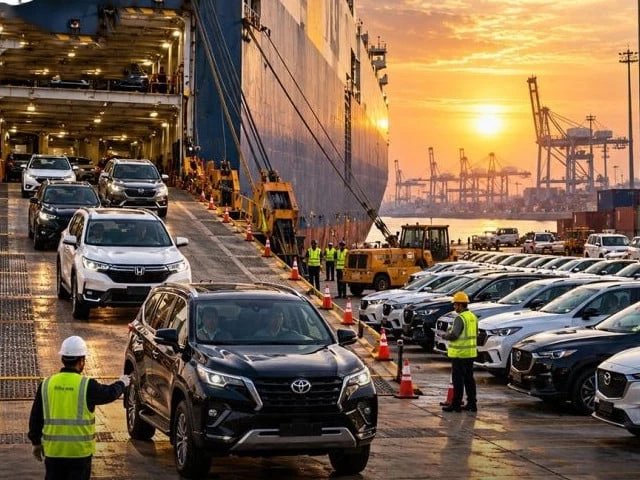
ISLAMABAD: Pakistan’s proposed new auto policy has raised concerns among local auto parts manufacturers, who warn that its incentives for imported vehicles and components could undermine domestic production, threaten employment and increase pressure on the country’s foreign exchange reserves.
Representatives of the component manufacturing industry argue that the proposed framework places greater emphasis on vehicle imports and local assembly than on strengthening domestic manufacturing. They fear the policy could reverse years of progress in localisation and reduce government tax revenues.
Around 1,200 domestic engineering and auto component manufacturing enterprises could be affected, according to industry representatives. These businesses collectively employ approximately 300,000 people directly and support another 1.5 million jobs indirectly.
Manufacturers are particularly concerned that lower duties on completely built-up (CBU) electric vehicles and completely knocked-down (CKD) kits could encourage local assemblers to source components from foreign suppliers instead of purchasing them from domestic manufacturers.
They warn that such a shift could weaken localisation levels, currently estimated at 50% to 65% for several locally assembled vehicle models, and put investments in domestic engineering capabilities at risk.
The proposed incentives could also increase Pakistan’s import bill by encouraging purchases of CBU electric vehicles and imported CKD kits. Component manufacturers argue that preferential treatment for imported parts could make foreign supplies more commercially attractive than locally produced alternatives, increasing dependence on overseas suppliers.
The industry has also raised concerns about the potential impact on Federal Board of Revenue (FBR) collections. Representatives have questioned the proposed 5% customs duty on small CBU electric vehicles and preferential sales tax treatment for electric vehicles, arguing that the concessions could reduce government revenue.
They have further criticised provisions facilitating the commercial import of used vehicles, saying these could add pressure on domestic vehicle manufacturing and assembly.
FBI Investigates Alleged Chinese Spy Links to Nvidia CEO Jensen Huang
The manufacturers claim the final version of the policy differs substantially from proposals discussed with the Ministry of Industries during consultations that continued until June 2026.
According to industry representatives, the framework underwent significant changes between June and November, shifting its focus towards imports rather than expanding local manufacturing. They say the final policy does not reflect the understanding reached during earlier consultations and lacks sufficient stakeholder ownership.
Although consumers could benefit from lower vehicle prices, the industry estimates that tax concessions may reduce prices by only around 5% to 7%.
Manufacturers argue that the potential savings would benefit a limited segment of the population, noting that approximately 0.1% of Pakistanis purchase cars annually. They maintain that this limited price relief should be weighed against the possible effects on domestic production, employment and foreign exchange stability.
The industry has also challenged the regional tariff comparisons used in the National Tariff Policy, arguing that Pakistan’s proposed approach does not adequately account for the protection offered to automobile industries in other regional markets.
According to manufacturers, India imposes a 120% customs duty on CBU vehicles, while Thailand and Indonesia apply rates of 80% and 52%, respectively. They contrast these figures with the proposed 15% rate under Pakistan’s new auto policy.
The manufacturers argue that applying the National Tariff Policy uniformly to the automobile sector, without considering the tariff structures of competing regional economies, could place local producers at a disadvantage.
They have called on the government to reconsider the proposed framework and balance consumer affordability with domestic manufacturing, employment, localisation and foreign exchange management.
In a pointed criticism, industry representatives suggested renaming the proposed “Auto and Auto Parts Policy” as the “Policy for Automobile Assembly and Import of New and Used Vehicles”, arguing that its current direction does not adequately support the local parts manufacturing sector.
You may also like
-
Jeep Wrangler Alternatives: 10 Off-Road SUVs and Trucks to Consider in 2027
-
Auto Policy: PAMA Seeks Official Copy from Ministry of Industries
-
BYD-MMC Expands Dealership Network to Sialkot
-
Auto Policy: Pakistan Urged to Finalise New Framework Without Further Delays
-
Pakistan’s Car Market Offers More Choice but Parts Localization Remains Uncertain
1 thought on “Auto Policy: Pakistan’s Parts Industry Warns of Job Losses and Rising Import Dependence”
Comments are closed.