
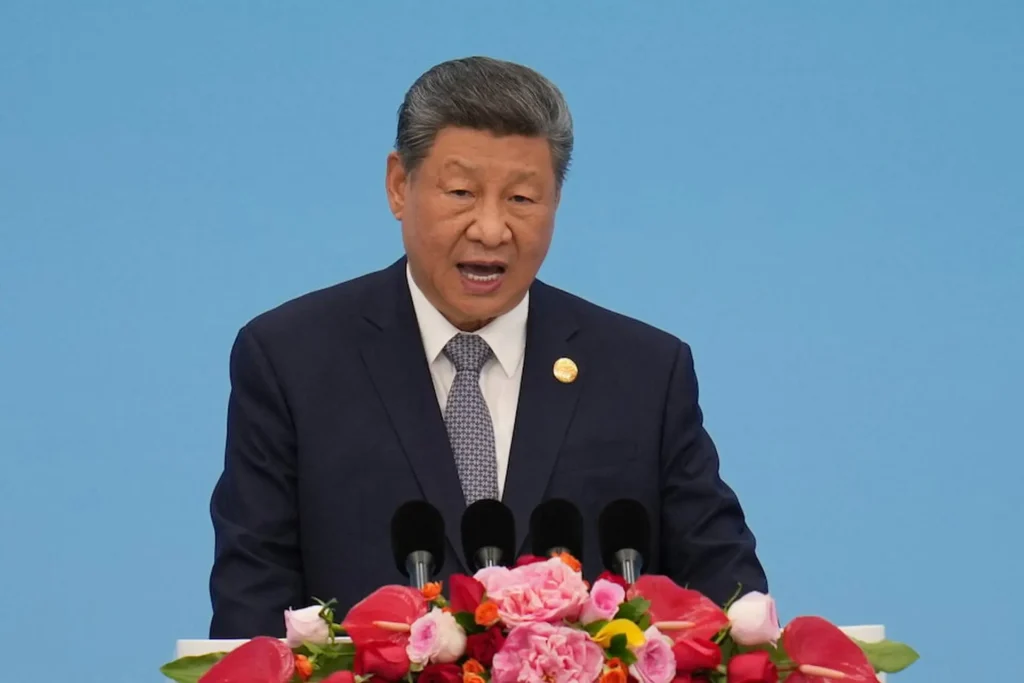
SHENZHEN: Chinese President Xi Jinping called for free and open international trade on Wednesday, urging Asia-Pacific economies to reduce investment barriers and strengthen cooperation amid growing tensions over technology restrictions and global supply chains.
Speaking at the Asia-Pacific Economic Cooperation (APEC) CEO Summit in Shenzhen, Xi emphasised the importance of maintaining a rules-based international trading system centred on the World Trade Organization (WTO).
He urged regional economies to support open trade and investment while ensuring the stability and smooth functioning of global industrial and supply chains.
Xi’s remarks came against the backdrop of reported new US restrictions on China’s access to advanced artificial intelligence semiconductors, including chips produced by American technology companies such as Nvidia.
The restrictions have raised concerns about the future of trade relations between Washington and Beijing, with China reportedly warning that it could introduce retaliatory measures.
Addressing business executives, Xi stressed the need for greater economic cooperation as the Asia-Pacific region faces changing geopolitical and commercial conditions.
His comments reflected Beijing’s continued emphasis on multilateral trade arrangements and its opposition to barriers affecting international investment and technology exchanges.
However, China’s trade policies remain a source of disagreement with major Western economies.
Western governments have criticised Beijing’s manufacturing-focused economic model, arguing that state-supported industrial production contributes to substantial trade surpluses and creates competitive pressures for businesses in other countries.
The supplied report cited China’s annual trade surplus as exceeding $1 trillion, highlighting the scale of its export-oriented manufacturing sector.
Beijing has defended its economic approach, maintaining that its development strategy is appropriate for an economy seeking to narrow the gap with wealthier countries.
Meanwhile, policymakers in Washington and Brussels have expressed concerns that China’s dominance in certain global supply chains could create economic dependencies and provide geopolitical leverage.
They have also argued that Chinese industrial policies could undermine domestic manufacturing industries and employment.
Xi delivered his remarks at the opening of the APEC CEO Summit in Shenzhen, ahead of a reported gathering of leaders from participating economies.
The supplied report also described planned diplomatic engagements involving US President Donald Trump and Russian President Vladimir Putin.
According to the account, Putin arrived in China overnight, while Trump was expected to arrive later on Wednesday after completing meetings with Southeast Asian and other regional leaders in Manila.
The report claimed that the three leaders were preparing for high-level discussions on Thursday covering the conflicts in Iran and Ukraine, international trade, artificial intelligence and nuclear weapons.
However, the reported trilateral meeting and related diplomatic arrangements have not been independently verified.
The account also referred to a reported attack on the Kerch Bridge connecting Crimea with Russia, another significant development requiring confirmation from reliable sources.
Beyond the reported diplomatic meetings, Xi’s address highlighted the broader economic challenges facing the Asia-Pacific region as countries seek to balance international trade cooperation with national security and industrial policy priorities.
Technology export controls, supply chain resilience and market access remain central issues in US-China economic relations.
Xi’s call for open trade underscores China’s stated commitment to multilateral economic cooperation at a time when geopolitical tensions and restrictions on advanced technologies are creating uncertainty for international businesses and investors.
You may also like
-
Strait of Hormuz: Iran and Oman Discuss Maritime Security and Diplomatic Solutions
-
US Technology Outages: NSA Network Disruption Raises Concerns Over Critical Infrastructure
-
FDA Nomination: Trump Withdraws Heidi Overton’s Candidacy Amid Senate Opposition
-
NYPD Strategic Response Group: New York Mayor Announces Plan to Disband Police Unit
-
Trump Asia Visit: US President Arrives in Philippines for Quad Summit Amid Trade Tensions