

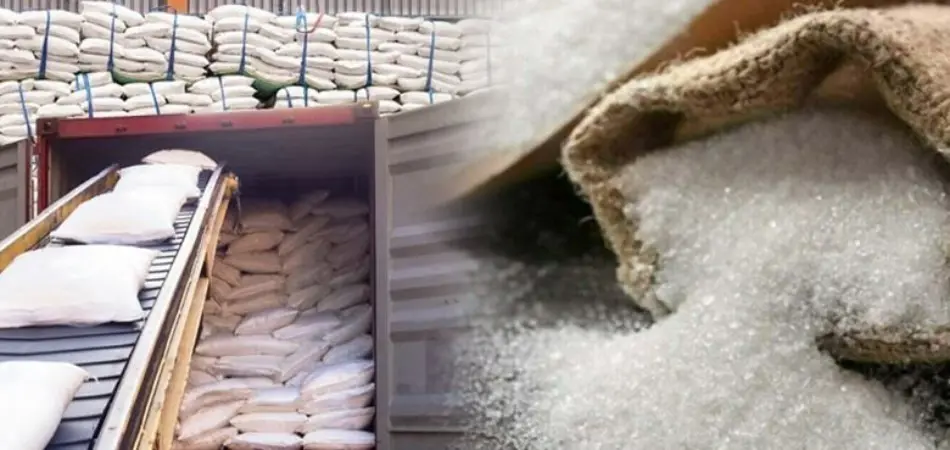
ISLAMABAD, November 24, 2026: Pakistan’s sugar policy is facing renewed scrutiny after the government imported sugar to meet domestic requirements and subsequently moved to export a significant portion of those imports, raising questions about production forecasting, stock assessments and commodity management.
Figures presented by the government in Parliament show that domestic sugar consumption during the 2023-24 crop year was estimated at 6.4 million tonnes, against expected production of 6.7 million tonnes. With 823,000 tonnes in carry-forward stocks, total availability was estimated at approximately 7.6 million tonnes.
Based on the expected surplus, the government authorised sugar exports in four phases: 150,000 tonnes in June 2024, 100,000 tonnes and 40,000 tonnes in August 2024, and another 500,000 tonnes in October 2024. The total export authorisation reached 790,000 tonnes, according to the Ministry of National Food Security and Research’s parliamentary reply dated October 6, 2025.
The ministry said production was expected to increase following a 1.2% expansion in sugarcane cultivation. However, heatwaves and crop disease affected the crop, resulting in actual sugar production falling short of estimates by around one million tonnes.
Imports and the Financial Implications
Following the production shortfall, the government turned to imports. According to the Ministry of Commerce’s reply to National Assembly Question No. 147, the Trading Corporation of Pakistan (TCP), acting under decisions of the Economic Coordination Committee, Federal Cabinet and Steering Committee on Sugar, imported 306,737 tonnes.
As of August 31, 2026, TCP had incurred a total import cost of Rs54.16 billion, including incidental charges and mark-up. It had sold 198,668.30 tonnes at a weighted average price of Rs168.24 per kilogram, while 108,069 tonnes remained in its warehouses.
The ministry clarified that the 20% customs duty had been waived. It also stated that the final financial gain or loss could not yet be determined because the disposal process was incomplete. Therefore, the reported Rs54.16 billion represents the import cost, not a confirmed loss to the public exchequer.
The matter took another turn when TCP issued an international tender on November 6, 2026, for the export of 108,000 tonnes of imported white refined sugar stored at its Pipri warehouse in Karachi. The tender document confirmed that the sugar had been imported in 2025 and that the federal government had authorised its export.
The final financial outcome will depend on the sale price and associated procurement, financing, storage and disposal costs.
Questions Over Planning and Oversight
The sequence of export authorisations, subsequent imports and the proposed disposal of remaining stocks has highlighted concerns about the reliability of information used in sugar policy decisions.
In December 2025, the National Assembly Standing Committee on Commerce reported that a subcommittee had identified misreporting of quantities, artificial shortages and inconsistencies in official records. It also highlighted weaknesses in monitoring and verification mechanisms.
Economic analyst Shahid Anwar argues that the issue extends beyond an unexpected decline in production and reflects weaknesses in forecasting, coordination and the management of public-sector commodity operations. He notes that agricultural risks cannot be eliminated, but they should be incorporated into government planning before decisions are made that affect consumers, producers and public finances.
Pakistan and Russia Set to Sign 15–16 Agreements During PM’s Moscow Visit
Recommendations for a Better Sugar Management System
The government should establish a transparent and coordinated system for managing essential commodities, beginning with a comprehensive national supply-and-demand assessment before every crushing season.
Such an assessment should include opening stocks, expected production, domestic consumption, public and private inventories, and projected export or import requirements.
Export permissions should be issued in phases and linked to independently verified surplus stocks. Clear review mechanisms should also be introduced to reassess export decisions if production estimates decline or available stocks fall below agreed thresholds.
Regular updates to crop estimates and stock positions through a shared information system involving federal ministries, provincial governments, sugar mills and TCP could improve coordination.
Import decisions should similarly be based on verified inventories and clearly established supply gaps.
After every public-sector import or disposal operation, the government should publish a financial review detailing procurement costs, sale proceeds, storage and financing expenses, outstanding receivables and the final gain or loss to the public exchequer.
Sugar is not an isolated case but an example of the challenges involved in managing essential commodities. Improved forecasting, coordination and accountability could help reduce avoidable costs, protect consumers and strengthen public confidence in government decisions.
About the Author
Shahid Anwar is an economic analyst, researcher, op-ed writer and business and trade adviser. He previously served as Secretary General of the Federation of Pakistan Chambers of Commerce & Industry (FPCCI) and Senior Director of Research & Publications at the Institute of Cost and Management Accountants of Pakistan (ICMA).
With 36 years of experience in economic, business and trade affairs, he is currently the Founder and Chief Executive of SAKA Business Services.
You may also like
-
Pakistan Government Borrows Rs601 Billion in One Week Despite FY27 Debt Retirement
-
Pakistan Develops Roadmap to Boost Shrimp Farming and Exports
-
Pakistan’s Oil Import Bill Rises 9.34% to $5.63 Billion in Four Months
-
Pakistan’s Neem Secures ADB Ventures Investment to Expand Digital Payments
-
Pakistan’s Mobile Phone Imports Fall 7.2% as Local Assembly Reaches 23 Million Units