
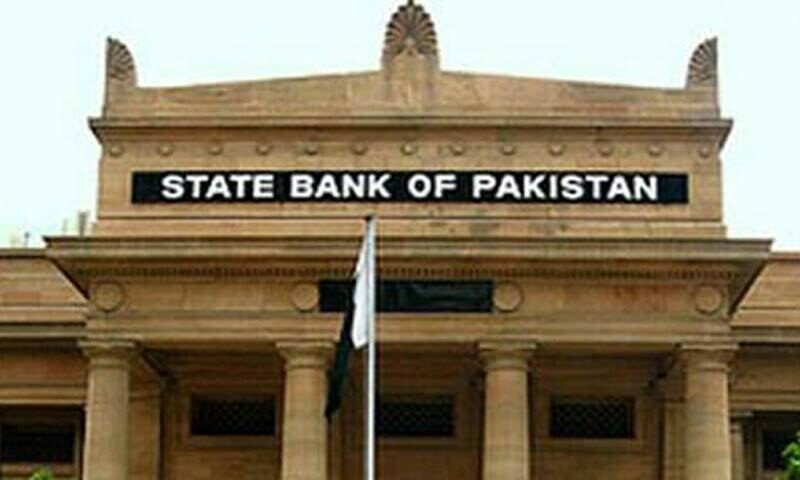
KARACHI: The State Bank of Pakistan (SBP) has highlighted the impact of the Middle East conflict on domestic inflation and the country’s external economic outlook, saying rising energy prices prompted a 100-basis-point increase in the policy rate in April 2026 to contain inflationary pressures and maintain macroeconomic stability.
According to the central bank governor’s annual report for fiscal year 2025–26, issued on Tuesday, the escalation of regional tensions created additional challenges for Pakistan’s economy by driving up global commodity prices and increasing uncertainty surrounding international trade and financial conditions.
The report stated that the Monetary Policy Committee (MPC) responded to these developments by tightening monetary policy to limit the secondary effects of higher energy prices on broader inflation.
Similar monetary policy responses were observed internationally, with several central banks in advanced and emerging economies pausing their interest rate reductions, while others raised borrowing costs to address renewed inflationary pressures.
Earlier in FY26, the MPC maintained the policy rate until December 2025, when it announced a reduction of 50 basis points.
The decision was supported by subdued headline inflation, relatively stable inflation expectations, easing international commodity prices and improvements in Pakistan’s external account.
According to the report, these developments created room for monetary easing to support economic activity during the first half of the fiscal year.
However, subsequent increases in global energy prices altered the inflation outlook and required a reassessment of monetary conditions.
Despite these challenges, the SBP reported that Pakistan’s major macroeconomic indicators demonstrated resilience throughout FY26.
Average consumer price inflation remained close to the upper limit of the central bank’s medium-term target range, even as the economy experienced a significant international energy price shock.
The country’s foreign exchange reserves exceeded the year-end target, while the current account recorded only a marginal deficit.
Real gross domestic product (GDP) growth also improved during the fiscal year, reflecting stronger economic activity despite external pressures.
The central bank attributed this resilience partly to a cautious, data-dependent monetary policy approach and continued fiscal consolidation.
According to the report, these policies helped strengthen Pakistan’s capacity to withstand successive economic shocks, including monsoon flooding, uncertainty surrounding US trade tariffs and the reported regional conflict that began near the end of February.
The financial system also remained stable, supported by increased banking-sector lending to private businesses and improvements in financial depth.
Inflation developments, however, reflected a significant shift during the second half of the fiscal year.
Average national Consumer Price Index (CPI) inflation stood at 5.5% during July–February FY26.
Following the reported escalation of the Middle East conflict, higher global oil prices contributed to a sharp increase in domestic inflation.
The report stated that headline inflation moved into double digits from April onward, largely reflecting the impact of rising energy costs.
The contribution of energy prices to overall consumer inflation increased substantially during March–June FY26 compared with the July–February period.
Food inflation also accelerated, driven by higher prices of wheat and related products amid supply constraints.
US Technology Outages: NSA Disruption Adds to Concerns Over Nationwide System Failures
These developments increased pressure on household purchasing power and raised production and transportation costs for businesses.
Core inflation, which excludes certain volatile components, continued to moderate during much of FY26 but remained elevated.
The central bank noted that core inflation increased slightly after higher energy prices began feeding into production costs and transportation services.
This development highlighted the risk that an initial rise in fuel prices could spread to other goods and services, making inflation more persistent.
Meanwhile, Pakistan’s external financial position showed improvement during the fiscal year.
The SBP reported that its foreign exchange reserves exceeded the $18 billion year-end target, supported by continued foreign currency accumulation.
During FY26, the central bank made net foreign exchange purchases totalling $8.1 billion.
It also reduced its outstanding forward and swap liabilities by $1.6 billion, indicating an improvement in the composition and quality of its foreign exchange reserve position.
The reduction in these liabilities, alongside higher reserve holdings, strengthened the central bank’s reported external liquidity position.
The annual report emphasised the importance of maintaining prudent monetary and fiscal policies to preserve macroeconomic stability amid uncertain global conditions.
The SBP’s assessment indicates that although Pakistan’s economy demonstrated resilience during FY26, energy price volatility, inflationary pressures and external geopolitical developments remained important risks to the country’s economic outlook.
You may also like
-
SIFC Investment: Pakistan Reports $20 Billion China Portfolio and $2.3 Billion Saudi Inflows
-
Pakistan IT Exports: Monthly Earnings Hit Record $453 Million in October 2026
-
Pakistan REER: Rupee’s Real Effective Exchange Rate Hits Nearly Nine-Year High
-
Electricity Prices: CPPA-G Seeks Rs2.88 Per Unit Increase for October 2026
-
HBL Trade Financing: Commerce Ministry Pledges Support to Strengthen Pakistan’s Global Banking Links