
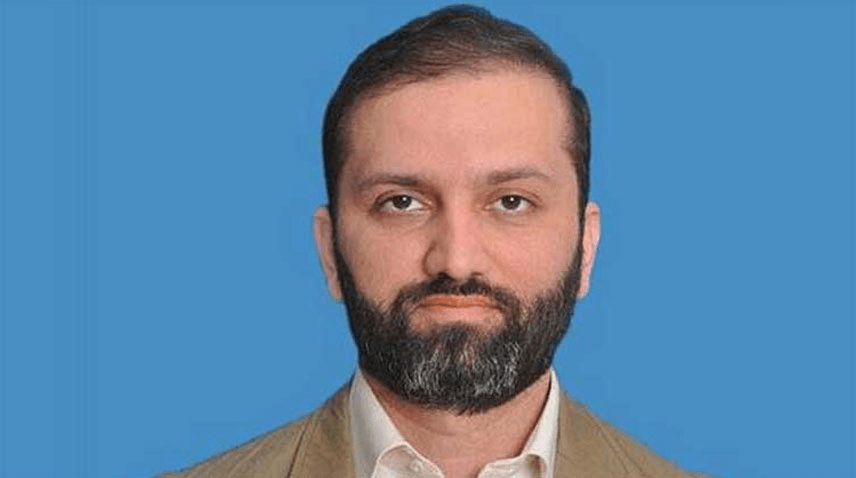
KARACHI: Senator Dr. Afnan Ullah Khan, Chairman of the Privatization Commission and a member of the Senate representing Pakistan Muslim League-Nawaz (PML-N), has said Pakistan cannot achieve its target of becoming a PKR 1 trillion economy without developing Karachi.
Speaking at a meeting with industrialists and business representatives at the Korangi Association of Trade and Industry (KATI), he said Karachi had enormous economic potential and access to some of the country’s finest human resources. He added that Prime Minister Shehbaz Sharif was committed to improving the city’s infrastructure and that the PML-N government was working to promote its development.
Senator Afnan said the business community could play an important role in bridging gaps and supporting Karachi’s economic growth. However, sustained federal government attention was essential to resolving the city’s longstanding challenges. He said he would raise issues related to electricity and water supply at the federal level.
KATI President Sheikh Umer Rehan, Deputy Patron-in-Chief Zubair Chhaya, Senior Vice President Farrukh Qandhari, Vice President Nasir Sheikh, Sardar Ismail Gabol, Khawaja Tariq Nazir, Daniyal Munaf Kherani, Sardar Rehan and other industrialists and association members attended the meeting.
The senator said the PML-N government had previously played a significant role in completing major development projects and addressing security challenges in Karachi. He described the city’s development as a national responsibility because of its substantial contribution to government revenue. He added that greater public support for the PML-N in Karachi could help expand the scope of development projects.
Discussing the privatisation of Pakistan International Airlines (PIA), Senator Afnan described the process as a major challenge. He said an earlier attempt in 2017 had failed, followed by another effort in 2022, before the process succeeded on the fourth attempt. According to him, the government determined the airline’s value through a comprehensive assessment and independent third-party valuation. He maintained that the process was transparent and welcomed the fact that the airline remained under Pakistani ownership.
He said the government had adopted Türkiye’s model for privatising electricity distribution companies (DISCOs), while Islamabad International Airport was also included in the privatisation list.
On power-sector losses, he said Sukkur and Quetta electric supply companies accounted for approximately 90 per cent of overall losses, with Quetta Electric Supply Company alone responsible for 70 per cent. He added that the government was working to improve the performance of these entities.
Senator Afnan also proposed establishing a solar park outside Karachi with the cooperation of the business community. He encouraged KATI and industrialists to submit practical recommendations, which he would convey to the Prime Minister and federal government for consideration.
He further said efforts were underway to address railway-related issues. The financial closing of the Main Line-1 (ML-1) project had been achieved, and work was expected to begin soon. Its implementation, he said, would help resolve several problems associated with the existing railway tracks.
Earlier, KATI President Sheikh Umer Rehan said Karachi generated more than half of Pakistan’s national revenue, while the Korangi Industrial Area contributed approximately 60 per cent of the city’s overall revenue. He added that six major export-oriented industries in the Korangi Industrial Zone accounted for five per cent of Pakistan’s total exports, while the area’s overall exports had reached $3.1 billion.
Despite this contribution, he said, Karachi’s business community faced numerous challenges involving federal, provincial and local government departments. KATI was raising these concerns at relevant forums to seek solutions for the industrial sector.
Rehan said industries in Karachi were paying some of the highest electricity and energy rates in the region, increasing production costs and making Pakistani products less competitive in international markets. He described expensive energy as a major obstacle to export growth that required urgent attention.
He urged all federal ministers to visit Karachi every month, following the example of the Federal Board of Revenue (FBR) chairman, who visits the city monthly on the Prime Minister’s directions to meet stakeholders. He said regular meetings between ministers and industrialists would allow the government to understand business concerns directly and accelerate solutions.
Rehan added that regular visits by the Prime Minister and federal ministers would help resolve Karachi’s longstanding problems and strengthen business confidence. He said greater federal attention could unlock the city’s economic potential and increase its contribution to national growth.
KATI Deputy Patron-in-Chief Zubair Chhaya said Karachi’s business community continued to work for national economic prosperity regardless of political affiliations. He stressed that Pakistan’s progress was directly linked to the city’s development.
Chhaya recalled that industrial development in Pakistan had begun in Karachi, where Quaid-e-Azam Muhammad Ali Jinnah laid the foundation stone of Valika Textile Mills after the country’s establishment. He said Karachi had since faced serious challenges, including lawlessness, deteriorating infrastructure and corruption, yet continued to contribute approximately 60 per cent to the national economy. He also said the city accounted for 95 per cent of Sindh Revenue Board collections.
Comparing development in Punjab with Karachi, Chhaya said the city deserved similar attention and focused development initiatives. He added that if monthly visits by the FBR chairman were producing visible improvements, regular visits by federal ministers could help address many of Karachi’s longstanding issues.
He expressed hope that Senator Afnan Ullah Khan would effectively present the city’s concerns at the federal level and help resolve challenges facing industry and trade.
Highlighting the importance of railways, Chhaya said an efficient railway system was essential for national economic growth. He said the federal government had to provide a grant of Rs64 billion to sustain railway operations and cover losses, but an effective freight transportation service could turn the sector into a major source of revenue.
He added that rail-based freight services would provide businesses with a more affordable transportation option, reduce heavy traffic on roads and help lower the country’s diesel import bill. He urged the federal government to prioritise Karachi’s challenges given the city’s importance to Pakistan’s industrial and economic landscape.
Photo Caption: KATI President Sheikh Umer Rehan and Deputy Patron-in-Chief Zubair Chhaya present a commemorative shield to Senator Dr. Afnan Ullah Khan during his visit to KATI. Farrukh Qandhari, Hasnain Mazhar, Karim Teli, Khawaja Tariq Nazir and others are also present.
You may also like
-
Kinnow Exports: Uzbekistan Approves 184 Pakistani Exporters and 39 Packhouses
-
Nvidia Chips: China’s Military-Linked University Acquires Restricted H200 AI Processors
-
Pearl Continental: Thatta Cement Signs Agreement with Fauji Foundation for PSL Restructuring
-
Gold Prices: Per Tola Rate Falls by Rs3,400 to Rs427,436 in Pakistan
-
ADB Financing: $500 Million Disaster Support Approved for Pakistan