Author name: Web Desk

Japan Earthquake Triggers Tsunami Warning After Powerful 7.4 Magnitude Tremor
Editor pick, Environment

Japan Earthquake Triggers Tsunami Warning After Powerful 7.4 Magnitude Tremor

A powerful Japan earthquake measuring 7.4 magnitude struck northern Japan on Monday, prompting authorities to issue an urgent tsunami warning. The tremor shook coastal regions and triggered immediate evacuation alerts across vulnerable areas. According to the Japan Meteorological Agency, the earthquake hit at 4:53 pm local time in the Pacific Ocean off the coast of Iwate Prefecture. The impact spread widely, with strong shaking reported even in Tokyo, hundreds of kilometres away. Tsunami Warning Issued as Waves Threaten Coast Authorities quickly issued a tsunami warning following the Japan earthquake. Officials warned that waves could reach heights of up to three metres. The agency stated that the earliest waves could hit northern coastal areas almost immediately. Emergency alerts urged residents to evacuate without delay. Officials directed people living near the coast and rivers to move to higher ground or designated evacuation buildings. They also warned that tsunami waves could arrive in multiple surges. “Do not leave safe areas until the warning is officially lifted,” the agency emphasized. Officials stressed that repeated waves could increase the risk of damage and casualties. Government Activates Crisis Response The Japanese government responded swiftly to the Japan earthquake. Prime Minister Sanae Takaichi confirmed that a crisis management team had been established. She urged residents in affected areas to follow evacuation orders and prioritize safety. Authorities began assessing the situation to determine the extent of damage and any potential casualties. Initial reports did not confirm significant destruction, but officials remained cautious. Footage aired by NHK showed several ports in Iwate with no immediate visible damage. However, authorities continued monitoring the situation closely. Strong Tremors Felt Across Regions The Japan earthquake caused strong tremors across northern regions and beyond. Buildings swayed in several cities, including Tokyo. Residents reported panic as the shaking lasted for several seconds. Despite the intensity, early indications suggested limited immediate damage. However, experts warned that aftershocks could follow. Authorities advised residents to remain alert and prepared for further seismic activity. Japan’s High Earthquake Risk Japan remains one of the most earthquake-prone countries in the world. The nation sits along the Pacific Ring of Fire, where multiple tectonic plates meet. This location exposes the country to frequent seismic activity. The country experiences around 1,500 earthquakes each year. These account for nearly 18 percent of global seismic activity. Most quakes are minor, but larger ones can cause significant damage depending on their depth and location. Memories of the 2011 Disaster Resurface The latest Japan earthquake has revived memories of the devastating 2011 Tohoku Earthquake and Tsunami. That 9.0 magnitude quake triggered massive tsunami waves and caused widespread destruction. The disaster killed around 18,500 people and led to a nuclear crisis at the Fukushima power plant. It remains one of the most tragic events in Japan’s modern history. Concerns Over Future Megaquakes Experts continue to warn about the risk of a major earthquake along the Nankai Trough. This zone has the potential to generate a powerful megaquake. In 2024, the Japan Meteorological Agency issued its first advisory warning about such a possibility. The alert caused widespread concern and even led to panic buying and travel cancellations. Authorities estimate that a megaquake in this region could cause catastrophic damage. Government projections suggest it could lead to nearly 298,000 deaths and economic losses reaching $2 trillion. A similar advisory followed in December 2025 after a magnitude 7.5 earthquake struck off the northern coast. That event caused injuries but limited structural damage. Ongoing Monitoring and Public Safety Efforts Following Monday’s Japan earthquake, authorities continue to monitor seismic activity and tsunami risks. Emergency teams remain on high alert. Officials are also assessing infrastructure and coastal areas for potential damage. Residents have been urged to stay informed through official channels. Authorities emphasized the importance of following evacuation orders and avoiding coastal zones until conditions stabilize. The situation remains fluid. While no major damage has been confirmed yet, the risk of aftershocks and further tsunami waves keeps authorities vigilant.

Fazeela Abbasi Gets Bail Extension in Illegal Clinic Case
Editor pick, Pakistan

Fazeela Abbasi Gets Bail Extension in Illegal Clinic Case

Islamabad court on Monday granted interim pre-arrest bail to dermatologist and social media personality Fazeela Abbasi in a case related to an allegedly illegal clinic. The development comes as legal proceedings continue against her on multiple charges. Read More: https://theboardroompk.com/us-iran-talks-in-doubt-amid-mixed-signals-ahead-of-islamabad-meeting/ The development took place during a hearing at the Special Central Court in Islamabad, where Judge Humayun Dilawar heard arguments from both sides and issued the ruling. Court Provides Temporary Protection During the hearing, the court extended interim protection from arrest and allowed Abbasi to remain on bail until the next hearing. The judge directed her to fully cooperate with investigators and join the inquiry without delay. Abbasi appeared before the court along with her counsel Naeem Bukhari. Her lawyer submitted a pre-arrest bail application and argued that his client required protection while the investigation continued. After reviewing the arguments, the court accepted the request and granted bail against surety bonds worth Rs50,000. The court also warned that the protection remained conditional on cooperation with the investigation process. The judge emphasized that Abbasi must not avoid legal proceedings and must respond to all notices issued by investigators. The case was then adjourned until May 5 for further proceedings. FIA Registers Two Cases Officials confirmed that the Federal Investigation Agency has registered two separate cases against Abbasi. Both cases relate to allegations of operating an unauthorized medical clinic. Investigators claim the clinic functioned without proper legal approval. They are currently collecting documents, statements, and operational records to verify the allegations. Authorities also stated that Abbasi faces a separate money laundering case. She is already on bail in that matter. The ongoing legal cases have placed her under increasing scrutiny from law enforcement agencies. Officials said the investigation is in an active stage. They are examining whether any regulatory or financial violations took place during the operation of the clinic. Earlier Court Developments The case has already moved through multiple judicial levels. The Islamabad High Court had earlier restored Abbasi’s interim bail in the money laundering case after a lower court rejected her request. The lower court had dismissed her bail application due to her absence during a scheduled hearing. It also rejected her request for exemption on medical grounds. The court stated that her absence amounted to misuse of the concession granted under pre-arrest bail provisions. Following that decision, Abbasi approached the Islamabad High Court. The high court granted temporary relief and directed her to pursue legal remedies before the trial court. This allowed her to continue under interim protection. Legal Proceedings Intensify The ongoing case reflects growing legal pressure as multiple investigations continue against Abbasi. Authorities are closely monitoring her compliance with court orders and investigation procedures. Legal experts say pre-arrest bail does not indicate innocence or guilt. Instead, it prevents immediate arrest while investigations continue. They note that cooperation with investigators remains a key condition for maintaining bail. Officials expect Abbasi to submit required documentation and respond to queries related to the alleged clinic operations. Failure to comply could result in cancellation of her bail and possible arrest. Next Hearing Set for May 5 The court has scheduled the next hearing for May 5. During this session, investigators may present additional evidence or progress reports. The court will review the investigation status before deciding whether to extend or modify the bail conditions. Further legal action will depend on the findings submitted by the prosecution. For now, Abbasi remains free on interim bail while legal proceedings continue. The outcome of the case will depend on evidence collected and her cooperation with authorities in the coming weeks.

Pakistan Partners with IFC for Large-Scale Smart Meters Rollout Across Power Sector
Editor pick, Pakistan

Pakistan Partners with IFC for Large-Scale Smart Meters Rollout Across Power Sector

Pakistan has moved ahead with a major energy sector reform by appointing the International Finance Corporation (IFC) of the World Bank Group as transaction adviser for the nationwide rollout of smart meters across electricity distribution companies. Read More: https://theboardroompk.com/us-iran-talks-in-doubt-amid-mixed-signals-ahead-of-islamabad-meeting/ The initiative aims to modernize the country’s power distribution system and install 10 million smart meters across all Discos under a structured public-private partnership model. IFC to Guide Smart Meter Implementation Framework The Ministry of Energy (Power Division) confirmed on Monday that it has signed a Transaction Advisory Services Agreement with the IFC. Under this agreement, the IFC will act as the transaction adviser for the large-scale deployment of smart meters. Officials said the IFC will conduct a detailed techno-commercial assessment to design a service-provider model or public-private partnership framework. This structure will help attract both local and international investors for installation, operation, and maintenance of smart metering infrastructure. The government expects this model to reduce financial pressure on the public sector while accelerating digital transformation in the electricity network. Major Reform Push in Power Distribution System Authorities said the smart meters rollout forms a central part of Pakistan’s ongoing power sector reforms. The Ministry of Energy has accelerated efforts to replace outdated systems with modern digital infrastructure. Officials said the transformation aims to improve transparency, strengthen operational efficiency, and ensure long-term financial stability in electricity distribution companies. The reform agenda also focuses on reducing electricity theft, improving billing accuracy, and minimizing human intervention in meter reading processes. Advanced Smart Metering System to Improve Efficiency The introduction of Advanced Metering Infrastructure (AMI) will support the nationwide deployment of smart meters. Officials said the system will allow real-time monitoring of electricity consumption. Smart meters will help detect irregular usage patterns and reduce electricity theft through anomaly detection. They will also improve billing accuracy and recovery rates across distribution networks. Energy officials said the system will eliminate manual errors and increase transparency in electricity usage, benefiting both consumers and utility providers. Government Opens Door for Private Investment The government has planned to involve private investors in the smart meters project through a service-provider model. Investors will finance and manage the infrastructure under agreed commercial arrangements. Officials said this approach will help speed up deployment and reduce reliance on public funding. They added that the participation of international investors will bring technical expertise and financial strength to the project. The Power Division believes this model will improve efficiency and ensure faster rollout across the country. Nationwide Installation Plan for Discos All electricity distribution companies have been instructed to install smart meters for every new electricity connection. Authorities have also stopped the issuance of traditional meters for new consumers. In addition, existing three-phase consumers will be gradually shifted to smart metering systems. The government has set deadlines for converting commercial and industrial users into the digital system. Officials said the transition will ensure complete integration of high-consumption users into the smart grid. Cost Reduction Achieved Through Competitive Bidding The Power Division announced that it has reduced the cost of smart meters by 40 percent through international competitive bidding. Officials said this reduction will generate significant savings for the national budget. They added that the cost savings will eventually benefit consumers by improving efficiency and reducing system losses in the power distribution chain. NEPRA Supports Meter Replacement Program The National Electric Power Regulatory Authority (NEPRA) has also supported the rollout by allowing distribution companies to replace faulty meters with smart meters. This regulatory approval is expected to speed up the transition process. Officials said it will help eliminate outdated equipment and improve billing accuracy across the system. NEPRA’s decision aligns with broader efforts to digitize Pakistan’s electricity grid. Focus on Transparency and Consumer Benefits The Power Division said the smart meters initiative will improve transparency in the power sector and strengthen consumer trust. Officials emphasized that real-time monitoring will give users better control over their electricity consumption. They said the project will reduce billing disputes, improve service delivery, and enhance accountability in electricity distribution companies. Long-Term Digital Transformation Goal Authorities said the smart meters rollout represents a long-term shift toward a fully digital power system. The government aims to build a modern energy infrastructure that is efficient, transparent, and financially sustainable. Officials said the project will help reduce losses, improve revenue collection, and support broader economic stability in the energy sector. They added that the success of the initiative will depend on strong investor participation, effective regulation, and smooth implementation across all distribution companies.

US-Iran Talks in Doubt Amid Mixed Signals Ahead of Islamabad Meeting
Breaking News, Politics

US-Iran Talks in Doubt Amid Mixed Signals Ahead of Islamabad Meeting

Uncertainty deepened on Monday as mixed signals from Tehran cast doubt over whether the United States and Iran would proceed with a second round of direct negotiations. Despite preparations underway in Islamabad, officials on both sides continued to issue conflicting statements. These contradictions raised concerns about the future of diplomacy at a time of rising regional tension. Read More: https://theboardroompk.com/indrive-joins-world-economic-forums-unicorn-community/ Iran Sends Mixed Signals on Negotiations Iran’s foreign ministry spokesperson Esmaeil Baqaei confirmed that Tehran has not yet decided whether it will attend the next round of talks with the US. He made it clear that no final decision exists at this stage. His statement reflected the broader mixed signals emerging from Iran’s leadership. Baqaei addressed reporters in Tehran and said the government had no immediate plans for negotiations. He stressed that Iran remains cautious. He also accused Washington of failing to demonstrate genuine commitment to diplomacy. According to him, recent US actions contradict its stated willingness to engage in dialogue. At the same time, Iran’s parliament speaker Mohammad Bagher Ghalibaf offered a slightly different tone. He said Tehran continues negotiations with Washington. However, he warned that Iran stands ready to take necessary measures if tensions escalate. His remarks added to the growing sense of mixed signals surrounding Iran’s position. US Position Adds to Uncertainty On the American side, statements from Donald Trump further complicated the situation. Trump announced that a US delegation would travel to Islamabad for talks. However, he did not confirm whether negotiations would actually take place. This announcement followed reports that the US Navy targeted an Iranian vessel attempting to bypass a blockade in the Strait of Hormuz. Both Washington and Tehran presented conflicting accounts of the incident. This development intensified tensions and reinforced the prevailing mixed signals. The situation worsened after Iran closed the Strait of Hormuz again on Saturday. Tehran declared it would not reopen the vital trade route until the US lifted its blockade on Iranian ports. This move raised global concerns about oil supply disruptions and regional stability. Tehran Accuses US of Ceasefire Violations Baqaei strongly criticized US actions during his briefing. He argued that Washington’s behavior undermines any claim of pursuing diplomacy. He pointed to several incidents as evidence. These included the alleged attack on an Iranian cargo ship, the ongoing naval blockade, and delays in implementing a ceasefire in Lebanon. According to Iran, these actions violate a recently agreed two-week ceasefire. Baqaei said such measures show a lack of seriousness from the US. Iran’s leadership also expressed deep mistrust toward Washington. Ghalibaf reiterated that Iran does not trust its adversary. He warned that the US could escalate the conflict at any moment. He also referenced past experiences, including the brief but intense 12-day war in June 2025. He said Iran has learned from that conflict and remains prepared for future confrontations. Islamabad on High Alert for Possible Talks Meanwhile, Islamabad continued preparations for the expected negotiations. Authorities implemented extraordinary security measures across the capital and nearby Rawalpindi. Officials deployed more than 10,000 security personnel. These included commandos and snipers stationed at key locations. Authorities also sealed the high-security Red Zone and blocked major routes. Public transport services were suspended in several areas to ensure security. At Islamabad International Airport, special arrangements were put in place to handle the expected arrival of foreign delegations. Reports confirmed that advance US security teams had already reached the city to coordinate logistics. Authorities also vacated two luxury hotels to accommodate visiting officials. These measures highlighted Islamabad’s readiness to host high-stakes diplomatic engagement despite ongoing uncertainty. Confusion Over US Delegation Leadership Another layer of uncertainty emerged regarding the US delegation. During the first round of talks, JD Vance led the American team. However, officials have not confirmed whether he will attend the upcoming meeting. Trump initially suggested that Vance would not lead the delegation due to security concerns. He later praised his vice president but avoided giving a clear answer. The White House also issued conflicting statements, adding to the confusion. This lack of clarity contributed to the broader atmosphere of mixed signals. It raised questions about the seriousness and structure of the US approach to the negotiations. Strait of Hormuz Tensions Escalate Tensions in the Strait of Hormuz remained a critical issue. Iran’s First Vice President Mohammad Reza Aref issued a strong warning regarding the situation. He stated that the security of the vital shipping route cannot be guaranteed if Iran’s oil exports remain restricted. He emphasized that no country should expect free security while limiting Iran’s economic activity. Aref said the global community faces a clear choice. It must either allow a free oil market or accept significant economic consequences. He warned that continued pressure on Iran could destabilize global energy markets. His remarks underscored the high stakes involved. The Strait of Hormuz remains one of the world’s most important oil transit routes. Any disruption could have far-reaching economic impacts. Diplomatic Path Remains Uncertain The combination of military tension, political mistrust, and conflicting statements has created a fragile environment. Both sides appear open to dialogue, yet their actions suggest otherwise. These mixed signals continue to cloud the future of US-Iran relations. While Islamabad stands ready to host the talks, the absence of clear commitments from either side raises doubts. The coming days will prove critical. They will determine whether diplomacy can move forward or whether tensions will escalate further.

inDrive Joins World Economic Forum’s Unicorn Community
Business

inDrive Joins World Economic Forum’s Unicorn Community

Karachi: The mobility platform inDrive has officially joined the World Economic Forum’s Unicorn Community. By becoming part of this community, inDrive aims to bring the perspective of emerging markets like Pakistan into global discussions on digital equity. Read More: https://theboardroompk.com/pakistan-ethiopia-agree-to-expand-trade-joint-ventures-and-tourism-cooperation/ The platform’s participation will focus on promoting fair access to services and expanding economic opportunities, while challenging algorithmic injustice through its “fairness-first” model. According to inDrive’s founder and CEO, Arsen Tomsky, “Joining the World Economic Forum’s Unicorn Community is a significant milestone for us as we continue to expand our global presence and impact. Our mission has always been to challenge injustice by giving people more control over their choices. We look forward to working with the Forum to contribute to discussions on building more inclusive, transparent, and fair digital economies—especially in fast-growing and underserved markets.” Membership in the World Economic Forum’s community will also support broader economic inclusion and enable the platform to promote non-profit initiatives such as empowering women entrepreneurs, as well as advancing education and digital literacy.

Pakistan, Ethiopia Agree to Expand Trade, Joint Ventures and Tourism Cooperation
Business

Pakistan, Ethiopia Agree to Expand Trade, Joint Ventures and Tourism Cooperation

Islamabad: April 20, 2026: Federal Minister for Commerce Jam Kamal Khan and H.E. Dr. Oumer Hussein Oba held a detailed meeting to explore new avenues for strengthening bilateral trade, industrial collaboration, and regional connectivity between Pakistan and Ethiopia, with a particular focus on expanding engagement across African markets. Read More: https://theboardroompk.com/pakistans-first-pkr-3-billion-aaa-rated-green-sukuk-for-telecom-sector-launched/ During the meeting, both sides expressed satisfaction over the growing momentum in Pakistan–Ethiopia relations and emphasized the need to transform this engagement into practical, results-oriented partnerships. The Commerce Minister highlighted that recent bilateral interactions have created a “fresh foundation” to jointly explore not only each other’s markets but also broader opportunities across Africa. The Minister proposed organizing a multi-country business forum in Islamabad, inviting East African nations to witness Pakistan’s industrial capabilities firsthand. He stressed that direct exposure would help reshape global perceptions about Pakistan and unlock new trade and investment partnerships. Highlighting Pakistan’s strengths, the Minister underscored the country’s robust small and medium enterprise (SME) sector, which produces a wide range of goods including home appliances, engineering products, agricultural machinery, and consumer goods. He specifically emphasized the strong potential for cooperation in agriculture, engineering industries, and tractors, noting that Pakistan has developed significant expertise in these sectors which can support mechanization and productivity in African economies. A key area of discussion was the cosmetics and personal care industry, where the Minister noted significant growth in Pakistan over the past four to five years. He proposed joint ventures between Pakistani and Ethiopian firms in cosmetics, perfumes, and related products to tap into rising consumer demand in both regions. Referring to Pakistan’s industrial success stories, the Minister invited the Ethiopian delegation to visit Sialkot, describing it as a unique example of private-sector-led development. He noted that the city’s business community, led by the Sialkot Chamber of Commerce and Industry, has independently built infrastructure including an international airport. Sialkot remains a global hub for sports goods, surgical instruments, leather, and footwear, with exports reaching billions of dollars annually, including to the European Union. On trade logistics, the Minister stressed the importance of improving connectivity and reducing reliance on third-country transshipment hubs such as Jebel Ali Port. He proposed enhancing direct maritime links through feeder vessels to African ports, which could significantly reduce transit time from over 10–12 days to just 2–3 days. He further highlighted Pakistan’s geographic advantage, particularly Karachi, as a gateway for African exports to Central Asia through regional maritime corridors including Djibouti Port. The Federal Minister also highlighted the immense tourism potential in both countries, stating that Ethiopia’s natural beauty and climate are “truly amazing,” while Pakistan remains a “sleeping giant” in tourism. During the discussion, H.E. Dr. Oumer Hussein Oba informed the Minister that a Single Country Exhibition of Ethiopia is planned to be held in Islamabad by the end of this year, following the successful exhibition earlier organized in Ethiopia. The Commerce Minister welcomed the initiative and appreciated the success of the previous exhibition, terming it an important step toward strengthening bilateral trade ties. The Ambassador further shared that Ethiopian Airlines is planning to start direct flights to Lahore, which will significantly enhance business-to-business (B2B) linkages, improve connectivity, and promote cultural exchange between the two countries. The Ethiopian side appreciated Pakistan’s economic progress and acknowledged the country’s skilled human resource base and strong hospitality sector. Dr. Oba emphasized that human capital remains the most critical resource and called for deeper cooperation in education, skills, and institutional development. Both sides agreed that Pakistan and African countries stand at a pivotal moment, where diversification, industrial cooperation—including agriculture, engineering, and tractor manufacturing—tourism promotion, and practical business engagement can unlock significant economic opportunities. They reaffirmed their commitment to enhancing bilateral trade, promoting joint ventures, and developing a long-term, quality-driven economic partnership.

Pakistan’s First PKR 3 Billion, AAA Rated, Green Sukuk for Telecom Sector Launched
Pakistan

Pakistan’s First PKR 3 Billion, AAA Rated, Green Sukuk for Telecom Sector Launched

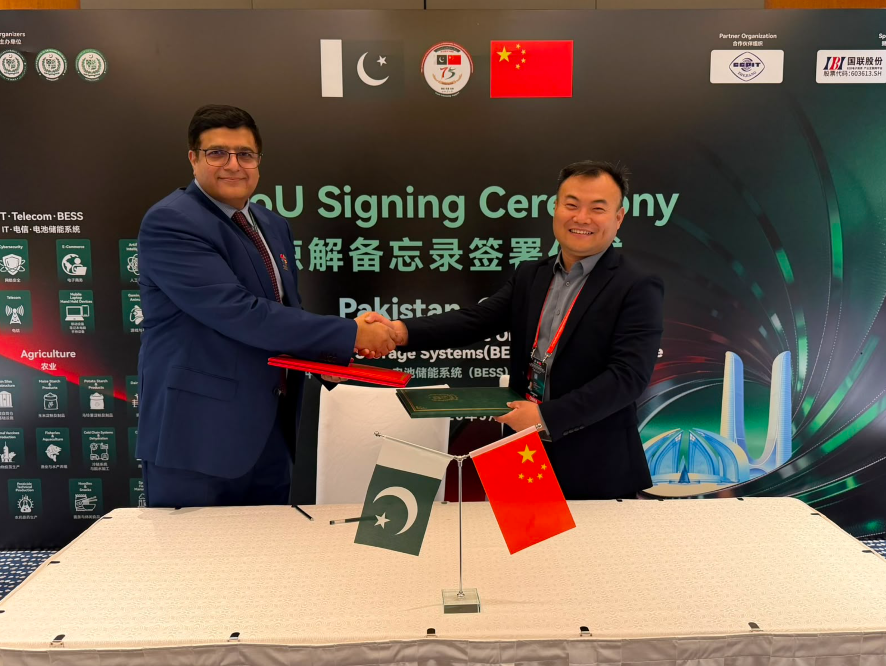
Karachi: InfraZamin Pakistan Limited, in partnership with Infralectric, a Brillanz Group company, DIB Pakistan Limited, Bank Alfalah Limited, and Meezan Bank Limited, announced the signing of Pakistan’s first-ever PKR 3 Billion, ‘AAA’ Rated, Green Sukuk for the telecom sector, marking a major milestone in sustainable infrastructure financing and climate-aligned capital markets development. Read More: https://theboardroompk.com/pakistans-6-popular-beauty-creams-pulled-off-the-shelves-for-containing-toxic-substances/ Under the transaction, InfraZamin Pakistan is providing a 100% principal guarantee for the PKR 3 billion Green Sukuk issued by Infralectric Private Limited with DIB Pakistan Limited, as the Lead Arranger of the Green Sukuk transaction demonstrating how ethical capital markets can lead the transition toward scalable, climate-aligned infrastructure financing. The proceeds will finance one of Pakistan’s largest commercial deployments of lithium-ion Battery Energy Storage Systems (BESS) and solarization solutions for telecom tower infrastructure across the country. The transaction witnessed oversubscription by investors and initial disbursement is planned after completion of all formalities. Commenting on the occasion, Maheen Rahman, Chief Executive Officer of InfraZamin Pakistan, said, “This landmark transaction demonstrates how innovative credit enhancement can unlock capital markets for transformative green infrastructure. By guaranteeing Pakistan’s first Green Sukuk for the telecom sector, InfraZamin is proud to catalyze sustainable private investment into climate-resilient infrastructure while deepening Pakistan’s debt capital markets. We are delighted to partner with Infralectric and Dubai Islamic Bank on this pioneering transaction.” Bilal Qureshi, Group CEO, Brillianz Group, stated, “This landmark transaction sets a new benchmark for business model innovation, demonstrating how private capital can accelerate energy transition, reduce diesel reliance and forex pressure, and build a more resilient, AI-enabled telecom network for Pakistan.” Muhammad Ali Gulfaraz, Chief Executive Officer of Dubai Islamic Bank Pakistan Limited, highlighted, “This agreement represents a defining moment in the Bank’s commitment to the country’s green transition. By structuring this PKR 3,000 million Green Sukuk, DIB Pakistan is demonstrating how Islamic capital markets can effectively bridge the gap between critical infrastructure needs and climate-conscious investment. The solarization of Pakistan’s telecom backbone will significantly lower dependence on conventional energy while reinforcing the resilience of the digital economy, proving that ethical finance serves as a powerful catalyst for large-scale environmental impact.” Atif Bajwa, President and Chief Executive Officer of Bank Alfalah Limited, stated, “Bank Alfalah is pleased to contribute to this landmark Green Sukuk, representing a significant advancement in green finance and sustainable infrastructure development in Pakistan. This transaction underscores Bank Alfalah’s continued commitment to developing climate-aligned capital markets and facilitating the mobilization of private sector investment into environmentally responsible projects. The initiative is expected to play a meaningful role in promoting cleaner energy solutions within the telecom sector, while strengthening the resilience and sustainability of critical infrastructure across the country. I would like to extend my sincere appreciation to Infralectric, InfraZamin, and all partners involved for their collaboration and efforts in successfully delivering this transaction.”Syed Tanveer Hussain, Chief Operating Officer, Wholesale Banking, Meezan Bank added: “Meezan Bank’s participation in this landmark syndicated Green Sukuk transaction, reflects our continued commitment towards advancing the role of Islamic finance in supporting sustainable and infrastructure-led development in Pakistan. This initiative, focused on green energy solutions for telecom infrastructure, represents a meaningful step towards reducing carbon emissions while enhancing operational efficiency within a critical sector of the economy. The inclusion of Infrazamin’s financial guarantee further strengthens the structure by enhancing investor confidence and facilitating broader market participation. Such transactions will deepen Pakistan’s Islamic capital market while supporting a more sustainable and resilient economy.” Pakistan’s telecom sector, serving nearly 190 million mobile subscribers, is among the country’s most energy-intensive and operationally critical industries, with over 50,000 tower sites nationwide, many operating on weak-grid or off-grid power. This has historically resulted in heavy reliance on diesel generators, elevated operating costs, and significant carbon emissions. Through this transaction, Infralectric will deploy advanced battery storage, solar PV, Artificial-Intelligence enabled optimization, and remote monitoring solutions across approximately 1,955 telecom tower sites, significantly reducing diesel dependence, improving network reliability, lowering operational costs, and cutting emissions.Carbon emission reduction and fuel import bill reduction are among the key expected outcomes of the project. In addition to InfraZamin Pakistan as Guarantor, Infralectric Private Limited as Issuer, and DIB Pakistan Limited, as Lead Arranger, the transaction has been supported by Bank Alfalah Limited as Joint Lead Arranger, Meezan Bank Limited as LC (Import) Bank, BankIslami Pakistan Limited as Investment Agent, DIB PF, DIB GF, Alfalah Asset Management Limited and NBP Fund Management Limited as investors, Ahmed & Qazi as Investor’s Legal Counsel, HP | FKM as Issuer’s Legal Counsel, Al Hilal as Shariah Advisor, Pakistan Environment Trust (PET) as Green Bond Consultant, and Pakistan Credit Rating Agency (PACRA) as Rating Agency. The transaction is expected to support hundreds of direct and indirect jobs through installation, maintenance, local manufacturing, remote monitoring, and technical field operations. By replacing diesel generators with clean distributed energy solutions, the initiative advances environmental sustainability while strengthening the resilience of Pakistan’s telecom infrastructure. The transaction contributes to Pakistan’s progress toward Sustainable Development Goals relating to Affordable and Clean Energy, Industry Innovation and Infrastructure, Climate Action, and Partnerships for the Goals. This milestone reflects InfraZamin Pakistan’s continued commitment to enabling innovative financing solutions that mobilize private capital into sustainable, climate-aligned, and development-focused infrastructure projects across Pakistan.

Auto

For the First Time, Middle-Class Cars Take Lead as SUVs Lose Ground in Pakistan

Pakistan’s automobile market is witnessing a notable shift as passenger cars tighten their grip on overall sales, signaling changing consumer priorities in a price-sensitive environment. Latest industry data shows passenger cars now account for around 63% of total sales, up from 58% a year earlier, reflecting a steady move away from larger, more expensive SUVs. Affordability Driving Consumer Choices The rise of models like Toyota Corolla and Yaris highlights how affordability is shaping buying decisions. With inflationary pressures still weighing on household budgets, many consumers appear to be opting for practical and fuel-efficient vehicles instead of premium SUVs. Industry analysts say lower interest rates have supported auto financing, but rising ownership costs—including fuel, maintenance, and insurance—are pushing buyers toward smaller cars. Even among buyers who previously preferred SUVs, there is growing evidence of a shift toward more economical options. This trend is particularly visible in urban centers, where congestion and fuel costs make compact cars more attractive for daily use. SUVs Face Growing Competition While SUVs remain popular, their dominance is increasingly being challenged. The segment is facing pressure not only from affordability concerns but also from intensifying competition among brands offering feature-rich vehicles at competitive prices. New entrants and aggressive pricing strategies have fragmented the SUV market, reducing the dominance of traditional models. As a result, some consumers are delaying purchases or reconsidering their options altogether. Analysts believe that unless price points stabilize or incomes improve significantly, passenger cars will continue to gain ground. The shift underscores a broader transformation in Pakistan’s auto market, where value-for-money is becoming the decisive factor in purchase decisions.

Pakistan’s 6 Popular Beauty Creams Pulled Off the Shelves for Containing Toxic Substances!
Health

Pakistan’s 6 Popular Beauty Creams Pulled Off the Shelves for Containing Toxic Substances!

For years, beauty creams promising instant glow and brighter, clearer skin have dominated shelves across Pakistan. But recent findings suggest that beneath the glossy packaging and bold claims, some of these products may carry serious health risks. Read More: https://theboardroompk.com/pakistan-aims-to-break-boom-bust-cycle-with-export-led-strategy-kayani/ The Pakistan Standards and Quality Control Authority (PSQCA) has stepped in to take decisive action against multiple skincare brands after routine inspections revealed violations of national safety standards. At the center of the issue is the presence of toxic substances, including mercury and arsenic, as well as microbiological contamination, that have no place in cosmetic products. Confirmed through a written response by Minister for Science and Technology Khalid Hussain Magsi, the six beauty creams, including Golden Pearl Beauty Cream, Parley 24K Gold Beauty Cream, Goree Beauty Cream, and Face Fresh Beauty Cream, among others, failed to meet the requirements set out in Pakistan Standard Specification 3228:2025. Samples were tested by Pakistan Council of Scientific and Industrial Research, where laboratory analysis confirmed both chemical hazards and microbiological contamination in beauty creams. The findings directly challenge the production process, from ingredient sourcing to quality control. Mercury, commonly used in some skin-lightening formulations, suppresses melanin production to create a temporary brightening effect. However, this accompanies significant side effects, including irritation, rashes, and long-term skin damage. Arsenic, on the other hand, can appear as a contaminant, posing serious health risks even in small amounts. The danger doesn’t stop at the skin. Both substances can be absorbed into the body, leading to complications that extend beyond cosmetic concerns. Experts warn of potential kidney damage, even neurological disorders. Following these revelations, authorities have banned the sale and distribution of the affected creams until they comply with safety regulations. Continuous market surveillance is also underway to ensure that non-compliant products are removed from the stores.This situation alarms consumers against the use of unverified beauty products, raising an uncomfortable question:how much do we really know about the products we trust with our skin?

Pakistan Aims to Break Boom-Bust Cycle with Export-Led Strategy: Kayani
Pakistan

Pakistan Aims to Break Boom-Bust Cycle with Export-Led Strategy: Kayani

KARACHI: Minister of State for Finance Bilal Azhar Kayani has reiterated the government’s firm commitment to achieving sustainable economic stability and accelerating export-led growth through strong public–private sector collaboration. Read More: https://theboardroompk.com/strait-of-hormuz-reopens-amid-uncertainty-in-us-iran-peace-talks/ Speaking during his visit to the Karachi Chamber of Commerce & Industry on Saturday, the State Minister emphasized that the government is pursuing a policy framework aimed at ensuring inclusive and durable economic growth, with the private sector playing a central and leading role. He assured that exporters, in particular, would continue to receive full policy support to enhance Pakistan’s export performance and global competitiveness. The meeting was attended by Chairman Businessmen Group Zubair Motiwala, Vice Chairmen BMG Jawed Bilwani and Tariq Yousuf, President KCCI Muhammad Rehan Hanif, Senior Vice President Muhammad Raza, Vice President Arif Lakhani, members of the Executive Committee, and prominent exporters. Bilal Azhar Kayani underscored that his continued visits to Karachi reflect the government’s commitment to sustained engagement with the business community. He noted that such interactions are vital for understanding ground realities and ensuring that policy measures remain aligned with the needs of trade and industry. He described Karachi as the backbone of Pakistan’s economy, highlighting its critical contribution to industrial output, trade volumes, and national revenue. He further stated that the purpose of his visit was to identify and address key impediments to economic activity, while facilitating a more enabling and business-friendly environment. Highlighting recent economic progress, the Minister noted that since February 2024, the government has remained focused on macroeconomic stabilization. He pointed out that inflationary pressures have eased and foreign exchange reserves have improved as a result of timely, prudent, and coordinated policy interventions. Providing broader context, he observed that Pakistan’s economy has historically faced cycles of growth accompanied by external imbalances, where increases in GDP were often offset by pressure on foreign exchange reserves. He stressed that the government is now committed to breaking this cycle by promoting sustainable growth anchored in exports and private sector investment. He also outlined key reforms introduced under the Prime Minister’s leadership, including the transfer of management of the Export Development Fund to exporters, aimed at improving transparency, efficiency, and industry ownership. Bilal Azhar Kayani further shared that structured engagement with the business community has been institutionalized through regular meetings with presidents of chambers of commerce. He added that even during challenging periods, including times of regional uncertainty, the government’s economic team has taken balanced and prudent decisions to safeguard economic stability. Reiterating the government’s consultative approach, he assured participants that stakeholder feedback would continue to play a central role in shaping economic policies. Referring to financial sector initiatives, he described Roshan Digital Accounts as a flagship success, which has garnered strong confidence from overseas Pakistanis and facilitated significant inflows of foreign investment. He emphasized that the government remains committed to further strengthening such channels to attract and sustain foreign exchange inflows. He also noted that private sector representation has been enhanced in key institutions such as SMEDA to ensure that policymaking is informed by practical business insights. On the energy front, the Minister stated that petroleum prices are being reviewed on a regular basis, with any adjustments being aligned with global market trends. He noted that petroleum levies are being rationalized, with the levy on diesel currently at zero while petrol carries a levy of Rs. 80, adding that any further decline in international oil prices would be passed on to consumers. He further highlighted that Pakistan has regained access to the international Eurobond market after a hiatus of four years, reflecting renewed investor confidence in the country’s economic direction. Addressing regulatory reforms, he pointed out that amendments introduced in the previous budget to Section 37A of FBR laws have curtailed certain discretionary powers. He added that the authority of FBR officials to arrest traders has also been significantly reduced, providing much-needed relief and improving the ease of doing business. Concluding his remarks, the Minister stated that he would refrain from commenting on the upcoming federal budget at this stage, noting that detailed announcements would be made at the appropriate time. The meeting concluded with an interactive session, during which exporters highlighted key challenges and offered practical suggestions for further improving the business climate and export ecosystem.

Scroll to Top