Author name: Web Desk

Pakistan’s First PKR 3 Billion, AAA Rated, Green Sukuk for Telecom Sector Launched
Pakistan

Pakistan’s First PKR 3 Billion, AAA Rated, Green Sukuk for Telecom Sector Launched

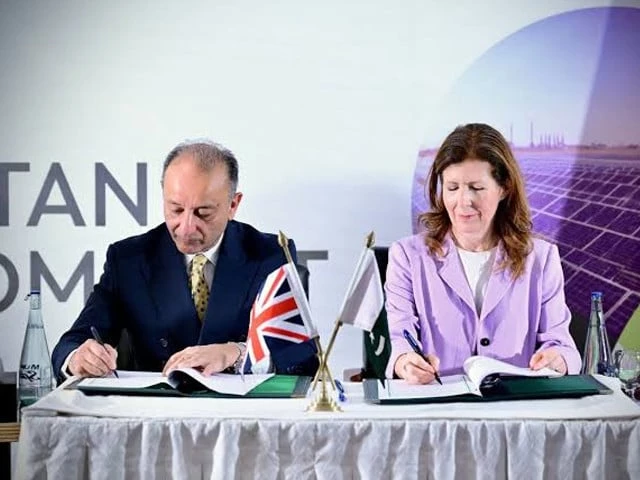
Karachi: InfraZamin Pakistan Limited, in partnership with Infralectric, a Brillanz Group company, DIB Pakistan Limited, Bank Alfalah Limited, and Meezan Bank Limited, announced the signing of Pakistan’s first-ever PKR 3 Billion, ‘AAA’ Rated, Green Sukuk for the telecom sector, marking a major milestone in sustainable infrastructure financing and climate-aligned capital markets development. Read More: https://theboardroompk.com/pakistans-6-popular-beauty-creams-pulled-off-the-shelves-for-containing-toxic-substances/ Under the transaction, InfraZamin Pakistan is providing a 100% principal guarantee for the PKR 3 billion Green Sukuk issued by Infralectric Private Limited with DIB Pakistan Limited, as the Lead Arranger of the Green Sukuk transaction demonstrating how ethical capital markets can lead the transition toward scalable, climate-aligned infrastructure financing. The proceeds will finance one of Pakistan’s largest commercial deployments of lithium-ion Battery Energy Storage Systems (BESS) and solarization solutions for telecom tower infrastructure across the country. The transaction witnessed oversubscription by investors and initial disbursement is planned after completion of all formalities. Commenting on the occasion, Maheen Rahman, Chief Executive Officer of InfraZamin Pakistan, said, “This landmark transaction demonstrates how innovative credit enhancement can unlock capital markets for transformative green infrastructure. By guaranteeing Pakistan’s first Green Sukuk for the telecom sector, InfraZamin is proud to catalyze sustainable private investment into climate-resilient infrastructure while deepening Pakistan’s debt capital markets. We are delighted to partner with Infralectric and Dubai Islamic Bank on this pioneering transaction.” Bilal Qureshi, Group CEO, Brillianz Group, stated, “This landmark transaction sets a new benchmark for business model innovation, demonstrating how private capital can accelerate energy transition, reduce diesel reliance and forex pressure, and build a more resilient, AI-enabled telecom network for Pakistan.” Muhammad Ali Gulfaraz, Chief Executive Officer of Dubai Islamic Bank Pakistan Limited, highlighted, “This agreement represents a defining moment in the Bank’s commitment to the country’s green transition. By structuring this PKR 3,000 million Green Sukuk, DIB Pakistan is demonstrating how Islamic capital markets can effectively bridge the gap between critical infrastructure needs and climate-conscious investment. The solarization of Pakistan’s telecom backbone will significantly lower dependence on conventional energy while reinforcing the resilience of the digital economy, proving that ethical finance serves as a powerful catalyst for large-scale environmental impact.” Atif Bajwa, President and Chief Executive Officer of Bank Alfalah Limited, stated, “Bank Alfalah is pleased to contribute to this landmark Green Sukuk, representing a significant advancement in green finance and sustainable infrastructure development in Pakistan. This transaction underscores Bank Alfalah’s continued commitment to developing climate-aligned capital markets and facilitating the mobilization of private sector investment into environmentally responsible projects. The initiative is expected to play a meaningful role in promoting cleaner energy solutions within the telecom sector, while strengthening the resilience and sustainability of critical infrastructure across the country. I would like to extend my sincere appreciation to Infralectric, InfraZamin, and all partners involved for their collaboration and efforts in successfully delivering this transaction.”Syed Tanveer Hussain, Chief Operating Officer, Wholesale Banking, Meezan Bank added: “Meezan Bank’s participation in this landmark syndicated Green Sukuk transaction, reflects our continued commitment towards advancing the role of Islamic finance in supporting sustainable and infrastructure-led development in Pakistan. This initiative, focused on green energy solutions for telecom infrastructure, represents a meaningful step towards reducing carbon emissions while enhancing operational efficiency within a critical sector of the economy. The inclusion of Infrazamin’s financial guarantee further strengthens the structure by enhancing investor confidence and facilitating broader market participation. Such transactions will deepen Pakistan’s Islamic capital market while supporting a more sustainable and resilient economy.” Pakistan’s telecom sector, serving nearly 190 million mobile subscribers, is among the country’s most energy-intensive and operationally critical industries, with over 50,000 tower sites nationwide, many operating on weak-grid or off-grid power. This has historically resulted in heavy reliance on diesel generators, elevated operating costs, and significant carbon emissions. Through this transaction, Infralectric will deploy advanced battery storage, solar PV, Artificial-Intelligence enabled optimization, and remote monitoring solutions across approximately 1,955 telecom tower sites, significantly reducing diesel dependence, improving network reliability, lowering operational costs, and cutting emissions.Carbon emission reduction and fuel import bill reduction are among the key expected outcomes of the project. In addition to InfraZamin Pakistan as Guarantor, Infralectric Private Limited as Issuer, and DIB Pakistan Limited, as Lead Arranger, the transaction has been supported by Bank Alfalah Limited as Joint Lead Arranger, Meezan Bank Limited as LC (Import) Bank, BankIslami Pakistan Limited as Investment Agent, DIB PF, DIB GF, Alfalah Asset Management Limited and NBP Fund Management Limited as investors, Ahmed & Qazi as Investor’s Legal Counsel, HP | FKM as Issuer’s Legal Counsel, Al Hilal as Shariah Advisor, Pakistan Environment Trust (PET) as Green Bond Consultant, and Pakistan Credit Rating Agency (PACRA) as Rating Agency. The transaction is expected to support hundreds of direct and indirect jobs through installation, maintenance, local manufacturing, remote monitoring, and technical field operations. By replacing diesel generators with clean distributed energy solutions, the initiative advances environmental sustainability while strengthening the resilience of Pakistan’s telecom infrastructure. The transaction contributes to Pakistan’s progress toward Sustainable Development Goals relating to Affordable and Clean Energy, Industry Innovation and Infrastructure, Climate Action, and Partnerships for the Goals. This milestone reflects InfraZamin Pakistan’s continued commitment to enabling innovative financing solutions that mobilize private capital into sustainable, climate-aligned, and development-focused infrastructure projects across Pakistan.

Auto

For the First Time, Middle-Class Cars Take Lead as SUVs Lose Ground in Pakistan

Pakistan’s automobile market is witnessing a notable shift as passenger cars tighten their grip on overall sales, signaling changing consumer priorities in a price-sensitive environment. Latest industry data shows passenger cars now account for around 63% of total sales, up from 58% a year earlier, reflecting a steady move away from larger, more expensive SUVs. Affordability Driving Consumer Choices The rise of models like Toyota Corolla and Yaris highlights how affordability is shaping buying decisions. With inflationary pressures still weighing on household budgets, many consumers appear to be opting for practical and fuel-efficient vehicles instead of premium SUVs. Industry analysts say lower interest rates have supported auto financing, but rising ownership costs—including fuel, maintenance, and insurance—are pushing buyers toward smaller cars. Even among buyers who previously preferred SUVs, there is growing evidence of a shift toward more economical options. This trend is particularly visible in urban centers, where congestion and fuel costs make compact cars more attractive for daily use. SUVs Face Growing Competition While SUVs remain popular, their dominance is increasingly being challenged. The segment is facing pressure not only from affordability concerns but also from intensifying competition among brands offering feature-rich vehicles at competitive prices. New entrants and aggressive pricing strategies have fragmented the SUV market, reducing the dominance of traditional models. As a result, some consumers are delaying purchases or reconsidering their options altogether. Analysts believe that unless price points stabilize or incomes improve significantly, passenger cars will continue to gain ground. The shift underscores a broader transformation in Pakistan’s auto market, where value-for-money is becoming the decisive factor in purchase decisions.

Pakistan’s 6 Popular Beauty Creams Pulled Off the Shelves for Containing Toxic Substances!
Health

Pakistan’s 6 Popular Beauty Creams Pulled Off the Shelves for Containing Toxic Substances!

For years, beauty creams promising instant glow and brighter, clearer skin have dominated shelves across Pakistan. But recent findings suggest that beneath the glossy packaging and bold claims, some of these products may carry serious health risks. Read More: https://theboardroompk.com/pakistan-aims-to-break-boom-bust-cycle-with-export-led-strategy-kayani/ The Pakistan Standards and Quality Control Authority (PSQCA) has stepped in to take decisive action against multiple skincare brands after routine inspections revealed violations of national safety standards. At the center of the issue is the presence of toxic substances, including mercury and arsenic, as well as microbiological contamination, that have no place in cosmetic products. Confirmed through a written response by Minister for Science and Technology Khalid Hussain Magsi, the six beauty creams, including Golden Pearl Beauty Cream, Parley 24K Gold Beauty Cream, Goree Beauty Cream, and Face Fresh Beauty Cream, among others, failed to meet the requirements set out in Pakistan Standard Specification 3228:2025. Samples were tested by Pakistan Council of Scientific and Industrial Research, where laboratory analysis confirmed both chemical hazards and microbiological contamination in beauty creams. The findings directly challenge the production process, from ingredient sourcing to quality control. Mercury, commonly used in some skin-lightening formulations, suppresses melanin production to create a temporary brightening effect. However, this accompanies significant side effects, including irritation, rashes, and long-term skin damage. Arsenic, on the other hand, can appear as a contaminant, posing serious health risks even in small amounts. The danger doesn’t stop at the skin. Both substances can be absorbed into the body, leading to complications that extend beyond cosmetic concerns. Experts warn of potential kidney damage, even neurological disorders. Following these revelations, authorities have banned the sale and distribution of the affected creams until they comply with safety regulations. Continuous market surveillance is also underway to ensure that non-compliant products are removed from the stores.This situation alarms consumers against the use of unverified beauty products, raising an uncomfortable question:how much do we really know about the products we trust with our skin?

Pakistan Aims to Break Boom-Bust Cycle with Export-Led Strategy: Kayani
Pakistan

Pakistan Aims to Break Boom-Bust Cycle with Export-Led Strategy: Kayani

KARACHI: Minister of State for Finance Bilal Azhar Kayani has reiterated the government’s firm commitment to achieving sustainable economic stability and accelerating export-led growth through strong public–private sector collaboration. Read More: https://theboardroompk.com/strait-of-hormuz-reopens-amid-uncertainty-in-us-iran-peace-talks/ Speaking during his visit to the Karachi Chamber of Commerce & Industry on Saturday, the State Minister emphasized that the government is pursuing a policy framework aimed at ensuring inclusive and durable economic growth, with the private sector playing a central and leading role. He assured that exporters, in particular, would continue to receive full policy support to enhance Pakistan’s export performance and global competitiveness. The meeting was attended by Chairman Businessmen Group Zubair Motiwala, Vice Chairmen BMG Jawed Bilwani and Tariq Yousuf, President KCCI Muhammad Rehan Hanif, Senior Vice President Muhammad Raza, Vice President Arif Lakhani, members of the Executive Committee, and prominent exporters. Bilal Azhar Kayani underscored that his continued visits to Karachi reflect the government’s commitment to sustained engagement with the business community. He noted that such interactions are vital for understanding ground realities and ensuring that policy measures remain aligned with the needs of trade and industry. He described Karachi as the backbone of Pakistan’s economy, highlighting its critical contribution to industrial output, trade volumes, and national revenue. He further stated that the purpose of his visit was to identify and address key impediments to economic activity, while facilitating a more enabling and business-friendly environment. Highlighting recent economic progress, the Minister noted that since February 2024, the government has remained focused on macroeconomic stabilization. He pointed out that inflationary pressures have eased and foreign exchange reserves have improved as a result of timely, prudent, and coordinated policy interventions. Providing broader context, he observed that Pakistan’s economy has historically faced cycles of growth accompanied by external imbalances, where increases in GDP were often offset by pressure on foreign exchange reserves. He stressed that the government is now committed to breaking this cycle by promoting sustainable growth anchored in exports and private sector investment. He also outlined key reforms introduced under the Prime Minister’s leadership, including the transfer of management of the Export Development Fund to exporters, aimed at improving transparency, efficiency, and industry ownership. Bilal Azhar Kayani further shared that structured engagement with the business community has been institutionalized through regular meetings with presidents of chambers of commerce. He added that even during challenging periods, including times of regional uncertainty, the government’s economic team has taken balanced and prudent decisions to safeguard economic stability. Reiterating the government’s consultative approach, he assured participants that stakeholder feedback would continue to play a central role in shaping economic policies. Referring to financial sector initiatives, he described Roshan Digital Accounts as a flagship success, which has garnered strong confidence from overseas Pakistanis and facilitated significant inflows of foreign investment. He emphasized that the government remains committed to further strengthening such channels to attract and sustain foreign exchange inflows. He also noted that private sector representation has been enhanced in key institutions such as SMEDA to ensure that policymaking is informed by practical business insights. On the energy front, the Minister stated that petroleum prices are being reviewed on a regular basis, with any adjustments being aligned with global market trends. He noted that petroleum levies are being rationalized, with the levy on diesel currently at zero while petrol carries a levy of Rs. 80, adding that any further decline in international oil prices would be passed on to consumers. He further highlighted that Pakistan has regained access to the international Eurobond market after a hiatus of four years, reflecting renewed investor confidence in the country’s economic direction. Addressing regulatory reforms, he pointed out that amendments introduced in the previous budget to Section 37A of FBR laws have curtailed certain discretionary powers. He added that the authority of FBR officials to arrest traders has also been significantly reduced, providing much-needed relief and improving the ease of doing business. Concluding his remarks, the Minister stated that he would refrain from commenting on the upcoming federal budget at this stage, noting that detailed announcements would be made at the appropriate time. The meeting concluded with an interactive session, during which exporters highlighted key challenges and offered practical suggestions for further improving the business climate and export ecosystem.

21,050 Used Cars Expected to Shift to CKD Market After Baggage Scheme Ban: IMC CEO
Pakistan

21,050 Used Cars Expected to Shift to CKD Market After Baggage Scheme Ban: IMC CEO

Indus Motor Company has appreciated the sincere efforts of Haroon Akhtar, Special Assistant to the Prime Minister on Industries and Production, Saif Anjum, Federal Secretary of the Ministry of Industries and Production, and Hamad Ali Mansoor, CEO of the Engineering Development Board, for the stability of local auto industry. Read More: https://theboardroompk.com/strait-of-hormuz-reopens-amid-uncertainty-in-us-iran-peace-talks/ “I really appreciate their concerted efforts for the growth of local auto industry, especially abolishing the baggage scheme for used car imports,” said Chief Executive IMC Ali Asghar Jamali. He added that this landmark policy decision marks a significant step towards strengthening Pakistan’s local automotive manufacturing sector as by discouraging the influx of used vehicles the initiative is expected to enhance demand for locally assembled cars, support industrial growth, generate employment and effectively reduce idle production capacity within the country’s automotive industry. It is worth adding here that a 50% shift is expected from Baggage Scheme to CKD market while others may shift to remaining schemes, thus the Used Car market will shift by 21,050 units. In the financial year 2025 total 35,806 units of used cars were imported under Personal Baggage category and since this category has been abolished in January 2026 the imports under this category are not expected to happen now. Similarly, under Gift Scheme total 4634 units were imported and under Transfer of Residence category total 1685 units were imported in the FY 2025, leading to total imported used cars units of 42,125 in the said year. “Used car imports are negligible in India, Thailand, and Vietnam due to various tariff and administrative measures as the market share of used cars in these countries are 0%, 1.2%, and 0.3%, respectively, while the market share of used cars in Pakistan is 20%. The CEO IMC said that the sincere efforts of the government will help Pakistan’s automotive sector to become a driver of sustainable economic growth and position itself as a potential investment destination for original equipment manufacturers.

Strait of Hormuz Reopens Amid Uncertainty in US-Iran Peace Talks
Breaking News

Strait of Hormuz Reopens Amid Uncertainty in US-Iran Peace Talks

WASHINGTON — Seven weeks of conflict with Iran have exposed a key vulnerability for President Donald Trump: the US economy. Despite military pressure on Tehran, the war has driven up global energy prices, strained domestic consumers, and forced a rush toward diplomacy. Read More: https://theboardroompk.com/pakistan-new-company-registrations-surge-as-foreign-investors-boost-corporate-growth-in-q1-2026/ Economic Pressure Mounts on Trump Iran’s temporary reopening of the Strait of Hormuz has allowed some tankers to move, easing immediate fears over oil supplies. Yet analysts say the conflict has revealed limits to Trump’s tolerance for economic pain at home. US gasoline prices have surged, inflation is rising, and Trump’s approval ratings have dipped. The International Monetary Fund has warned of global recession risks. Trump, who campaigned on promises of cheap gas and low inflation, now faces growing pressure from Republican lawmakers ahead of midterm elections. Higher fuel costs have hit American drivers, farmers, and airlines. Disrupted fertilizer shipments have affected key Trump-supporting agricultural regions. Financial markets reacted positively to news of the strait’s reopening, with oil prices falling sharply and stocks climbing. White House officials insist the administration is balancing military goals with its economic agenda. However, critics argue the war has become an “Achilles heel” for Trump, prompting an abrupt shift from airstrikes to negotiations. Uncertain Path to Lasting Peace Trump described “some pretty good news” on Iran but offered no details. He indicated a two-week ceasefire might not be extended beyond Wednesday unless a broader deal is reached. Talks mediated by Pakistan remain unclear, with no visible preparations in Islamabad for high-level meetings this weekend. Core disputes persist over Iran’s nuclear program. Trump insists any agreement must prevent Tehran from developing a nuclear weapon and involves removing stockpiles of enriched uranium. Iranian officials have rejected transferring the material outside their territory. Iran’s armed forces have signaled they could reimpose strict military control over the strait, citing alleged US “piracy” and blockade actions. A senior Iranian negotiator warned the waterway “will not remain open” if pressure continues. Allies and rivals alike are watching closely. European nations and Asian partners worry about Trump’s unpredictability and its impact on global energy security. Russia and China may see opportunities to exploit perceived US economic sensitivities in future confrontations. Experts caution that even if fighting ends soon, repairing economic damage could take months or years. Gulf Arab states seek security guarantees, while Trump’s call for regime change in Iran has gone unanswered. The conflict, which began on February 28 with US-Israeli strikes, has killed thousands and disrupted one-fifth of global oil trade. A lasting deal remains elusive, with gaps on nuclear issues and enforcement mechanisms.

PIA Pre Hajj Operation to commence from 19 April
Breaking News, Pakistan

PIA Pre Hajj Operation to commence from 19 April

Karachi: PIA Pre Hajj Operation of transporting intending pilgrims to Saudi Arabia will commence from 19 April, 2026. PIA on the first day of Pre Hajj Operation will transport more than 540 intending pilgrims to Al-Madinah Al-Munawwarah, Saudi Arabia . Read More: https://theboardroompk.com/india-sixth-largest-economy-dropped-from-4th-position-imf-report-exposes-growth-claims/ PIA’s first Pre-Hajj flight from Sialkot PK 747 and Faisalabad PK 4003 will depart on 19 April for Madinah, Saudi Arabia. The first flight from Multan, PK 715, will depart on 20 April. On 21 April, the first Pre-Hajj flights from Quetta and Islamabad will depart for Madinah respectively. The first Pre-Hajj flight from Karachi, PK 743, will depart on 23 April. The airlines first Pre-Hajj flight PK 747 will depart from Lahore for Madinah on 24 April. PIA will operate more than 191 flights to Jeddah and Madinah to transport more than 55,000 intending pilgrims. PIA will operate flights from cities such as Islamabad, Karachi, Lahore, Multan, Sialkot, Faisalabad and Quetta to Madinah and Jeddah, Saudi Arabia. PIA will transport more more than 15,400 intending pilgrims from Islamabad to Saudi Arabia through 46 Pre- Hajj flights, more than 15,000 from Karachi through 55 flights, more than 12,300 from Lahore through 34 flights, 3,680 from Faisalabad through 23 flights, 5,383 from Multan through 13 flights, 2075 from Sialkot through 5 flights and more than 4,487 intending pilgrims through 15 Pre Hajj flights from Quetta to Saudi Arabia. This year also, PIA aims to provide best services to the Intending Pilgrims, meeting the reliability targets set for itself. During Hajj Operations 2025, PIA exceeded the reliability of 90% and got commendations from the local authorities. CEO PIA , AVM Amir Hayat, who would be personally supervising the operation, has instructed the airline’s Hajj Team to provide the best services to intending pilgrims and make their travel Comfortable and Convenient. The Pre-Hajj Operation will conclude on 21 May 2026.

US Tariffs Cause 26% Fall in EU Exports, Shrinking Trade Surplus by 60%
World

US Tariffs Cause 26% Fall in EU Exports, Shrinking Trade Surplus by 60%

Eurostat data released on April 17 revealed that the European Union’s trade surplus with the world contracted by a dramatic 60% in February, driven mainly by weaker exports to the United States. EU exports to the US fell sharply by 26.4% compared to February last year. In contrast, imports from the US declined only 3.2%. Overall EU exports dropped 9.3% year-on-year, with imports easing 3.5%. Significant Contraction in Trade Balance The steep decline in exports to America stemmed from US tariffs of approximately 15% on a wide range of EU goods. The effect was magnified because European companies had rushed shipments to the US market in early 2025 ahead of expected tariff hikes under President Trump. This front-loading created an unusually high base for comparison, making the current drop appear even larger. Legal and Policy Shifts in US The situation remains fluid after the US Supreme Court invalidated Trump’s broad emergency tariffs on February 20. Shortly afterward, the US introduced a temporary global import levy, with indications that new tariffs modeled on last year’s EU agreement may soon follow. Such rapid policy changes have added layers of uncertainty for EU exporters. Businesses across the bloc are reassessing strategies for the US market, which remains one of their most important destinations. The latest figures illustrate how tariff barriers and legal challenges can quickly reshape trade flows. While the 60% surplus shrinkage is eye-catching, part of it reflects temporary distortions rather than purely structural weakness. European trade authorities will likely engage in further discussions with Washington to stabilize the relationship. For now, the data serves as a clear signal of the costs imposed by escalating tariff measures.

Pakistan-China Economic Cooperation Discussed at IMF–World Bank Meetings
Editor pick, Pakistan

Pakistan-China Economic Cooperation Discussed at IMF–World Bank Meetings

Pakistan-China economic cooperation took center stage as Finance Minister Muhammad Aurangzeb held high-level meetings with Chinese leadership during the IMF and World Bank Spring Meetings in Washington D.C.. The engagements focused on strengthening bilateral ties, mobilising external financing, and reinforcing Pakistan’s improving economic outlook. The minister used the platform to highlight Pakistan’s macroeconomic progress and ongoing reform measures. He emphasized the government’s commitment to stabilizing the economy and expanding strategic partnerships. Meeting with Chinese Finance Minister During his meeting with Lan Fo’an, Aurangzeb expressed appreciation for China’s consistent support for Pakistan. He acknowledged Beijing’s role in facilitating Pakistan’s engagements with the International Monetary Fund. The finance minister briefed his Chinese counterpart on Pakistan’s progress under the IMF programme. He highlighted the successful Staff-Level Agreement for the third review under the Extended Fund Facility and the second review under the Resilience and Sustainability Facility. Officials expect the IMF Executive Board to approve these reviews in early May. This approval would unlock further financial support and strengthen investor confidence. Updates on Financial Stability Measures Aurangzeb informed the Chinese side that Pakistan has repaid a $1.4 billion Eurobond. He also highlighted additional financial inflows secured from Saudi Arabia, which have supported foreign exchange reserves. He shared details about Pakistan’s plan to issue its first Panda Bond. This move aims to diversify funding sources and tap into China’s capital markets. The minister also noted a growing trend in bilateral trade settlement using the Chinese Renminbi. He stressed the need to expand the currency swap facility to support increasing trade volumes between the two countries. Regional Diplomacy and Strategic Support The finance minister appreciated China’s recognition of Pakistan’s mediation efforts in ongoing regional tensions. He reaffirmed Pakistan’s commitment to promoting peace and stability in the region. Aurangzeb also reiterated Pakistan’s full support for the establishment of the Shanghai Cooperation Organization Development Bank. He noted that Pakistan will actively pursue this initiative during its upcoming presidency of the SCO. Both sides expressed satisfaction with continued coordination at international financial forums. They agreed to strengthen collaboration at both the IMF and World Bank levels. Meeting with People’s Bank of China Governor In a separate meeting, Aurangzeb met Pan Gongsheng, Governor of the People’s Bank of China. The discussion focused on Pakistan’s financing strategy and ongoing IMF programme reviews. The finance minister updated the Chinese central bank on progress related to the Panda Bond issuance. He requested faster regulatory approvals to ensure timely execution of the plan. Aurangzeb also highlighted Pakistan’s policy measures to address economic challenges linked to regional instability. These measures include targeted subsidies and demand management strategies to protect key sectors. Invitation to Strengthen Bilateral Engagement Pan Gongsheng invited the finance minister to visit Beijing in the near future. The invitation reflects China’s interest in deepening economic engagement with Pakistan. Officials see this as an opportunity to accelerate financial cooperation and expand bilateral trade frameworks. Future discussions are expected to focus on investment, infrastructure, and financial integration. Strengthening Economic Outlook The meetings underscore Pakistan’s efforts to build stronger economic partnerships while maintaining reform momentum. Engagement with China remains central to Islamabad’s strategy for long-term stability and growth. Analysts believe continued cooperation between Pakistan and China will help address external financing needs and promote sustainable development. The focus on Pakistan China economic cooperation highlights the importance of strategic alliances in navigating global economic challenges. Both countries appear committed to expanding collaboration across financial, trade, and development sectors.

Scroll to Top