
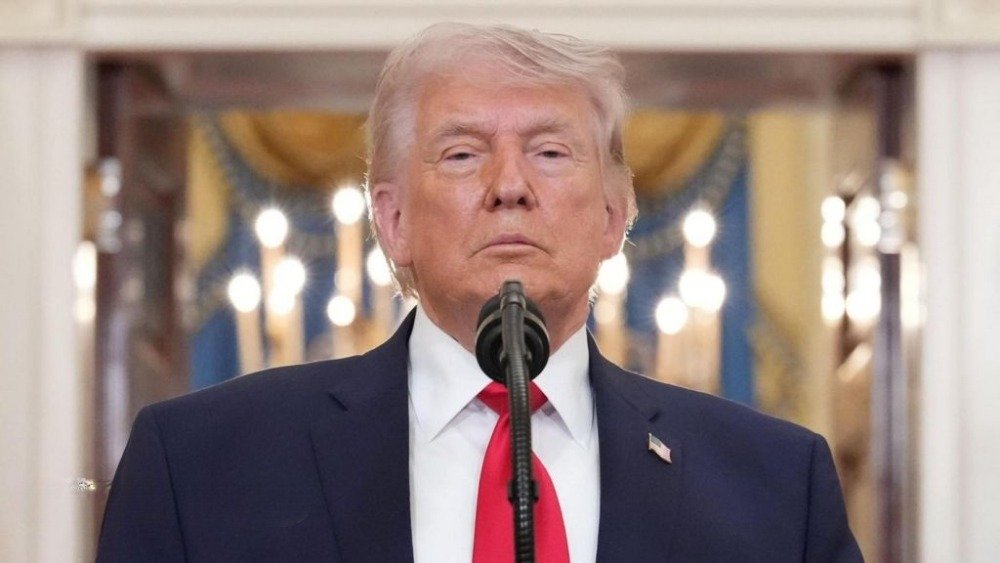
The fragile truce in the Middle East faces a fresh crisis as Trump threatens Iran after ceasefire, following Tehran’s decision to close the Strait of Hormuz again. The move came in response to intensified Israeli strikes in Lebanon. The development has raised global alarm. It has also put ongoing peace efforts at serious risk. The White House has demanded the immediate reopening of the vital waterway while pushing to keep negotiations alive.
Ceasefire Under Immediate Pressure
The ceasefire agreement between the United States and Iran now appears dangerously unstable. Both sides had earlier declared victory after reaching a temporary deal aimed at pausing the war. However, events on the ground quickly challenged that narrative. Iran’s closure of the Strait of Hormuz has triggered strong reactions from Washington. Officials described the move as unacceptable and warned of consequences if the route remains blocked.
At the same time, violence has intensified across the region. Israeli forces launched heavy strikes on Hezbollah positions in Lebanon. These attacks targeted both residential and commercial areas in Beirut. According to Lebanon’s health ministry, at least 182 people were killed in a single day. This marked the deadliest escalation in the ongoing conflict.
US Vice President JD Vance described the agreement as fragile. His statement reflected growing concerns that the deal may collapse at any moment.
Iran Accuses US of Violating Terms
Iranian leadership has openly criticized Washington’s actions. Parliament Speaker Mohammad Bagher Qalibaf accused the United States of violating key conditions of the ceasefire. He stated that planned peace talks now seem unreasonable due to these breaches.
Iran outlined ten conditions for ending hostilities. Officials claim the US has already violated at least three of them. These include continued Israeli strikes on Hezbollah, alleged drone activity inside Iranian airspace, and refusal to accept Iran’s right to uranium enrichment.
Foreign Minister Abbas Araghchi emphasized that Lebanon was part of the ceasefire understanding. However, both US President Donald Trump and Israeli Prime Minister Benjamin Netanyahu rejected that interpretation. They insisted the deal only applied to direct US-Iran hostilities.
This disagreement has created a major diplomatic rift. It has also increased mistrust between both sides.
Strait of Hormuz Closure Raises Global Stakes
The closure of the Strait of Hormuz has serious global implications. The waterway serves as a critical route for nearly 20 percent of the world’s oil and gas supply. Any disruption sends shockwaves across global markets.
The White House responded strongly. Press Secretary Karoline Leavitt called the move completely unacceptable. She reiterated Trump’s demand that Iran must reopen the strait without delay.
Maritime data showed that only 11 vessels passed through the strait on Wednesday. This number remained far below normal levels. Reports suggest that Iran has introduced new tolls for ships crossing the route. Some vessels are now paying up to one dollar per barrel of oil.
This new policy could change long-standing international norms. For decades, the strait has remained open as a free global shipping lane. Any shift may trigger further tensions with Gulf nations.
Conflicting Claims Over Military Success
Both Washington and Tehran continue to claim victory despite the escalating crisis. US Defense Secretary Pete Hegseth said American and Israeli forces achieved a decisive military outcome. He claimed Iran no longer poses a major threat in the region.
Iran strongly rejected this claim. Its military leadership stated that it forced the US and Israel to accept its conditions. Officials described the outcome as a strategic success for Tehran.
These conflicting narratives highlight the uncertainty surrounding the ceasefire. Many key aspects of the agreement remain unclear. This includes the future of Iran’s nuclear and missile programs.
Trump has suggested working with Iran to remove enriched uranium. However, Iranian authorities have not confirmed any such arrangement.
Peace Talks Face Uncertain Future
Despite rising tensions, diplomatic efforts continue. The White House has signaled readiness for further talks. Vice President JD Vance is expected to lead the US delegation in upcoming negotiations.
Sources indicate that talks could begin in Pakistan within days. The goal is to stabilize the ceasefire and reach a long-term agreement.
Iran has presented its own demands. These include the withdrawal of US forces from the region, lifting of economic sanctions, and release of frozen assets.
However, deep mistrust continues to overshadow these discussions. Each side remains skeptical of the other’s intentions.
Israel Intensifies Regional Conflict
While Washington and Tehran attempt to negotiate, Israel has continued its military campaign. Israeli Chief of Staff Lt. Gen. Eyal Zamir confirmed ongoing operations against Hezbollah. He stated that Israel would use every available opportunity to strike.
The Israeli military reported hitting more than 100 targets within minutes. This marked one of the largest attack waves in recent months.
Hezbollah has responded with rocket fire into northern Israel. The group stated it would continue attacks until Israeli and US aggression stops.
This ongoing conflict threatens to derail diplomatic efforts completely.
Rising Casualties and Humanitarian Crisis
The human cost of the conflict continues to rise. In Iran, more than 1,900 people have reportedly died since the start of hostilities. In Lebanon, over 1,700 people have been killed. Around one million people have been displaced.
Casualties have also been reported in Israel, Gulf states, and the West Bank. US forces have suffered losses as well, with 13 service members confirmed dead.
The scale of destruction has drawn global concern. Many world leaders have called for restraint and immediate de-escalation.
Conclusion: Ceasefire Hanging by a Thread
The situation remains highly volatile as Trump threatens Iran after ceasefire and regional tensions escalate. The closure of the Strait of Hormuz, combined with ongoing violence in Lebanon, has pushed the fragile agreement to the brink.
Diplomatic efforts continue, but the risk of renewed full-scale war remains high. The coming days will prove critical. Any further escalation could collapse the ceasefire entirely and trigger a wider regional conflict.