Author name: Web Desk

PSX Rebounds by 1,496 Points; Fertilizer & Banks led the Show
Pakistan

PSX Rebounds by 1,496 Points; Fertilizer & Banks led the Show

Finally, as the Roll-over week progressed, PSX began to show signs of recovery, with the KSE-100 Index closing at 163,189 points, up 1,496 points or 0.93%, said Ali Najib, Deputy Head of Trading at Arif Habib Ltd. The session opened on a flattish note but quickly came under selling pressure once trading resumed, dragging the index to an intra-day low of 160,565 (-1,128 points or 0.70%) and briefly slipping below the 161k mark. However, value hunters stepped in, providing much-needed support and helping the benchmark rebound into positive territory by the close. On the macro front, Pakistan’s unemployment rate has climbed to 7.1%, the highest in 21 years. The Planning Minister attributed this rise to the IMF program and climate-related disruptions, which constrained economic activity and job creation. FFC dominated the positive contributors with 532 points, while renewed interest in banking stocks including MEBL, HBL, NBP and UBL added another 523 points to the day’s rally. Market activity remained moderate, with over 635 million shares traded and a turnover of Rs 38.9 billion. WTL once again topped the volume chart with 47.7 million shares. Outlook: Market momentum continues to strengthen as the Roll-over week progresses. Going forward, the index is expected to maintain a positive trajectory and may march toward the 165k level in the two remaining sessions of the week
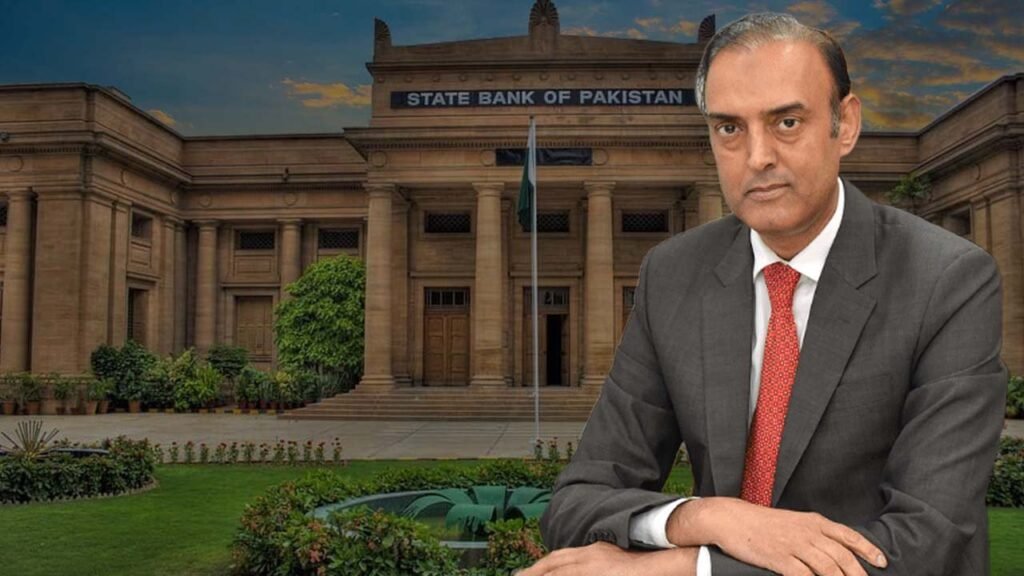
SBP Governor Urges Private Sector to Start Exports or Stay Stuck at 3-4% Growth
Uncategorized

SBP Governor Urges Private Sector to Start Exports or Stay Stuck at 3-4% Growth

Governor State Bank of Pakistan (SBP), Jameel Ahmad has emphasized the urgent need for Pakistan to transition from short-lived stabilization efforts to a durable, sustainable, and outward-looking growth model. Speaking at the opening session of the Pakistan Business Council’s (PBC) ‘Dialogue on the Economy,’ Jameel Ahmad highlighted that while Pakistan has repeatedly cycled through phases of growth followed by painful stabilization, this moment presents a genuine opportunity for long-term transformation, provided policy continuity and private sector adaptability remain at the forefront.Ahmad outlined why the current stabilization phase stands apart from previous cycles. He noted that macroeconomic discipline is now underpinned by well-coordinated and forward-looking monetary and fiscal policies, avoiding the premature easing that historically undermined stability. The central bank’s enhanced forecasting capacity, he added, has allowed policymakers to anchor decisions in eight-quarter projections rather than short-term indicators. ’Inflation has not only fallen in line with our forecast but is expected to remain within the 5–7 percent target band over the medium term,’ he affirmed.A major pillar of improved stability, Ahmad stressed, is the qualitative strengthening of external buffers. Unlike past reliance on debt-driven inflows, recent reserve accumulation reflects strategic FX purchases and reduced forward liabilities. Public sector external debt has remained broadly stable since 2022, while the external debt-to-GDP ratio has declined from 31 percent to 26 percent. During the same period, SBP’s FX reserves have risen from a critically low USD2.9 billion to roughly USD 14.5 billion, a nearly fivefold increase. He shared that there is a growing recognition that sustainable growth will remain elusive until policymaking is reoriented towards a long-term vision of achieving socioeconomic prosperity for our people instead of looking for short-term consumption led growth spurts of the past. He added that this shift is reflected in the long-term reforms initiated by the government and the SBP under our homegrown policy framework. On the fiscal side, the Governor noted that the government’s consistent achievement of primary surpluses over the last three years has helped put public debt indicators on a sustainable path—an outcome rarely seen in the past. He added that the government is implementing long-term structural reforms, including increasing tax to GDP ratio through documentation and widening of the tax base, and energy sector reforms to lower the cost of energy. The Governor added that these reforms are complemented by the SBP continued efforts to address gaps in financial intermediation and increasing financial inclusion across the country.Looking ahead, Ahmad underscored that Pakistan’s economic model must evolve to prevent yet another boom-bust cycle. He added that historical growth averages—hovering around 3–4 percent—can no longer support a nation of over 250 million people. ‘Pakistan stands at an inflection point,’ he said, calling on the private sector to embrace global competitiveness rather than depend on subsidies or domestic market protection.Governor urged businesses to integrate into global value chains, modernize production, leverage emerging opportunities from partners such as the US, China, and Middle Eastern economies, and invest in innovation. ‘Rapid digitalization, the green transition, and global supply-chain realignments offer windows of opportunity—if our firms are willing to adapt,’ he noted. He encouraged businesses to diversify funding sources by tapping domestic and international capital markets and adopting advanced digital tools in financial operations. He placed special emphasis on documenting supply chains—an essential step for improving productivity, access to finance, and supply-chain resilience.Concluding his remarks Mr. Jameel Ahmad said: ‘We cannot expect different results by doing more of the same. The stability we have achieved must now serve as the foundation for long-term prosperity. Only by moving together—government, SBP, and the private sector—we can secure a future of sustained and inclusive growth.’

Meta Faces Wider Italian Antitrust Case Over WhatsApp AI Dominance
World

Meta Faces Wider Italian Antitrust Case Over WhatsApp AI Dominance

ROME: Italy’s competition watchdog has escalated its probe into Meta Platforms Inc. (META.O), accusing the tech giant of leveraging its market dominance to stifle rivals via AI enhancements in WhatsApp.The Italian Antitrust Authority (AGCM) announced Tuesday that it is expanding a July-launched inquiry, now targeting the September 2024 rollout of updated WhatsApp Business Service terms and the seamless embedding of Meta AI functionalities within the app. Regulators allege these moves could hinder innovation, limit market entry for competing AI chatbots, and curb overall output in the burgeoning sector.“By mandating AI integrations without opt-out options, Meta risks entrenching its control, sidelining developers and users seeking alternatives,” the AGCM stated in a release. The probe examines potential breaches of EU antitrust laws, focusing on non-consensual data usage for AI training and the bundling of services that disadvantages third-party providers.Authorities are mulling provisional remedies, such as temporary suspensions of the new terms or AI features, to prevent irreparable harm during the investigation.This marks the latest EU scrutiny on Big Tech’s AI ambitions, following similar cases against Google and Apple. Meta, which counts over 2 billion WhatsApp users globally, has yet to comment. The case could set precedents for cross-border digital enforcement.

TDAP Invites Exporters: Join Pakistan Pavilion at Motobike Istanbul 2026
Auto, World

TDAP Invites Exporters: Join Pakistan Pavilion at Motobike Istanbul 2026

Karachi: Motobike Istanbul, the region’s largest motorbike exhibition, scheduled to be held from 22–25 April 2026 at the Istanbul Expo Center, Türkiye. It is a leading platform for the motorcycle, and bicycle parts, motor bike wears and accessories, which attracting thousands of international buyers and visitors. The event provides Pakistani manufacturers an excellent opportunity to showcase their products, explore new markets, and strengthen global business linkages. In the previous edition, 300 exhibitor brands from 31 countries participated, and the fair attracted 126,094 visitors overall. The exhibition covers a wide range of product groups, including:Motorcycle Parts & Components, Bicycle Parts & Components, Motorcycle Accessories, Bicycle Accessories, Repair & Maintenance, Electronics & Systems, and Service Groups. In 2025, five Pakistani companies participated under the Pakistan Pavilion: Ghauri Tyres & Tubes, Smooth Ways International, Asaqal Sports, Maxler Sewing Corporation, and Qasim Impex. TDAP aims to support local exporters by facilitating their participation in this internationally recognized fair, helping them expand business networks and enhance Pakistan’s presence in the global motorcycle industry. After the subsidy each stand is available for only PKR. 735,000/- while direct stand cost is Last Date to apply: 10 December 2025For more details, please visit our website:https://motobike-istanbul.tr.messefrankfurt.com/istanbul/en.html For TDAP to apply online: https://tdap.gov.pk/mis/

India and Pakistan to clash on 15 February in 2026 T20 World Cup
World

India and Pakistan to clash on 15 February in 2026 T20 World Cup

MUMBAI: Arch-rivals India and Pakistan will renew their blockbuster rivalry in a high-voltage Twenty20 World Cup clash on February 15 in Colombo, the International Cricket Council (ICC) confirmed Tuesday while unveiling the tournament draw.The 20-team showpiece, scheduled from February 7 to March 8, will be co-hosted by India and Sri Lanka, with matches split across five Indian and three Sri Lankan venues. The March 8 final is set for Ahmedabad’s Narendra Modi Stadium, but will shift to Colombo if Pakistan qualifies – a contingency reflecting the strained bilateral ties that have prevented cricket between the neighbours on Indian soil since 2016.Pakistan, placed in Group A alongside New Zealand, Afghanistan and Ireland, will play all its league matches in Sri Lanka due to ongoing political tensions. India, heading Group B with Australia, England and Bangladesh, will contest all games at home.The top two from each of the five groups advance to the Super Eight stage, followed by semi-finals and the final.The fixture comes nine months after May’s brief military flare-up that cast a shadow over the Asia Cup, where India refused the trophy from Pakistan’s Interior Minister and ACC chief Mohsin Naqvi.Despite the off-field frost, the ICC expects record global viewership when the two nuclear-armed nations collide in what remains world cricket’s most watched contest.

Pakistan, Iran Vow to Hit $10bn Trade Target, Revive Gas Pipeline
Uncategorized

Pakistan, Iran Vow to Hit $10bn Trade Target, Revive Gas Pipeline

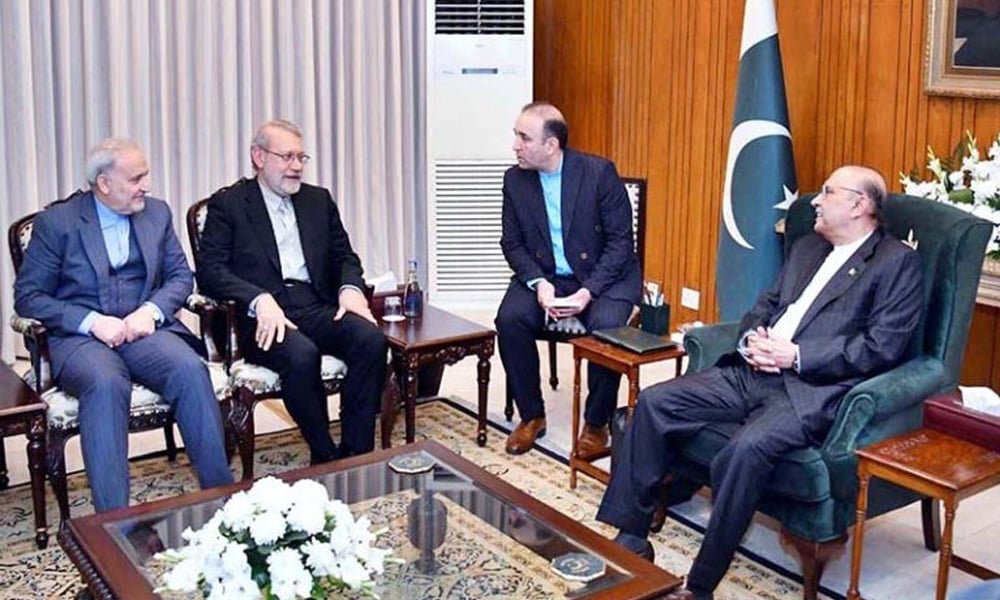
ISLAMABAD: Pakistan and Iran on Tuesday set an ambitious $10 billion bilateral trade target, pledging to fast-track economic ties and resolve long-stalled energy projects during a high-level meeting at Aiwan-e-Sadr.Iran’s Secretary of the Supreme National Security Council, Dr Ali Ardeshir Larijani, who called on President Asif Ali Zardari, conveyed warm greetings from Supreme Leader Ayatollah Ali Khamenei and President Masoud Pezeshkian. He thanked Pakistan for its “unwavering diplomatic and moral support” during Iran’s recent 12-day conflict, declaring that “Pakistan’s victory is our victory.”President Zardari reciprocated Iran’s solidarity after Pakistan’s floods and its consistent backing on Kashmir and Palestine, while praising Tehran’s resilience against “Israeli aggression.”Both sides agreed to grant Pakistani goods preferential market access in Iran and prioritise rail connectivity to boost trade and facilitate Zaireen pilgrimage. Reviving the delayed Iran-Pakistan Gas Pipeline featured prominently, with Zardari stressing a “mutually workable solution” amid Pakistan’s acute energy crunch. Recent technical talks in Islamabad were welcomed, with follow-up discussions slated for Tehran.The leaders described frequent high-level exchanges as evidence of deepening fraternal ties rooted in shared history, faith and culture, vowing enhanced cooperation in security, counter-terrorism and regional stability.

Pakistan’s Unemployment Hits 21-Year High of 7.1% in 2024-25
Pakistan

Pakistan’s Unemployment Hits 21-Year High of 7.1% in 2024-25

Islamabad: Pakistan’s unemployment rate climbed to 7.1% in fiscal year 2024-25, the highest since 2003-04, according to the long-delayed Labour Force Survey released Tuesday by the Pakistan Bureau of Statistics. The figure marks a sharp rise from 6.3% in 2020-21 and surpasses the previous peak of 6.9% recorded in 2018-19.Planning Minister Ahsan Iqbal blamed the surge on the IMF’s stringent $7 billion stabilisation programme, climate-induced disasters, and global price shocks that curbed economic growth to under 3% annually. “These factors severely constrained job creation,” he said, noting that 3.5 million new workers enter the market yearly.Khyber Pakhtunkhwa recorded the highest rate at 9.6%, followed by Punjab (7.3%). Sindh had the lowest at 5.3%. Of nearly 180 million working-age Pakistanis, a staggering 118 million—two-thirds—are unpaid, largely performing household chores, childcare, livestock rearing, or fetching water.The survey also revealed agriculture’s employment share dropped over 4% to 33.1%, while manufacturing fell marginally to 14.4%, hit by high interest rates and energy costs. Over 72% of non-agricultural jobs remain informal.Released under IMF conditions, the report underscores Pakistan’s struggle to absorb its growing labour force amid structural challenges and external pressures.

ADB Approves $48 Million Additional Loan for Balochistan Water Project
World

ADB Approves $48 Million Additional Loan for Balochistan Water Project

Manila, 26 November 2025 – The Asian Development Bank (ADB) has approved an additional $48 million loan to complete the delayed Balochistan Water Resources Development Sector Project in Pakistan, aimed at tackling severe water scarcity in the country’s largest province.The funding will finalize critical components including the Churi Infiltration Gallery subproject, development of the Siri Toi Dam command area, and watershed management initiatives previously stalled due to budget constraints. An innovative piped irrigation network will replace traditional open channels in the Siri Toi area, promising higher efficiency, reduced water losses, and better service delivery.Balochistan, home to 13 million people, relies on agriculture for nearly two-thirds of its economic output and 60% of employment. Yet frequent droughts, poor water management, and climate change have pushed poverty rates almost double the national average.“The project in the Zhob and Mula river basins supports livelihoods and creates economic opportunities, especially for women in agriculture,” said ADB Pakistan Country Director Emma Fan.Upon completion, Siri Toi Dam will store 36 million cubic meters of water, irrigating 16,592 hectares and bolstering climate-resilient farming. Watershed measures including afforestation and check dams will curb soil erosion and flood risks.Co-financed by Japan-funded trusts through ADB, the initiative seeks sustainable, equitable water management for long-term prosperity in one of Pakistan’s most vulnerable regions

Mashreq NEO Goes Live: Pakistan’s First Shariah-Compliant Digital-Only Bank
World

Mashreq NEO Goes Live: Pakistan’s First Shariah-Compliant Digital-Only Bank

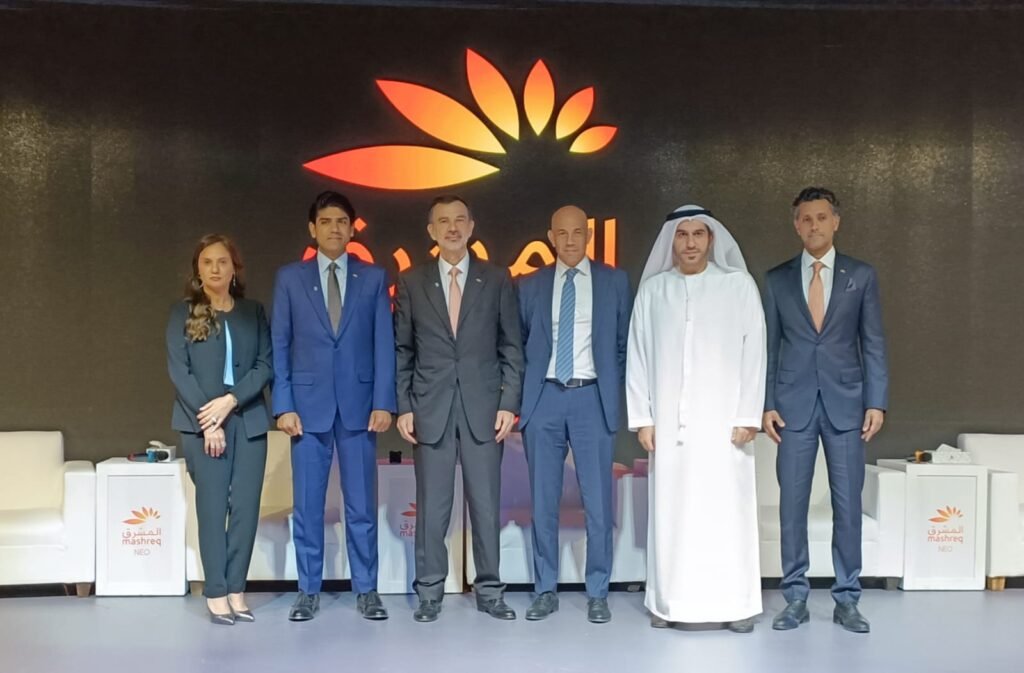
Karachi: In a major step toward accelerating Pakistan’s digital and financial inclusion landscape, Mashreq has officially launched Mashreq NEO, the country’s first Islamic-first digital banking platform. The launch is a significant milestone for the MENA-based financial institution as it expands its digital footprint into Pakistan. Fully operational nationwide, Mashreq NEO offers a seamless, paperless, and Shariah-compliant digital banking experience designed for both resident and non-resident Pakistanis. Customers can open accounts within minutes, access profit-bearing current and savings accounts, and enjoy free digital transactions along with nationwide ATM availability. A key highlight of the platform is its Shariah-compliant remunerative current account, offering a market-first profit rate of up to 5% per annum. Additionally, its Islamic savings account delivers competitive returns of up to 10%, further strengthening its appeal in a country where Islamic banking adoption continues to grow. “Mashreq’s mission has always been to advance how people bank, save, and grow,” said Fernando Morillo, Group Head of Retail Banking at Mashreq and Chairman of Mashreq Bank Pakistan. “The launch of Mashreq NEO underscores our long-term commitment to empowering individuals and businesses in one of the world’s most dynamic digital markets with our global innovation legacy.” Built on a cloud-based infrastructure aligned with State Bank of Pakistan regulations, Mashreq NEO integrates international-grade security, scalability, and transparency. The bank aims to onboard 10 million customers within the next five years, with a strong focus on salaried professionals, freelancers, women entrepreneurs, and overseas Pakistanis. The platform’s debit cards, powered by leading payment networks, provide access to exclusive discounts at more than 30,000 outlets nationwide. For Non-Resident Pakistanis based in the UAE, the bank will offer instant account opening and zero-fee remittances by leveraging Mashreq’s global systems. “Pakistanis have always found a way to adapt, innovate, and move forward. It’s time their banking did the same,” said Muhammad Hamayun Sajjad, CEO of Mashreq Bank Pakistan. “Our Islamic-first digital model is designed to make everyday banking simple, transparent, and inclusive.” Industry observers note that Mashreq NEO’s entry aligns with the country’s broader push toward a digitally enabled financial ecosystem, as highlighted in recent analyses calling for deeper integration of digital channels to expand financial inclusion. With its global expertise and localized approach, Mashreq NEO aims to serve as a bridge between technological innovation and Pakistan’s evolving financial needs offering secure, ethical, and accessible digital banking to millions across the country.

Pakistan-Bangladesh direct flights to start in December; trade and connectivity set to increase
World

Pakistan-Bangladesh direct flights to start in December; trade and connectivity set to increase

LAHORE: Bangladesh’s High Commissioner Iqbal Hussain Khan announced that Mahan Air is likely to start three weekly flights between Karachi and Dhaka from next month. This would be a major step for trade between the two brotherly nations and a significant leap in strengthening connectivity.Speaking at the Lahore Chamber of Commerce & Industry (LCCI), the High Commissioner added that the visa process has been simplified. He said visas are now being issued on the joint recommendation of LCCI and the Bangladesh Honorary Consulate in Lahore, adding that visas will be issued to members within three to four days, making travel between the two countries faster and easier.The High Commissioner was warmly received by LCCI President Faheem ur Rehman Saigol. Senior Vice President Tanveer Ahmed Sheikh, EC Member Shouban Akhtar, former EC Member Naeem Hanif, and diplomat Mahfujol Hassan from the Bangladesh High Commission were also present at the event.LCCI President Faheem ur Rehman Saigol emphasized the historical and cultural ties between Pakistan and Bangladesh, describing the two countries as sharing a common heritage. He said Pakistan can increase rice exports to Bangladesh and also seek guidance from Bangladesh in the garments sector. He noted that both nations have opportunities to collaborate in IT, automobiles, and other industries. Currently, bilateral trade stands at approximately 700 million dollars, but there is potential to increase it to 3 billion dollars over the next few years. President Saigol added that direct flights would further enhance trade relations, and LCCI is ready to provide full support to the Bangladesh High Commission in this regard.The High Commissioner invited the LCCI President to lead a delegation to Bangladesh, to which President Saigol responded positively, stating that a delegation would visit Bangladesh soon. Highlighting trade opportunities, High Commissioner Khan said Pakistan can export rice to Bangladesh, while Bangladesh can supply fresh pineapples to Pakistan. He also pointed out significant potential in textiles and ready-made garments.He further mentioned that a direct cargo shipping service will soon be launched. While a cargo service between the two countries has been operational since last December, rising trade demand now requires a dedicated direct cargo route.In the education sector, the High Commissioner encouraged both countries to collaborate. The Higher Education Commission of Pakistan will soon send a delegation to Bangladesh, comprising representatives from twelve universities, with the aim of attracting more Bangladeshi students to study in Pakistan.He also highlighted Pakistan’s tourism sector as an area with considerable potential. The High Commissioner stressed the shared culture, history, and values of the two nations, describing them as closely connected and united as one community.

Scroll to Top