Author name: Web Desk

Pakistan Stocks Crosses 168,000 as KSE-100 Gains 1,200+ Points on IMF, Clarity on CDF Notification Circular Debt Meeting & PTC Deal
Pakistan

Pakistan Stocks Crosses 168,000 as KSE-100 Gains 1,200+ Points on IMF, Clarity on CDF Notification Circular Debt Meeting & PTC Deal

Pakistan’s equity market kicked off the week with strong optimism as the KSE-100 Index surged 1,218 points – that’s a solid 0.73% gain – to close at 168,303. Investors cheered a perfect trifecta of positive triggers: the IMF Board meets today to approve a fresh $1.2 billion tranche, the ECC will review the Circular Debt Management Plan tomorrow, and political uncertainty eased after the Ministry of Defence formally announced the new Chief of Defence Forces. “Today’s bullish momentum was driven by several key developments: 1) The IMF Board of Directors is meeting today to consider approval of a $1.2 billion tranche for Pakistan; 2) The ECC is scheduled to review the Circular Debt Management Plan for FY25–26 tomorrow; 3) The Ministry of Defence officially announced the appointment of the Chief of Defence Forces, reducing uncertainty on the political front,” said Ali Najib, Deputy Head of Trading at Arif Habib Ltd. On the corporate side, PTC hit the upper cap post company notice regarding that company is accepting the Pakistan Telecommunication Authority’s conditional approval for acquiring control of Telenor Pakistan and Orion Towers. Among major movers, FFC, SYS, NBP, PTC and DGKC collectively contributed 847 points, while HBL, UBL, KTML, SAZEW and HUMNL jointly shaved off 125 points. Market activity stayed moderate, with 781 million shares traded and total turnover reaching Rs 49.9 billion. PTC led the volumes with 60.8 million shares. Outlook: Going forward, the market is expected to attempt a new all-time high, with the energy sector likely to lead the rally. Anticipation of a potential circular debt disbursement tomorrow continues to fuel positive sentiment and may trigger fresh buying interest across key E&P and power sector stocks.

Pakistan, Indonesia Mark 75 Years of Diplomacy with Prabowo’s Historic Visit
Pakistan

Pakistan, Indonesia Mark 75 Years of Diplomacy with Prabowo’s Historic Visit

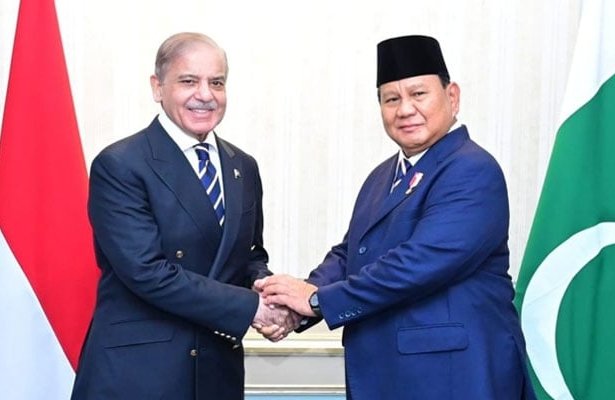
Indonesian President Prabowo Subianto arrived in Islamabad on Monday for a two-day official visit, marking his first trip to Pakistan since assuming office. He was warmly received by Prime Minister Shehbaz Sharif and President Asif Ali Zardari at Nur Khan airbase.The visit holds special significance as it coincides with the 75th anniversary of diplomatic relations between Pakistan and Indonesia. The last Indonesian presidential visit was by President Joko Widodo in 2018.Accompanied by a high-level delegation including key ministers and senior officials, President Prabowo will hold delegation-level talks with Prime Minister Shehbaz Sharif and call on President Asif Ali Zardari. He will also meet Chief of Army Staff Field Marshal Syed Asim Munir.The two sides will discuss deepening cooperation in trade, investment, defence, health, IT, climate resilience, education, and culture, besides enhancing collaboration at regional and multilateral forums. Several Memoranda of Understanding (MoUs) are expected to be signed.The Foreign Office stated that the visit will impart fresh momentum to the historic fraternal ties and expand mutually beneficial partnership between the two nations.

Nestlé Pakistan Upgrades Sheikhupura, Khanewal Plants to Full Automation as per Global Standard. To Unveil Extension Plans at Davos
Pakistan

Nestlé Pakistan Upgrades Sheikhupura, Khanewal Plants to Full Automation as per Global Standard. To Unveil Extension Plans at Davos

Amid plethora of news of leaving multinationals from Pakistan owing to discouraging and complex business environment, heavy taxes and other issues, Nestlé Pakistan has upgraded its manufacturing facilities in Sheikhupura and Khanewal to full automation, bringing both plants to global Nestlé standards and integrating them with the company’s worldwide systems. The announcement was made during a high-level meeting with Federal Minister for Finance Muhammad Aurangzeb on Monday.Led by CEO Jason Avancena, the Nestlé Pakistan delegation briefed the minister on the company’s long-term commitment to the country and outlined multi-year expansion plans focused on sustainability, agricultural transformation, automation, and strengthening production in infant and dairy nutrition segments.The company highlighted strong export performance to the United States, Canada, Gulf countries, and the United Kingdom, while discussing challenges in regional trade, especially the Afghanistan transit route. Finance Minister Aurangzeb advised exploring logistics partnerships to unlock Central Asian markets and reaffirmed full government support for export-led growth.Nestlé expressed its intent to announce the major investment package on a global platform. Global leader Remy Ejel, Executive Vice President for Zone Asia, Oceania and Africa, will attend the World Economic Forum in Davos and seeks a meeting with Prime Minister Shehbaz Sharif. The finance minister welcomed the proposal and assured full facilitation

Global Warning: Under-5 Child Deaths Projected to Rise for the First Time in Decades as Aid Cuts Deepen
World

Global Warning: Under-5 Child Deaths Projected to Rise for the First Time in Decades as Aid Cuts Deepen

In a troubling reversal of decades of progress, a new Gates Foundation report warns that global mortality rates for children under five are expected to rise for the first time in the 21st century. The study highlights a sharp reduction in international development aid as the primary factor putting millions of young lives at risk. First Increase in Under-5 Deaths in Over Two Decades: After years of consistent improvements driven by healthcare investments, vaccines, and widespread social development, under-5 mortality had fallen dramatically from 88 deaths per 1,000 live births in 1990 to roughly 36 per 1,000 in recent years. But this positive trajectory is now under threat. According to the Gates Foundation’s Goalkeepers Report, the figure is expected to rise to 37 per 1,000 live births in 2024. Last year, an estimated 4.6 million children died before turning five. This year, that number is projected to increase by over 200,000 additional deaths. Aid Cuts Could Lead to 12 Million Additional Child Deaths by 2045: Researchers say the alarming trend is closely linked to a significant decline in global health funding. Development assistance for health has fallen from $49 billion to $36 billion a drop of more than 25% in just one year. If these cuts continue, the Institute for Health Metrics and Evaluation (IHME) estimates that 12 million more children under five could die by 2045. Senior Program Officer at the Gates Foundation, called the situation “tragic,” stressing that 25 years of global health gains now stand at risk. Low-Income Countries Hit the Hardest: The funding gap disproportionately impacts low-income countries across sub-Saharan Africa and South Asia, where health systems heavily depend on external aid. Diseases such as pneumonia, diarrhea, malaria, and complications from premature births remain leading causes of child mortality despite being largely preventable. Senior Director at IHME, emphasized that when aid declines, “low-income countries have the least ability to absorb the shock.” Past Funding Cuts Still Creating Ripple Effects: Analysts also point to earlier disruptions, including the dismantling of parts of the U.S. Agency for International Development (USAID) under the Trump administration. A separate study published in The Lancet predicts USAID reductions alone could lead to 14 million additional deaths over the next five years. UN Goals Now Out of Reach: The United Nations had set a goal to reduce under-5 mortality to 25 per 1,000 live births by 2030. The new projections suggest the world will remain stalled around 36 per 1,000, moving further off track from global health targets. Gates Foundation Calls for Urgent Action: Bill Gates warned that the world could become a generation that “had access to the most advanced science in human history but couldn’t secure funding to save lives.” The report emphasizes that smart spending and scalable innovation, such as single-dose vaccines, precision data tools, and lower-cost interventions are crucial to reversing current trends. “Immunization remains the best buy in global health,” the report states, noting that every $1 invested in vaccines generates $54 in economic returns for countries. A Critical Crossroads for Global Health: With nearly 13,000 children under five dying every day, researchers say the world is at a pivotal moment. They stress that many deaths are preventable and financial commitment must match scientific advancement to safeguard the next generation.

NADRA Introduces New Simplified Process for Address Update on CNIC
Pakistan

NADRA Introduces New Simplified Process for Address Update on CNIC

Islamabad: The National Database and Registration Authority (NADRA) has rolled out a new, streamlined process for Pakistani citizens seeking to update their residential address on their Computerized National Identity Card (CNIC). According to a NADRA spokesperson, the updated guidelines are designed to make the address-change procedure faster, easier, and more citizen-friendly. This initiative aims to help individuals maintain accurate and up-to-date residential records, ensuring smoother access to government services, banking, and official documentation. One Valid Document Required to Update CNIC Address: Under the new policy, applicants must provide one authentic proof of residence to request an address change. NADRA has broadened the list of acceptable documents to make the process more convenient. Accepted documents include:• Utility bills (electricity, gas, or water) issued under the name of a parent, spouse, or the applicant’s own property• Domicile certificate• Property ownership documents• Housing society allotment letter• Verified rent agreement By expanding the range of acceptable documents, NADRA aims to eliminate unnecessary delays and encourage citizens to keep their addresses updated. Visit Any NADRA Registration Center Nationwide: NADRA has advised citizens to visit their nearest NADRA Registration Center (NRC) with the required documents. Trained staff at all centers will guide applicants through the complete procedure and assist them in updating their records efficiently. The improved process reflects NADRA’s ongoing commitment to enhance service delivery and provide seamless digital and in-person experiences for millions of Pakistanis. Why This Update Matters: Accurate address information on the CNIC is crucial for:• Banking and financial transactions• Property matters• Government and welfare programs• Voting and constituency records• Employment and travel documentation The simplified process is expected to significantly reduce processing time, benefiting citizens across Pakistan.

Justice (R) Agha Rafiq Khan Appointed Chairman Board of Jahangir Siddiqui & Co. Ltd. (JSCL)
Politics

Justice (R) Agha Rafiq Khan Appointed Chairman Board of Jahangir Siddiqui & Co. Ltd. (JSCL)

Karachi: Jahangir Siddiqui & Co. Ltd. (PSX: JSCL) has announced a major leadership reshuffle, appointing Justice (R) Dr. Agha Rafiq Ahmed Khan as the new Chairman of its Board of Directors. The development was disclosed in the company’s latest filing to the Pakistan Stock Exchange (PSX). The appointment marks a significant milestone for JSCL, bringing in a highly respected jurist with more than 40 years of judicial, administrative, and regulatory experience. A Veteran Jurist Takes Charge at JSCL: Justice (R) Agha Rafiq Ahmed Khan, former Chief Justice of the Federal Shariat Court, has held several high-profile positions throughout his career. His past roles include:• Federal Law Secretary• Chairman, Sindh Public Service Commission• Senior judicial and administrative posts across Pakistan Known for his integrity, legal expertise, and strong leadership, Justice (R) Agha Rafiq is expected to play a key role in strengthening JSCL’s corporate governance and strategic direction. Asad Nasir Appointed New CEO for a Three-Year Term: Alongside the new chairman, Mr. Asad Nasir has been appointed Chief Executive Officer of Jahangir Siddiqui & Co. Ltd. for a three-year term, signaling the company’s focus on expanding its financial and investment footprint. Nasir brings over 20 years of experience across:• Private equity• Corporate finance• Capital markets• Transaction advisory• Audit and financial consulting Before joining JSCL, he served as the Group Head of Ecosystem Development & Sustainable Finance at JS Bank, where he led major initiatives in digital transformation and green finance. His appointment reflects JSCL’s commitment to innovation, sustainable growth, and stronger financial performance. Board Approves FY2026 Budget: In addition to leadership restructuring, the Board of Directors has approved the company’s budget for the fiscal year ending December 31, 2026, setting the stage for strategic expansion and long-term value creation. Strategic Leadership Strengthens JSCL’s Future Outlook With Justice (R) Agha Rafiq’s governance expertise and Asad Nasir’s financial leadership, JSCL is poised to enter a new phase of stability, innovation, and sustainable growth. These changes reinforce the company’s focus on corporate excellence, investment diversification, and value enhancement for shareholders.

World's Largest Standalone Ice Cream Business, Magnum Ice Cream Valued at $9.1 Billion in Amsterdam Listing
World

World’s Largest Standalone Ice Cream Business, Magnum Ice Cream Valued at $9.1 Billion in Amsterdam Listing

Shares in the newly independent Magnum Ice Cream Company opened weakly in Amsterdam on Monday, debuting at €12.8 apiece, below the €13 reference price set for the spinoff. The listing values the business at €7.84 billion ($9.14 billion), creating the world’s largest standalone ice cream company.The long-planned separation from Unilever, finalized today, ends decades of ownership by the Anglo-Dutch consumer giant. Unilever cited limited synergies between Magnum’s temperature-controlled supply chain and its broader portfolio of foods, soaps (Dove) and deodorants (Axe). The carve-out allows Unilever to streamline its operations while giving Magnum full autonomy.Magnum CEO Hein Schumacher (who remains Unilever CEO during the transition) said the standalone structure will make the company “more agile and focused,” enabling faster decisions and sharper innovation in a €120 billion global ice cream market.However, the new entity faces headwinds: intensifying anti-obesity regulation, consumer shifts toward healthier indulgence, and ongoing reputational challenges at subsidiary Ben & Jerry’s over political activism. Despite the soft debut, analysts believe pure-play ice cream companies can command premium valuations long-term if growth accelerates.Trading continues under ticker “MAGM.AS” on Euronext Amsterdam.

Pakistan and Cambodia Move Toward Stronger Economic Ties at Global Muslim Business Forum 2025
Pakistan

Pakistan and Cambodia Move Toward Stronger Economic Ties at Global Muslim Business Forum 2025

Pakistan and Cambodia are charting a new chapter in their bilateral relationship, reaffirming their commitment to strengthen cooperation grounded in mutual respect, shared economic interests, and long-term regional collaboration. The development came during a high-level sideline meeting in Kuala Lumpur, held alongside the 3rd Global Muslim Business Forum (GMBF) in Malaysia. According to the official press release, the meeting brought together Chairman Senate of Pakistan, Syed Yousaf Raza Gilani, and Neak Oknha Datuk Dr. Othsman Hassan, Senior Minister in Charge of Special Mission for the Royal Government of Cambodia. A Renewed Focus on Trade, Investment, and Regional Connectivity: During the discussion, both sides conducted a detailed review of the current state of Pakistan–Cambodia relations. The two officials agreed to expand cooperation across several high-potential areas, including: • Bilateral trade development• Investment promotion and business partnerships• Parliamentary exchanges and institutional linkages• Regional connectivity and trade facilitation The conversation highlighted a shared vision for deeper economic integration and the creation of new opportunities for businesses and investors on both sides. Commitment to High-Level Dialogue and Long-Term Cooperation: Chairman Gilani emphasized Pakistan’s dedication to strengthening partnerships with countries across Southeast Asia. He noted that forums like the Global Muslim Business Forum play a vital role in bringing together leaders, policymakers, and business communities from across the Muslim world to discuss economic growth and cross-border collaboration. Both Pakistan and Cambodia agreed to maintain high-level engagement to build on the positive momentum in their bilateral relations. This commitment is expected to pave the way for more structured cooperation and long-term strategic initiatives. Why This Matters for Pakistan’s Economic Strategy: Pakistan’s outreach to Cambodia supports its broader economic and diplomatic vision aimed at strengthening ties within Southeast Asia, one of the fastest-growing regions in the world. Enhanced collaboration with Cambodia can help Pakistan: • Expand its export markets• Attract new foreign investments• Promote parliamentary and institutional cooperation• Improve regional trade routes and connectivity For Cambodia, stronger ties with Pakistan open access to South Asian markets and provide a platform for broader engagement with Muslim-majority economies. A Step Forward for Regional Economic Diplomacy: The meeting in Kuala Lumpur marks a meaningful step toward building a more dynamic Pakistan–Cambodia partnership. With growing political goodwill and mutual economic interests, both countries are positioned to benefit from a deeper, more structured relationship in the years ahead. As global business dynamics evolve, such strategic partnerships will play an increasingly important role in shaping regional trade, investment ecosystems, and diplomatic engagement across Asia.

How the AI Revolution Is Reshaping Global Energy Strategy, Why Carbon Removal Is Becoming the Next Big Investment Frontier
Uncategorized

How the AI Revolution Is Reshaping Global Energy Strategy, Why Carbon Removal Is Becoming the Next Big Investment Frontier

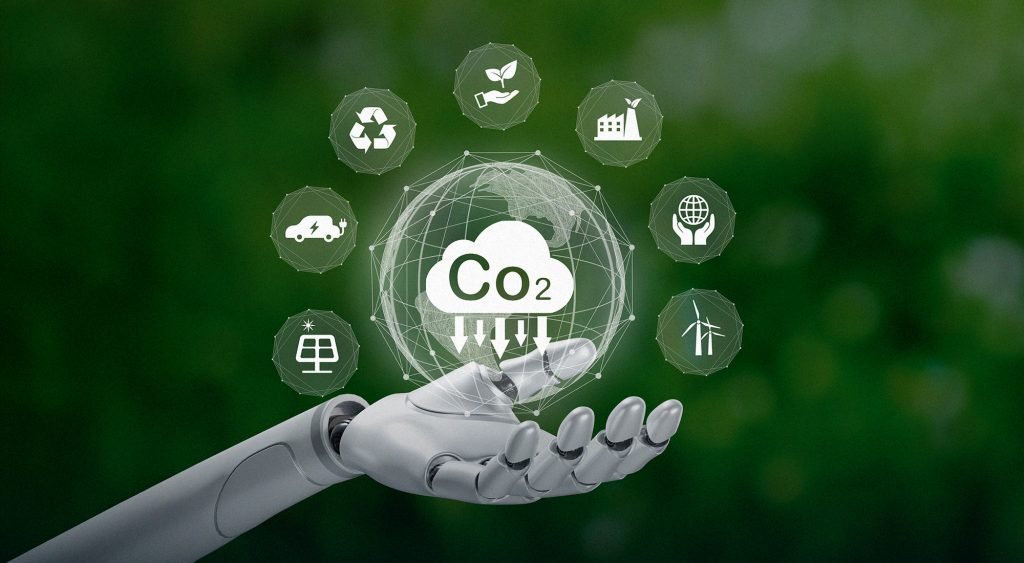
As artificial intelligence (AI) accelerates at unprecedented speed, it is not just transforming industries, it is reshaping global energy demand, climate strategy, and trillion-dollar investment priorities. The world is entering a new era where AI growth and climate commitments intersect, creating both a massive challenge and a high-value business opportunity. At the center of this transformation is a hard truth: the AI boom is building a global carbon debt that can no longer be ignored. AI’s Energy Surge: The New Demand Curve: By 2030, worldwide data center electricity consumption is expected to reach nearly 1,000 terawatt-hours, double today’s levels, and more than Japan consumes in an entire year. Even with renewable energy capacity hitting record growth, clean power simply cannot expand fast enough to feed the explosive demand from AI training and inference workloads. As a result:• Fossil fuels, gas, oil and coal, are poised to deliver more than 50% of global data-center power through 2030.• Annual emissions from data centers could exceed 300 million tonnes of CO₂, according to the International Energy Agency (IEA).• Hyperscalers like Microsoft, Google, Meta and Amazon are moving toward net-zero targets, but emissions are still rising as deadlines approach.The race to scale AI is outpacing the world’s ability to scale clean energy. The Decarbonization Paradox: AI Growth vs. Net-Zero Commitments: No company illustrates this tension more than Microsoft.• Investing $80 billion in new data centers in 2025• Clean-energy contracts in 24 countries• Bets on both nuclear and emerging fusion technologies Yet, its energy consumption has surged 168% since 2020, and total emissions continue to climb. As Microsoft’s Chief Sustainability Officer Melanie Nakagawa said, when talking about the 2030 carbon-negative goal:“The moon has gotten further away.” Even the most aggressive climate-leading tech companies are struggling to keep pace with AI’s power demands. Why Carbon Removal Is Becoming the Next Multibillion-Dollar Market: Reaching net zero is not just about cutting emissions. The world must also begin removing carbon already in the atmosphere. This is where Carbon Dioxide Removal (CDR) becomes a crucial and fast-growing market. Why CDR Matters:• Avoidance offsets don’t remove carbon, they shift responsibility.• CDR captures CO₂ and stores it in soils, oceans, biomass, or deep geological formations.• The IPCC says the world needs 5–10 billion tonnes of carbon removed annually by 2050.• There is no net-zero scenario without carbon removal at scale. Microsoft is leading the way, having already purchased over 30 million tonnes of high-quality carbon removal, representing ~80% of the global market as of October 2025. But to sustain AI growth without breaching climate commitments, other hyperscalers must match that ambition. Why Tech Companies Are Investing in Carbon Removal Now:Contrary to perception, these investments aren’t purely environmental. They’re strategic. The Role of Governments: Public Policy Must Match Private Investment: Tech giants are now operating at nation-state scale, influencing global markets for energy, materials, and carbon. But even with their massive capital power, private investment cannot solve the carbon-removal challenge alone. Governments must:• Establish clear regulatory frameworks• Fund early CDR demonstration projects• Accelerate permitting for storage sites• Integrate CDR into mandatory compliance markets• Invest in carbon infrastructure: measurement, transport, and storageThis mirrors how governments helped scale:• Renewable energy• Broadband• COVID-19 vaccinesA similar public-private model is essential for carbon removal. A Once-in-a-Generation Opportunity: Balancing AI Innovation with a Livable Planet: AI has fundamentally redrawn the global emissions curve. But carbon removal provides a viable pathway to pay down the carbon debt created by the exponential rise in compute power.For businesses, investors, and policymakers, the next five years will define whether AI and net zero can grow togPlane, or collide. One thing is certain:Carbon removal is emerging as one of the most important investment markets of the next decade.Companies that act now will not only protect their AI-driven future, they will help build a sustainable one.

China Exports Smash Forecasts Despite Trump’s 60% Tariffs. Non-US Shipments Surge 18%: Beijing’s Trade Rerouting Pays Off in November
World

China Exports Smash Forecasts Despite Trump’s 60% Tariffs. Non-US Shipments Surge 18%: Beijing’s Trade Rerouting Pays Off in November

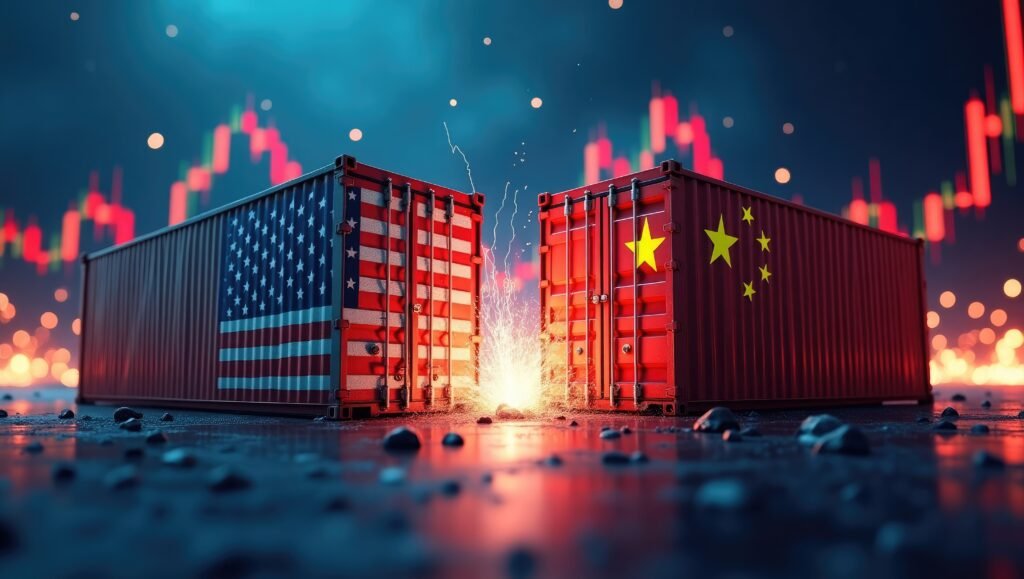
BEIJING: China’s exports surged 11.2% year-on-year in November, far exceeding analysts’ expectations of 8.5% growth, powered by a sharp acceleration in shipments to Southeast Asia, Europe, Latin America and Africa as manufacturers rush to reroute trade ahead of Donald Trump’s return to the White House.Non-U.S. exports jumped 14–18% in key emerging markets, while shipments to the United States rose only 3.1%, the slowest pace in 18 months, underscoring successful diversification away from Washington’s threatened 60% tariffs.Imports, however, grew just 1.7% – well below the forecast 4.2% – signaling persistently weak domestic consumption and excess industrial capacity. The trade surplus swelled to a record $104.6 billion.Factory surveys released last week painted a cautious outlook: the Caixin Manufacturing PMI for export orders slipped to 49.8, with respondents citing rising protectionism and expected demand slowdown in 2026.Beijing has accelerated “China +1” strategies, with companies expanding plants in Vietnam, Mexico and Indonesia to retain low-tariff access to Western markets once higher U.S. duties take effect in 2025.Economists warn that while front-loading and rerouting cushioned 2024, global trade fragmentation will pose mounting challenges next year.

Scroll to Top