Author name: Web Desk

BRT Red Line Faces Fresh Delay in Karachi as Work Slows Again
Pakistan

BRT Red Line Faces Fresh Delay in Karachi as Work Slows Again

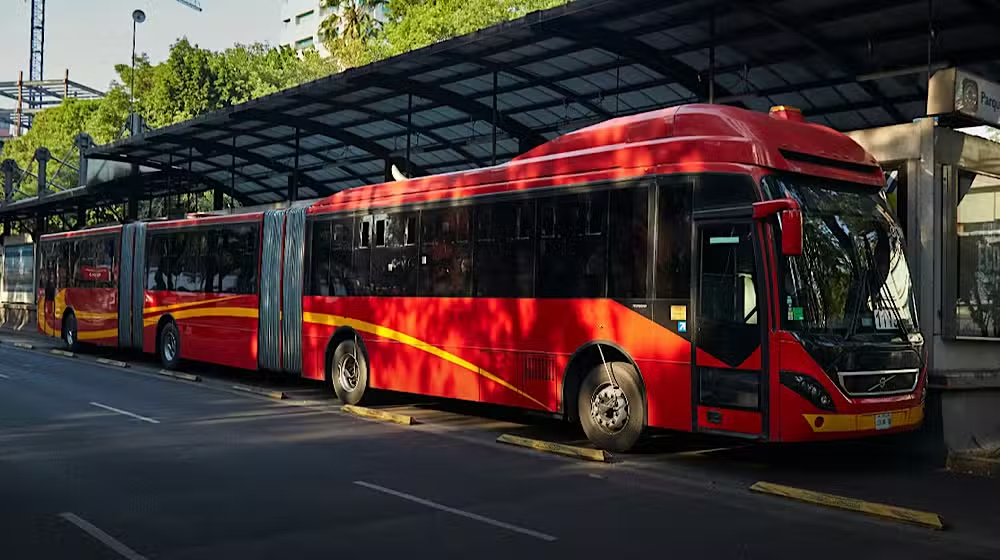
The BRT Red Line project in Karachi has once again slowed sharply as construction activity drops across multiple key stretches. Large sections of the route now show little to no visible progress, raising renewed concerns over delays and project coordination. Field observations indicate that machinery remains idle in several areas. Labour presence has also reduced significantly compared to earlier phases of construction. Authorities had previously assured steady progress after resolving financial issues. However, the situation on the ground now reflects another setback for one of Karachi’s most important transport projects. Project Divided Into Two Major Sections The BRT Red Line is divided into two main segments for execution. Lot 1 runs from Airport Signal to Mosamiyat. Lot 2 extends from Mosamiyat to Numaish. Lot 2 continues to face the most serious challenges. This section is longer and involves more complex urban construction work along heavily populated corridors. Officials had earlier prioritized resolving delays in this segment. Despite that, progress remains inconsistent and slow. Past Financial Disputes Still Affect Progress Construction on Lot 2 had already faced a major suspension last year. The halt came after financial disagreements between contractors and project authorities. The dispute escalated to legal proceedings before payments were eventually cleared. Work resumed after intervention, but the recovery has not been stable. Although officials later claimed that the matter had been resolved, current conditions suggest lingering effects on project execution and contractor performance. Visible Work Slowdown Across Key Routes A field review of the project corridor shows a clear slowdown in activity. At People’s Chowrangi, no machinery is currently active, and construction appears suspended. Further along toward Hassan Square, only a small number of workers are visible. A few machines are present, but no active construction is taking place. On the Hassan Square to Nipa stretch, work has been halted due to the ongoing installation of the K-IV water pipeline. This infrastructure project has directly interfered with the BRT construction timeline. Even where machinery is stationed, most equipment remains idle. No consistent operational activity is visible across major sections of the route. Pipeline Work Adds New Layer of Delay The K-IV water supply project has become a major factor affecting the BRT Red Line progress. Construction teams have been forced to pause work in multiple areas where pipeline installation is underway. This overlap between infrastructure projects has created logistical challenges. Road space is limited, and coordination between agencies remains weak. Officials have not provided a clear revised schedule for resolving these conflicts. As a result, uncertainty continues to grow over project completion timelines. Lot 2 Remains the Most Troubled Section The Mosamiyat to Numaish segment continues to face repeated interruptions. This part of the route passes through some of Karachi’s busiest urban zones. Construction delays here have a wider impact on traffic flow and daily commuting. Residents in surrounding areas report prolonged road blockages and diversions. Despite being the largest and most critical segment, Lot 2 has not shown consistent progress in recent months. Commuters Face Ongoing Disruption The slowdown in BRT Red Line construction has continued to affect daily commuters across Karachi. University Road and adjoining corridors remain heavily congested. Travel times have increased due to lane closures and construction barriers. Alternative routes are also under pressure due to diverted traffic. Residents say they continue to face uncertainty over when normal road conditions will return. Many had expected faster completion timelines based on earlier official statements. Repeated Delays Raise Governance Questions The repeated slowdown has raised concerns about project management and coordination. Observers point to a lack of synchronization between infrastructure agencies working in the same corridor. Financial disputes, utility relocation, and construction planning issues have all contributed to delays. Despite earlier claims of resolution, progress remains uneven. The situation has also triggered questions about long term planning for urban transport development in Karachi. Importance of the BRT Red Line Project The BRT Red Line is one of Karachi’s key mass transit initiatives. The project is designed to improve public transport, reduce congestion, and provide a reliable travel option for millions of residents. Once completed, it is expected to connect major residential and commercial zones through a dedicated bus corridor. However, repeated delays have slowed down the delivery of these benefits, leaving commuters dependent on existing overcrowded transport systems.

CCP Authorizes Acquisition of TPL Insurance Limited by Jazz International Holding Limited
Business

CCP Authorizes Acquisition of TPL Insurance Limited by Jazz International Holding Limited

ISLAMABAD: The Competition Commission of Pakistan (CCP) has authorized the acquisition of M/s. TPL Insurance Limited by M/s. Jazz International Holding Limited from M/s. TPL Corp Limited following a Phase-I review. Read More: https://theboardroompk.com/us-naval-blockade-on-iran-set-to-tighten-global-oil-supply/ The transaction involves the acquisition of a controlling stake by Jazz in TPL Insurance Limited through a Share Purchase Agreement. A portion of the shares will first be acquired by TPL Corp Limited from Deutsche Investitions- und Entwicklungsgesellschaft (DEG), a German investment company, and subsequently transferred to the acquirer, through a mandatory tender offer. Jazz International Holding Limited, a subsidiary of VEON, incorporated in the UAE, is engaged in telecommunications and digital services. The target company, M/s. TPL Insurance Limited, is a public listed company operating in Pakistan’s non-life insurance sector, offering conventional and takaful insurance products. The CCP conducted a detailed Phase-I competition assessment in accordance with the Competition Act and the Competition (Merger Control) Regulations, 2016. The relevant market was identified as the non-life insurance sector in Pakistan. Based on the assessment, the Commission determined that the transaction constitutes a conglomerate merger, with no horizontal or vertical overlap between the business activities of the acquirer and the target. The Commission further observed that the transaction is not likely to result in the creation or strengthening of a dominant position or to substantially lessen competition in the relevant market. Accordingly, the CCP has authorized the transaction under the applicable provisions of the law. The merger is expected to accelerate the growth of digital insurance and advance financial inclusion in Pakistan. The Commission remains committed to facilitating foreign direct investment through timely merger clearances, promoting business growth, and ensuring that market structures remain competitive and aligned with the principles of fair competition.

US Naval Blockade on Iran Set to Tighten Global Oil Supply
Breaking News, World

US Naval Blockade on Iran Set to Tighten Global Oil Supply

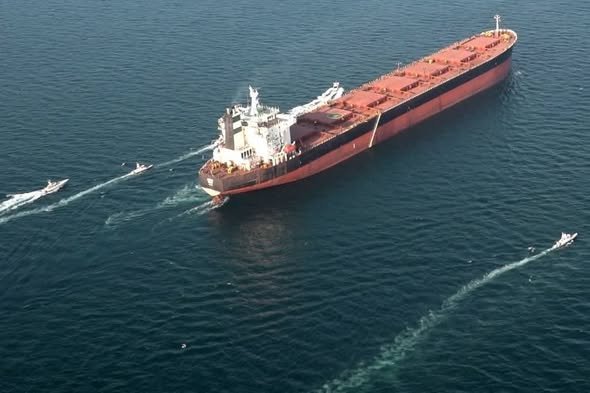
The US military has announced a naval blockade of Iranian ports starting Monday at 10am ET (7pm PKT), preventing roughly two million barrels of Iranian oil per day from reaching international markets. This move comes after weekend peace talks in Islamabad between US and Iranian negotiators ended without any agreement. Read More: https://theboardroompk.com/pakistan-deploys-fighter-jets-to-saudi-arabia-under-defence-pact/ US President Donald Trump stated that the Navy would begin blockading ships trying to enter or leave the Strait of Hormuz. The US Central Command clarified that the blockade targets only vessels going to or from Iranian ports and will not affect freedom of navigation for ships heading to non-Iranian ports in the region. Impact on Global Oil Markets Iran exported about 1.84 million barrels per day in March and 1.71 million so far in April. Blocking these flows is expected to tighten global oil supply significantly. Analysts note that more than 180 million barrels of Iranian oil are already loaded on ships, adding pressure to an already strained market. Before the recent conflict, roughly 20 percent of global oil and natural gas exports passed through the Strait of Hormuz, with most cargoes destined for Asia. China remains the top buyer of Iranian crude, while India is preparing to receive its first Iranian shipment in seven years under a recent US sanctions waiver. Risks to Shipping and Regional Stability Shipping traffic through the Strait of Hormuz has been severely limited since the war began on February 28. Despite a two-week ceasefire last week, many tankers continue to avoid the area. Recent incidents include a tanker turning back near the Gulf of Oman and only a few supertankers successfully exiting the Gulf over the weekend. Iran’s Revolutionary Guards have warned that any military vessels approaching the strait would be seen as a ceasefire violation and met with a harsh response. Retired Admiral Gary Roughead cautioned that Iran could target ships or attack infrastructure in Gulf states hosting US forces. The blockade adds fresh uncertainty to energy markets already watching developments closely in the Persian Gulf and Gulf of Oman.

Pakistan Deploys Fighter Jets to Saudi Arabia Under Defence Pact
Editor pick, World

Pakistan Deploys Fighter Jets to Saudi Arabia Under Defence Pact

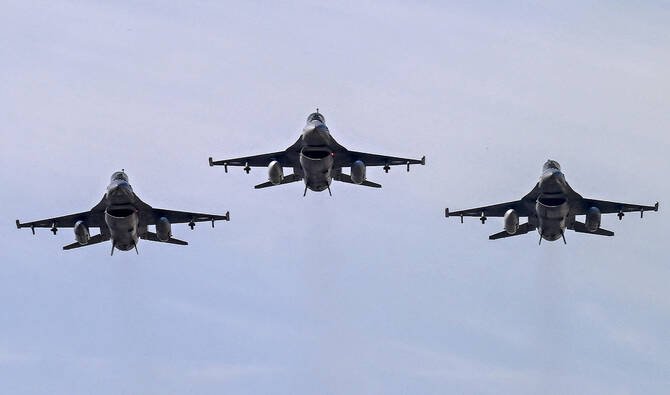
Pakistan has sent a small number of fighter and support jets to Saudi Arabia, marking the first visible military step under a mutual defence pact signed in September 2025. The aircraft landed at King Abdulaziz Air Base in Saudi Arabia’s Eastern Province on Saturday, according to the Saudi Ministry of Defence, according to Aljazeera. Read More: https://theboardroompk.com/google-and-pakistan-government-launch-ai-seekho-2026-to-train-youth-in-vibe-coding-and-ai-skills/ This deployment comes as Pakistan hosts sensitive ceasefire talks between the United States and Iran in Islamabad, aimed at ending weeks of regional conflict that began after Iran’s missile and drone strikes on US targets in Gulf states. First Visible Move Under 2025 Pact The mutual defence agreement, signed during Prime Minister Shehbaz Sharif’s visit to Riyadh, commits both nations to treat an attack on one as an attack on the other. Pakistani Foreign Minister Ishaq Dar had earlier warned Iranian leaders that Islamabad would honour its obligations to Saudi Arabia. Army Chief Field Marshal Asim Munir visited Riyadh in early March to discuss ways to stop Iranian strikes. Just days before the jets arrived, Sharif spoke with Saudi Crown Prince Mohammed bin Salman and pledged that Pakistan would stand “shoulder to shoulder” with the kingdom. Analysts describe the move as largely symbolic. Imtiaz Gul noted that “three jets won’t make much of a difference militarily” given Saudi Arabia’s large air force, but it sends a clear message to Iran about Pakistan’s commitments. Timing Raises Questions in Regional Tensions The deployment occurs against the backdrop of a fragile ceasefire. Iran has continued attacks on Saudi targets, including key bases. Meanwhile, Pakistan is trying to mediate between Washington and Tehran. Pakistan and Saudi Arabia also agreed to speed up a promised $5 billion Saudi investment package for Pakistan’s economy. On Saturday, Saudi Finance Minister Mohammed al-Jadaan met Sharif in Islamabad alongside Dar and Munir. Saudi Arabia remains a major economic partner for Pakistan, hosting over 2.5 million Pakistani workers whose remittances are vital. The move highlights the close defence and economic ties between the two countries while Islamabad navigates complex regional diplomacy.

US Dollar Rises as Iran Tensions Shake Global Currency Markets
Business, Editor pick

US Dollar Rises as Iran Tensions Shake Global Currency Markets

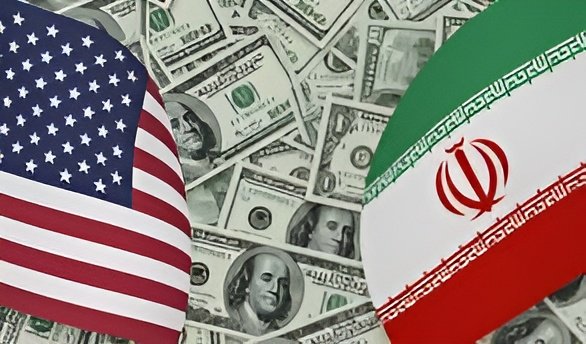
The US dollar strengthened in early Asian trading on Monday as global markets reacted to rising tensions between Washington and Tehran. Investors moved quickly toward safe haven assets after peace talks between the United States and Iran collapsed. The United States signaled a major escalation in the conflict. The move pushed traders to shift away from riskier currencies and into the US dollar. Market analysts described the early trading session as thin but decisive. They noted a clear risk off sentiment across global foreign exchange markets. US Dollar Climbs as Hormuz Blockade Fears Intensify US President Donald Trump announced that the US Navy would begin blockading the Strait of Hormuz. This development followed failed negotiations aimed at ending the ongoing conflict. The blockade targets Iranian ports and threatens to disrupt global oil supply routes. As a result, investors reacted swiftly by increasing their exposure to the US dollar. The United States Central Command confirmed that operations would begin at 10 a.m. ET. This announcement further intensified uncertainty in global markets. US Dollar Pressures Major Global Currencies The surge in the US dollar weighed heavily on other major currencies. The euro slipped 0.3 percent to 1.1684 against the dollar. The British pound also declined by 0.5 percent to 1.3398. Meanwhile, risk sensitive currencies saw sharper declines. The Australian dollar dropped 0.6 percent to 0.7030. The New Zealand dollar fell 0.4 percent to 0.5816. These movements reflect growing caution among investors. They are moving away from higher risk currencies amid rising geopolitical uncertainty. US Dollar Index Holds Near Recent Highs The US Dollar Index remained steady at 99.056. This level is close to its highest point since early April. The index tracks the strength of the US dollar against a basket of major currencies. Its stability signals continued demand for the dollar despite market volatility. Analysts from Westpac noted that the dollar rally reflects broader risk aversion. They highlighted that geopolitical developments are driving market sentiment more than economic data. Hungarian Forint Surges After Political Shift In contrast to the broader market trend, the Hungarian forint posted strong gains. The currency rallied sharply after a major political shift in Hungary. Veteran leader Viktor Orbán lost power following national elections. The result boosted investor confidence in Hungary’s economic outlook. The forint surged as much as 1.8 percent against the dollar. It reached its strongest level since January. Against the euro, it gained 2.2 percent and hit a four year high. Analysts from Goldman Sachs said markets reacted positively to the election outcome. They noted that the result could unlock European Union funding for Hungary. EU Funding Expectations Support Hungarian Assets Market participants expect faster release of European Union funds to Hungary. These funds form a significant part of the country’s economic framework. Analysts estimate that EU funding accounts for about 3 percent of Hungary’s GDP each year. Nearly half of these funds had remained frozen under previous political conditions. The expected release of funds has boosted investor sentiment. It has also strengthened the forint despite broader global uncertainty. US Dollar Gains Against Yen as Bond Yields Rise The US dollar also strengthened against the Japanese yen. It rose 0.4 percent to 159.83 yen during trading. At the same time, Japan’s benchmark 10 year government bond yield climbed sharply. It increased by 5.5 basis points to 2.49 percent. This marks its highest level in nearly three decades. Higher bond yields often support currency strength. In this case, the dollar continued to gain as investors sought safety and returns. Global Markets Brace for Continued Volatility The rise of the US dollar reflects deeper concerns about geopolitical stability and global economic risks. Investors remain cautious as tensions between the United States and Iran continue to escalate. Currency markets are likely to remain volatile in the coming days. Much will depend on developments in the Middle East and the response of global powers. For now, the US dollar continues to dominate as the preferred safe haven asset. Its strength signals a broader shift in investor sentiment as uncertainty grips global markets.

Google and Pakistan Government Launch “AI Seekho 2026” to Train Youth in Vibe Coding and AI Skills
Education

Google and Pakistan Government Launch “AI Seekho 2026” to Train Youth in Vibe Coding and AI Skills

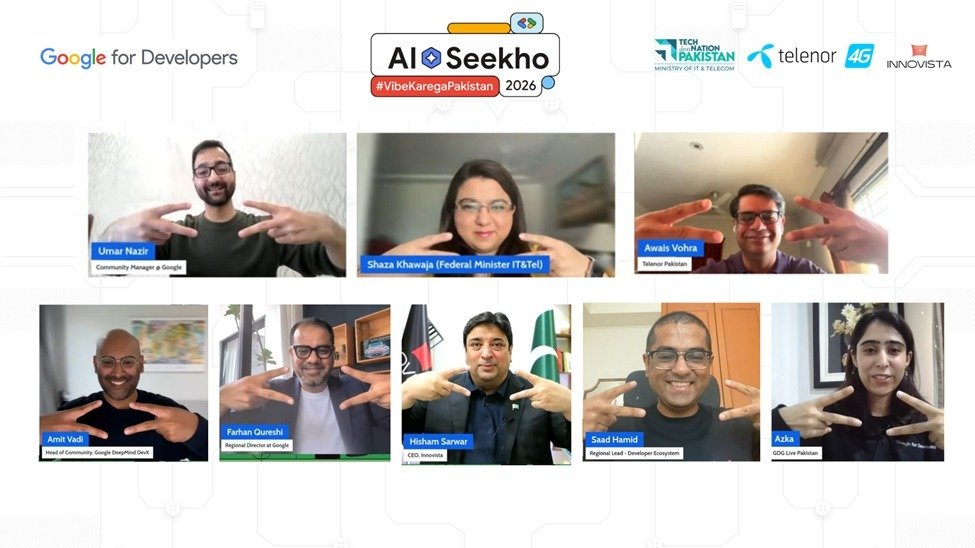
KARACHI: To accelerate Pakistan’s transition into a global digital economy, Google for Developers, in strategic collaboration with the Ministry of Information Technology & Telecom (MoITT), Telenor, and Innovista, announced the launch of AI Seekho 2026. Read More: https://theboardroompk.com/pso-announces-appointment-of-jawwad-ahmed-cheema-as-ceo/ This nationwide initiative aims to equip developers and young professionals with cutting-edge artificial intelligence capabilities, entirely free of financial barriers. The program pioneers the introduction of vibe coding to Pakistani youth, a modern, intuitive, and agent-driven approach to application development. Utilizing next-generation platforms like Google AI Studio and Google Antigravity, participants will learn to build software through natural language and problem-solving, rather than traditional complex syntax. Participants can register here: goo.gle/aiseekho2026. Shaza Fatima, Federal Minister for IT and Telecom, stated: “Our vision is to shift from a legacy service economy to an AI-powered, product-based economy. With 65% of our population under the age of 35, we are declaring AI a core priority to ensure that every young person from tech professionals to doctors, lawyers, and artists is empowered with the digital skills necessary to compete in the global market.” Farhan Qureshi, Cluster Director (Pakistan and Frontier Markets), Google, said: “Google believes very strongly in the future of Pakistan. Through initiatives like AI Seekho, we are helping build the necessary capacity and speed for the local ecosystem. If we want to secure Pakistan’s digital future, we must commit to scaling AI skills, ensuring that our talent can continue to lead in the global freelance and gaming industries.” A Structured “Learn, Build, Win” Journey AI Seekho 2026 moves beyond conventional lectures, offering a hands-on, two-phased competitive journey focusing on tangible deployment: ● Phase 1: Online Challenge (April 11 – May 3): Participants will master the fundamentals of Generative AI and prototyping using Google AI Studio. Participants must submit fully functional solutions in one of two tracks: Build an App (App Banao) or Build a Game (Game Uthao). ● Phase 2: Physical Hackathon (Opening Soon): Developers who will participate in this phase will be required to build solutions usingGoogle Antigravity in Karachi, Lahore & Islamabad. This will be a competition theme-based where the participants will be required to build a mobile app for a chance to win exclusive Swag and a PKR 2.5 Million prize pool! An Unprecedented Industry Collaboration AI Seekho 2026 is powered by a robust multi-partner ecosystem. Google for Developers leads the end-to-end execution, providing free cloud credits and platform access, supported by the Google Developer Groups (GDG) and Google Developer Experts (GDE) communities. Watch the full kick-off event here: https://goo.gle/aiseekho-ytlive AI Seekho 2026 invites Pakistan’s youth to learn, build, and innovate with AI. Through hands-on experiences and global collaborations, it’s creating a future-ready generation poised to lead the AI revolution.

FrieslandCampina Engro Pakistan Signs EPC Contract with A2Z Energy Systems for 2MW Solar + 4MWh BESS Project to Cut Carbon Footprint
Pakistan

FrieslandCampina Engro Pakistan Signs EPC Contract with A2Z Energy Systems for 2MW Solar + 4MWh BESS Project to Cut Carbon Footprint

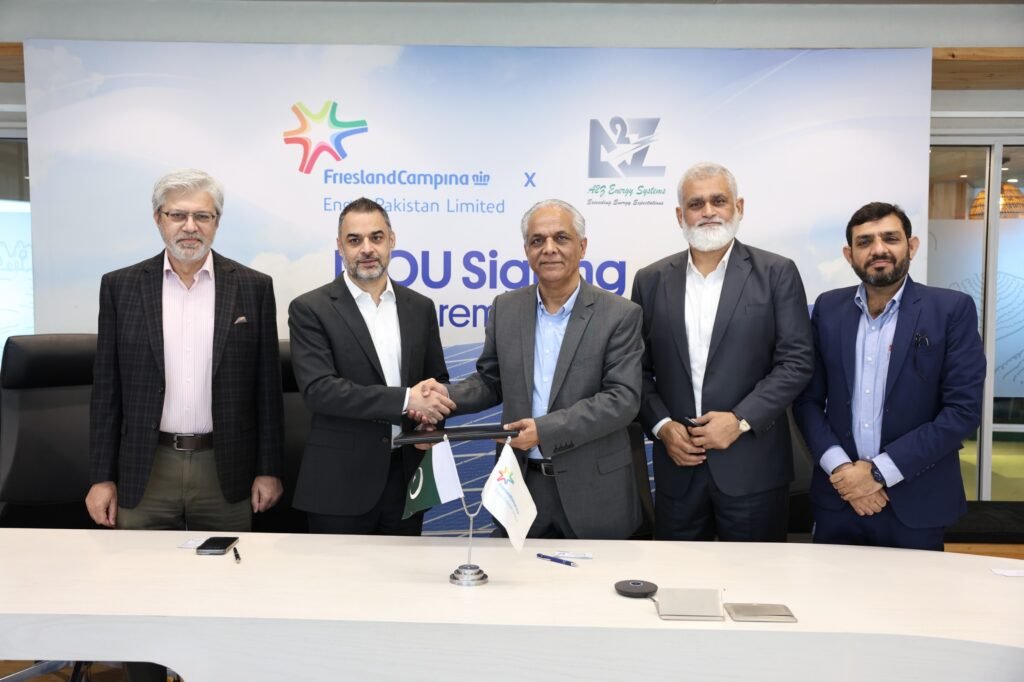
Karachi:FrieslandCampina Engro Pakistan Limited (FCEPL), a leading multinational in the dairy and nutrition sector, has announced a strategic partnership with A2Z Energy Systems to implement a 2MW solar photovoltaic (PV) plant integrated with a 4MWh Battery Energy Storage System (BESS). Read More: https://theboardroompk.com/pso-announces-appointment-of-jawwad-ahmed-cheema-as-ceo/ The deployment marks a significant step in FCEPL’s long-term commitment to its decarbonization strategy and to its vision of embedding sustainable energy solutions across its operations. The hybrid system, being deployed at the FCEPL’s operational sites is designed to improve energy cost efficiency, enhance power reliability, and reduce exposure to grid volatility amid rising tariffs. It will enable optimized energy dispatch, support peak shaving, and strengthen load management, driving greater operational resilience and delivering measurable financial benefits. “A sustainable and resilient energy infrastructure is central to our vision for the future,” said Mr. Kashan Hasan, CEO & Managing Director, FrieslandCampina. “Our partnership with A2Z Energy Systems represents a pivotal step in our efforts to reduce the carbon footprint of dairy farming. This is also aligned with Friesland Campina’s vision of Doing DAIRY Right, which encompasses being In Balance with Nature. By harnessing solar energy, we are developing a cost-effective and sustainable approach that reduces reliance on non-renewable resources and enhances financial viability for the dairy sector. In a nation facing inflationary pressures, I take pride in leading a company committed to fostering growth and shaping a sustainable future for Pakistan.’’ A2Z Energy Systems, acting as the Engineering, Procurement, and Construction (EPC) contractor, will deliver the project on a turnkey basis. Drawing on its expertise in advanced energy systems, the company will ensure optimal design, seamless integration, and high-performance execution in line with international standards. “This project reflects the increasing convergence of sustainability and financial performance in industrial energy strategies. We are pleased to support FrieslandCampina in deploying a future-ready energy solution that delivers both environmental and economic value,” said Mr. Anwar ul Hasan, Chairman, A2Z Energy Systems. This project represents a scalable model for industrial energy transition, combining clean energy generation with storage to maximize efficiency and unlock long-term value. Upon commissioning, the system is expected to deliver stable energy cost savings, reduce reliance on the conventional grid, and enhance operational continuity, magnifying higher asset utilization and improved returns. This partnership not only showcases FCEPL’s commitment to reducing the carbon footprint of dairy farming but also highlights A2Z’s expertise as a leading renewable microgrids provider, marking a significant step toward a greener & more sustainable future for Pakistan.

Oil Tankers Reroute at Last Minute as US Moves to Block Iran Sea Routes
World

Oil Tankers Reroute at Last Minute as US Moves to Block Iran Sea Routes

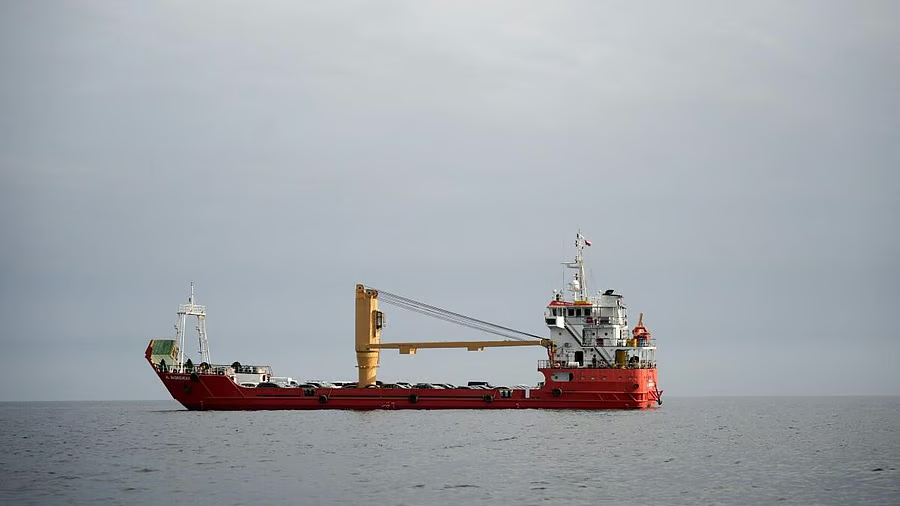
The Strait of Hormuz crisis intensified on Monday as oil tankers began steering clear of one of the world’s most critical maritime routes. Shipping data confirmed a sharp shift in tanker movement ahead of a planned US naval blockade targeting Iranian oil exports. Read More: https://theboardroompk.com/pso-announces-appointment-of-jawwad-ahmed-cheema-as-ceo/ The Strait of Hormuz serves as a vital artery for global energy supplies. Any disruption in this narrow passage immediately impacts oil markets and shipping patterns worldwide. Following the announcement, tanker operators moved quickly to avoid the region. This reaction highlights growing fears of escalation after diplomatic efforts between Washington and Tehran collapsed over the weekend. US Blockade Announcement Raises Stakes US President Donald Trump confirmed that the US Navy would begin blockading maritime traffic linked to Iranian ports. His statement came after extended negotiations failed to produce a ceasefire agreement. The decision threatens to derail a fragile two-week truce. It also raises concerns about direct confrontation in one of the most sensitive geopolitical zones. The United States Central Command stated that enforcement would begin at 10 a.m. ET (1400 GMT). US forces will monitor and restrict vessels entering or leaving Iranian ports. Officials clarified that the blockade would apply to ships of all nations engaging with Iranian ports across the Arabian Gulf and Gulf of Oman. However, vessels transiting the Strait to non-Iranian destinations will not face interference. Iran Issues Strong Warning Amid Escalation Iran responded swiftly through the Islamic Revolutionary Guard Corps. Officials warned that any foreign military presence near the Strait would violate the ceasefire agreement. They stated that Iran would respond “harshly and decisively” to any such move. This warning has added another layer of uncertainty to an already volatile situation. The risk of miscalculation remains high. Even a minor confrontation could escalate into a broader conflict, further disrupting global oil flows. Pakistan-Flagged Tankers Continue Strategic Movements Despite rising tensions, some vessels continue operations in the region. Shipping data from LSEG and Kpler revealed that two Pakistan-flagged tankers entered the Gulf on Sunday. The Aframax tanker Shalamar is heading toward the United Arab Emirates to load Das crude. Meanwhile, the Panamax-sized Khairpur is en route to Kuwait to load refined petroleum products. The movement of these vessels indicates that not all operators have halted activity. However, the broader trend shows increasing caution among shipping companies. Pakistan National Shipping Corporation, which manages Shalamar, has not yet issued an official statement regarding the evolving situation. Global Tanker Routes Shift Amid Rising Risks The crisis has forced several vessels to reconsider their routes. The Liberia-flagged VLCC Mombasa B successfully transited the Strait and is now ballasting in the Gulf. In contrast, the Malta-flagged VLCC Agios Fanourios I aborted its journey. The vessel attempted to enter the Gulf to load Iraqi Basra crude for Vietnam but later turned back. It is now anchored near the Gulf of Oman and plans to redirect toward Iraq. This shift reflects the growing uncertainty and operational challenges facing global shipping companies. Managers of both vessels have not responded to media queries, further highlighting the cautious approach adopted by industry players. Supertankers Continue Limited Transit Despite Crisis Despite the heightened tensions, three fully loaded supertankers successfully passed through the Strait on Saturday. These vessels marked the first major outbound shipments since the ceasefire agreement last week. Their movement suggests that some operators still view the route as viable, at least temporarily. However, the number of such transits remains limited. Shipping companies continue to assess risks in real time. Many prefer to delay voyages or reroute shipments rather than face potential conflict zones. Global Energy Markets Face Growing Uncertainty The Strait of Hormuz crisis has once again exposed the vulnerability of global energy supply chains. Even the threat of disruption has forced immediate changes in tanker routes and logistics. Oil markets remain highly sensitive to developments in the region. Any escalation could push prices higher and strain global supply. At the same time, the situation places additional pressure on diplomatic channels. Without a breakthrough, tensions may continue to rise in the coming days. For now, tanker operators, energy companies, and governments are closely monitoring every development. The decisions made in the next 48 hours could shape the direction of global oil markets for weeks to come.

Government Moves to Slash Dairy GST from 18% to 10%
Pakistan

Government Moves to Slash Dairy GST from 18% to 10%

Islamabad:Federal Minister for Commerce Jam Kamal Khan chaired a meeting with a delegation of the Pakistan Dairy Association, led by CEO Dr. Shehzad Amin. Read More: https://theboardroompk.com/pso-announces-appointment-of-jawwad-ahmed-cheema-as-ceo/ The meeting was also attended virtually by Rana Ihsaan Afzal, Coordinator to the Prime Minister on Commerce, along with senior officials from the Ministry of Commerce. The discussion focused on the challenges facing Pakistan’s dairy sector, particularly regarding tariff and taxation issues, as well as improving productivity, genetic quality, and formalization of the sector. Minister Jam Kamal Khan emphasized that enhancing the genetic quality of dairy breeds and guiding farmers toward a formalized business model is critical for the sector’s development. Jam Kamal said that without proper genetic direction, farmers cannot achieve the desired milk yields and that structured support, regulation, and farmer education are essential to transform the sector. The Pakistan Dairy Association pointed out that the current GST on dairy products is 18 percent, while globally, and even in neighboring countries, such products often enjoy zero or minimal taxation. In response, Minister Jam Kamal Khan asked the Association to submit proposals for reducing the GST from 18 percent to 10 percent and asked Rana Ihsaan Afzal to take the lead in working closely with the Association to prepare a comprehensive proposal. The Minister also stated that he would write letters to the Chief Ministers and all relevant ministers to ensure coordination and support for implementing these proposals and improving the formalization of the dairy sector across the country. The Association presented additional proposals including the provision of financial support and banking facilities for farmers, the implementation of regulatory measures to ensure only pasteurized or properly packaged milk is sold, and the initiation of pilot programs in major urban centers to transition farmers into formal business practices. They also highlighted the need for cross-breeding programs and farmer training to enhance genetic quality and improve overall milk production. Minister Jam Kamal Khan welcomed these proposals and stressed that a comprehensive plan should be prepared for timely implementation, ensuring that Pakistan’s dairy sector achieves higher productivity, better regulatory compliance, and contributes more effectively to the country’s economy.

PSO Announces Appointment of Jawwad Ahmed Cheema as CEO
Pakistan

PSO Announces Appointment of Jawwad Ahmed Cheema as CEO

Pakistan State Oil Company Limited (PSO) has formally notified the Pakistan Stock Exchange (PSX) that its Board of Management has appointed Mr. Jawwad Ahmed Cheema as Chief Executive Officer for a three-year term, effective 18 May 2026. Read More: https://theboardroompk.com/psctf-delegation-visit-federation-of-pakistan-chambers-of-commerce-and-industry-in-karachi/ Cheema succeeds Abdus Sami, who serves as interim CEO. A distinguished C-suite executive, Cheema brings over 28 years of experience in the downstream energy sector, including nearly two decades in corporate leadership roles spanning five countries across Asia-Pacific, Europe, and South Asia. His career covers the full downstream value chain retail fuels, lubricants, storage infrastructure, supply chain management, strategy, and international portfolio management with a consistent thread of strategic transformation, business turnaround, and large-scale organisational change running through every assignment. The centerpiece of his career is a 26-year tenure with Royal Dutch Shell, one of the world’s largest energy majors, during which he rose from frontline retail operations in Pakistan to the most senior levels of Shell’s global leadership, progressing through Indonesia, Singapore, the Netherlands, and the United Kingdom each assignment representing a substantive expansion of scope, complexity, and accountability. As Managing Director and CEO of Shell Pakistan Limited, he successfully steered one of the country’s most prominent publicly listed energy companies through a period of significant strategic and operational transformation in one of the region’s most complex and fast-evolving energy markets. In subsequent international roles, Mr. Cheema served as Vice President of Strategy & Portfolio at Shell International B.V. in The Hague, where he directed global downstream infrastructure portfolio strategy across multiple continents, delivering significant enterprise value through network optimisation, asset rationalisation, and supply chain reconfiguration. As Vice President of Shell Business Operations in Singapore, he transformed Shell’s global business process outsourcing function, driving large-scale workforce expansion and operational consolidation across a global network. Earlier, as Strategy & Management Consultancy Manager, he led business turnarounds, divestments, new market entries, and integrated downstream reviews across Asia-Pacific. Mr. Cheema’s expertise also extends to high-growth market entries, most notably as General Manager leading Shell’s end-to-end retail fuels entry into Indonesia a complex, fast-growing emerging market. Most recently, he served as CEO of Karachi Hydrocarbon Terminal (KHT), a strategic joint venture under the VTTI B.V. portfolio, managing Pakistan’s primary petroleum import and distribution terminal at Port Qasim. Beyond executive leadership, Mr. Cheema has exercised significant governance authority as Chairman of the Board of Shell Pakistan Limited and as a Director on the boards of Pakistan Refinery Limited (PRL) and Pakistan Arab Pipeline Company (PAPCO) the most strategically significant nodes of Pakistan’s downstream infrastructure. With a rare combination of commercial sharpness, strategic clarity, and the operational discipline to execute at scale in complex, regulated, and politically sensitive energy environments, Mr. Cheema stands as a leader shaped by the most rigorous global standards and deeply rooted in the realities of Pakistan’s energy landscape.

Scroll to Top