Author name: Web Desk

Mideast Conflict Causes Sharp Volatility in Global Oil Prices
World

Mideast Conflict Causes Sharp Volatility in Global Oil Prices

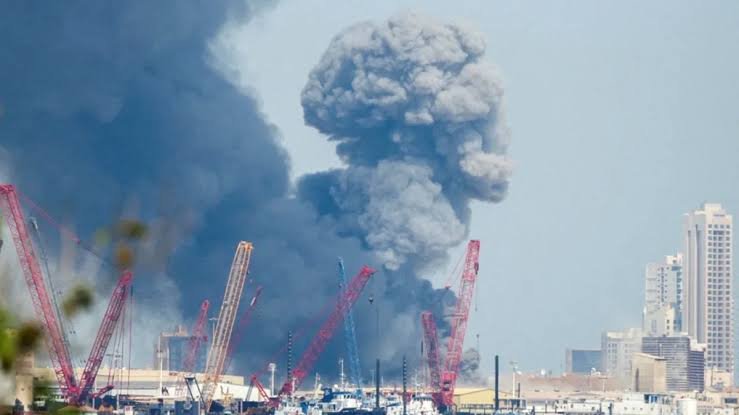
Crude markets remained on edge Tuesday as escalating military actions in the Middle East triggered extreme volatility in global oil prices. Brent crude futures slipped slightly but stayed near the $114 mark following a series of maritime strikes. Both the United States and Iran launched fresh attacks in the Gulf on Monday. These nations are currently fighting for control over the Strait of Hormuz. The duelling blockades have shattered a fragile truce and forced investors to reassess supply risks. Brent crude futures dropped 93 cents or 0.8% to settle at $113.51 per barrel. This minor retreat follows a massive 5.8% surge during the previous session. Meanwhile US West Texas Intermediate crude fell $2.16 to $104.26 per barrel. Analysts note that while the numbers dipped today the underlying market remains incredibly tight. The ongoing threat to shipping lanes ensures that any calm in the market remains temporary and fragile. Strait of Hormuz Under Siege The primary driver of the current volatility in global oil prices is the maritime blockade in the Strait of Hormuz. This narrow waterway carries roughly 20% of the daily global oil and gas demand. Iran launched several attacks on Monday to counter US military movements in the region. These strikes targeted commercial vessels and a key oil port in the United Arab Emirates. The port reportedly caught fire after a direct hit from an Iranian missile. The US Navy responded by launching Project Freedom to reopen the shipping lanes. A US flagged vehicle carrier named Alliance Fairfax successfully exited the Gulf under military escort. This successful passage provided some relief to traders who feared a total shutdown of the strait. However market analysts warn that a single escorted vessel does not mean the route is safe. Most commercial shipping companies still view the area as a high risk combat zone. Military Escalation and Market Skepticism President Trump has deployed the US Navy to free up international shipping. This move represents the largest escalation of the conflict since the ceasefire four weeks ago. The presence of heavy naval assets usually stabilizes markets but the current aggression from Iran has had the opposite effect. Traders are bracing for more shocks as both sides refuse to back down from their maritime positions. This geopolitical tug of war is the main reason for the sustained volatility in global oil prices seen this week. Some analysts believe the market may find brief relief following comments from the White House. President Trump suggested that the current hostilities might only last another two or three weeks. However many investors remain skeptical of this timeline. Conflict durations in this region have historically exceeded initial projections. Repeated extensions of hostilities have made market participants cautious about betting on a quick resolution. Economic Impact and Supply Fears The global economy is sensitive to any disruption in the Gulf. If the Strait of Hormuz remains contested energy costs for industrial nations will continue to climb. High fuel prices could trigger broader inflation across Europe and Asia. Currently the market is trading in a highly volatile range because fundamentals are not improving. The slight price ease on Tuesday was simply a reaction to the news of the US military escort. It was not a sign that the oil supply is actually secure. Experts at ING and KCM Trade highlight that the risk of a worst case supply disruption is still high. While limited safe passage is possible it is not a full reopening of the trade route. Until a permanent diplomatic solution is reached the energy sector will remain in a state of high alert. Investors are closely monitoring the US Israeli conflict with Iran for any signs of a ceasefire. Without a truce the threat of higher prices remains a significant burden on global trade. The next few days will be critical for energy benchmarks. If more commercial vessels attempt to cross the strait under naval protection prices might stabilize. However if Iran continues to strike ports and tankers the market will likely see another sharp spike. The focus remains on whether the US can maintain a consistent flow of traffic through the Gulf. For now the world is watching the Strait of Hormuz as the center of global energy security.

Sitara Petroleum IPO Oversubscribed 7x to raise 4.8 billion at 40% premium, making it 3rd largest IPO at PSX!
Breaking News

Sitara Petroleum IPO Oversubscribed 7x to raise 4.8 billion at 40% premium, making it 3rd largest IPO at PSX!

Karachi, May 05: Sitara Petroleum Service Limited (SPSL) has successfully concluded its book-building phase on May 5, 2026, with the strike price determined at PKR 18.90 per share, the upper limit of the price band, reflecting strong and decisive institutional demand. The IPO was oversubscribed 7 times of the size. Read More: https://theboardroompk.com/critical-minerals-investment-crisis-why-demand-is-surging-but-funding-is-missing/ With the conclusion of this IPO, Sitara Petroleum Service IPO becomes the third largest IPO after Interloop and Airlink. The offering attracted investor interest of over PKR 11.7 billion, highlighting the depth of demand from institutional investors and high-net-worth individuals. The IPO comprises a total offering of 279.9 million shares, representing 16.66% company’s paid-up capital. The book building portion has now been successfully completed, while the general public portion remains fully underwritten, ensuring completion of the overall offering. Including the earlier pre-IPO placement of PKR 1.67 billion, the total transaction size stands at up to PKR 4.8 billion, positioning it among the notable IPOs in recent years. Sitara Petroleum Service Limited operates one of Pakistan’s leading fuel station management and logistics platforms, with a network of over 61 fuel stations and a fleet of more than 320 oil tankers. The company derives the majority of its revenues from dealer commissions, complemented by a growing logistics and carriage services segment catering to oil marketing companies. The proceeds from the IPO will be deployed to support the company’s next phase of growth, including the addition of approximately 50 new fuel stations and expansion of its logistics fleet by around 50 oil tankers, strengthening its presence across Pakistan’s downstream petroleum value chain. Following the completion of the book building, the public subscription phase is expected to proceed as scheduled, after which Sitara Petroleum Service Limited will be listed on the Pakistan Stock Exchange.

FPCCI Urges Immediate Export Incentivization to Combat Alarming $32 Billion Trade Deficit During 10MFY26
Uncategorized

FPCCI Urges Immediate Export Incentivization to Combat Alarming $32 Billion Trade Deficit During 10MFY26

Karachi: Atif Ikram sheikh, President of the Federation of Pakistan Chambers of Commerce and Industry (FPCCI), has expressed his grave concerns over the critical expansion in Pakistan’s trade deficit – which has surged by 20.28% to reach $32 billion during the first 10 months of the current fiscal year (July-April FY26). Mr. Atif Ikram Sheikh, in an urgent appeal to policymakers, emphasized that the only sustainable solution to stabilize the nation’s fragile external account and protect foreign exchange reserves shall be a comprehensive and fast-tracked strategy to aggressively incentivize the export sectors. FPCCI Chief, analyzing the latest figures released by the Pakistan Bureau of Statistics (PBS) on Tuesday, highlighted the severely disproportionate ratio between the country’s exports and imports. During the July to April period of FY26, Pakistan’s import bill climbed by nearly 7%, reaching a staggering $57.19 billion. In a stark contrast, total export proceeds over the same ten-month time-frame contracted by 6.25% – falling to $25.21 billion from $26.89 billion in the corresponding period last year. Mr. Arif Ikram Sheikh explained that this immense gap means the country is importing more than double the value of what it exportاs, pushing the cumulative trade deficit up by 20.28% from $26.59 billion a year ago. FPCCI President stressed that the business community’s apprehensions are further magnified by the monthly data for April 2026, which recorded a 46-month high monthly trade deficit of $4.07 billion. While April witnessed a 14.03% year-on-year recovery in monthly export receipts, reaching $2.48 billion – but, this growth was entirely eclipsed by massive import payments. Mr. Saquib Fayyaz Magoon, SVP FPCCI, maintained that the monthly imports surged by 7.46% year-on-year and a dramatic 28.41% month-on-month, clocking in at an overwhelming $6.55 billion. FPCCI asserts that these figures unequivocally prove that temporary import compression tactics have failed – and, structural export weaknesses must be immediately addressed. Mr. Saquib Fayyaz Magoon stated that, while FPCCI acknowledged a marginal relief from the services sector – where the trade deficit narrowed by 6.7% to $2.15 billion during July-March FY26, backed by a healthy 17% rise in services exports to $7.35 billion – the apex body reiterated that merchandise exports remain the core engine of Pakistan’s economy. The traditional manufacturing and textile sectors simply cannot compete on the global stage while battling the region’s highest energy tariffs, a highly restrictive monetary policy and a continuously deteriorating ease of doing business, he added. Mr. Abdul Mohamin Khan, VP & Regional Chairman Sindh, FPCCI, reiterated that, to avert a potential balance of payments crisis, FPCCI strongly advocates for an immediate pivot toward export-led economic growth. We have outlined a set of critical, data-driven interventions required from the government – primarily focusing on reducing the crippling cost of industrial production. Mr. Abdul Mohamin Khan pointed out that these interventions should include the urgent rationalization of electricity and gas tariffs for export-oriented industries to bring them at par with regional competitors, alongside a significant reduction in the policy rate to spur industrial borrowing and capacity expansion, he added. FPCCI is also calling for the immediate disbursement of all pending export rebates, the introduction of targeted tax incentives for non-traditional export sectors such as IT, engineering goods and pharmaceuticals – and aggressive diplomatic efforts to secure zero-duty access or Free Trade Agreements (FTAs) with major global markets.

BankIslami and aik collaborate with Paklaunch to promote Pakistan’s tech ecosystem at UNConference ‘26
Business

BankIslami and aik collaborate with Paklaunch to promote Pakistan’s tech ecosystem at UNConference ‘26

Karachi, May 01, 2026 –: BankIslami and its digital banking platform – aik, partnered with Paklaunch for the 8th edition of its flagship event, UNConference ‘26. The two-day summit gathered a select group of founders, investors, and policymakers to discuss the trajectory of Pakistan’s startup ecosystem, with a particular focus on Fintech, artificial intelligence, and digital investment trends. Read More: https://theboardroompk.com/petroleum-sales-in-pakistan-drop-7-in-april/ Speaking at the opening ceremony, Rizwan Ata, President and CEO of BankIslami, highlighted the momentum of Pakistan’s booming tech ecosystem and the urgent need to support digital adoption across the financial sector. “Pakistan’s tech ecosystem is at a crossroads where digital adoption is the only path to mass-scale expansion,” he stated. “In 2025, we launched aik as Pakistan’s first Islamic digital banking platform to bridge our mission of promoting Shariah-compliant finance with modern technology for the masses. Sustainable growth and scale do not happen in isolation; they are fuelled by technology-driven innovation.” Aly Fahd, Founder of Paklaunch, reflected on the significance of the partnership and the event’s mission to drive high-value connections. “At Paklaunch, our focus has always been on building meaningful bridges between Pakistan’s entrepreneurial talent and global capital, expertise, and opportunity. Partnerships like this with BankIslami and aik reflect a shared commitment to enabling founders with the right financial infrastructure and digital tools they need to scale”. One of the event’s highlights was the ‘Digital Platforms & Innovation’ panel discussion, which hosted key entrepreneurs to discuss the evolving role of technology in scaling local businesses. During this session, Ashfaque Ahmed, Chief Officer of aik, addressed the practical shift toward digital-native financial services as a means to empower the next generation of founders. “Our focus at aik is to move beyond traditional banking hurdles by creating a digital-first journey that mirrors the speed and agility of the start-ups we serve,” Ashfaque said. “The goal is to simplify user experience so that ethical, Shariah-compliant banking becomes a seamless tool for growth, effectively reaching underserved segments of the population.” The event served as a powerful reminder that the maturity of the start-up ecosystem depends on integrating inclusive financial tools and fostering ongoing cooperation between traditional financial institutions and tech-driven platforms.

Pakistan Stock Exchange Pricing Error: BAFL Dividend Miscalculation Sparks Market Debate
Pakistan

Pakistan Stock Exchange Pricing Error: BAFL Dividend Miscalculation Sparks Market Debate

The Pakistan Stock Exchange Pricing Error has grabbed investor attention after a rare technical misstep briefly distorted the trading dynamics of Bank Alfalah Limited. While such glitches are uncommon, the exchange’s response has sparked debate over transparency, resilience, and investor confidence. What Happened in the Pakistan Stock Exchange Pricing Error The incident unfolded when Pakistan Stock Exchange mistakenly adjusted BAFL’s stock price using an incorrect dividend figure. Instead of deducting the actual dividend of PKR 1.50, the system applied a deduction of PKR 3.00 from the previous closing price of PKR 59.95. This miscalculation resulted in an inaccurate ex-dividend reference price of PKR 56.95, significantly lower than the correct value of PKR 58.45. In simple terms, the market opened with a flawed benchmark, potentially misleading traders about the stock’s true value. How the Pricing Error Impacted Market Trading The Pakistan Stock Exchange Pricing Error did more than just alter a number on the screen. It also affected the circuit breaker limits, which define how much a stock can move during a trading session. Because of the miscalculation, the trading band was set between PKR 51.26 and PKR 62.65. However, the correct range should have been PKR 52.61 to PKR 64.30. This narrower band could have restricted price movement and influenced trading decisions. Yet, interestingly, the market did not spiral into chaos. Why PSX Refused to Reverse Trades Despite the error, the Pakistan Stock Exchange took a firm stance: no trades would be reversed. According to the exchange, trading remained active and orderly throughout the session. Prices moved within what it described as a “true fundamental range,” meaning buyers and sellers were still engaging in fair transactions without manipulation. The decision signals confidence in market behavior. By allowing executed trades to stand, PSX emphasized that investor-driven price discovery remained intact, even in the face of a technical glitch. Pakistan Stock Exchange Pricing Error: Correction and Aftermath To fix the discrepancy, PSX announced that BAFL’s previous closing price would be revised to PKR 58.45, aligning it with the correct dividend adjustment. This correction ensures that historical data reflects accurate valuation, preventing long-term distortions in analysis and reporting. However, the episode raises an important question: how resilient is Pakistan’s financial system when faced with operational errors? A Rare Glitch or a Wake-Up Call for Investors The Pakistan Stock Exchange Pricing Error may appear minor at first glance, but its implications run deeper. On one hand, it highlights the robustness of the market. Even with incorrect inputs, trading continued smoothly, suggesting that investor sentiment and fundamentals play a stronger role than automated benchmarks. On the other hand, it exposes vulnerabilities in exchange systems. In a fast-moving financial environment, even small errors can ripple into significant consequences, especially for retail investors who rely heavily on displayed prices. What Investors Should Learn from This Incident For market participants, this event offers key lessons. Always cross-check corporate announcements such as dividends, rather than relying solely on system-generated prices. Understand that short-term anomalies can occur, but long-term investment decisions should be based on fundamentals. The Pakistan Stock Exchange Pricing Error ultimately underscores a critical reality: markets are not just driven by systems, but by human behavior, trust, and confidence. Final Thoughts on Pakistan Stock Exchange Pricing Error While the pricing error was quickly addressed, it has ignited discussions about operational accuracy and regulatory response. The Pakistan Stock Exchange’s decision not to intervene reflects its belief in market maturity, but it also places responsibility on investors to stay informed. In a market where milliseconds matter, even a small miscalculation can become headline news. This time, the system faltered briefly, but the market held its ground.

NAB Recovers State Land Worth Rs6b from Bahria Town
Pakistan

NAB Recovers State Land Worth Rs6b from Bahria Town

The National Accountability Bureau (NAB) Karachi successfully recovered 80 acres of government land. This land was previously allotted to Bahria Town within the Gulshan i Sarmast housing scheme. The recovered site is located in Deh Ganjo Takkar in the Hyderabad district. Officials estimate the market value of the prime property at approximately Rs6 billion. Possession through illegal Allotment Process The Bureau stated that the management of Bahria Town obtained possession of this site through an illegal allotment process. The developer reportedly secured the land for a meagre sum of Rs383 million. Investigations revealed that Bahria Town even defaulted on this relatively small payment. The NAB Karachi land recovery operation ensures that this valuable public asset returns to the provincial government. Original Terms of the Allotment Furthermore, the statement highlighted that Bahria Town failed to meet the original terms of the allotment. The government originally intended for the developer to use the 80 acres to establish a university. Instead of building an educational institution, the management integrated the land into its commercial housing project. This violation of the agreement prompted immediate legal scrutiny from the authorities. Significant Victory NAB officials took up the matter directly with the Hyderabad Development Authority. Following the intervention of the bureau, the HDA formally cancelled the allotment and the possession of the site. The authority also moved to forfeit the partial payments already made by the developer. This NAB Karachi land recovery marks a significant victory for the state against illegal property encroachments in Sindh. Arrest Warrants for Malik Riaz and Son The recovery follows recent judicial developments in the ongoing land grab case. Last week, an accountability court issued perpetual arrest warrants for property tycoon Malik Riaz and his son. These warrants target the Bahria Town owners and several other associates linked to the illegal acquisition. The court continues to track individuals involved in the systematic misappropriation of public territory. In 2025, the Bureau filed a comprehensive reference against the owners of Bahria Town and senior political leaders. The case involves the illegal conversion and transfer of state property to various private projects. Government officials also face charges for facilitating these exchanges. The NAB Karachi land recovery serves as a core component of this broader effort to hold powerful entities accountable for administrative malpractice.

IMF Restrictions Force Changes to the Sovereign Wealth Fund in Pakistan
Pakistan

IMF Restrictions Force Changes to the Sovereign Wealth Fund in Pakistan

The federal government has officially committed to stripping the Sovereign Wealth Fund in Pakistan of its independent legal powers. This decision follows strict demands from the International Monetary Fund. Pakistan must now amend the law to prevent the direct sale of state assets to foreign nations. The government will not make the fund operational until Parliament approves these changes. The new law will lower the status of the fund to a simple holding company. Finance Ministry officials previously missed the March deadline to submit these amendments. To ensure compliance the IMF has blocked the fund from starting any work. The global lender insists that the law must meet international standards of transparency. The original act allowed the fund to bypass competitive bidding when selling assets. The IMF found this governance structure unacceptable. This pressure has effectively frozen the Sovereign Wealth Fund in Pakistan until legal revisions are complete. Shrinking the Legal Mandate The original 2023 law aimed to transfer shares of seven profitable state entities. These included the Oil and Gas Development Company and Pakistan Petroleum Limited. National Bank of Pakistan and Mari Petroleum were also on the list. The government wanted to sell these shares overseas to raise quick cash. However the IMF objected to the lack of a competitive process. The new amendments will drastically narrow the role of the fund. It will now only manage state owned enterprises on behalf of the state. Its primary goal will be to create value through financial and operational improvements. Under the new agreement the Sovereign Wealth Fund in Pakistan can no longer sell assets directly to local or foreign players. Any future sale must follow open and transparent procedures. These procedures must include full disclosure of beneficial ownership. New Fiscal Safeguards and Bans The Finance Ministry must also implement strict fiscal safeguards. All revenues from the fund and its sub funds must go directly to the government treasury. Unlike the first version of the law the fund cannot keep money for its own investments. If the fund needs money for a project the government must allocate it through the national budget. This change ensures that all public money remains under parliamentary oversight. There is now a complete ban on the fund incurring any debt or borrowing money. The fund cannot provide guarantees or use state assets as collateral. It is also forbidden from lending to any public or private person. The fund cannot participate in public private partnerships or acquire financial instruments. Furthermore it cannot receive contributions from the central bank or other state companies. These restrictions ensure that the Sovereign Wealth Fund in Pakistan does not become a source of hidden debt. Transparency and Board Appointments Governance remains a top priority for the international lenders. The government promised to make board appointments through a merit based process. This will help safeguard the fund from undue political influence. New rules will introduce cooling off periods for board members to ensure independence. The accountability mechanisms used for other state companies will now apply to the wealth fund. The government also agreed to withdraw several exemptions previously granted to the fund. These legal changes aim to align the entity with global best practices. Finance Minister Muhammad Aurangzeb assured the IMF that these amendments are a priority. The IMF is expected to approve two loan tranches worth $1.2 billion this Friday. This funding depends heavily on the government following through on these structural reforms. Challenges on the Privatisation Front While the government makes promises it still faces hurdles in privatisation. The state currently lags behind most of its targets in this area. The sale of Pakistan International Airlines is the only major success so far. The government recently told the IMF about delays in selling power distribution companies. It needs more time to address market concerns before private investors will step in. The transition of the wealth fund into a holding company marks a shift in economic strategy. The government can no longer use the fund to sell national assets in secret deals. Instead it must focus on improving the performance of state companies. This approach aims to attract foreign direct investment through strategic commercial ventures. The success of this plan rests on the government ability to pass the new law quickly.

Karachi Braces for Humid Conditions as Heatwave in Pakistan Gradually Eases
Editor pick, Environment

Karachi Braces for Humid Conditions as Heatwave in Pakistan Gradually Eases

Residents of the provincial capital may find slight relief soon as the intense heatwave in Pakistan begins to subside. Read More: https://theboardroompk.com/petroleum-sales-in-pakistan-drop-7-in-april/ The Pakistan Meteorological Department announced on Tuesday that hot and humid conditions will persist in Karachi over the next three days. However forecasters expect temperatures to decline gradually throughout the week. This update comes after a period of extreme weather that saw the mercury climb to dangerous levels across the Sindh province. Most parts of the region will continue to experience hot to very hot and dry weather during this transition. The Early Warning Centre of the Met Office provided a detailed outlook for the coming days. The city will remain under the influence of high humidity from Tuesday through Thursday. Meteorologists expect the maximum temperature to stay between 37°C and 39°C on Tuesday. This range should drop slightly to between 36°C and 38°C on Wednesday. By Thursday the city could see a maximum of 35°C to 37°C. While these figures are lower than the recent peaks the high moisture content in the air will still make it feel uncomfortable for the public. Humidity and Wind Patterns The impact of the recent heatwave in Pakistan remains evident in the high humidity levels forecast for the coastal city. The morning humidity could reach as high as 85 per cent on Wednesday and Thursday. During the evening hours the humidity will likely range between 45 and 65 per cent. These conditions often create a higher heat index which makes the air feel much hotter than the actual thermometer reading. Winds will play a crucial role in regulating the city temperature. The Met Office predicts that sea breezes along with westerly and southwesterly winds will prevail. There is a possibility of northwesterly winds blowing on Wednesday before they shift direction again. These shifting wind patterns are common as the local weather system stabilizes following an intense thermal spike. Authorities are keeping a close watch on these developments to provide timely updates to the citizens. Tragic Impact of Extreme Temperatures The severity of the heatwave in Pakistan became tragically clear on Monday. Emergency services recovered at least ten bodies from different parts of Karachi as the city endured its hottest day since 2018. The temperature surged past 44°C during this period. The thermal intensity reminded many of the historic highs recorded in the region. In May 2018 the city reached 46°C. The highest temperature ever documented for May in Karachi was back in 1938 when the mercury soared to 48°C. The current weather cycle follows a heatwave alert issued by the meteorological department on Saturday. The alert covered Karachi and several other districts across Sindh. Officials warned that temperatures could exceed 41°C on Monday after reaching 40°C on Sunday. The reality on the ground proved to be even harsher than the initial predictions. On Sunday the city recorded a maximum of 42°C with 52 per cent humidity. This combination made the environment feel like 45°C for those outdoors. Safety Precautions for Citizens Health experts are advising the public to remain cautious even as the mercury begins to drop. The transition from dry heat to humid conditions can still pose significant risks to vulnerable populations. Staying hydrated is the most critical step for anyone who must spend time outside. People should avoid direct sunlight during the peak hours of 11 AM to 4 PM. Wearing light colored and loose clothing can also help the body regulate its temperature more effectively. Local hospitals and heatstroke relief centers remain on high alert. The recovery of bodies from various streets underscores the need for community awareness. Residents are encouraged to look out for elderly neighbors and children who are at a higher risk of heat exhaustion. Despite the predicted gradual decline in temperatures the persistent humidity means the body will struggle to cool down through sweat. Provincial Weather Outlook While Karachi expects some relief the rest of the Sindh province remains in the grip of the sun. The meteorological department notes that weather will remain hot to very hot and dry in most northern and central districts. These areas do not benefit from the cooling sea breeze that Karachi receives. Minimum temperatures across the province are expected to hover between 26.5°C and 29°C during this period. This means nights will provide only limited recovery from the daytime heat. The current atmospheric conditions highlight the growing challenges of extreme weather events in the region. Scientists often link these intense bursts of heat to broader climate patterns affecting the South Asian landmass. As the week progresses the focus remains on the gradual decline in temperature. Everyone hopes that the predicted shift in wind and humidity will finally bring an end to the deadly thermal stress that has affected millions.

Petroleum Sales in Pakistan Drop 7% in April
Breaking News, Uncategorized

Petroleum Sales in Pakistan Drop 7% in April

High domestic costs continue to reshape the energy landscape as petroleum sales in Pakistan witnessed a significant contraction this April. Total volumes fell by 7% year-on-year, descending to 1.36 million tonnes compared to 1.45 million tonnes in the same month of the previous fiscal year. Read More: https://theboardroompk.com/pakistans-trade-deficit-hits-46-month-high-at-4-billion-as-import-bill-surges/ The latest industry data, released on Monday, paints a sobering picture of a market struggling under the weight of inflationary pressures. While the global oil market remains volatile, the immediate impact on the Pakistani consumer has been a sharp reduction in mobility and industrial consumption. On a month-on-month basis, the oil product sector also saw a 6% dip, signaling that the downward trend is gaining momentum as the fiscal year enters its final quarter. The Pricing Wall The primary catalyst for the decline is no mystery: the cost of keeping the country moving has reached record highs. The average price of motor spirit (petrol) surged by a staggering 54% year-on-year to reach Rs392.64 per litre. High-speed diesel (HSD) followed an even steeper trajectory, climbing 67% to Rs431.97 per litre. These price hikes occurred despite the government’s efforts to manage the petroleum levy on HSD, suggesting that international benchmarks and currency fluctuations are currently the dominant forces in domestic pricing. This environment has significantly dampened petroleum sales in Pakistan, forcing both private households and commercial transport sectors to tighten their belts. Sector-Specific Impacts The breakdown of fuel types reveals how different segments of the economy are reacting to the crisis: High-Speed Diesel (HSD): Sales plummeted by 12% year-on-year. This is particularly concerning as HSD is the lifeblood of the transport and agricultural sectors. Analysts point to lower tractor sales and reduced freight movement as primary drivers for this double-digit drop. Motor Spirit (MS): Petrol volumes dropped by 7%, reflecting a shift in consumer behavior as commuters seek out carpooling, public transport, or simply reduce non-essential travel. Furnace Oil (FO): In a surprising twist, FO sales bucked the overall trend, rising by 63% year-on-year. This spike was driven by the power sector’s increased reliance on oil-based generation following disruptions in the supply of re-gasified liquefied natural gas (RLNG). When furnace oil—typically a less desirable and more polluting fuel—is excluded from the calculations, the underlying health of the fuel market looks even more fragile. Stripping away FO reveals that core demand for transport and industrial fuels fell by 11% year-on-year. Corporate Performance and Market Shifts The shifting tide of petroleum sales in Pakistan has also led to a realignment among the country’s major Oil Marketing Companies (OMCs). The state-owned giant, Pakistan State Oil (PSO), reported a 5% decline in April sales, with its total volume hitting 0.59 million tonnes. Consequently, PSO’s market share for the first ten months of FY2026 slipped to 42.4%, down from 44.5% the previous year. While PSO and Hascol Petroleum (which saw a 26% sales crash) struggled, other players found room to grow. Gas & Oil Pakistan Ltd (GO) managed to expand its footprint, increasing its market share from 10.2% to 12%. Wafi Energy, taking over the mantle from Shell Pakistan, maintained stable volumes and slightly improved its market position to 8%. The Silver Lining in Cumulative Data Despite the grim monthly figures for April, the broader fiscal year perspective offers a more nuanced view. Cumulative petroleum sales for the first ten months of FY2026 (July–April) actually show a 4% increase compared to the same period last year, totaling 13.76 million tonnes. This suggests that while the current price shocks are causing an immediate contraction, the overall economic activity over the past year had been on a recovery path. However, if the current trend of high international oil prices and domestic inflation persists, the gains made in the early half of the fiscal year could be eroded. Fiscal Implications From a government perspective, the high prices have a dual effect. While they dampen demand, they have bolstered the national exchequer through the petroleum levy. Collection for the July-April period has reached approximately Rs1.28 trillion, providing a critical cushion for the federal budget as the country navigates ongoing economic stabilization programs.

Pakistan’s Trade Deficit Hits 46-Month High at $4 Billion as Import Bill Surges
Pakistan

Pakistan’s Trade Deficit Hits 46-Month High at $4 Billion as Import Bill Surges

Pakistan’s Trade Deficit Hits 46-Month High at $4 Billion as Import Bill SurgesPakistan’s economic landscape faces renewed pressure as the trade deficit reached a 46-month peak in April 2026. Read More: https://theboardroompk.com/listed-pharmaceuticals-post-rs10-2-billion-profit-despite-economic-headwinds/ Data from the Pakistan Bureau of Statistics (PBS) reveals a deficit of US$4.07 billion for the month. The Surge in Import Volumes Imports for April 2026 climbed to US$6.55 billion, representing a significant 28% increase from the previous month. This sharp month-on-month rise has outpaced export growth, straining the national balance of trade significantly. Fiscal Year Cumulative Stress The cumulative trade deficit for the first ten months of the current fiscal year (10MFY26) has reached US$31.98 billion. This reflects a 20% year-on-year increase compared to the US$26.59 billion recorded during the same period last year.

Scroll to Top