Author name: Web Desk

Pakistan Auto Sells 15,531 Vehicles in March 2026, up 40% YoY
Auto, Breaking News

Pakistan Auto Sells 15,531 Vehicles in March 2026, up 40% YoY

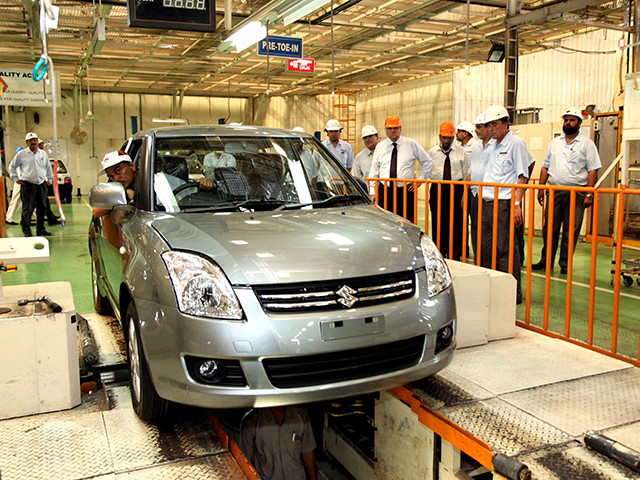
Pakistan’s auto industry posted a robust recovery in March 2026, with total sales reaching 15,531 units, marking a 40% year-on-year increase. Read More: https://theboardroompk.com/pakistan-unveils-1-billion-ai-push-to-power-next-gen-digital-infrastructure/ Broad-Based Growth Across Segments The surge was driven by macroeconomic stability, lower interest rates, and improved demand conditions. Passenger car sales jumped 45% YoY to 11,755 units, while LCVs and pickups grew a modest 27% YoY to 3,776 units. Cumulatively, 9MFY26 sales stood at approximately 144,000 units, up 43% YoY. Industry experts attribute the momentum to easier financing and rising consumer confidence following months of sluggish demand. Short-term volatility persisted, however, as March figures were 9% lower month-on-month due to seasonal factors. Positive Momentum in Key Categories Charts tracking multi-month trends confirm a clear uptrend in cars and LCVs since the start of the calendar year. The recovery reflects broader economic improvements, including stable inflation and better availability of imported kits. Analysts note that the sector’s resilience remains intact despite global headwinds. With demand conditions continuing to improve, the coming months could see sustained double-digit growth if policy support persists. Local assemblers are also ramping up production to meet pent-up orders, particularly in the sedan and compact SUV segments. The latest data from Intermarket Securities highlights how sectoral tailwinds are translating into tangible volume gains, positioning the industry for a stronger fiscal year ahead. According to Intermarket Securities Ltd: Auto sales in March 2026 stood at 15,531 units, rising a robust 40% YoY but down 9% MoM, taking 9MFY26 sales to c. 144K units, up 43%. The YoY growth is primarily driven by sectoral tailwinds including macroeconomic stability, lower interest rates, and relatively better demand conditions. Passenger car sales increased 45% YoY to 11,755 units, while LCVs and Pickup segment posted a modest growth of 27% YoY to 3,776 units. INDU: Indus Motors posted a 24% YoY growth (flat MoM), selling 3,873 units in Mar 26. The Corolla, Yaris and Cross portfolio posted robust growth of 32% YoY to 3,145 units, while the Fortuner and Revo segment declined 3% YoY to 728 units, mainly due to increased competition from new cars launched at the start of the year. Overall, the company’s market share dropped 3ppt YoY to 25%. HCAR: Honda posted a sharp growth of 63% YoY (10% MoM) to 2,324 units, primarily led by its sedan segment which grew by 71% YOY, while the SUV segment posted a growth of 18% YoY, HCAR’s market share improved by 2ppt YoY to 15% in Mar 26. SAZEW: Sazgar recorded 4-wheeler sale of 1,733 units, up 34% YoY in Mar 26. Sequentially, however, the sales dropped 11% MoM, The Company’s market share improved 3ppt YoY to 11% in Mar 26. SAZEW rolled out the test unit of TANK 500 in Apr 26 which shall provide a further support the volumes in upcoming months. Moreover, SAZEW’s three-wheeler sales improved 10% YoY to 2,159 units during the month. Tractor: Tractor sales saw a sharp 98% YoY growth (63% MoM) to 3,008 units this month as deliveries for the Punjab tractor scheme neared completion. With the scheme’s impact subsiding, sales volumes are expected to normalize going forward. MTL’s market share dropped 10ppt YoY to 51%, while AGTL’s market share improved to 49% during Mar 26. Trucks: Trucks segment continues to benefit from relatively improved economic activity YoY along with stricter enforcement of Axle Load regime. Volumes are up 38% YoY to 488 units. GHNI’s volumes grew by 47% to 376 units in Mar 26. Meanwhile, GAL’s sales reached 340 units, up 3.9x YOY. Despite intensifying competition, volumetric growth across listed auto OEMs remains robust, underscoring resilient underlying demand; however, we flag key overhangs to the sector’s near-term outlook, including pending regulatory clarity on the New Energy Vehicles (NEV) policy, rising competition from Chinese OEMs, and potential supply-side disruptions stemming from escalating Middle East tensions, which could impact shipping routes and delay CKD kit procurement for local assemblers.

Pakistan Unveils $1 Billion AI Push to Power Next-Gen Digital Infrastructure
Editor pick, Tech

Pakistan Unveils $1 Billion AI Push to Power Next-Gen Digital Infrastructure

Pakistan has announced a landmark $1 billion investment in artificial intelligence, signaling a decisive move to strengthen its digital backbone and accelerate technological progress across the country. Read More: https://theboardroompk.com/oil-tankers-reroute-at-last-minute-as-us-moves-to-block-iran-sea-routes/ The initiative, led by the Ministry of IT and Telecommunication, will initially focus on building high-performance computing capacity, including advanced GPUs essential for developing and running modern AI systems. These resources will be made accessible to startups, businesses, and researchers to drive innovation and expand AI adoption across multiple sectors. Managed through the Ignite National Technology Fund, the program aims to lower barriers to entry by offering affordable access to cutting-edge computing infrastructure. This is expected to empower both emerging and established players in Pakistan’s tech ecosystem. Officials emphasize that the initiative is designed to boost research, enhance industrial competitiveness, and position Pakistan as a serious contender in the global AI landscape. By investing in foundational infrastructure, the government hopes to unlock new opportunities in innovation, economic growth, and digital transformation. Overall, the move reflects a broader national strategy to transition toward a knowledge-based economy, where AI-driven capabilities play a central role in shaping future industries.

Finance Minister Aurangzeb Begins Washington Visit for IMF and World Bank Talks
Pakistan

Finance Minister Aurangzeb Begins Washington Visit for IMF and World Bank Talks

Finance Minister Muhammad Aurangzeb arrived in Washington on Monday to attend the Spring Meetings hosted separately by the International Monetary Fund and the World Bank. The Finance Minister begins a critical visit aimed at strengthening Pakistan’s economic position on the global stage. The meetings will take place from April 13 to April 18. They will bring together finance leaders, policymakers, and development partners from across the world. Officials said the Finance Minister will present Pakistan’s reform progress. He will also highlight priorities to stabilize the economy and attract foreign investment. Finance Minister to Hold Separate Talks with IMF and World Bank The Finance Minister will engage both institutions through distinct meetings aligned with their mandates. He will discuss macroeconomic stability and fiscal reforms with the IMF. He will also hold separate discussions with the World Bank on development financing and social protection. Aurangzeb will meet senior IMF leadership including Nigel Clarke and Jihad Azour. These discussions will focus on Pakistan’s economic outlook and reform trajectory. In parallel, the Finance Minister will meet World Bank officials including Anna Bjerde. He will also engage with Makhtar Diop and Tsutomu Yamamoto. These engagements will focus on investment and development support. Finance Minister Strengthens Economic Engagement with United States The Finance Minister will hold meetings with senior officials of the United States administration. These include representatives from the State Department and the Treasury. He will also meet Jamieson Greer to discuss trade cooperation and market access. These talks aim to deepen economic ties between Pakistan and the United States. Officials said the Finance Minister will highlight improvements in Pakistan’s economic indicators. He will also present policy measures designed to encourage investment and growth. Finance Minister Engages Global Financial Institutions and Investors The Finance Minister will meet top global financial institutions during his visit. These include JP Morgan Chase, Citibank, Rothschild & Co., and Franklin Templeton. He will participate in investment forums and policy discussions. These sessions will provide an opportunity to directly engage with institutional investors. The Finance Minister aims to build investor confidence. He will highlight key sectors and reforms that improve Pakistan’s investment climate. Finance Minister Expands Bilateral Economic Partnerships The Finance Minister will also meet counterparts from key partner countries. These include China, Saudi Arabia, United Arab Emirates, Türkiye, and the United Kingdom. These meetings will focus on strengthening bilateral cooperation. They will also explore opportunities for investment and financial collaboration. Officials believe these engagements will support Pakistan’s long term economic strategy and help secure external financing. Finance Minister Showcases Pakistan Social Protection Success A major highlight of the visit will be Pakistan’s participation in a World Bank roundtable on digital social protection. The Finance Minister will present Pakistan’s experience with Government to Person payment systems. These systems operate under the Benazir Income Support Programme. The programme has improved financial inclusion and transparency. It has also helped deliver support to vulnerable populations across the country. Pakistan will share its model with countries from the Middle East and North Africa. This engagement will highlight innovation in public service delivery. Finance Minister Participates in Global Policy Forums The Finance Minister will attend several multilateral forums during the visit. These include meetings of the G Twenty Four Finance Ministers and Central Bank Governors. He will also participate in the Coalition of Finance Ministers for Climate Action. These forums will address global economic stability and climate finance challenges. Aurangzeb will contribute to discussions on financial reforms and development priorities. These engagements will allow Pakistan to play an active role in global policymaking. Finance Minister Undertakes Extensive Diplomatic Engagements Officials confirmed that the Finance Minister will participate in more than fifty engagements during his visit. These include bilateral meetings, policy dialogues, and investment roundtables. He will also engage with development partners such as the International Fund for Agricultural Development, the Gates Foundation, and institutions like the Asian Development Bank, JICA, and the Asian Infrastructure Investment Bank.

NEPRA Petition Filed as PHMA Accuses DISCOs of Misusing Private Power Systems
Pakistan

NEPRA Petition Filed as PHMA Accuses DISCOs of Misusing Private Power Systems

The Pakistan Hosiery Manufacturers and Exporters Association (PHMA) has filed a formal NEPRA petition urging action against distribution companies over the use of privately built electricity infrastructure in Karachi’s industrial areas. The association has approached the National Electric Power Regulatory Authority, claiming that distribution licensees have been using private power systems without proper consent or compensation. The dispute centers on industrial zones where factories installed their own electricity systems decades ago. PHMA argues that these systems are now being used for third party connections without legal approval from owners. PHMA Raises Concerns Over Private Distribution Systems PHMA said many factories built Dedicated Distribution Systems during the 1970s and 1980s. These systems included private substations and 11kV infrastructure installed on factory owned land. The association stated that these systems were originally meant for exclusive industrial use. It added that distribution companies later extended supply to nearby consumers through the same infrastructure. PHMA claims this was done without written consent from the original owners. It also alleges that no compensation was provided for the use of private land or equipment. Allegations Against DISCOs Over Regulatory Violations The association has accused distribution companies of violating regulatory rules. It referred to provisions under NEPRA consumer guidelines that require a written No Objection Certificate before any third party connection is made through private systems. PHMA argues that many connections were issued without such approval. It says this action breaches both regulatory manuals and licensing conditions. The association further claims that private system owners were neither informed nor consulted. It describes this as a long standing regulatory gap that has harmed industrial stakeholders. Industrial Owners Claim Loss of Control Over Property PHMA has raised concerns about practical consequences for factory owners. It stated that landowners often face difficulties when they try to sell, close, or redevelop their properties. According to the association, distribution companies refuse to shift connections unless the owner pays relocation costs. PHMA argues that these costs should not fall on private owners when the infrastructure was used without consent. The association described the situation as a form of restriction on property rights. It said owners are unable to fully control or develop their land due to public utility installations. Dispute Over Conversion of Private Systems into Public Networks A key issue highlighted in the NEPRA petition is the conversion of Dedicated Distribution Systems into Common Distribution Systems. PHMA said existing regulations allow distribution companies to convert private systems into public infrastructure. It argued that this conversion happens without compensation to the original owners. The association added that once converted, the infrastructure becomes part of public use while ownership rights of the original builders are not recognized financially. It claimed this creates an imbalance where private investment is absorbed into public utility networks without reimbursement. PHMA Cites Constitutional Property Rights The association has cited constitutional provisions under Article 24 of Pakistan’s Constitution. It states that no property can be taken for public use without lawful authority and compensation. PHMA argues that current regulations do not meet this requirement. It says private infrastructure is effectively being used for public benefit without financial settlement. The association claims this raises legal and constitutional concerns that require urgent regulatory review. Five Key Demands Submitted to NEPRA PHMA has requested National Electric Power Regulatory Authority to take immediate action through five major reforms. It has asked for identification of all third party connections running through private systems without proper consent. It also wants such practices stopped immediately. The association demands that distribution companies bear all relocation costs where connections were made without approval. It also seeks mandatory relocation within 90 days when property owners plan redevelopment. PHMA has also called for compensation based on market value for both land use and infrastructure before any system conversion. It insists that owner consent must be required before such changes. The association further wants a standardized No Objection Certificate system. It has also requested a public record of all connections passing through private infrastructure. Finally, PHMA has demanded refunds for owners who previously paid relocation costs. It wants these refunds processed within 90 days. Call for Regulatory Reform in Power Distribution Sector PHMA has expressed confidence that NEPRA will review the petition and take appropriate action. The association believes the current framework needs urgent reform to protect industrial investors. The dispute highlights growing tensions between private industrial infrastructure and public utility expansion. It also raises broader questions about regulatory fairness and compensation mechanisms.

Challans Return to Karachi Roads as Traffic Police Launch On-the-Spot Enforcement Drive
Pakistan

Challans Return to Karachi Roads as Traffic Police Launch On-the-Spot Enforcement Drive

Challans have officially returned to Karachi’s major roads as traffic police resume on-the-spot enforcement across key traffic corridors. The move aims to improve road discipline, reduce violations, and restore order on one of Pakistan’s busiest urban road networks. The Karachi Traffic Police have deployed officers at major intersections and highways. These officers now issue instant challans directly to violators instead of relying only on automated systems. Authorities say the decision reflects growing concern over traffic violations, congestion, and unsafe driving behavior across the city. On-the-Spot Challans Resume on Major Roads Traffic authorities confirmed that challans are now being issued in real time on Karachi roads. Officers stop vehicles, check documents, and issue fines immediately for violations. The enforcement covers multiple offences. These include over speeding, signal jumping, wrong lane driving, and missing safety equipment. Motorcyclists and car drivers both fall under the new enforcement drive. Officials say no category of vehicle is exempt from compliance. The system is designed to make enforcement more visible. Police presence on roads is expected to increase driver caution and reduce repeated violations. Karachi Traffic Police Strengthen Field Enforcement The Karachi Traffic Police have increased deployment at major traffic points. Key roads such as Shahrah-e-Faisal, M A Jinnah Road, Korangi Road, and University Road are part of the enforcement zones. Officers are using handheld devices and mobile applications to issue digital challans. These tools allow immediate recording of violations and automated ticket generation. The department says this approach improves transparency and reduces manual errors. It also speeds up the enforcement process. Officials believe visible policing will improve driver behavior more effectively than camera-only monitoring. E-Challan System Continues Alongside Manual Fines The existing e-challan system remains active in Karachi. However, authorities have now combined it with physical enforcement through on-the-spot challans. The dual system allows police to capture violations both through surveillance cameras and direct observation. Officials say this hybrid model will close enforcement gaps. It ensures that violations not captured by cameras are still penalized. Drivers who attempt to avoid automated fines may now face immediate penalties on the road. Why Challans Were Reintroduced on the Roads Traffic authorities say the decision was taken to address increasing violations across the city. Karachi continues to face serious challenges in traffic management due to high vehicle density and limited road discipline. Officials identified several key issues. These include signal violations, reckless driving, lane cutting, and illegal parking. The return of challans is aimed at restoring discipline. Authorities believe physical enforcement will create stronger compliance among drivers. They also want to reduce pressure on automated systems that sometimes miss contextual violations. Focus on Road Safety and Public Discipline The renewed challan drive is part of a broader road safety strategy. Traffic officials say the goal is not only to issue fines but also to change driver behavior. Karachi’s roads have long faced criticism for poor discipline. Frequent violations contribute to congestion and accidents. Authorities believe strict enforcement will encourage safer driving habits. They also expect it to reduce traffic bottlenecks during peak hours. The campaign targets both private and commercial vehicles. Public transport operators are also under strict monitoring. Public Reaction to Return of Challans The reintroduction of challans has triggered mixed reactions from commuters. Some drivers support the move and say stricter enforcement is necessary to improve traffic flow. Others express concern about over enforcement and frequent fines. They argue that traffic management should also focus on infrastructure improvements. Motorists have also raised questions about consistency in enforcement. Some demand clearer guidelines and better awareness campaigns. Despite differing opinions, many agree that Karachi’s traffic situation requires immediate intervention. Technology Integration in Traffic Enforcement The Karachi Traffic Police are increasingly relying on digital tools. Officers now use mobile applications linked to central databases for issuing challans. This system allows instant verification of vehicle records, license status, and previous violations. Officials say this integration improves accountability and reduces paperwork delays. It also helps maintain a centralized record of all violations. The system supports the broader shift toward digital governance in law enforcement across Sindh. Impact on Daily Commuters and Traffic Flow Commuters are already noticing increased police presence on major routes. Traffic officers are actively stopping vehicles for checks and issuing fines where required. The presence of challan enforcement has led to more cautious driving behavior in some areas. Early observations suggest improved lane discipline during peak hours. However, traffic congestion remains a challenge in several parts of the city. Authorities say enforcement alone cannot solve infrastructure limitations. They emphasize the need for long term urban traffic planning alongside enforcement measures. Government Push for Better Compliance Officials say the challan system is part of a wider push to improve compliance with traffic laws. The goal is to reduce accidents and improve road safety standards. Authorities are also reviewing penalties for different categories of violations. The aim is to make fines more effective as a deterrent. Awareness campaigns are expected to accompany enforcement efforts. These campaigns will educate drivers about traffic rules and penalties.

BRT Red Line Faces Fresh Delay in Karachi as Work Slows Again
Pakistan

BRT Red Line Faces Fresh Delay in Karachi as Work Slows Again

The BRT Red Line project in Karachi has once again slowed sharply as construction activity drops across multiple key stretches. Large sections of the route now show little to no visible progress, raising renewed concerns over delays and project coordination. Field observations indicate that machinery remains idle in several areas. Labour presence has also reduced significantly compared to earlier phases of construction. Authorities had previously assured steady progress after resolving financial issues. However, the situation on the ground now reflects another setback for one of Karachi’s most important transport projects. Project Divided Into Two Major Sections The BRT Red Line is divided into two main segments for execution. Lot 1 runs from Airport Signal to Mosamiyat. Lot 2 extends from Mosamiyat to Numaish. Lot 2 continues to face the most serious challenges. This section is longer and involves more complex urban construction work along heavily populated corridors. Officials had earlier prioritized resolving delays in this segment. Despite that, progress remains inconsistent and slow. Past Financial Disputes Still Affect Progress Construction on Lot 2 had already faced a major suspension last year. The halt came after financial disagreements between contractors and project authorities. The dispute escalated to legal proceedings before payments were eventually cleared. Work resumed after intervention, but the recovery has not been stable. Although officials later claimed that the matter had been resolved, current conditions suggest lingering effects on project execution and contractor performance. Visible Work Slowdown Across Key Routes A field review of the project corridor shows a clear slowdown in activity. At People’s Chowrangi, no machinery is currently active, and construction appears suspended. Further along toward Hassan Square, only a small number of workers are visible. A few machines are present, but no active construction is taking place. On the Hassan Square to Nipa stretch, work has been halted due to the ongoing installation of the K-IV water pipeline. This infrastructure project has directly interfered with the BRT construction timeline. Even where machinery is stationed, most equipment remains idle. No consistent operational activity is visible across major sections of the route. Pipeline Work Adds New Layer of Delay The K-IV water supply project has become a major factor affecting the BRT Red Line progress. Construction teams have been forced to pause work in multiple areas where pipeline installation is underway. This overlap between infrastructure projects has created logistical challenges. Road space is limited, and coordination between agencies remains weak. Officials have not provided a clear revised schedule for resolving these conflicts. As a result, uncertainty continues to grow over project completion timelines. Lot 2 Remains the Most Troubled Section The Mosamiyat to Numaish segment continues to face repeated interruptions. This part of the route passes through some of Karachi’s busiest urban zones. Construction delays here have a wider impact on traffic flow and daily commuting. Residents in surrounding areas report prolonged road blockages and diversions. Despite being the largest and most critical segment, Lot 2 has not shown consistent progress in recent months. Commuters Face Ongoing Disruption The slowdown in BRT Red Line construction has continued to affect daily commuters across Karachi. University Road and adjoining corridors remain heavily congested. Travel times have increased due to lane closures and construction barriers. Alternative routes are also under pressure due to diverted traffic. Residents say they continue to face uncertainty over when normal road conditions will return. Many had expected faster completion timelines based on earlier official statements. Repeated Delays Raise Governance Questions The repeated slowdown has raised concerns about project management and coordination. Observers point to a lack of synchronization between infrastructure agencies working in the same corridor. Financial disputes, utility relocation, and construction planning issues have all contributed to delays. Despite earlier claims of resolution, progress remains uneven. The situation has also triggered questions about long term planning for urban transport development in Karachi. Importance of the BRT Red Line Project The BRT Red Line is one of Karachi’s key mass transit initiatives. The project is designed to improve public transport, reduce congestion, and provide a reliable travel option for millions of residents. Once completed, it is expected to connect major residential and commercial zones through a dedicated bus corridor. However, repeated delays have slowed down the delivery of these benefits, leaving commuters dependent on existing overcrowded transport systems.

CCP Authorizes Acquisition of TPL Insurance Limited by Jazz International Holding Limited
Business

CCP Authorizes Acquisition of TPL Insurance Limited by Jazz International Holding Limited

ISLAMABAD: The Competition Commission of Pakistan (CCP) has authorized the acquisition of M/s. TPL Insurance Limited by M/s. Jazz International Holding Limited from M/s. TPL Corp Limited following a Phase-I review. Read More: https://theboardroompk.com/us-naval-blockade-on-iran-set-to-tighten-global-oil-supply/ The transaction involves the acquisition of a controlling stake by Jazz in TPL Insurance Limited through a Share Purchase Agreement. A portion of the shares will first be acquired by TPL Corp Limited from Deutsche Investitions- und Entwicklungsgesellschaft (DEG), a German investment company, and subsequently transferred to the acquirer, through a mandatory tender offer. Jazz International Holding Limited, a subsidiary of VEON, incorporated in the UAE, is engaged in telecommunications and digital services. The target company, M/s. TPL Insurance Limited, is a public listed company operating in Pakistan’s non-life insurance sector, offering conventional and takaful insurance products. The CCP conducted a detailed Phase-I competition assessment in accordance with the Competition Act and the Competition (Merger Control) Regulations, 2016. The relevant market was identified as the non-life insurance sector in Pakistan. Based on the assessment, the Commission determined that the transaction constitutes a conglomerate merger, with no horizontal or vertical overlap between the business activities of the acquirer and the target. The Commission further observed that the transaction is not likely to result in the creation or strengthening of a dominant position or to substantially lessen competition in the relevant market. Accordingly, the CCP has authorized the transaction under the applicable provisions of the law. The merger is expected to accelerate the growth of digital insurance and advance financial inclusion in Pakistan. The Commission remains committed to facilitating foreign direct investment through timely merger clearances, promoting business growth, and ensuring that market structures remain competitive and aligned with the principles of fair competition.

US Naval Blockade on Iran Set to Tighten Global Oil Supply
Breaking News, World

US Naval Blockade on Iran Set to Tighten Global Oil Supply

The US military has announced a naval blockade of Iranian ports starting Monday at 10am ET (7pm PKT), preventing roughly two million barrels of Iranian oil per day from reaching international markets. This move comes after weekend peace talks in Islamabad between US and Iranian negotiators ended without any agreement. Read More: https://theboardroompk.com/pakistan-deploys-fighter-jets-to-saudi-arabia-under-defence-pact/ US President Donald Trump stated that the Navy would begin blockading ships trying to enter or leave the Strait of Hormuz. The US Central Command clarified that the blockade targets only vessels going to or from Iranian ports and will not affect freedom of navigation for ships heading to non-Iranian ports in the region. Impact on Global Oil Markets Iran exported about 1.84 million barrels per day in March and 1.71 million so far in April. Blocking these flows is expected to tighten global oil supply significantly. Analysts note that more than 180 million barrels of Iranian oil are already loaded on ships, adding pressure to an already strained market. Before the recent conflict, roughly 20 percent of global oil and natural gas exports passed through the Strait of Hormuz, with most cargoes destined for Asia. China remains the top buyer of Iranian crude, while India is preparing to receive its first Iranian shipment in seven years under a recent US sanctions waiver. Risks to Shipping and Regional Stability Shipping traffic through the Strait of Hormuz has been severely limited since the war began on February 28. Despite a two-week ceasefire last week, many tankers continue to avoid the area. Recent incidents include a tanker turning back near the Gulf of Oman and only a few supertankers successfully exiting the Gulf over the weekend. Iran’s Revolutionary Guards have warned that any military vessels approaching the strait would be seen as a ceasefire violation and met with a harsh response. Retired Admiral Gary Roughead cautioned that Iran could target ships or attack infrastructure in Gulf states hosting US forces. The blockade adds fresh uncertainty to energy markets already watching developments closely in the Persian Gulf and Gulf of Oman.

Pakistan Deploys Fighter Jets to Saudi Arabia Under Defence Pact
Editor pick, World

Pakistan Deploys Fighter Jets to Saudi Arabia Under Defence Pact

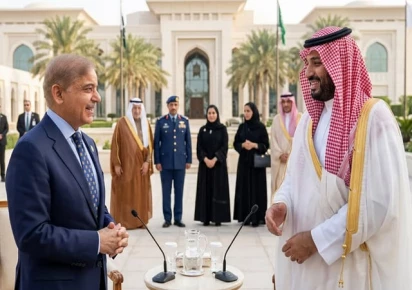
Pakistan has sent a small number of fighter and support jets to Saudi Arabia, marking the first visible military step under a mutual defence pact signed in September 2025. The aircraft landed at King Abdulaziz Air Base in Saudi Arabia’s Eastern Province on Saturday, according to the Saudi Ministry of Defence, according to Aljazeera. Read More: https://theboardroompk.com/google-and-pakistan-government-launch-ai-seekho-2026-to-train-youth-in-vibe-coding-and-ai-skills/ This deployment comes as Pakistan hosts sensitive ceasefire talks between the United States and Iran in Islamabad, aimed at ending weeks of regional conflict that began after Iran’s missile and drone strikes on US targets in Gulf states. First Visible Move Under 2025 Pact The mutual defence agreement, signed during Prime Minister Shehbaz Sharif’s visit to Riyadh, commits both nations to treat an attack on one as an attack on the other. Pakistani Foreign Minister Ishaq Dar had earlier warned Iranian leaders that Islamabad would honour its obligations to Saudi Arabia. Army Chief Field Marshal Asim Munir visited Riyadh in early March to discuss ways to stop Iranian strikes. Just days before the jets arrived, Sharif spoke with Saudi Crown Prince Mohammed bin Salman and pledged that Pakistan would stand “shoulder to shoulder” with the kingdom. Analysts describe the move as largely symbolic. Imtiaz Gul noted that “three jets won’t make much of a difference militarily” given Saudi Arabia’s large air force, but it sends a clear message to Iran about Pakistan’s commitments. Timing Raises Questions in Regional Tensions The deployment occurs against the backdrop of a fragile ceasefire. Iran has continued attacks on Saudi targets, including key bases. Meanwhile, Pakistan is trying to mediate between Washington and Tehran. Pakistan and Saudi Arabia also agreed to speed up a promised $5 billion Saudi investment package for Pakistan’s economy. On Saturday, Saudi Finance Minister Mohammed al-Jadaan met Sharif in Islamabad alongside Dar and Munir. Saudi Arabia remains a major economic partner for Pakistan, hosting over 2.5 million Pakistani workers whose remittances are vital. The move highlights the close defence and economic ties between the two countries while Islamabad navigates complex regional diplomacy.

US Dollar Rises as Iran Tensions Shake Global Currency Markets
Business, Editor pick

US Dollar Rises as Iran Tensions Shake Global Currency Markets

The US dollar strengthened in early Asian trading on Monday as global markets reacted to rising tensions between Washington and Tehran. Investors moved quickly toward safe haven assets after peace talks between the United States and Iran collapsed. The United States signaled a major escalation in the conflict. The move pushed traders to shift away from riskier currencies and into the US dollar. Market analysts described the early trading session as thin but decisive. They noted a clear risk off sentiment across global foreign exchange markets. US Dollar Climbs as Hormuz Blockade Fears Intensify US President Donald Trump announced that the US Navy would begin blockading the Strait of Hormuz. This development followed failed negotiations aimed at ending the ongoing conflict. The blockade targets Iranian ports and threatens to disrupt global oil supply routes. As a result, investors reacted swiftly by increasing their exposure to the US dollar. The United States Central Command confirmed that operations would begin at 10 a.m. ET. This announcement further intensified uncertainty in global markets. US Dollar Pressures Major Global Currencies The surge in the US dollar weighed heavily on other major currencies. The euro slipped 0.3 percent to 1.1684 against the dollar. The British pound also declined by 0.5 percent to 1.3398. Meanwhile, risk sensitive currencies saw sharper declines. The Australian dollar dropped 0.6 percent to 0.7030. The New Zealand dollar fell 0.4 percent to 0.5816. These movements reflect growing caution among investors. They are moving away from higher risk currencies amid rising geopolitical uncertainty. US Dollar Index Holds Near Recent Highs The US Dollar Index remained steady at 99.056. This level is close to its highest point since early April. The index tracks the strength of the US dollar against a basket of major currencies. Its stability signals continued demand for the dollar despite market volatility. Analysts from Westpac noted that the dollar rally reflects broader risk aversion. They highlighted that geopolitical developments are driving market sentiment more than economic data. Hungarian Forint Surges After Political Shift In contrast to the broader market trend, the Hungarian forint posted strong gains. The currency rallied sharply after a major political shift in Hungary. Veteran leader Viktor Orbán lost power following national elections. The result boosted investor confidence in Hungary’s economic outlook. The forint surged as much as 1.8 percent against the dollar. It reached its strongest level since January. Against the euro, it gained 2.2 percent and hit a four year high. Analysts from Goldman Sachs said markets reacted positively to the election outcome. They noted that the result could unlock European Union funding for Hungary. EU Funding Expectations Support Hungarian Assets Market participants expect faster release of European Union funds to Hungary. These funds form a significant part of the country’s economic framework. Analysts estimate that EU funding accounts for about 3 percent of Hungary’s GDP each year. Nearly half of these funds had remained frozen under previous political conditions. The expected release of funds has boosted investor sentiment. It has also strengthened the forint despite broader global uncertainty. US Dollar Gains Against Yen as Bond Yields Rise The US dollar also strengthened against the Japanese yen. It rose 0.4 percent to 159.83 yen during trading. At the same time, Japan’s benchmark 10 year government bond yield climbed sharply. It increased by 5.5 basis points to 2.49 percent. This marks its highest level in nearly three decades. Higher bond yields often support currency strength. In this case, the dollar continued to gain as investors sought safety and returns. Global Markets Brace for Continued Volatility The rise of the US dollar reflects deeper concerns about geopolitical stability and global economic risks. Investors remain cautious as tensions between the United States and Iran continue to escalate. Currency markets are likely to remain volatile in the coming days. Much will depend on developments in the Middle East and the response of global powers. For now, the US dollar continues to dominate as the preferred safe haven asset. Its strength signals a broader shift in investor sentiment as uncertainty grips global markets.

Scroll to Top