
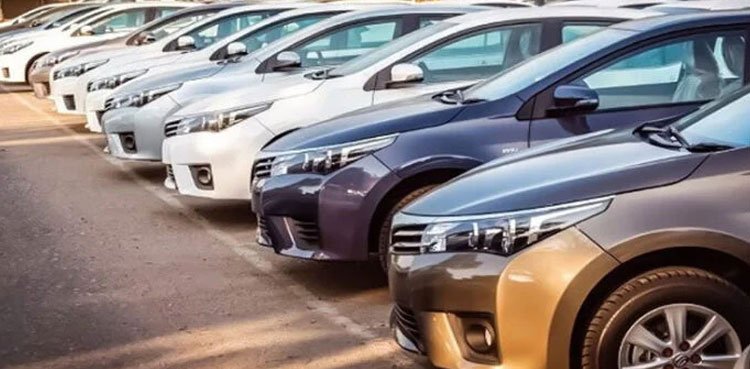
Pakistan’s auto industry posted a robust recovery in March 2026, with total sales reaching 15,531 units, marking a 40% year-on-year increase.
Broad-Based Growth Across Segments
The surge was driven by macroeconomic stability, lower interest rates, and improved demand conditions. Passenger car sales jumped 45% YoY to 11,755 units, while LCVs and pickups grew a modest 27% YoY to 3,776 units.
Cumulatively, 9MFY26 sales stood at approximately 144,000 units, up 43% YoY. Industry experts attribute the momentum to easier financing and rising consumer confidence following months of sluggish demand. Short-term volatility persisted, however, as March figures were 9% lower month-on-month due to seasonal factors.
Positive Momentum in Key Categories
Charts tracking multi-month trends confirm a clear uptrend in cars and LCVs since the start of the calendar year. The recovery reflects broader economic improvements, including stable inflation and better availability of imported kits. Analysts note that the sector’s resilience remains intact despite global headwinds.
With demand conditions continuing to improve, the coming months could see sustained double-digit growth if policy support persists. Local assemblers are also ramping up production to meet pent-up orders, particularly in the sedan and compact SUV segments.
The latest data from Intermarket Securities highlights how sectoral tailwinds are translating into tangible volume gains, positioning the industry for a stronger fiscal year ahead.
According to Intermarket Securities Ltd:
Auto sales in March 2026 stood at 15,531 units, rising a robust 40% YoY but down 9% MoM, taking 9MFY26 sales to c. 144K units, up 43%. The YoY growth is primarily driven by sectoral tailwinds including macroeconomic stability, lower interest rates, and relatively better demand conditions.
Passenger car sales increased 45% YoY to 11,755 units, while LCVs and Pickup segment posted a modest growth of 27% YoY to 3,776 units.
INDU: Indus Motors posted a 24% YoY growth (flat MoM), selling 3,873 units in Mar 26. The Corolla, Yaris and Cross portfolio posted robust growth of 32% YoY to 3,145 units, while the Fortuner and Revo segment declined 3% YoY to 728 units, mainly due to increased competition from new cars launched at the start of the year. Overall, the company’s market share dropped 3ppt YoY to 25%.
HCAR: Honda posted a sharp growth of 63% YoY (10% MoM) to 2,324 units, primarily led by its sedan segment which grew by 71% YOY, while the SUV segment posted a growth of 18% YoY, HCAR’s market share improved by 2ppt YoY to 15% in Mar 26.
SAZEW: Sazgar recorded 4-wheeler sale of 1,733 units, up 34% YoY in Mar 26. Sequentially, however, the sales dropped 11% MoM, The Company’s market share improved 3ppt YoY to 11% in Mar 26. SAZEW rolled out the test unit of TANK 500 in Apr 26 which shall provide a further support the volumes in upcoming months. Moreover, SAZEW’s three-wheeler sales improved 10% YoY to 2,159 units during the month.
Tractor: Tractor sales saw a sharp 98% YoY growth (63% MoM) to 3,008 units this month as deliveries for the Punjab tractor scheme neared completion. With the scheme’s impact subsiding, sales volumes are expected to normalize going forward.
MTL’s market share dropped 10ppt YoY to 51%, while AGTL’s market share improved to 49% during Mar 26.
Trucks: Trucks segment continues to benefit from relatively improved economic activity YoY along with stricter enforcement of Axle Load regime. Volumes are up 38% YoY to 488 units. GHNI’s volumes grew by 47% to 376 units in Mar 26. Meanwhile, GAL’s sales reached 340 units, up 3.9x YOY.
Despite intensifying competition, volumetric growth across listed auto OEMs remains robust, underscoring resilient underlying demand; however, we flag key overhangs to the sector’s near-term outlook, including pending regulatory clarity on the New Energy Vehicles (NEV) policy, rising competition from Chinese OEMs, and potential supply-side disruptions stemming from escalating Middle East tensions, which could impact shipping routes and delay CKD kit procurement for local assemblers.