
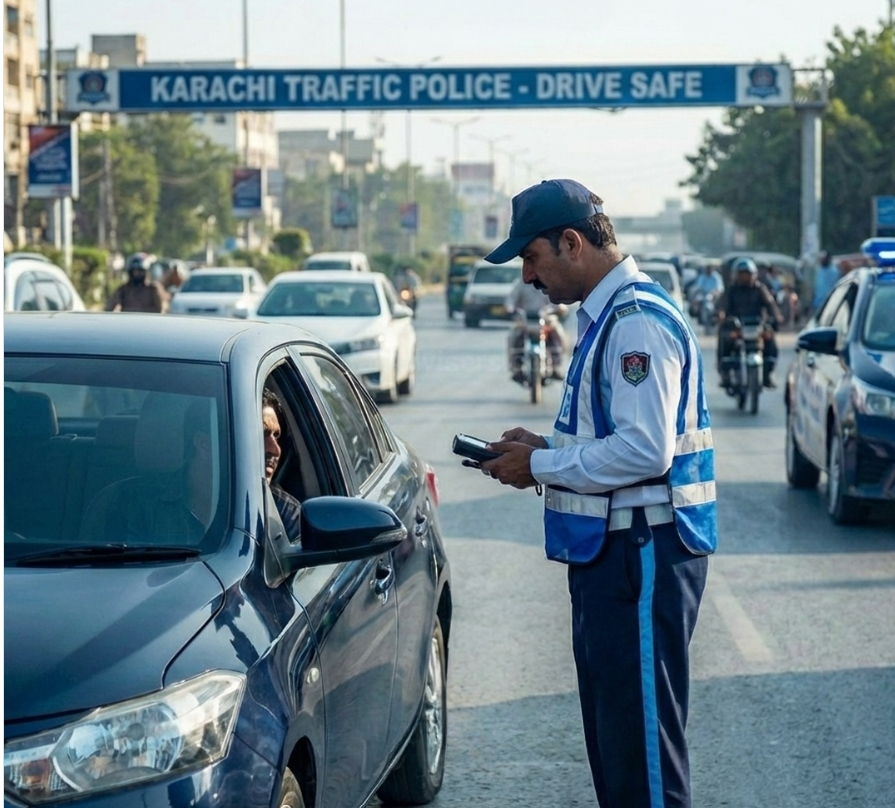
Challans have officially returned to Karachi’s major roads as traffic police resume on-the-spot enforcement across key traffic corridors. The move aims to improve road discipline, reduce violations, and restore order on one of Pakistan’s busiest urban road networks.
The Karachi Traffic Police have deployed officers at major intersections and highways. These officers now issue instant challans directly to violators instead of relying only on automated systems.
Authorities say the decision reflects growing concern over traffic violations, congestion, and unsafe driving behavior across the city.
On-the-Spot Challans Resume on Major Roads
Traffic authorities confirmed that challans are now being issued in real time on Karachi roads. Officers stop vehicles, check documents, and issue fines immediately for violations.
The enforcement covers multiple offences. These include over speeding, signal jumping, wrong lane driving, and missing safety equipment.
Motorcyclists and car drivers both fall under the new enforcement drive. Officials say no category of vehicle is exempt from compliance.
The system is designed to make enforcement more visible. Police presence on roads is expected to increase driver caution and reduce repeated violations.
Karachi Traffic Police Strengthen Field Enforcement
The Karachi Traffic Police have increased deployment at major traffic points. Key roads such as Shahrah-e-Faisal, M A Jinnah Road, Korangi Road, and University Road are part of the enforcement zones.
Officers are using handheld devices and mobile applications to issue digital challans. These tools allow immediate recording of violations and automated ticket generation.
The department says this approach improves transparency and reduces manual errors. It also speeds up the enforcement process.
Officials believe visible policing will improve driver behavior more effectively than camera-only monitoring.
E-Challan System Continues Alongside Manual Fines
The existing e-challan system remains active in Karachi. However, authorities have now combined it with physical enforcement through on-the-spot challans.
The dual system allows police to capture violations both through surveillance cameras and direct observation.
Officials say this hybrid model will close enforcement gaps. It ensures that violations not captured by cameras are still penalized.
Drivers who attempt to avoid automated fines may now face immediate penalties on the road.
Why Challans Were Reintroduced on the Roads
Traffic authorities say the decision was taken to address increasing violations across the city. Karachi continues to face serious challenges in traffic management due to high vehicle density and limited road discipline.
Officials identified several key issues. These include signal violations, reckless driving, lane cutting, and illegal parking.
The return of challans is aimed at restoring discipline. Authorities believe physical enforcement will create stronger compliance among drivers.
They also want to reduce pressure on automated systems that sometimes miss contextual violations.
Focus on Road Safety and Public Discipline
The renewed challan drive is part of a broader road safety strategy. Traffic officials say the goal is not only to issue fines but also to change driver behavior.
Karachi’s roads have long faced criticism for poor discipline. Frequent violations contribute to congestion and accidents.
Authorities believe strict enforcement will encourage safer driving habits. They also expect it to reduce traffic bottlenecks during peak hours.
The campaign targets both private and commercial vehicles. Public transport operators are also under strict monitoring.
Public Reaction to Return of Challans
The reintroduction of challans has triggered mixed reactions from commuters. Some drivers support the move and say stricter enforcement is necessary to improve traffic flow.
Others express concern about over enforcement and frequent fines. They argue that traffic management should also focus on infrastructure improvements.
Motorists have also raised questions about consistency in enforcement. Some demand clearer guidelines and better awareness campaigns.
Despite differing opinions, many agree that Karachi’s traffic situation requires immediate intervention.
Technology Integration in Traffic Enforcement
The Karachi Traffic Police are increasingly relying on digital tools. Officers now use mobile applications linked to central databases for issuing challans.
This system allows instant verification of vehicle records, license status, and previous violations.
Officials say this integration improves accountability and reduces paperwork delays. It also helps maintain a centralized record of all violations.
The system supports the broader shift toward digital governance in law enforcement across Sindh.
Impact on Daily Commuters and Traffic Flow
Commuters are already noticing increased police presence on major routes. Traffic officers are actively stopping vehicles for checks and issuing fines where required.
The presence of challan enforcement has led to more cautious driving behavior in some areas. Early observations suggest improved lane discipline during peak hours.
However, traffic congestion remains a challenge in several parts of the city. Authorities say enforcement alone cannot solve infrastructure limitations.
They emphasize the need for long term urban traffic planning alongside enforcement measures.
Government Push for Better Compliance
Officials say the challan system is part of a wider push to improve compliance with traffic laws. The goal is to reduce accidents and improve road safety standards.
Authorities are also reviewing penalties for different categories of violations. The aim is to make fines more effective as a deterrent.
Awareness campaigns are expected to accompany enforcement efforts. These campaigns will educate drivers about traffic rules and penalties.