Author name: Web Desk

Pakistan loses nearly 1pc of GDP annually to climate impacts, reveals OICCI’s 4th Pakistan Climate Conference
Uncategorized

Pakistan loses nearly 1pc of GDP annually to climate impacts, reveals OICCI’s 4th Pakistan Climate Conference

KARACHI, FEB 9: Pakistan is losing close to one per cent of its GDP each year to climate-related damages, speakers revealed on Monday at the 4th Pakistan Climate Conference, as government leaders, development partners and business executives urged an accelerated shift from policy frameworks to bankable climate action. Organised by the Overseas Investors Chamber of Commerce & Industry (OICCI), the Conference brought together federal and provincial policymakers, international institutions, climate experts, journalists, and corporate leaders to address Pakistan’s mounting exposure to floods, heatwaves and economic disruption despite contributing less than one per cent to global emissions. Federal Minister for Climate Change and Environmental Coordination Dr Musadik Masood Malik said Pakistan was on the frontline of a rapidly intensifying crisis. “I commend OICCI for creating a platform where climate resilience is treated not as CSR, but as an economic imperative. From record 53°C heatwaves to floods that displaced four million people last year, with over 13,000 glaciers melting and climate losses costing nearly one per cent of GDP annually, this is an existential challenge,” he said. Referring to Pakistan’s updated climate commitments, Dr Malik said the country’s NDC 3.0 targets a 50pc emissions reduction by 2035, but achieving a just transition would require $565.7 billion in investment, calling for climate finance that is sustainable, grant-based and rooted in climate justice. Addressing the participants, Federal Minister for Finance and Revenue Senator Muhammad Aurangzeb described climate change as an existential threat, stressing that while key frameworks including the National Adaptation Plan, Climate Prosperity Plan and Green Taxonomy were in place, the focus must now shift to mobilising available financing and developing investable projects. He highlighted the private sector’s role in providing not just capital, but innovation and technical expertise. Speaking at the Conference, Regional Lead, Sustainable Finance, Asia and Pacific at United Nations Development Programme (UNDP), Chongguang Yu (Charles) said the core challenge was no longer capital availability but fragmented systems, advocating blended finance, risk-sharing mechanisms and programmatic investment pipelines to unlock scalable private-sector participation. President OICCI Yousaf Hussain said the Government of Pakistan was making tangible progress on its climate agenda. He noted that from emphasising adaptation finance through public–private partnerships at the World Economic Forum in Davos to finalising the $20 billion, 10-year Country Partnership Framework with the World Bank, and preparing for the launch of Pakistan’s first Green Panda Bond, the steps reflected growing momentum on sustainable finance. “Together, these steps signal a clear and credible national commitment to climate resilience.” Meanwhile, Senior Vice President OICCI Jason Avanceña said the Conference was designed to move beyond rhetoric towards practical economic outcomes. “Building on the momentum from COP30, our discussions focused on translating climate commitments into economic outcomes, from modernising Pakistan’s strained power grid and accelerating renewable energy to unlocking Blue Economy opportunities through coastal resilience and marine sustainability, while leveraging artificial intelligence to improve climate forecasting, reduce disaster losses, and strengthen investment planning,” said Jason. The event was attended by local and international speakers from UNDP, Asia Development Bank, International Finance Corporation, World Wildlife Fund Pakistan, State Bank of Pakistan, Securities Exchange Commission of Pakistan, Pakistan Stock Exchange, Environmental Protection Agency Punjab, Sindh Solid Waste Management Board, Sindh Environmental Protection Agency, Sustainable Development Policy Institute, and leading corporates including Unilever, Nestlé, Standard Chartered Bank and Beko Global. The Conference concluded with the 2nd OICCI Climate Excellence Awards, recognising organisations advancing renewable energy, circularity, water stewardship and inclusive climate action. • Climate Excellence (Main Award): Nestlé Pakistan• Climate Action: Award: Dawlance; Runner-Up: Unilever; Small Companies: Loreal Pakistan• Water Stewardship: Award: Pakistan Tobacco Company; Runner-Up: Reckitt; Small Companies: Lotte Chemicals• Renewable Energy & Conservation: Award: Atlas Honda Ltd. and Martin Dow Group; Runner-Up: Metro; Small Companies: KSB Pumps• Circular Economy: Award: PepsiCo Pakistan; Runner-Up: TetraPak; Small Companies: Engro Powergen Thar• Supporting Biodiversity: Award: Attock Refinery Ltd.; Runner-Up: Engro Polymer; Small Companies: Engro Vopak• Sustainable Finance: Award: Mobilink Microfinance Bank; Runner-Up: Bank Alfalah; Small Companies: (None) As climate risks escalate, speakers agreed that climate policy can no longer sit at the margins, it must now drive Pakistan’s economic planning, investment strategy and national development agenda.
Meezan Bank Posts Rs89 Billion Profit in 2025; Gives Rs 28 Per Share Dividend
Business

Meezan Bank Posts Rs89 Billion Profit in 2025; Gives Rs 28 Per Share Dividend

Meezan Bank reported a Profit After Tax (PAT) of Rs. 89 billion for the year ended December 31, 2025, delivering a strong Return on Equity of 34%. This performance reflects the Bank’s continued commitment to creating sustainable value for its shareholders. Read More: https://theboardroompk.com/water-supply-suspension-halts-industrial-production-in-karachi/ Basic Earnings Per Share (EPS) stood at Rs. 49.54, compared to Rs. 56.62 in 2024. The Board of Directors has approved a final cash dividend of Rs. 7 per share (70%), bringing the total cash dividend for 2025 to Rs. 28 per share (280%), following the interim dividend of Rs. 21 per share (210%) paid during the first nine months of the year. Meezan Bank’s financial position remains robust, with a Capital Adequacy Ratio of 19.2%, well above the regulatory requirement of 11.5%. The Bank’s market capitalization has surpassed USD 3.2 billion, reinforcing its position as one of Pakistan’s most valuable companies. For the year ended 2025, Meezan Bank reported a net spread of Rs. 252.5 billion, compared to Rs. 287.0 billion in the previous year, primarily reflecting the impact of a lower policy rate environment. In contrast, the Bank’s non-funded income recorded strong growth of 13% year-on-year, rising to Rs. 32.6 billion from Rs. 28.9 billion in 2024, highlighting the diversification and resilience of its revenue streams. At year-end, Meezan Bank’s total deposits surpassed a significant milestone, reaching Rs. 3.30 trillion, representing a 28% increase from Rs. 2.58 trillion at the close of 2024. In addition, the Bank’s Roshan Digital Account (RDA) programme recorded cumulative inflows of USD 3.4 billion since inception, capturing 29% of total industry inflows. This achievement further reinforces Meezan Bank’s position as the preferred banking partner for overseas Pakistanis. As at year-end 2025, Meezan Bank’s gross financings stood at Rs. 1.69 trillion. The Bank maintained a strong asset quality profile, with a non-performing financing (NPF) ratio of 1.8%, among the lowest in the industry. Reflecting its prudent risk management practices, the non-performing financing coverage ratio remained robust at 146%. During the year, Meezan Bank also expanded its investment portfolio to Rs. 2.60 trillion, representing a significant growth of 39% compared to the end of 2024.

Water Supply Suspension Halts Industrial Production in Karachi
Pakistan

Water Supply Suspension Halts Industrial Production in Karachi

KARACHI: President of the Korangi Association of Trade and Industry (KATI), Muhammad Ikram Rajput, has said that the suspension of water supply in several industrial areas of Karachi has severely disrupted industrial production, raising serious concerns about potential economic losses for both the city and the national economy. Read More: https://theboardroompk.com/supreme-court-rejects-pti-plea-for-immediate-meeting-with-imran-khan/ Rajput said that ongoing disputes between the Water and Sewerage Corporation and subsoil water contractors have led to continuous interruptions in water supply, forcing many factories across the city’s industrial zones to operate partially or shut down completely. As a result, export orders are being affected and production costs are rising further, he added. The KATI president noted that Karachi is Pakistan’s largest industrial, commercial, and economic hub, contributing a significant share to national revenue and exports. However, the lack of a basic facility such as water has pushed the industrial sector into a serious crisis. He warned that if the water supply is not restored immediately, prolonged industrial shutdowns could not only affect exports but also threaten the livelihoods of millions of workers, causing wider economic repercussions. Ikram Rajput urged Chief Minister Sindh Syed Murad Ali Shah, Mayor Karachi Murtaza Wahab, and the relevant authorities, particularly the Chief Executive Officer of the Water and Sewerage Corporation to resolve the issues between the Water Corporation and subsoil contractors without delay and ensure the urgent restoration of water supply to industrial areas. He further called on the government and senior officials to take immediate steps to guarantee uninterrupted water provision to industries through subsoil sources and other alternative arrangements. He pointed out that industries in Karachi are already facing high costs of electricity, gas, and water, while weekly gas load-shedding has already forced factories to remain closed for two days each week. The uncertainty in water supply and the need to purchase expensive tanker water have become a serious threat to industrial productivity, he added. Rajput stressed that unless the availability of essential utilities is ensured, the competitiveness of the industrial sector will weaken further and the investment senario will also suffer. He urged the government to prioritize reducing industrial costs and ensuring the provision of basic utilities so that industrial activity can continue smoothly and the national economy can be protected from further losses. He said that industrialists across all industrial zones of Karachi are awaiting an immediate resolution of the issue and expect the government to address the matter on an emergency basis.

Supreme Court Rejects PTI Plea for Immediate Meeting with Imran Khan
Politics

Supreme Court Rejects PTI Plea for Immediate Meeting with Imran Khan

Islamabad: The Supreme Court of Pakistan on Monday rejected a plea by PTI lawyers seeking an immediate meeting with incarcerated party founder Imran Khan. Read More: https://theboardroompk.com/pakistan-reaffirms-gsp-plus-commitment-in-high-level-eu-trade-review/ A two-member bench, headed by Chief Justice Yahya Afridi and comprising Justice Shahid Bilal Hassan, heard multiple petitions related to Imran Khan and his wife Bushra Bibi. Rejection of Immediate Access Request PTI counsel Latif Khosa requested facilitation for an urgent meeting with his client. Chief Justice Afridi observed that such an order could not be issued ex parte without notifying the opposing party and hearing their stance. The court emphasized procedural fairness, stating that the government must be given notice before any directive on access or meetings. The bench clarified that determining the current legal status of related cases pending in other courts was necessary. Instead of granting immediate relief, the court issued a notice to the government, with a response expected by Tuesday. Broader Case Developments and Adjournments During the hearing, the court dismissed Imran Khan’s bail petition in the Al-Qadir Trust case as infructuous. It issued notices in the Toshakhana criminal case on a plea to declare proceedings illegal, seeking replies by next Tuesday. The apex court also directed a report on Imran Khan’s health status in prison to evaluate his medical condition. Proceedings on various petitions were adjourned for two weeks. The court formed a three-member bench for appeals against acquittals in the Cipher case and another for matters including bail cancellation in May 9 Lahore incidents and a defamation suit against Prime Minister Shehbaz Sharif. This decision comes amid ongoing concerns over Imran Khan’s prison conditions and access rights, with PTI alleging prolonged restrictions on family and lawyer visits.

Pakistan Reaffirms GSP Plus Commitment in High-Level EU Trade Review
World

Pakistan Reaffirms GSP Plus Commitment in High-Level EU Trade Review

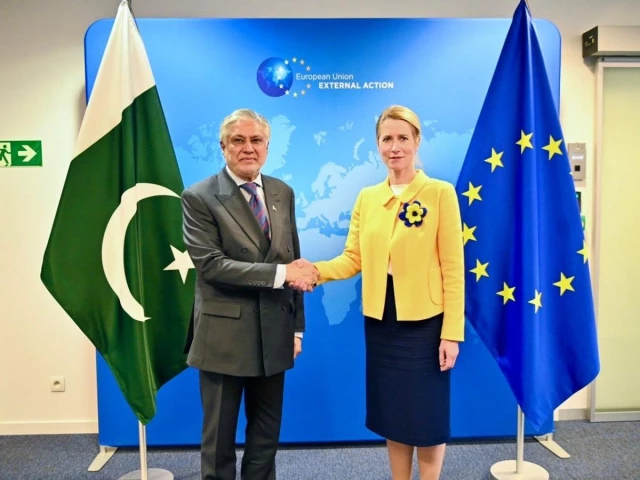
Islamabad: Deputy Prime Minister and Foreign Minister Senator Mohammad Ishaq Dar chaired a high-level inter-ministerial meeting on Monday to review steps for bolstering Pakistan’s trade and economic ties with the European Union Read More: https://theboardroompk.com/apna-microfinance-bank-mobilink-microfinance-merger-moves-into-spotlight/ The session focused on leveraging the GSP Plus scheme to enhance mutual benefits. Commitment to GSP Plus Obligations Ishaq Dar highlighted the EU as a vital economic partner for Pakistan, especially through the GSP Plus framework. He noted that Pakistan has successfully completed four biennial reviews under the scheme. This achievement underscores the country’s dedication to implementing international conventions on human rights, labour standards, environmental protection, and good governance. The minister reaffirmed Pakistan’s full commitment to meeting all obligations under GSP Plus. Such compliance is seen as essential to expanding duty-free access for Pakistani exports to the European market and fostering long-term trade growth. Inter-Ministerial Coordination and Broader Cooperation The meeting brought together key figures, including Federal Minister for Law and Justice Azam Nazeer Tarar, Special Assistant to the Prime Minister Tariq Bajwa, Secretary Foreign Affairs Ambassador Amna Baloch, and secretaries from commerce, interior, overseas Pakistanis, and human rights ministries. Pakistan’s ambassador to the EU and senior officials from federal and provincial departments also participated. Discussions emphasized deepening engagement beyond trade, including investment, development, security, migration, and climate change. This aligns with recent interactions, such as Prime Minister Shehbaz Sharif’s meeting with EU Ambassador Raimundas Karoblis in late January, where similar commitments were expressed. The government views sustained GSP Plus benefits as critical for export sectors like textiles and leather goods. Continued compliance will help maximize trade opportunities amid evolving global dynamics.

APNA Microfinance Bank Mobilink Microfinance Merger Moves Into Spotlight
Business

APNA Microfinance Bank Mobilink Microfinance Merger Moves Into Spotlight

The APNA Microfinance Bank Mobilink Microfinance merger has officially entered Pakistan’s financial conversation after the State Bank of Pakistan (SBP) granted approval for due diligence an early but meaningful step toward possible consolidation in the country’s growing microfinance sector. In a letter dated February 6, 2026, the central bank authorized Mobilink Microfinance Bank Limited to initiate a detailed due diligence review of APNA Microfinance Bank Limited (PSX: AMBL). While not a final merger approval, the move has ignited industry speculation about what could become one of the most notable microfinance combinations in recent years. Why the APNA Microfinance Bank Mobilink Microfinance Merger Matters Pakistan’s microfinance industry has been undergoing rapid transformation amid digital banking expansion, rising competition, and regulatory tightening. The APNA Microfinance Bank Mobilink Microfinance merger, if materialized, could reshape market dynamics by combining scale, technology, and outreach. According to SBP’s approval, Mobilink Microfinance Bank is permitted to conduct due diligence strictly in line with applicable laws, rules, and regulatory frameworks. This phase allows Mobilink to examine APNA’s financial health, asset quality, governance structure, and operational risks before deciding whether to proceed. Importantly, the SBP emphasized that this approval does not constitute consent for a merger or acquisition, reinforcing that regulatory oversight remains firm at every stage. Regulatory Framework Behind the Potential Merger If due diligence and negotiations conclude successfully, the proposed transaction would take place under Section 48 of the Banking Companies Ordinance, 1962, which governs bank mergers and amalgamations in Pakistan. SBP has outlined several non-negotiable conditions: Rather than using a table, these conditions can be explained clearly. First, all members of the due diligence team must sign strict confidentiality undertakings, with copies submitted directly to the central bank. Second, the due diligence approval is time-bound, valid for two months, expiring around April 6, 2026. Third, depositors’ funds from neither APNA nor Mobilink may be used at any stage of the proposed transaction. Additionally, SBP has stated that any future merger request will be assessed independently, including a satisfactory funding plan. The regulator also reserves the right to impose additional conditions as it sees fit. What This Means for APNA and Mobilink From a corporate perspective, the APNA Microfinance Bank Mobilink Microfinance merger remains firmly at a preliminary stage. In its official disclosure, APNA confirmed that the development has no immediate impact on its financial position or day-to-day operations. However, market observers view the approval as a strategic signal. Mobilink Microfinance Bank already one of the country’s largest digital microfinance players could significantly expand its footprint by integrating APNA’s network, customers, and regional strengths. For APNA, the process offers a potential pathway to scale, stability, and capital optimization at a time when microfinance institutions are facing margin pressure and rising compliance costs. Bigger Picture: Consolidation in Pakistan’s Microfinance Sector The APNA Microfinance Bank Mobilink Microfinance merger comes amid a broader trend of consolidation across Pakistan’s banking and non-banking financial sectors. Regulators have increasingly encouraged stronger balance sheets, improved governance, and sustainable growth models especially in financial inclusion-driven institutions. While the outcome remains uncertain, the SBP’s decision to allow due diligence suggests that regulatory doors are open, provided transactions are transparent, well-funded, and depositor-safe. What Happens Next? Over the next two months, Mobilink’s due diligence findings will determine whether negotiations progress toward a formal merger proposal. Only after SBP reviews a complete transaction structure including funding sources could final approval even be considered. Until then, the APNA Microfinance Bank Mobilink Microfinance merger remains a developing story one that could signal the next phase of evolution for Pakistan’s microfinance landscape.

Pakistan Fiscal Surplus 1HFY26 Signals a Rare Economic Turning Point
Pakistan

Pakistan Fiscal Surplus 1HFY26 Signals a Rare Economic Turning Point

For the first time in recent history, Pakistan Fiscal Surplus 1HFY26 has entered the economic conversation with unexpected optimism. In the first half of fiscal year 2026, Pakistan posted a fiscal surplus of Rs542 billion, equivalent to 0.4% of GDP a sharp and symbolic reversal from the Rs1.5 trillion deficit (1.2% of GDP) recorded during the same period last year. Read More: https://theboardroompk.com/turning-saplings-into-trees-is-real-victory-dg-sepa-stresses-care-in-new-plantation-campaign/ According to the Finance Division of the Government of Pakistan, this surplus is not the result of a single windfall. Instead, it reflects a carefully stitched mix of revenue growth, falling debt costs, and tighter expenditure controls, hinting at a shift toward more disciplined fiscal management. What Drove the Pakistan Fiscal Surplus 1HFY26? The story behind Pakistan Fiscal Surplus 1HFY26 is best understood through two powerful forces moving in opposite directions spending coming down and revenues climbing up. Total government expenditures declined by 10.27%, while overall revenues expanded by 9.42%. This rare alignment created the fiscal breathing room Islamabad has struggled to achieve for years. A standout factor was the sharp reduction in debt servicing costs. Markup payments fell by 30.69%, primarily due to a 33.92% decline in domestic debt servicing, which stood at Rs3.1 trillion during the period. In plain terms, lower interest burdens gave the government room to stabilize its books without slashing critical development or social spending. Revenue Engines Behind Pakistan Fiscal Surplus 1HFY26 Revenue performance played an equally decisive role in shaping the Pakistan Fiscal Surplus 1HFY26. The Federal Board of Revenue (FBR) collected Rs6.1 trillion, posting a 10% year-on-year increase, signaling improved tax administration and compliance. Non-tax revenues surged to Rs3.8 trillion, largely driven by Rs2.4 trillion in profits transferred from the State Bank of Pakistan. Energy-related levies also delivered a surprise boost. Petroleum Development Levy (PDL) collections jumped 50% to Rs823 billion, providing the federal government with a critical cushion amid volatile global energy markets. At the provincial level, fiscal performance added further momentum. Provincial tax receipts rose 28% to Rs569 billion, while non-tax revenues increased 8% to Rs155 billion, reinforcing the broader national surplus. Pakistan Fiscal Surplus 1HFY26 and the Primary Balance Breakthrough Beyond the headline surplus, Pakistan also recorded a primary surplus of Rs4.1 trillion, equivalent to 3.2% of GDP, during 1HFY26 an improvement from Rs3.6 trillion in the same period last year. This means that excluding interest payments, the government generated a sizable surplus, reflecting stronger underlying fiscal health and improved budgetary discipline. Spending Priorities Remain Intact Despite tighter controls, essential spending was not sidelined. Provincial current expenditure stood at Rs2.8 trillion, while primary current spending reached Rs3.2 trillion. Development expenditure amounted to Rs950 billion, supported mainly by higher allocations from Punjab, Sindh, and Balochistan. Crucially, spending on social protection and energy subsidies, including BISP and power sector support, remained aligned with program targets suggesting that fiscal consolidation did not come at the cost of vulnerable segments. Debt Management: The Silent Contributor One of the quieter but most impactful contributors to Pakistan Fiscal Surplus 1HFY26 was proactive debt management. The early retirement of Rs1.62 trillion in domestic debt generated Rs1.59 trillion in savings on future debt servicing, easing pressure on upcoming budgets. Why Pakistan Fiscal Surplus 1HFY26 Matters Going Forward While challenges remain, Pakistan Fiscal Surplus 1HFY26 sends a strong signal to markets, multilaterals, and investors: fiscal discipline is no longer just a promise it’s showing up in the numbers. If sustained, this trajectory could lower borrowing costs, strengthen investor confidence, and provide the government with greater flexibility to support growth without reopening the deficit floodgates. For now, Pakistan’s fiscal books tell a story few expected but many will be watching closely.

Turning Saplings into Trees is Real Victory: DG SEPA Stresses Care in New Plantation Campaign
Pakistan

Turning Saplings into Trees is Real Victory: DG SEPA Stresses Care in New Plantation Campaign

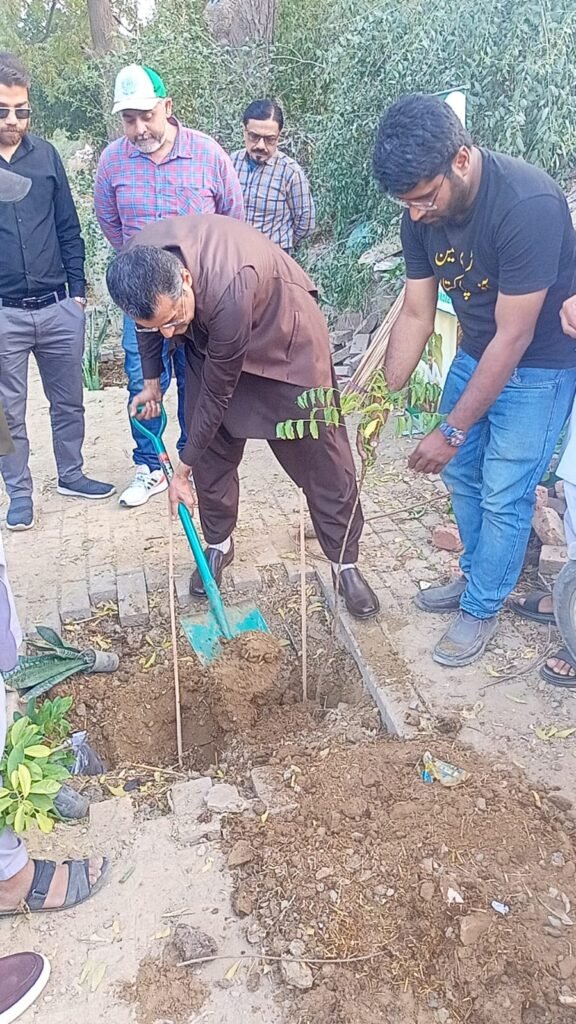
KARACHIThe Sindh Environmental Protection Agency (SEPA) formally launched its Spring Tree Plantation Campaign on Sunday through a hands-on and forward-looking plantation activity held near Hill Park, Karachi, in collaboration with renowned urban forester Shehroz Siraj Read More: https://theboardroompk.com/sindh-land-records-digitization-and-the-farmers-daily-struggle/ The activity followed the Miyawaki forest model, under which five different plant species were planted close together instead of a single sapling. This approach allows plants to support each other, grow faster, and develop into a dense, self-sustaining green ecosystem. The plantation drive saw active participation from Director General SEPA Waqar Hussain Phulpoto, Urban Forester Shehroz Siraj, SEPA officers and staff, the District East team of SEPA led by Adnan Sheikh, Assistant Director (Technical), social media activists, and a large number of environmentally conscious citizens. Participants planted saplings themselves, many dedicating them to the names of their loved ones, adding a strong social and emotional dimension to the initiative. The event concluded with DG SEPA, Waqar Hussain Phulpoto, planting a sapling to mark both the symbolic and practical start of the campaign. Addressing tree plantation activists on the occasion, he said:“During the Spring Tree Plantation Campaign, SEPA will fully support plantation efforts across Sindh wherever they are carried out in the true sense. True plantation does not mean merely planting saplings; it means ensuring their proper care, watering, and protection so that they grow into healthy, mature trees.” The DG SEPA further noted that as climate change continues to intensify, trees play a critical role not only in reducing its impacts but also in helping communities adapt to changing environmental conditions. He appreciated the commitment shown by all participants and encouraged them to continue such activities with the same dedication and sense of responsibility. Later, Shehroz Siraj gave the DG SEPA a detailed tour of the plantation site and briefed him on the Miyawaki method, explaining its long-term ecological benefits and implementation process. The activity reflects SEPA’s active and leadership-oriented role not only in environmental policy and regulation but also in promoting practical, on-ground environmental action through collaboration between government institutions and citizens, aimed at building a sustainable and greener future for Sindh.

Sindh Land Records Digitization and the Farmer’s Daily Struggle
Pakistan

Sindh Land Records Digitization and the Farmer’s Daily Struggle

Sindh Land Records Digitization was envisioned as a game-changing reform for millions of farmers but on the ground, the story remains painfully incomplete. Read More: https://theboardroompk.com/byd-lawsuit-against-us-tariffs-signals-a-turning-point-in-global-ev-trade/ For a small or medium-sized farmer in Sindh, land records are more than paperwork; they are identity, livelihood, and survival. Without timely access to these records, farmers cannot mortgage land, secure agricultural loans, transfer ownership, or even correct basic clerical errors. Despite years of digitization efforts, accessing land records remains a maze of offices, officials, and outdated procedures. Why Sindh Land Records Digitization Matters More Than Ever Agriculture in Sindh is dominated by small and medium landholders. Any delay in accessing land records directly impacts crop cycles, cash flow, and food security. While the provincial government scanned revenue records over the past decade, the core procedures never evolved. Processes such as: • Mortgaging farmland• Issuing passbooks• Sales certificates• Farm credit documentation still depend heavily on manual intervention through the Tapedar and Mukhtiarkar system structures that date back decades. The result? Digitized data sitting in servers, while farmers continue to queue outside offices. From LARMIS to Reality: A Gap That Hurts Farmers After the 2007 destruction of revenue records during widespread arson attacks, Sindh launched the Land Administration and Revenue Management Information System (LARMIS). The goal was simple: protect records, eliminate forgery, and modernize land governance. Sindh’s Board of Revenue (BoR) linked LARMIS with the Provincial Record Cell (PRC) and introduced e-stamps, significantly reducing fake stamp papers and boosting government revenue. Courts, including the Sindh High Court, backed automation to curb tampering and fraud. Yet for farmers, the everyday experience barely changed. People’s Service Centres and the Missing Farmer People’s Service Centres (PSCs), introduced after 2008, were expected to serve as one-window solutions. In practice, they mostly handle: • Computerised Form-VII (agricultural land)• Form-II (urban property)• Urban property mutations For agricultural land transactions sale, purchase, mortgages, and loan facilitation farmers are still sent back to manual routes. Instead of one counter, farmers must visit: • Post offices for passbooks• Tapedar offices for verification• Mukhtiarkar offices for mutation• Assistant commissioners for approvals Each step means lost days, transport costs, and, often, unofficial payments. Sindh vs Punjab: Two Digitization Stories While Sindh struggles, Punjab took a different route. Punjab established the Punjab Land Records Authority (PLRA) in 2017, operating under the Board of Revenue but with autonomous digital workflows. Farmers there complete land documentation at tehsil-level service centres without manual record handling. Banks in Punjab directly verify land ownership digitally, allowing farmers to secure loans quickly. In contrast, Sindh farmers often miss planting seasons because loan approvals stall due to missing or delayed land records. Sindh Land Records Digitization and the Credit Crisis According to Sindh Abadgar Board President Mahmood Nawaz Shah, Sindh receives a disproportionately low share of agricultural credit nationwide. The main reason is simple: banks cannot process loans without timely BoR documentation. This bottleneck disrupts: • Input purchases (seeds, fertilizer, fuel)• Crop planning• Yield optimization Farmers remain trapped in a cycle of low productivity and high dependency. A New Pilot Project: Hope or Another Delay? The Sindh government, after partnering with the Punjab Information Technology Board (PITB), has now placed digitization under the Sindh Information Technology Company (SITC). A cabinet-approved pilot project executed with IBA Sukkur is currently underway in three dehs across Matiari and Sukkur. Officials aim to: • Redesign land record automation• Issue secure digital access credentials to farmers• Identify system weaknesses before province-wide rollout If successful, this model could finally bring Sindh Land Records Digitization closer to its original promise. The Road Ahead for Sindh Land Records Digitization Sindh has over 6,090 dehs across 138 talukas, many lacking basic digital infrastructure. Scaling reforms will not be easy but without it, farmers will continue paying the price for bureaucratic inertia. True digitization is not about scanned files it’s about access, speed, and trust. Until farmers can retrieve land records as easily as urban property owners, Sindh’s agricultural potential will remain underutilized.

BYD Lawsuit Against US Tariffs Signals a Turning Point in Global EV Trade
Auto

BYD Lawsuit Against US Tariffs Signals a Turning Point in Global EV Trade

BYD lawsuit against US tariffs has quickly become one of the most closely watched legal battles in global trade and for good reason. In a move that could redefine how governments impose emergency tariffs, the Chinese electric vehicle (EV) giant is now challenging Washington’s authority in a US federal court, potentially unlocking billions in trade opportunities across North America. Read More:https://theboardroompk.com/gold-price-in-pakistan-continues-its-relentless-climb/ On January 26, 2026, four US-based subsidiaries of BYD formally filed a lawsuit in the US Court of International Trade (CIT), targeting a sweeping series of tariff executive orders issued under the International Emergency Economic Powers Act (IEEPA). The court publicly disclosed details of the case recently, sending ripples across global automotive and energy markets. Who Is Behind the BYD Lawsuit Against US Tariffs? The plaintiffs are not symbolic entities they represent the operational backbone of BYD’s North American presence. These include BYD America LLC, BYD Coach & Bus LLC, BYD Energy LLC, and BYD Motors LLC. Together, they manage everything from electric bus manufacturing and battery systems to vehicle imports and regional sales. On the other side stand heavyweight US institutions, including the federal government, the Department of Homeland Security, Customs and Border Protection, the US Trade Representative, and the Treasury Department. The legal confrontation is as much about constitutional authority as it is about commerce. What Tariffs Is BYD Challenging? The BYD lawsuit against US tariffs targets nine executive orders issued since February 2025, covering a complex web of trade actions. Instead of listing them in a table, here’s what they collectively represent: First, there are border tariffs on Mexico and Canada, aimed at reshaping North American supply chains. Then come China-focused tariffs, including measures linked to fentanyl enforcement, “reciprocal tariffs,” and retaliatory actions. Finally, the lawsuit expands into newer territory country-specific tariffs on Brazil and India, tied to their energy trade relationships with Russia. BYD argues that none of these tariffs fall within the legal scope of IEEPA, calling them ultra vires, or actions taken beyond lawful authority. Why the BYD Lawsuit Against US Tariffs Matters So Much This case is not happening in isolation. Since 2025, thousands of US importers have launched similar challenges, creating what legal experts describe as the largest wave of trade litigation in modern US history. The legal momentum shifted dramatically when a small New York wine importer, V.O.S. Selections, won favorable rulings in both the CIT and the Federal Circuit Court. Those courts concluded that the President lacks authority to impose tariffs under IEEPA. The US government has appealed, and the Supreme Court heard arguments in November 2025, with a final decision expected in early 2026. To avoid conflicting judgments, the CIT has paused or “stayed” thousands of related cases, including BYD’s. Still, the strategic value of filing now is immense. Strategic Payoff for BYD’s North American Business Even while on hold, the BYD lawsuit against US tariffs preserves the company’s right to seek refunds on tariffs already paid, plus interest and legal costs. More importantly, it expands the legal challenge beyond the scope of the V.O.S. case, capturing newer tariffs that could shape future trade policy. BYD already has deep roots in the US. Since 2013, it has operated a major electric bus factory in Lancaster, California, producing up to 1,500 buses annually and employing over 750 union workers. Its US business today focuses on electric buses and large-scale energy storage projects for cities and utilities, generating an estimated $500 million to $1 billion in annual North American revenue. Could Passenger EVs Be Next? Here’s where curiosity turns into possibility. A favorable ruling could open the door for BYD’s passenger vehicle expansion into the US and neighboring markets. Mexico BYD’s largest overseas market last year with more than 120,000 vehicle exports could become a launchpad rather than a barrier. If tariffs are rolled back, vehicles from BYD’s Brazilian factory could enter the US with tariffs below 15%, while its previously stalled Mexican manufacturing project could regain momentum. That would dramatically reshape EV competition across the Americas. The Bigger Picture The BYD lawsuit against US tariffs is more than a legal dispute it’s a stress test for emergency economic powers, global supply chains, and the future of clean transportation. As the Supreme Court prepares its ruling, governments, automakers, and investors alike are watching closely. One decision could determine whether trade policy remains a blunt political instrument or returns to the rulebook of international law

Scroll to Top