Breaking News

Pakistan FDI Falls 7.8% in May as Foreign Investment Momentum Slows
Breaking News

Pakistan FDI Falls 7.8% in May as Foreign Investment Momentum Slows

Pakistan recorded a net foreign direct investment (FDI) inflow of $214 million in May 2026, reflecting a decline of 7.8 percent compared with $232 million recorded during the same month last year, according to data released by the State Bank of Pakistan (SBP). The latest figures indicate a slowdown in foreign investment inflows despite continued support from major investors, including China and the United Arab Emirates. Gross Inflows Reach $295 Million During May, gross FDI inflows amounted to $295.1 million, while outflows stood at $80.8 million. After accounting for these outflows, net foreign direct investment settled at $214.3 million for the month. The figures highlight continued investor interest in Pakistan, although the pace of investment remained below last year’s level. Foreign Portfolio Investment Posts Net Outflow On the portfolio side, Pakistan witnessed a net outflow of $16.5 million in foreign portfolio investment (FPI) during May. As a result, total foreign private investment stood at $197.8 million. Meanwhile, foreign public investment contributed an additional $248.2 million, lifting total foreign investment to $445.9 million during the month. China and UAE Remain Major Investors China retained its position as the largest source of direct investment into Pakistan in May. According to the SBP data, Chinese investors brought in $79.3 million during the month. The United Arab Emirates ranked second with investments worth $50.5 million. Other major contributors included: Hong Kong: $27.1 millionSwitzerland: $17.4 millionUnited Kingdom: $14.8 million These countries collectively accounted for a significant share of Pakistan’s foreign direct investment inflows. Power Sector Attracts Highest Investment Sector-wise data showed that the power sector attracted the largest amount of foreign investment during May. The sector received inflows of $85.8 million, supported primarily by hydropower and coal-based energy projects. Hydel projects attracted $36.3 million, while coal-related projects brought in $43.6 million. The continued inflow into the energy sector reflects investor confidence in Pakistan’s power infrastructure and long-term energy requirements. Financial Sector Receives Strong Interest The financial business sector emerged as the second-largest recipient of foreign investment. The sector attracted net inflows of $59.6 million during May. Meanwhile, the transport sector secured investments amounting to $34.4 million. Other sectors also received foreign capital, including: Electrical machinery: $12.5 millionPetroleum refining: $6.3 million The diversified investment pattern suggests continued foreign interest across multiple segments of the economy. Cumulative FDI Drops More Than 28% Despite positive monthly inflows, cumulative foreign direct investment during the first 11 months of fiscal year 2025-26 showed a sharp decline. According to SBP data, Pakistan received $1.624 billion in FDI during July-May FY26. This represented a decline of 28.3 percent compared with $2.267 billion received during the corresponding period of FY25. The figures point to weakening momentum in attracting long-term foreign investment. Portfolio Outflows Increase Significantly Foreign portfolio investment recorded a substantial deterioration during the current fiscal year. Net portfolio outflows reached $1.145 billion during the first 11 months of FY26, significantly higher than the outflow of $312.3 million recorded during the same period last year. The larger outflows reduced overall foreign investment considerably. Total foreign investment during July-May FY26 stood at $477.6 million, compared with $1.562 billion during the corresponding period of FY25. Investment Trends Reflect Economic Challenges The decline in cumulative FDI and rising portfolio outflows come as Pakistan continues efforts to stabilize its economy and attract foreign investors. Analysts say global economic uncertainty, domestic challenges, and cautious investor sentiment have contributed to the slowdown in foreign investment. However, continued support from countries such as China and the UAE and investment in the energy and financial sectors indicate that Pakistan remains an attractive destination for selected strategic investments. Outlook for FY26 With one month remaining in the fiscal year, investors and policymakers will closely monitor foreign investment trends. Higher and more diversified investment inflows are considered essential for strengthening Pakistan’s external sector, supporting economic growth, and generating employment opportunities. The performance during June will determine the final foreign investment picture for FY26 and provide insight into investor confidence heading into the next fiscal year.
PTA Urges Families to Transfer SIMs Registered in Names of Deceased Persons
Breaking News, Editor pick

PTA Urges Families to Transfer SIMs Registered in Names of Deceased Persons

The Pakistan Telecommunication Authority (PTA) has advised citizens to transfer or block SIM cards registered in the names of deceased persons. The authority said timely action can help prevent misuse and ensure the lawful continuation of mobile services. PTA issued the advisory as part of its efforts to strengthen digital security and protect users from fraudulent activities. The regulator urged family members to complete the process through the prescribed Change of Ownership (COO) procedure. Legal Heirs Can Claim Ownership According to the PTA, only eligible legal heirs can obtain ownership of SIMs registered in the name of a deceased person. The authority said blood relatives and spouses are entitled to apply for the transfer. The regulator stressed that outdated ownership records can expose users to security risks. Therefore, families should either transfer the SIM to a legal heir or request its blocking. PTA noted that prompt action would help maintain accurate subscriber records and discourage the illegal use of mobile connections. Families Must Visit Customer Service Centers PTA said family members can complete the process by visiting the nearest customer service center or authorized franchise of their respective mobile operator. The authority encouraged people to avoid delays and ensure that SIM ownership records remain updated. It added that a transparent process would facilitate the lawful continuation of services. Mobile operators across Pakistan have established mechanisms to process requests and verify the identity of applicants before approving ownership changes. Four Documents Are Required PTA outlined the documents required for the transfer of ownership. Applicants must provide: The authority said these documents would help verify the relationship between the deceased subscriber and the claimant. Verification would also ensure that only authorized family members receive ownership rights. PTA added that proper documentation plays a key role in maintaining the integrity of Pakistan’s telecom system. Timely Transfer Can Prevent Fraud The telecom regulator warned that SIMs registered in the names of deceased persons can become vulnerable to misuse if families fail to update ownership records. According to PTA, criminals may exploit inactive or unattended mobile connections for illegal purposes. The authority said timely transfer or blocking of such SIMs can reduce the risk of fraud and unauthorized activities. Officials emphasized that responsible digital practices are necessary to create a secure telecommunications environment. They said public cooperation remains essential to protect consumers and maintain trust in digital services. PTA Promotes Safe Digital Connections PTA said the initiative forms part of its broader campaign to promote safe, secure and responsible digital communications. The regulator urged citizens to remain vigilant and ensure that all mobile connections are registered under active and legitimate users. PTA also advised the public to seek information from official channels and contact their respective telecom operators for assistance. For additional guidance, users can reach the PTA Digital Assistant through WhatsApp at 0315-0055055 or follow the authority’s official social media platforms. The authority reiterated that keeping subscriber information updated is essential for protecting digital identities and preventing the misuse of telecommunication services. As Pakistan’s digital ecosystem continues to expand, regulators are increasingly focusing on measures that enhance transparency and security. PTA said public awareness and timely compliance with ownership rules will help create a safer and more responsible digital environment for everyone.

SBP Keeps Interest Rates Unchanged at 11.5% amid US-Iran Deal
Breaking News

SBP Keeps Interest Rates Unchanged at 11.5% amid US-Iran Deal

The Monetary Policy Committee (MPC) decided to keep the policy rate unchanged at 11.5 percent in its meeting today. The Committee noted that global oil prices have eased following the recent positive geopolitical developments, yet they remain elevated as compared to pre-conflict levels. Nonetheless, as anticipated in the last MPC meeting, the impact of the conflict is now reflecting in recent economic indicators. Headline inflation rose to double digits in April and May, while core inflation also edged up. Moreover, economic activity is showing some signs of moderation, reflecting the impact of elevated prices, austerity measures and prevalent economic uncertainty. Meanwhile, the external account pressures remain moderate. While evaluating the impact of these unfolding developments and risks, the MPC observed that the macroeconomic outlook is broadly unchanged from its previous meeting. In this context, the MPC assessed that the current monetary policy stance remains appropriate to guide inflation towards the target range of 5 – 7 percent over the medium term. The Committee noted the following key developments since its last meeting. First, real GDP growth for FY26 is provisionally estimated at 3.7 percent by the PBS. Second, confidence of both consumers and businesses recovered marginally in the latest sentiment surveys, while their inflation expectations eased somewhat. Third, the successful completion of IMF reviews for EFF and RSF, coupled with ongoing purchases, increased SBP’s FX reserves to $17.2 billion as of June 5, 2026. Fourth, the government has estimated primary balance surplus for FY26 at 2.5 percent of GDP and is targeting a surplus of 2.0 percent of GDP for FY27. Lastly, the Middle East conflict has begun to impact macroeconomic conditions in many economies, and a rising number of central banks have started to raise their policy rates. The MPC noted that proactive macroeconomic management – underpinned by forward-looking monetary policy and consistent fiscal consolidation – has helped sustain ongoing macroeconomic stability despite the prolonged Middle East conflict. The MPC remains committed to achieving its objective of price stability and will closely monitor incoming data and evolving developments. The Committee also reiterated that it is imperative to accelerate structural reforms to strengthen the economy’s resilience to supply shocks, enhance productivity, and create the necessary conditions for higher and more sustainable economic growth. Real SectorAccording to the provisional PBS estimates, real GDP grew by 3.7 percent in FY26, up from 3.2 percent in FY25. The MPC observed that this outturn reflects the impact of Middle East conflict and austerity measures, as the pre-conflict growth momentum was notably higher. The growth in FY26 was primarily underpinned by the services and industry sectors, with meaningful contribution from agriculture. Large-scale manufacturing posted a strong growth of 6.5 percent during July-March FY26, though it is expected to moderate in Q4-FY26, as indicated by recent trends in some high-frequency indicators. Looking ahead, the MPC expects that spillover from the conflict may continue to moderate activity in both industry and services sectors in the coming months. This, along with subdued agriculture prospects – as indicated by initial information on the Kharif crops amidst challenging weather conditions – may weigh on the growth outlook for FY27. External SectorThe current account turned into a deficit of $0.3 billion in April, leading to a cumulative deficit of $0.2 billion during July-April FY26. This was mainly due to a widening of the trade deficit amidst the surge in energy imports in April, which more than offset the resilient workers’ remittances. The realization of sizable workers’ remittances during May is likely to contain the current account deficit in FY26 to the lower end of the earlier projected range, despite the challenging external environment. On the financing side, increase in official inflows provided critical support in meeting external obligations. These developments have facilitated ongoing FX purchases and buildup in SBP’s FX reserves, which are projected to reach $18 billion by end-June 2026. Notwithstanding some expected widening in the current account deficit in FY27, the MPC noted that the reserve buildup is expected to continue amidst FX purchases and timely realization of planned official inflows. Fiscal SectorAs per the July-March FY26 fiscal operations data, the fiscal consolidation efforts remained broadly on track, primarily driven by expenditure restraint. Revenue growth, however, moderated as compared to the same period last year. In this context, the FBR has revised its target to around Rs13 trillion for FY26. Despite this downward revision in revenues, the government expects to achieve a primary balance surplus of 2.5 percent of GDP by containing expenditures. For FY27, the government is targeting a primary balance surplus of 2.0 percent of GDP. In this regard, the MPC emphasized the importance of continuing with fiscal consolidation. The Committee also reiterated the need for timely implementation of structural reforms, particularly measures aimed at broadening the tax base and reforming PSEs. Money and CreditSince the last MPC meeting, broad money (M2) growth moderated to 14.3 percent y/y as of May 29, 2026, from 14.5 percent on April 10, 2026. This was entirely due to a deceleration in NDA growth, reflecting moderation in net budgetary borrowing from the banking system. Meanwhile, private sector credit grew by around 13 percent, with increase in working capital, fixed investment and consumer financing. At the same time, the improvement in the external position led to an acceleration in NFA growth. On the liability side, growth in currency in circulation rose, partly reflecting seasonal Eid-related cash withdrawals, resulting in an increase in the currency-to-deposit ratio. InflationHeadline inflation rose sharply from 7.3 percent in March to 10.9 percent y/y in April and 11.7 percent in May. Apart from the low base effect, the Middle East conflict has fueled inflation directly through the hike in domestic energy prices as well as indirectly through the rise in transportation and production costs. The latter has contributed to an increase in core inflation to 8.2 percent in April and 8.7 percent in May. Further, unanticipated surge in wheat and its product prices pushed up food inflation significantly during the last two months. The MPC assessed that

GPX Motorcycles Enter Pakistan with Aggressive Pricing, Eyeing Honda and Suzuki's Dominance
Breaking News

GPX Motorcycles Enter Pakistan with Aggressive Pricing, Eyeing Honda and Suzuki’s Dominance

Pakistan’s motorcycle market has welcomed a new player as Thailand-based GPX Motorcycles officially launched its operations in the country through the Royal Power Group, introducing four petrol motorcycles and two electric scooters. The arrival marks one of the most significant developments in Pakistan’s two-wheeler industry in decades, as a new international petrol motorcycle brand enters the highly competitive 125cc and 150cc segments, traditionally dominated by Honda and Suzuki. GPX Introduces Six Models in Pakistan The company has launched four petrol-powered motorcycles featuring 125cc, 150cc, 200cc and 250cc engines. It has also announced two electric scooters, whose prices will be revealed later. The newly launched lineup includes: Thai Brand Expands into Pakistan GPX Motorcycles was established in Thailand in 2007. Initially, the company focused on importing and assembling all-terrain vehicles and off-road motorcycles. However, in 2014, GPX entered Thailand’s mainstream commuter motorcycle market and quickly became one of the country’s leading motorcycle brands. The company gained further recognition after securing the highest pre-booking numbers during the Thailand Motor Expo in both 2015 and 2016. Besides Thailand, GPX has expanded to markets including Japan, Malaysia, Vietnam, Greece and Bangladesh. Pakistan has now joined the list. Competition for Honda and Suzuki For years, Pakistan’s 150cc segment has remained largely under the control of Honda and Suzuki, with models such as the Honda CB150F, Suzuki GS150 and Suzuki GR150 enjoying little competition. Yamaha attempted to challenge the segment with the YBR series, but failed to significantly disrupt the market. GPX now aims to provide an alternative to established Japanese brands by offering motorcycles with modern technology and aggressive pricing. Industry observers believe the GPX lineup could directly compete with the Honda CB150F, Suzuki GS150, Suzuki GR150 and Suzuki GSX125. Modern Features at Lower Prices One of the biggest selling points of the GPX motorcycles is their feature-rich package. The company is offering motorcycles equipped with: These features remain uncommon in Pakistan’s commuter motorcycle segment, where many competing models still rely on carburetor engines, conventional halogen headlights and older designs. Libre 150 and RZ200 Expected to Draw Attention Among the new models, the GPX Libre 150 and Raptor Plus RZ200 are expected to attract the most interest. Priced at Rs375,000, the Libre 150 undercuts the Honda CB150F while remaining close to the price of the Suzuki GS150. Despite the lower price, it offers fuel injection, a six-speed gearbox and a fully digital display. Meanwhile, the GPX Raptor Plus RZ200 is positioned as a 200cc naked sports motorcycle. Equipped with an oil-cooled engine, ABS, Bluetooth connectivity and six gears, the motorcycle is priced at Rs540,000, placing it near the Suzuki GR150 while offering significantly more features. Could GPX Disrupt the Market? Pakistan’s motorcycle market has seen little change in the 125cc and 150cc categories over the past several decades. With modern features and prices reportedly 30 to 40 percent lower than comparable Japanese offerings, GPX could emerge as a serious challenger. However, the brand’s long-term success will depend on factors such as after-sales service, spare parts availability and its ability to build consumer confidence in a market long dominated by Japanese manufacturers.

Pakistan Budget 2026 Tax Relief: Salaried Class Gets Major Relief as Housing, Health and Education Receive Billions
Breaking News

Pakistan Budget 2026 Tax Relief: Salaried Class Gets Major Relief as Housing, Health and Education Receive Billions

The Pakistan Budget 2026 Tax Relief measures have emerged as one of the most closely watched announcements in recent years, offering substantial benefits to salaried individuals while unveiling billions of rupees in development spending. The latest budget proposals attempt to balance public welfare, business competitiveness, and revenue generation at a time when inflation and economic pressures continue to squeeze households and companies alike. For millions of Pakistanis struggling with rising living costs, the government’s decision to lower income tax rates across multiple salary brackets could provide some much-needed breathing space. Pakistan Budget 2026 Tax Relief Brings Good News for Salaried Employees The biggest headline from the budget is undoubtedly the relief granted to salaried taxpayers. The government has reduced income tax rates across four major salary slabs, acknowledging the growing burden faced by middle and upper-middle-income professionals. Individuals earning annual salaries between PKR 2.2 million and PKR 3.2 million will now pay a tax rate of 20 percent instead of 23 percent. Those earning between PKR 3.2 million and PKR 4.1 million will see their tax rate reduced from 30 percent to 25 percent. Employees with annual salaries ranging from PKR 4.1 million to PKR 5.6 million will now pay 29 percent instead of 35 percent, while taxpayers earning between PKR 5.6 million and PKR 7 million will benefit from a reduced rate of 32 percent compared with the previous 35 percent. Perhaps even more significant is the complete abolition of the surcharge imposed on salaried individuals, a move likely to resonate strongly with urban professionals who have repeatedly demanded fairer taxation. Housing, Health and Education Receive Billions While tax relief captured public attention, the development allocations reveal where the government intends to spend public money. Under the Prime Minister’s Apna Ghar Housing Scheme, PKR 71 billion has been allocated to support affordable housing initiatives. The scheme aims to improve home ownership opportunities for low and middle-income families. Public health has been allocated PKR 25.1 billion for the upcoming fiscal year. The investment comes as Pakistan’s healthcare system continues to face pressure from population growth and increasing service demands. The higher education sector will receive PKR 46 billion, signaling the government’s intention to strengthen universities, research institutions, and academic development. Meanwhile, PKR 26.3 billion has been earmarked for the broader education sector, reflecting the continued importance of educational reforms and access. Corporate Pakistan Also Gets Relief Businesses have not been left out of the Pakistan Budget 2026 Tax Relief package. The government has announced reductions in super tax obligations aimed at improving the investment climate. Companies generating profits between PKR 150 million and PKR 500 million will no longer pay super tax. Larger corporations earning above PKR 500 million will benefit from a reduction in super tax from 10 percent to 8 percent. These measures are expected to encourage business expansion and improve investor confidence at a time when private sector growth remains crucial for economic recovery. IT Sector and Small Businesses Receive Incentives Pakistan’s export-oriented technology sector has retained its concessional tax regime. The reduced tax rate of 0.25 percent on IT exports will continue, offering certainty to one of the country’s fastest-growing industries. The government has also introduced a fixed tax regime under Section 99B for small shopkeepers. Officials hope the simplified structure will improve documentation while easing compliance burdens for small traders. Another notable change involves foreign transactions. The tax on international payments made through credit and debit cards has been slashed dramatically from 5 percent to just 0.5 percent. Additionally, capital gains tax on Pakistanis holding foreign assets is being abolished. New Duties Target Luxury and Counterfeit Markets While relief has dominated headlines, the budget also introduces new revenue measures. A Federal Excise Duty of PKR 80 per litre will be imposed on white spirit and mineral turpentine. The objective is to discourage the production and sale of substandard and counterfeit petroleum products. Imported vehicles with engine capacities ranging from 2000cc to 3000cc will now attract Federal Excise Duty. Imported electric vehicles valued above PKR 20 million have also been brought into the excise net, signaling a targeted approach toward luxury consumption. In another surprising move, the Federal Excise Duty previously applicable to business-class international travel has been abolished. Will Pakistan Budget 2026 Tax Relief Deliver Real Economic Impact? The latest budget attempts to send a clear message to both households and businesses. Tax-paying employees are being offered relief after years of complaints. Corporate Pakistan is receiving incentives designed to stimulate investment. Strategic sectors such as housing, education, health, and information technology are receiving financial support. However, the ultimate success of these measures will depend on implementation, fiscal discipline, and whether the promised relief translates into genuine improvements in economic activity and living standards. For now, Pakistan Budget 2026 Tax Relief has given millions of taxpayers and businesses a reason to pay close attention to the country’s economic direction.

GDP expands 3.7%, per capita income rises to $1,901
Breaking News, Pakistan

GDP expands 3.7%, per capita income rises to $1,901

ISLAMABAD: Pakistan’s economy expanded to more than $452 billion in the outgoing fiscal year, while growth accelerated to 3.7% — the highest in four years — driven by improvements in manufacturing, services, remittances and fiscal indicators, according to the Pakistan Economic Survey unveiled on Thursday. Presenting the survey ahead of the federal budget, Finance Minister Muhammad Aurangzeb said the economy had demonstrated resilience despite climate-related disruptions, geopolitical tensions in the Middle East and continued uncertainty in the global economy. “We have not only increased the size of the economy but also achieved broad-based recovery,” Aurangzeb said. The survey showed that per capita income increased by 9% to $1,901, reflecting improvements in economic activity and income levels. The services sector emerged as a key driver of growth, expanding by 4.9%, while large-scale manufacturing (LSM) posted a 6.1% increase — its strongest performance in four years. Sixteen out of 22 industrial sectors recorded positive growth during the year. Economic activity also translated into stronger demand indicators, with cement consumption rising by 10%, suggesting a pickup in construction and infrastructure-related activity. One of the strongest contributors to external sector stability remained workers’ remittances, which are projected to exceed $41 billion by the end of the fiscal year. In May alone, Pakistan received remittances worth $4.2 billion, including more than $1 billion from the United Arab Emirates. Aurangzeb acknowledged the support of friendly countries, particularly the UAE, saying the Gulf state had remained a longstanding partner of Pakistan. The finance minister highlighted a marked improvement in Pakistan’s external position, stating that foreign exchange reserves had crossed $17 billion and were expected to exceed $18 billion by the end of June. Total reserves stood at $22.6 billion. The survey further indicated that the agriculture sector grew by 2.89%, supported by a 17% increase in fertiliser sales. Livestock and dairy continued to dominate agricultural output, accounting for around 60% of the sector. Fiscal indicators also showed signs of improvement. The fiscal deficit narrowed to 0.7% of GDP, while the primary balance remained in surplus. Revenue collection by the Federal Board of Revenue (FBR) increased by 10.1%, reflecting efforts to improve tax administration and expand the tax base. According to Aurangzeb, the documented tax base has nearly doubled in recent years, increasing from Rs7 trillion to Rs13 trillion. He added that FBR revenues recorded a 46% increase in June 2026, while overall tax collection rose by 40% over the past two years. Pakistan also posted a current account surplus of $72 million, supported by strong remittance inflows and prudent external sector management. Private sector credit reached $11.57 billion, suggesting improved business confidence and lending activity. On inflation, the minister said recent price pressures were largely linked to higher international oil prices. He noted that while Pakistan’s oil import bill increased by $1 billion in April, the rise was limited to $500 million in May through effective management. The survey showed that Pakistan’s installed electricity generation capacity reached 49,651 megawatts, with thermal sources accounting for nearly half of total capacity, followed by hydropower, renewable energy and nuclear power. Aurangzeb said investor confidence had also strengthened during the year. Around 175,000 new investors entered the stock market, while 11 initial public offerings (IPOs) were completed — the highest number in two decades. Investments under Roshan Digital Accounts reached $12.75 billion. He added that global firms including Aramco, Alibaba, Turkish Petroleum, Veon and Google had expanded their presence in Pakistan, despite some companies exiting the market. Looking ahead, Aurangzeb said economic growth was expected to exceed 4% in the next fiscal year, supported by macroeconomic stability, fiscal discipline and ongoing reforms aimed at broadening the tax base and attracting investment.

Pakistan EV Makers Are Using Substandard Batteries, NCMC
Breaking News

Pakistan EV Makers Are Using Substandard Batteries, NCMC

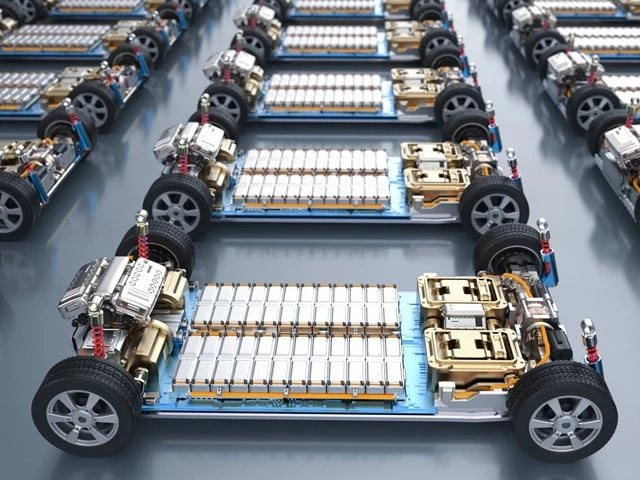
Electric vehicle manufacturers in Pakistan are using substandard and low-quality batteries, raising serious safety concerns in government circles. This issue has gained urgency amid a surge in EV demand.Rising Demand Meets Quality Concerns Pakistan is experiencing a boom in electric vehicles following the US-Israel-Iran war and sharp oil price increases. EVs support the country’s clean mobility goals and global environmental targets.Government Acts Swiftly The government has decided to introduce a strict testing mechanism for batteries used in EVs. The issue was discussed in a recent meeting of the executive committee of the National Coordination and Management Council (NCMC). The council expressed deep concern over non-compliance with quality and safety standards by some EV manufacturers. It directed relevant bodies to develop a robust inspection system. The meeting was co-chaired by the federal minister for economic affairs and the national coordinator of NCMC. Stakeholders from the Special Investment Facilitation Council (SIFC) Secretariat also attended.NCMC observed that uncertified batteries pose risks to consumer safety, vehicle performance, and the overall credibility of the EV ecosystem. Emphasis was placed on immediate corrective actions. New Testing Framework Underway The Engineering Development Board (EDB), in collaboration with the National Energy Efficiency and Conservation Authority (NEECA) and other stakeholders, will create a comprehensive testing and verification mechanism. This will include certification requirements, periodic inspections, and compliance monitoring for manufacturers and importers. Strict enforcement against violators is also planned. The Ministry of Industries & Production, EDB, and NEECA have been directed to begin work immediately on setting international-standard testing protocols for EV batteries. Experts believe this move will protect consumers and strengthen Pakistan’s emerging EV industry. Proper quality control can boost investor confidence and support long-term sustainability. Analysts note that substandard batteries could lead to fire hazards, reduced range, and early failures, undermining public trust. The new regime aims to align local practices with global benchmarks.Industry representatives welcomed the regulatory push but stressed the need for support in upgrading facilities. Government officials assured that the process would be transparent and collaborative.This development comes at a critical time as Pakistan pushes for greener transportation solutions amid energy challenges.

DIB Pakistan’s New Brand Identity, Signals the Next Phase of Purpose-Driven Growth
Breaking News, Business

DIB Pakistan’s New Brand Identity, Signals the Next Phase of Purpose-Driven Growth

Karachi, June 8, 2026: DIB Pakistan unveiled its new global brand identity across many branch locations nationwide, marking two decades of service in Pakistan, embracing a bold, purpose-driven new chapter. The transformation reflects the Bank’s commitment to carrying forward the legacy of DIB (UAE), which has pioneered Islamic banking for over 50 years, while reinforcing its vision for the future as the most progressive Islamic financial institution in the world. The new logo combines a distinctive DIB wordmark with the “Globus” symbol, bringing to life a modern vision of global Islamic banking. At its heart is a vibrant three-dimensional globe encircled by a radiant Islamic arabesque pattern, symbolizing the Bank’s rich Islamic heritage and global outlook. The green and gold elements reflect enduring values and tradition, while the bold burgundy core represents DIB’s passion for delivering innovative products and solutions that create lasting value for its customers. Muhammad Ali Gulfaraz, Chief Executive Officer, DIB Pakistan, expressed his enthusiasm for the rebranding, stating, “The rebranding is anchored in our belief that Progress Never Stops. It is a purposeful expression of growth, resilience, and forward momentum, reflecting the broader significance of DIB Pakistan’s renewed strategic direction. This transformation reinforces our commitment to strengthening and expanding our presence across the country. Through continued investment in technology and innovation, we aim to advance financial inclusion and contribute to the prosperity of the communities we serve.” Complementing the new branding, now visible at Jinnah International Airport, and many branch locations nationwide, the Bank has also redesigned the mobile banking app and has gone live delivering seamless digital experiences at customers’ fingertips. Guided by its enduring commitment to ethical banking, customer-centricity, and sustainable progress, DIB, as a leading bank from UAE, steps into its next chapter as an ethical, trust-led, digitally empowered institution, with conviction that it will always aim to provide innovative banking solutions for its valuable customers.

Petrol price cut by Rs4 per litre, diesel rate unchanged
Breaking News

Petrol price cut by Rs4 per litre, diesel rate unchanged

ISLAMABAD: The federal government on Friday reduced the price of petrol by Rs4 per litre while keeping the price of high-speed diesel (HSD) unchanged for the next week, offering modest relief to consumers amid fluctuating international oil prices. According to a notification issued by the Petroleum Division, the ex-depot price of petrol was cut to Rs377.78 per litre from Rs381.78 per litre. However, the price of HSD remained unchanged at Rs380.78 per litre. The revised rates came into effect from June 6, 2026.Relief for motorists The latest reduction follows a major cut announced last week when the government slashed the prices of both petrol and diesel by Rs22 per litre. Petrol is primarily consumed by motorcyclists and owners of private vehicles, making it the most widely used transport fuel in the country. Industry officials said the reduction would provide some relief to urban consumers who have been facing elevated transportation costs in recent months. Demand for petrol has also increased following restrictions on the use of indigenous natural gas in parts of Punjab, prompting many consumers to switch to alternative fuels. Diesel remains key economic fuel Unlike petrol, high-speed diesel is mainly used by the transport and agriculture sectors, making its price a critical factor in determining freight charges and farm input costs.Trucks, buses, tractors and agricultural machinery rely heavily on diesel, and any increase in its price generally feeds into inflation through higher transportation expenses. The government did not provide a detailed explanation for keeping the diesel price unchanged, but market participants linked the decision to ongoing volatility in global energy markets.Officials said fuel prices would continue to be reviewed periodically in line with international oil trends, exchange rate movements and tax adjustments. The latest revision reflects the government’s effort to pass on some benefit of changing global oil prices while maintaining fiscal stability and ensuring adequate supplies in the domestic market.

NEPRA Cuts Power Rates by 80 Paisa in June, Rs1.99 Per Unit in July–August
Breaking News

NEPRA Cuts Power Rates by 80 Paisa in June, Rs1.99 Per Unit in July–August

Here is your original text with H4 headings applied, nothing else changed: NEPRA has notified a net reduction in national electricity rates across three months. Consumers will pay 80 paisa less per unit in June. The reduction rises to Rs1.99 per unit in July and August. The total financial relief amounts to approximately Rs56 billion. Two Simultaneous Adjustments Drive the Cut Two tariff decisions combine to produce this relief. The first is a monthly fuel cost adjustment (FCA) for April 2026. The second is a quarterly tariff adjustment (QTA) covering January–March 2026. NEPRA applied both at the same time. Fuel Costs Rise by Rs1.19 Per Unit in June NEPRA approved a Rs1.19 per unit increase in fuel costs. Distribution companies (Discos) will recover this amount in June billing. This adds Rs11 billion to Disco revenues. Discos had originally demanded Rs1.74 per unit to recover Rs16 billion. NEPRA scaled the amount down significantly. The FCA applies to all consumer categories of KE and XWDISCOs. It excludes lifeline consumers, Electric Vehicle Charging Stations (EVCS), and prepaid consumers. Quarterly Adjustment Delivers Rs1.99 Per Unit Cut NEPRA separately approved a Rs1.99 per unit reduction under QTA. This applies across June, July, and August. The total financial impact reaches Rs67 billion over those three months. Discos had proposed a Rs64 billion refund at a rate of Rs1.75 per unit. NEPRA approved a higher relief amount. The QTA applies to all consumer categories except lifeline consumers, incremental consumption package users, and prepaid consumers. Net Impact: 80 Paisa Down in June, Rs1.99 in July–August In June, the Rs1.99 QTA reduction offsets the Rs1.19 FCA increase. Consumers effectively save 80 paisa per unit this month. In July and August, only the Rs1.99 QTA reduction applies. No FCA runs alongside it. Consumers benefit from the full cut both months. The combined net relief stands at Rs56 billion — Rs67 billion in QTA savings minus Rs11 billion in fuel cost recovery.

Scroll to Top