Auto

Budget 2026–27 Set to Cut Taxes on Auto Parts, Expected to Lower Car Prices in Pakistan
Auto

Budget 2026–27 Set to Cut Taxes on Auto Parts, Expected to Lower Car Prices in Pakistan

Car prices in Pakistan may decline in the coming months as the federal government prepares major tax reforms in the upcoming Budget 2026–27. Officials are reviewing proposals that could reduce duties on raw materials used in locally assembled vehicles and electric cars. Sources said the government aims to support the domestic auto industry by lowering production costs. This move could lead to more affordable vehicles for consumers if approved. Tax Relief on CKD Kits Under Review The government is considering reducing customs duties on completely knocked down CKD kits. Under the proposal, non localised parts may face a 5 percent duty, while localised components could be taxed at 10 percent. These changes aim to encourage local assembly and reduce dependency on imported finished vehicles. Industry experts believe this step could directly impact car prices in Pakistan by lowering manufacturing costs. Officials said the new measures will be part of the auto policy expected to take effect from July 1. The policy will also introduce incentives for local production and job creation in the automotive sector. Push for Local Manufacturing and Jobs The government plans to strengthen local manufacturing of auto parts. It also aims to create more employment opportunities for skilled workers in the auto industry. By encouraging domestic production, authorities hope to reduce reliance on imports and improve trade balance. This strategy is part of a broader effort to boost industrial growth in Pakistan. Focus on Electric and New Energy Vehicles The upcoming policy will also expand support for electric and new energy vehicles. Officials said the framework may include battery electric, hybrid, plug in hybrid, range extended, and fuel cell vehicles. These vehicles are expected to receive concessional tariffs under the new system. Locally assembled electric vehicles may also get priority over fully imported units. The government is also considering limited concessions for companies assembling electric bikes, rickshaws, and cars. Each firm may be allowed duty benefits on up to 100 vehicles, with the incentive available until June 30, 2027. Tariff Reforms Planned for Auto Sector In line with the National Tariff Policy, the government is reviewing major tariff reductions. Plans include eliminating Additional Customs Duty and reducing Regulatory Duty on auto imports. The average tariff on local vehicles is expected to stay below 6 percent. Authorities are also considering a gradual reduction in tariffs on fully imported petrol vehicles. These reforms aim to make the auto sector more competitive while supporting local production. Analysts say such steps could gradually bring down car prices in Pakistan over time. Industry Suggestions for EV Tax Structure The Pakistan Association of Automotive Parts and Accessories Manufacturers has proposed further incentives. The group suggested a 1 percent tax on battery electric vehicles. It also recommended around 9 percent tax on hybrid and plug in hybrid vehicles. Industry stakeholders believe these measures could accelerate adoption of cleaner vehicles while supporting local assembly. Government Holds Consultations With Stakeholders A consultative meeting was held a day earlier under the leadership of Special Assistant to the Prime Minister on Industries and Production Haroon Akhtar Khan. Representatives from the Pakistan Association of Automotive Parts and Accessories Manufacturers and the Pakistan Automotive Manufacturers Association attended the session. Participants discussed proposed duties on auto parts and the overall structure of the upcoming auto policy. Officials confirmed that final decisions will be made through consensus with industry input. Policy Aims to Strengthen Local Industry The government reiterated that the main goal of the policy is to strengthen domestic manufacturing and reduce import dependence. It also aims to build a more competitive and sustainable auto sector in Pakistan. If approved, the proposed tax relief and EV incentives could significantly influence car prices in Pakistan. Industry observers say the next budget will play a key role in shaping the future of the country’s automotive market.

Chery Master Pakistan Signals New Product Expansion in Pakistan Following Strong Presence at Auto China 2026
Auto, Breaking News

Chery Master Pakistan Signals New Product Expansion in Pakistan Following Strong Presence at Auto China 2026

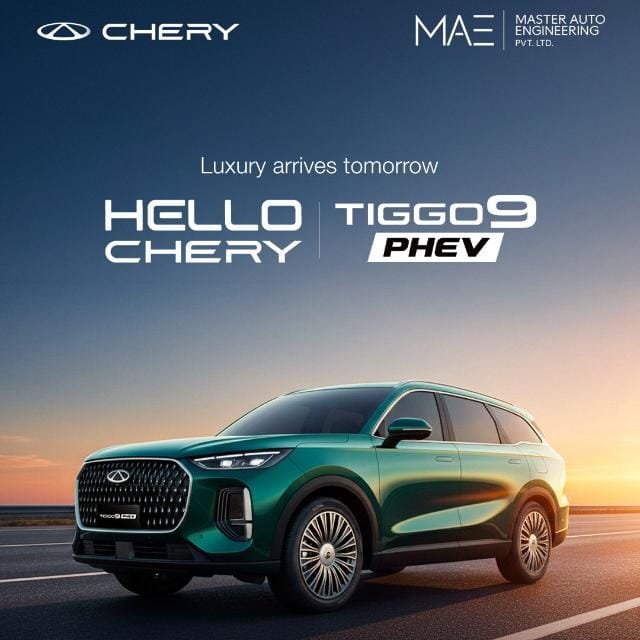
Karachi, May 7:  Chery Master Pakistan is evaluating to launch two to three future models for the local market, including the Tiggo 4 HEV, QQ BEV, and Tiggo V, products that reflect Chery’s broader focus on hybrid, electric and multi-purpose mobility solutions. Read More: https://theboardroompk.com/pakistan-imf-climate-funding-set-to-unlock-200-million-boost-for-green-economy/ Chery Master Pakistan, introduced locally by Master Auto Engineering, part of the Master Group with over 60 years of industrial and automotive legacy, has signalled the potential introduction of multiple new models in the local market following its strong participation at Auto China 2026, where the company engaged with global leadership and reviewed Chery’s next-generation product and technology roadmap. The direction is supported by Chery’s global plan to introduce 13 new models over the next two years across gasoline, hybrid and electric powertrains, spanning SUV, sedan, urban mobility and pickup segments. For Pakistan, these categories hold growing relevance as consumers increasingly seek fuel-efficient, practical and technology-driven vehicles amid rising fuel costs and changing mobility needs. Speaking on the company’s future direction, Samir Malik, CEO of Chery Master Pakistan, said “Pakistan remains an important growth market for Chery’s advanced mobility technologies, adding that the company is focused on evaluating products that match local driving conditions, consumer expectations and long-term mobility trends.” At Auto China 2026, Chery showcased the QQ BEV, a compact electric vehicle offering a range of up to 410 kilometres. The model is positioned as an affordable urban mobility solution, making it particularly relevant for congested cities such as Karachi, Lahore and Islamabad, where lower running costs, ease of movement and compact design are becoming more important for daily commuters. The Tiggo V concept, meanwhile, represents a versatile mobility platform combining SUV space, MPV practicality, and pickup-style utility. Its multi-purpose character aligns closely with Pakistan’s strong preference for family-oriented vehicles that can also support lifestyle, business and utility requirements. The Tiggo 4 HEV further expands Chery’s hybrid portfolio into a more accessible segment, potentially opening new opportunities in Pakistan’s compact SUV market. With hybrid technology gaining traction due to fuel economy benefits and limited charging infrastructure for full EVs, such products could play an important role in accelerating local NEV adoption. Chery currently operates in more than 130 countries with over 19 million global users, while one out of every four vehicles exported from China is a Chery, underscoring the company’s growing export leadership. In Pakistan, Chery Master Pakistan has established the largest locally assembled (CKD) plug-in hybrid SUV portfolios in the market. This includes the Tiggo 9 PHEV positioned as the first premium plug-in hybrid E-SUV, the new Tiggo 8 PHEV as the country’s only 7-seater plug-in hybrid D-SUV, and the newly introduced Tiggo 7 PHEV as a premium 5-seater C-segment SUV. Together, this lineup spans key SUV segments and reflects a deliberate strategy to make advanced hybrid technology accessible across different customer needs.

Banks Stall PM’s Green Initiative as 91% of E-Bike Applications Rejected
Auto

Banks Stall PM’s Green Initiative as 91% of E-Bike Applications Rejected

In a significant setback to the Prime Minister’s green mobility initiative, commercial banks in Pakistan have rejected a staggering 91% of applications for subsidized electric bikes. Out of 44,689 applications forwarded to financial institutions, only 4,075 were approved, representing a meager 9% success rate. This lack of enthusiasm from the banking sector has forced the federal government to overhaul its strategy to meet the ambitious targets of the Pakistan Accelerated Vehicle Electrification (PAVE) program. Failure to Meet Annual Targets The Economic Coordination Committee (ECC) was informed that the government is on track to miss its annual goal of distributing 116,000 electric bikes this fiscal year. Despite the imposition of a “climate support levy” of Rs2.5 per litre on petrol and diesel to fund this transition, the actual distribution remains abysmal. Currently, only 4.5% of the fiscal year’s target has been met. The poor response from banks has necessitated a pivot toward self-financing options and direct manufacturer-to-consumer subsidies to bypass traditional banking delays. Promoting Self-Financing and New Options To salvage the program, the government is now prioritizing a self-finance model where the role of banks is minimized. Under the revised policy, applicants can receive an electric vehicle directly from suppliers at a discounted rate, with the government providing a cost-sharing subsidy. In contrast to the low bank approval rate, the self-finance option has already shown a 99% success rate among initial applicants. The ECC has also introduced a specific scheme for government employees (BS-16 and below), allowing them to acquire bikes with a small upfront payment of Rs10,000 and interest-free installments.

Pakistan Plans Export of Refurbished Used Cars to Boost Automotive Sector
Auto

Pakistan Plans Export of Refurbished Used Cars to Boost Automotive Sector

The export of refurbished used cars is set to become a new focus for Pakistan as the government prepares a policy to import, refurbish and re export vehicles under the upcoming auto policy for 2026 to 2031. Officials said the initiative aims to boost exports, attract foreign investment and strengthen the automotive sector at a time of economic pressure. The proposal introduces a structured framework that allows licensed companies to bring used vehicles into Pakistan, refurbish them locally and ship them to international markets. Authorities have made it clear that these vehicles will not be allowed to enter the domestic market, ensuring that local industry dynamics remain unaffected. Policy Inspired by Global Trade Models The government has designed the plan based on successful international models such as the Jebel Ali system in Dubai. Officials believe this approach can help Pakistan integrate into the global automotive value chain and generate new revenue streams. The initiative has gained strong backing from the Special Investment Facilitation Council, which sees the export of refurbished used cars as a viable opportunity to generate millions in foreign exchange. This support comes at a critical time when Pakistan is facing challenges in increasing its export volume. Sources said the recent geopolitical developments, including tensions in the Gulf region, have further accelerated discussions around the policy. Policymakers now view the automotive export segment as a strategic avenue for economic stability. Consultations with Global Financial Institutions Underway Officials confirmed that the policy is currently under discussion with the International Monetary Fund. These consultations aim to ensure that the framework aligns with Pakistan’s broader economic commitments and fiscal targets. After completing these discussions, the government plans to present the policy to the federal cabinet for final approval. Authorities expect that the initiative will play a key role in improving Pakistan’s export performance in the coming years. Incentives to Attract Investment Under the proposed framework, companies will benefit from duty suspension incentives through the Export Facilitation Scheme. This measure aims to reduce initial costs and encourage businesses to invest in refurbishment facilities. Officials said the export of refurbished used cars will also create opportunities for technology transfer and skill development. By establishing modern refurbishment units, Pakistan can enhance its industrial capacity and generate employment. However, only registered companies will be allowed to operate under the scheme. Firms must be incorporated under the Companies Act and demonstrate strong financial and technical capabilities. They will also need to present detailed business plans outlining refurbishment processes and export strategies. Strict Regulatory Oversight in Place To maintain transparency and quality standards, companies must secure approvals from relevant ministries and register under the Export Facilitation Scheme. Additionally, their facilities must meet infrastructure requirements verified by the Engineering Development Board. Authorities have also introduced strict timelines for compliance. Vehicles imported under the scheme must be re exported within nine months of arrival. Limited extensions may be granted in exceptional cases, but only with valid justification and additional financial guarantees. If companies fail to meet the deadline, the Federal Board of Revenue will take action under existing laws. This enforcement mechanism aims to prevent misuse of the scheme and ensure that the policy delivers its intended outcomes. A Strategic Push for Export Growth The export of refurbished used cars represents a strategic shift in Pakistan’s economic planning. By focusing on value addition rather than simple exports, the government hopes to unlock new growth opportunities. Experts believe that the success of the policy will depend on effective implementation and investor confidence. If executed properly, the initiative could position Pakistan as a competitive player in the global automotive refurbishment market.

IMC among top Toyota manufacturing affiliates in Asia Pacific after winning three awards
Auto

IMC among top Toyota manufacturing affiliates in Asia Pacific after winning three awards

April 29, 2026: Indus Motor Company has achieved a place among the top Toyota manufacturing affiliates across the Asia Pacific region after winning Excellence Quality Award, Warranty Reduction Award, and Zero Field Action Award for the third consecutive year by Toyota Motor Asia. Read More: https://theboardroompk.com/mehmood-arshad-appointed-chairman-of-economic-council-by-employers-federation-of-pakistan-efp/ The Asia Production Quality Awards are presented annually by Toyota Motor Asia and have recognised outstanding quality performance among Asia Pacific manufacturing companies since 2011. IMC received all these three awards for the third year in a row in 2025 after meeting strict customer quality KPIs with a cumulative score exceeding 80% out of 200 points, which represents the highest standards of quality within Toyota’s regional manufacturing network. The company recorded zero field actions across all models, exceeded its warranty reduction target, and achieved zero defects per vehicle in Toyota Motor Asia’s Shipping Quality Audit. Out of nine Toyota affiliates evaluated in the region, only six received the Excellence Quality Award in CY25, with IMC proudly among them and the only Pakistani automotive manufacturer on that list. Commenting on the achievement, Ali Asghar Jamali, CEO of IMC, said, “Receiving all three quality awards for the third consecutive year reflects the relentless pursuit of excellence that defines every individual at IMC. This recognition reinforces our position not just as Pakistan’s leading automotive manufacturer, but also as a quality benchmark within Toyota’s global network.”

ECC Used Vehicles Import Pilot Project Pakistan Approved Amid Economic Reforms
Auto, Editor pick

ECC Used Vehicles Import Pilot Project Pakistan Approved Amid Economic Reforms

ECC used vehicles import pilot project Pakistan has been formally approved by the Economic Coordination Committee in a key policy meeting held at the Finance Division. The committee allowed the temporary import of used vehicles and auto parts for repair, refurbishment, and re-export under a controlled pilot framework. The ECC placed the scheme under a one-year review condition. Officials said the move aims to test feasibility, monitor economic impact, and assess compliance with trade regulations before a permanent decision. Federal Minister for Finance and Revenue Senator Muhammad Aurangzeb chaired the meeting. Senior officials from relevant ministries attended the session and reviewed multiple economic and policy matters. Economic Indicators Show Gradual Stabilization During the briefing, the Ministry of Planning shared an update on key economic indicators. The committee was informed that inflation trends are showing signs of gradual stabilization after recent volatility. Officials reported that coordinated efforts between federal, provincial, and district authorities have improved price monitoring. The National Price Monitoring Committee played a key role in strengthening oversight and market intervention. The Sensitive Price Index (SPI) showed mixed movement. However, data confirmed that the pace of inflation in essential goods has slowed in recent weeks. Prices of Essential Commodities Show Mixed Trends The ECC reviewed detailed price data of essential commodities. Officials reported that several items have recorded a downward trend in prices. Tomatoes, onions, wheat flour, garlic, LPG, and sugar showed price reductions in recent weeks. These changes helped ease pressure on household budgets in some segments of the market. At the same time, prices of eggs, chicken, pulses, cooking oil, bread, and milk recorded minor increases. Despite this, officials said the overall trend indicates gradual stabilization rather than sharp inflation spikes. The committee noted that several commodities are now moving closer to pre-volatility price levels. Authorities described this as a positive signal for economic stability. ECC Expresses Satisfaction Over Inflation Control Measures The ECC expressed satisfaction over the improving inflation outlook. Members credited timely policy interventions and improved monitoring systems for the recent stability in prices. The committee stressed the need to maintain strict market oversight. It also emphasized protecting consumers while ensuring macroeconomic balance. Officials said continued coordination between institutions will remain necessary to sustain price stability in the coming months. ECC Approves Funding for PIA Holding Company The ECC also reviewed a financial summary submitted by the Ministry of Defence regarding Pakistan International Airlines Corporation Limited (PIACL). The committee approved Rs. 5.985 billion allocation for PIA Holding Company Limited. The funds will be used to settle outstanding liabilities. This includes reimbursement of medical expenses, pension payments, and salary disbursements for employees. The ECC directed that the matter related to payments to the National Insurance Company Limited be taken up with the relevant revenue authority for adjustment. The decision must align with audit recommendations. Ban on Forced Labour Goods Strengthened In a significant policy decision, the ECC approved amendments to the Import Policy Order 2022. The amendment bans the import of goods produced through forced labour. The decision aligns Pakistan’s trade policy with International Labour Organization conventions. Officials said the move strengthens ethical trade compliance and improves international credibility. The Commerce Division proposed the amendment as part of broader import regulation reforms. Used Vehicles and Auto Parts Import Scheme Introduced The ECC also approved amendments to the Import-cum-Export Scheme under the Import Policy Order 2022 and Export Facilitation Scheme 2021. The decision allows the temporary import of used vehicles and auto parts under a pilot project. These goods will be imported for repair, refurbishment, and re-export purposes. Officials said the scheme aims to support industrial activity and create export opportunities. It will also help test regulatory controls before broader implementation. The committee directed that the pilot project be reviewed after one year. The review will assess economic benefits, regulatory compliance, and market impact.

Vehicle Import Rules Pakistan Tighten From July 1
Auto

Vehicle Import Rules Pakistan Tighten From July 1

Pakistan is preparing to enforce strict new vehicle import rules from July 1 under guidance from the International Monetary Fund. The move aims to improve transparency, raise quality standards, and expand the country’s tax net. Officials say the policy will reshape how vehicles enter Pakistan and who can import them. Only Tax Compliant Entities Will Be Allowed The new vehicle import rules Pakistan will restrict imports to tax compliant entities. Authorities plan to bar individuals who are non filers or not registered for tax purposes. This decision reflects a broader effort to bring more people and businesses into the formal tax system. Under the proposed framework, only companies with a valid National Tax Number will qualify for vehicle imports. These companies must also be registered under the Companies Act 2017. This requirement will effectively exclude individuals and sole proprietors from importing vehicles. Officials believe this step will improve documentation and reduce misuse of import channels. It will also ensure that only verified businesses handle vehicle imports. Engineering Development Board to Oversee Used Imports The government plans to increase oversight of used vehicle imports. Importers will now need to register with the Engineering Development Board. This additional layer of regulation aims to monitor compliance more effectively. Authorities say the involvement of the Engineering Development Board will help enforce quality and safety standards. It will also ensure that importers follow proper procedures before bringing vehicles into the country. After Sales Support Becomes Mandatory The new policy places strong emphasis on after sales support. Officials have made it clear that vehicles without proper service networks will not qualify for import. Importers must prove that they can provide genuine spare parts and trained technicians. They must also demonstrate access to diagnostic facilities. This requirement aims to protect consumers from poor quality vehicles that lack maintenance support. Commercial importers will need to submit detailed plans for after sales services. These plans must show how they will handle repairs and ensure long term vehicle performance. Strict Quality and Safety Checks Introduced The vehicle import rules Pakistan will also tighten quality control measures. Importers must submit pre shipment inspection certificates. These certificates will confirm that vehicles meet environmental and safety standards before they leave the exporting country. Authorities will also require fitness and quality testing documents. These documents will verify that the vehicles are in acceptable condition for use in Pakistan. In addition, post shipment inspection certification will become mandatory. Once vehicles arrive in Pakistan, they will undergo further checks to ensure compliance. This step will reduce the risk of substandard vehicles entering the market. Digital Records to Improve Transparency Another key feature of the new policy is the requirement for digital record keeping. Importers must maintain detailed records for each vehicle. These records will include engine numbers, chassis numbers, and other essential details. This system will improve traceability and transparency. It will help authorities track vehicles throughout their lifecycle. It will also reduce the chances of fraud and misreporting. Officials say digital documentation will modernize the import process. It will make it easier for regulators to monitor compliance and enforce rules. IMF Driven Reforms Target Economic Stability The reforms come as part of broader economic measures linked to the International Monetary Fund program. Pakistan has committed to improving governance and increasing tax revenue. By restricting imports to compliant entities, the government aims to expand the tax base. It also wants to ensure that imports align with international standards. Experts believe these steps will bring long term benefits. They will improve market discipline and protect consumers. However, they may also reduce the number of importers in the short term. Impact on Market and Consumers The new rules are likely to reshape Pakistan’s vehicle import market. Fewer players may operate in the sector due to strict requirements. However, the overall quality of imported vehicles is expected to improve. Consumers may benefit from better after sales support and higher safety standards. At the same time, prices could rise due to increased compliance costs. Despite these concerns, authorities argue that the reforms are necessary. They aim to create a more transparent and reliable system for vehicle imports. What Comes Next With July 1 approaching, businesses are preparing to adapt to the new framework. Importers will need to meet all regulatory requirements or exit the market. The government plans to monitor implementation closely. It wants to ensure that the new vehicle import rules Pakistan deliver the intended results. As the policy takes effect, it will mark a significant shift in how Pakistan manages vehicle imports. The focus now remains on enforcement and long term economic stability.

Pakistan’s New Auto Policy to Undergo IMF Scrutiny Before Cabinet
Auto

Pakistan’s New Auto Policy to Undergo IMF Scrutiny Before Cabinet

The federal government has reached an agreement to share the draft of the Automobiles and Auto Parts Manufacturing Policy (2026-31) with the International Monetary Fund (IMF) before seeking final approval from the federal cabinet. Read More: https://theboardroompk.com/kcci-raises-alarm-over-targeted-attack-on-industrialist-warns-of-resurgent-extortion-mafia-collapsing-law-order/ This unprecedented move signals the global lender’s growing influence over Pakistan’s industrial framework, specifically targeting the highly protected automotive sector to ensure it aligns with international trade standards. Phasing Out Protections Under the new policy guidelines, the government is set to dismantle long-standing protections for local car assemblers. The IMF is pushing for a significant reduction in net weighted average tariffs, aiming for a single-digit rate of 6% by the year 2030. This shift is intended to open the domestic market to foreign players and reduce the monopoly of current manufacturers who have, for decades, relied on high import barriers to remain competitive despite limited localization. Ambitious Export and Production Targets Despite the tightening of regulations, the policy remains focused on growth. The government aims to boost vehicle production to over 500,000 units annually within the next five years. Furthermore, a central pillar of the 2026-31 plan is to transform the sector into an export-oriented industry. Authorities are targeting a massive increase in automotive exports, aiming to jump from the current $300 million to approximately $3 billion by 2031, provided that local quality meets international benchmarks.

Same Platform, Different Price: What Explains the Rs1 Million Gap for SUV buyers in Pakistan?
Auto

Same Platform, Different Price: What Explains the Rs1 Million Gap for SUV buyers in Pakistan?

Karachi : Pakistan’s fast-evolving SUV market is beginning to see a new layer of competition — not just between brands, but within the same global automotive groups. Read More: https://theboardroompk.com/the-magnum-ice-cream-company-appoints-mert-turgut-as-general-manager-pakistan/ A case in point is the comparison emerging between the Chery Tiggo 7 PHEV and the Jaecoo J7 two different brands under the umbrella of Chery, a Chinese automobile giant. At first glance, the two vehicles appear to target similar buyers — modern SUV customers looking for electrification, performance, and technology. But a closer look reveals a more nuanced reality as both vehicles are built on closely related platforms, share core engineering, and deliver near-identical hybrid performance — yet are priced differently in the Pakistani market, almost 1 million rupees difference. The Tiggo 7 PHEV enters as a C-segment plug-in hybrid built on Chery’s latest Super Hybrid architecture. It combines a 1.5TGDI engine with an 18.3 kWh battery and a dedicated hybrid transmission, producing strong power output and delivering up to 90 km of pure electric range and a combined range of around 1,200 km. These are numbers that place it firmly among the most capable electrified SUVs currently available locally. The Jaecoo J7, meanwhile, is part of Chery’s newer sub-brand strategy aimed at more design-led and lifestyle-oriented positioning. While it introduces a distinct exterior identity — more rugged, upright, and off-road inspired — its underlying engineering DNA remains closely aligned with Chery’s existing hybrid platforms. This is not unusual in the global auto industry. Shared platforms across different brands — often referred to as “badge engineering” — are common practice. In Pakistan, however, where price sensitivity remains a key factor, such comparisons are beginning to influence buying decisions more directly. With an estimated price gap of close to Rs 1 million between the two, the Tiggo 7 PHEV positions itself as a high-value proposition — offering comparable hybrid technology, performance output, and core features at a more accessible entry point. For many buyers, especially those transitioning from conventional petrol SUVs, this difference is not marginal — it materially impacts affordability and ownership economics. Beyond pricing, the Tiggo7 also aligns closely with current market realities. With fuel prices remaining elevated and unpredictable, plug-in hybrid vehicles offer a practical middle ground — enabling daily commutes on electric power while retaining the flexibility of a combustion engine for longer journeys. Industry observers note that as more global brands introduce sub-brands and overlapping product lines, consumer awareness around platforms, powertrains, and real-world value is increasing. Buyers are no longer evaluating vehicles purely on exterior styling or badge perception, but increasingly on underlying engineering and cost efficiency. In that context, the Tiggo 7 PHEV’s positioning becomes clearer. It is not merely competing on features or design — it is competing on value for technology. As Pakistan’s hybrid segment expands, such intra-group comparisons are likely to become more common. And, for consumers, the key question may no longer be which vehicle looks different — but which one delivers more for what they pay.

Auto

For the First Time, Middle-Class Cars Take Lead as SUVs Lose Ground in Pakistan

Pakistan’s automobile market is witnessing a notable shift as passenger cars tighten their grip on overall sales, signaling changing consumer priorities in a price-sensitive environment. Latest industry data shows passenger cars now account for around 63% of total sales, up from 58% a year earlier, reflecting a steady move away from larger, more expensive SUVs. Affordability Driving Consumer Choices The rise of models like Toyota Corolla and Yaris highlights how affordability is shaping buying decisions. With inflationary pressures still weighing on household budgets, many consumers appear to be opting for practical and fuel-efficient vehicles instead of premium SUVs. Industry analysts say lower interest rates have supported auto financing, but rising ownership costs—including fuel, maintenance, and insurance—are pushing buyers toward smaller cars. Even among buyers who previously preferred SUVs, there is growing evidence of a shift toward more economical options. This trend is particularly visible in urban centers, where congestion and fuel costs make compact cars more attractive for daily use. SUVs Face Growing Competition While SUVs remain popular, their dominance is increasingly being challenged. The segment is facing pressure not only from affordability concerns but also from intensifying competition among brands offering feature-rich vehicles at competitive prices. New entrants and aggressive pricing strategies have fragmented the SUV market, reducing the dominance of traditional models. As a result, some consumers are delaying purchases or reconsidering their options altogether. Analysts believe that unless price points stabilize or incomes improve significantly, passenger cars will continue to gain ground. The shift underscores a broader transformation in Pakistan’s auto market, where value-for-money is becoming the decisive factor in purchase decisions.

Scroll to Top