Author name: Web Desk

Pakistan External Financing: January 2026 Inflows Raise Economic Eyebrows
Pakistan

Pakistan External Financing: January 2026 Inflows Raise Economic Eyebrows

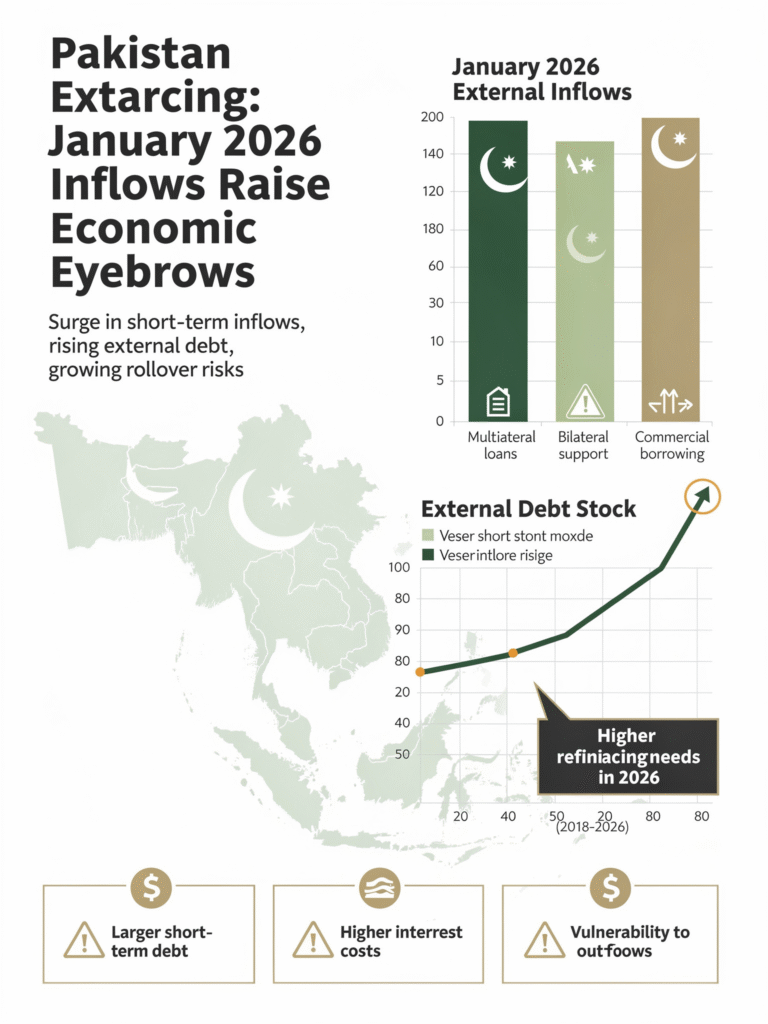
Pakistan External Financing once again took center stage as the country secured $625 million from multiple international sources in January 2026 a sharp 58% decline compared to the previous month. The latest data released by the Economic Affairs Division highlights both progress and persistent challenges in managing external liquidity. Read More: https://theboardroompk.com/7294-2/ At a time when economic stability remains closely tied to global financing support, the evolving pattern of foreign inflows has sparked debate among policymakers, investors, and analysts alike. Pakistan External Financing in 7MFY26: A Slow Momentum During the first seven months of fiscal year 2026, Pakistan External Financing reached $5.17 billion, significantly below the government’s ambitious budgetary projections. While the inflows provided some breathing room by strengthening foreign exchange reserves, the pace has not been enough to fully meet financing needs. Funding from multilateral and bilateral development partners totaled $237.4 million in January, bringing cumulative disbursements for July–January to $3.06 billion. This highlights the country’s continued reliance on external partners for development and macroeconomic support. Multilateral Partners Driving Pakistan External Financing Multilateral institutions remained vital contributors to Pakistan External Financing during the period. The Asian Development Bank retained its position as the largest multilateral donor, disbursing $56.5 million in January and reaching $624.6 million cumulatively. Its financing has focused on infrastructure development and regional connectivity projects. Similarly, the International Development Association extended $28.7 million in January, with cumulative support exceeding $608 million, particularly for transformative projects such as hydropower and agricultural reforms. Meanwhile, the International Bank for Reconstruction and Development contributed $30.6 million during the month, reflecting continued engagement in urban development and power sector reforms. Another emerging contributor, the Asian Infrastructure Investment Bank, disbursed $13.8 million, signaling growing diversification in Pakistan’s external funding mix. Bilateral Support Strengthens Pakistan External Financing Among bilateral partners, Saudi Arabia led January inflows with $100 million, bringing its cumulative support to $708.7 million the highest among bilateral donors. China continued its role as a strategic financing partner through guaranteed loan facilities totaling $13.8 million in January. Meanwhile, Japan and Germany maintained smaller but steady contributions toward social and infrastructure projects. These partnerships underline Pakistan’s diplomatic and economic balancing act as it seeks diversified financing channels. Commercial Borrowing and Market Instruments Beyond traditional donors, Pakistan External Financing also relied on commercial mechanisms. The government raised $286.3 million through the Naya Pakistan Certificate scheme, split between conventional and Islamic facilities. Additionally, borrowing from foreign commercial institutions such as Standard Chartered Bank totaled $88.1 million in January. However, inflows from the International Monetary Fund remained unchanged at $209.5 million cumulatively, as no fresh tranche was released during the month. Project vs Non-Project Financing: A Growing Dependence A notable trend in Pakistan External Financing was the dominance of non-project aid, which reached $477.4 million in January, including substantial budgetary support. This reflects the country’s reliance on programme-based loans for macroeconomic stabilisation rather than purely development-focused funding. Project financing, though smaller at $148.3 million, continues to play a crucial role in supporting provincial initiatives across Punjab, Sindh, and Khyber Pakhtunkhwa spanning water management, education, health, and urban infrastructure. The Road Ahead for Pakistan External Financing As Pakistan External Financing trends reveal a mixed outlook, policymakers face the challenge of boosting inflows while reducing reliance on short-term stabilisation support. Strengthening export competitiveness, improving investor confidence, and accelerating development project execution may determine how effectively the country navigates its external financing landscape in the coming months. With global financial conditions tightening and domestic reforms ongoing, January’s numbers may well be a signal not just of funding gaps, but of the urgent need for a more sustainable financing strategy.

Pakistan Import Bill February 2026: Trade Signals Point to Economic Stabilisation
Pakistan

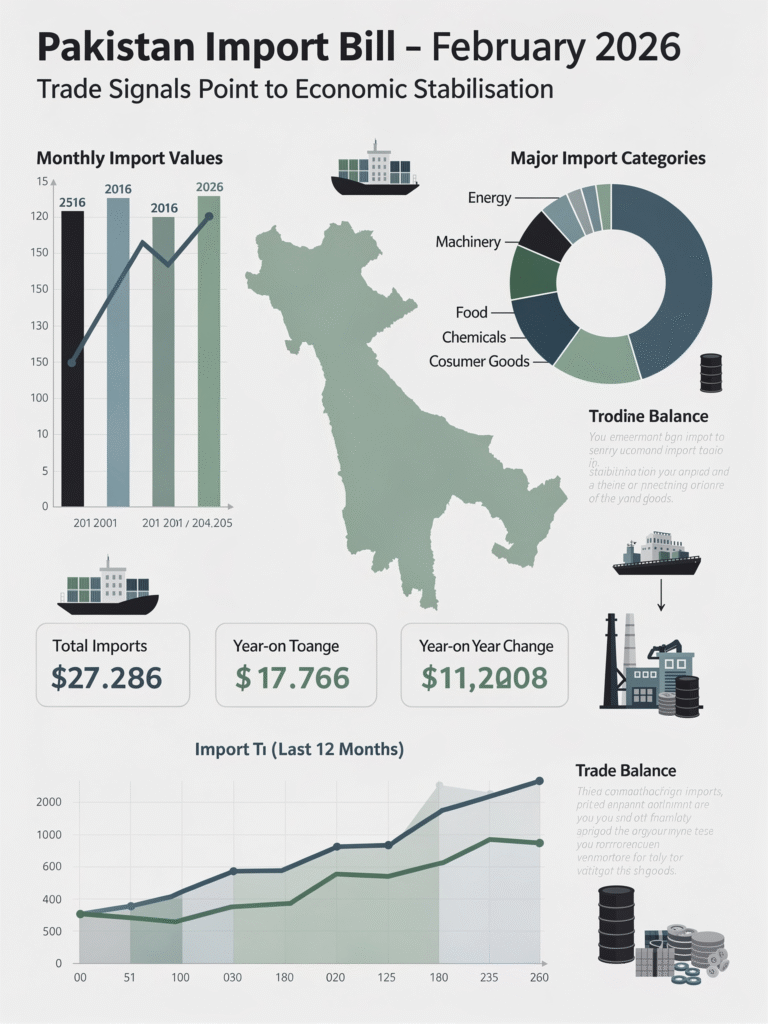
Pakistan Import Bill February 2026 has emerged as a closely watched indicator of the country’s evolving economic trajectory. The latest trade data highlights a period of stabilisation in external accounts, even as sector-specific trends reveal shifting consumption patterns, industrial priorities, and investment sentiment. Read More: https://theboardroompk.com/fertilizer-sector-profits-climb-10-to-rs141bn-in-2025-on-strong-urea-sales/ With policymakers, businesses, and investors tracking every movement in import volumes, February’s figures offer compelling clues about the direction of Pakistan’s recovery story. Pakistan Import Bill February 2026 Reflects External Sector Stability Pakistan’s total import bill for February 2026 stood at $5.32 billion (Rs1.49 trillion), showing only a marginal 0.41% year-on-year decline. More notably, imports fell 8.39% month-on-month from January’s $5.80 billion, pointing towards a cooling trend in overall trade demand. This moderation suggests improved balance-of-payments management and tighter procurement strategies across key sectors. Analysts interpret this as a sign that the external account is gradually stabilising after periods of volatility. Petroleum Imports Decline but Refinery Activity Holds Firm One of the most significant developments in the Pakistan Import Bill February 2026 was the sharp drop in the Petroleum Group, which declined 21.25% year-on-year to $982.9 million. Refined petroleum imports fell dramatically by nearly 40%, reflecting subdued domestic demand and possible efficiency gains in energy consumption. Liquefied natural gas purchases also contracted by over 25%, indicating more disciplined scheduling and inventory management. Interestingly, crude oil imports edged up on a monthly basis, signalling that refineries maintained operational throughput despite the broader contraction in energy imports. Food Imports Surge as Consumer Demand Remains Resilient In contrast, the Food Group emerged as a standout performer, rising 13.58% year-on-year to $908.1 million. Tea imports recorded a strong jump of more than 33%, while palm oil Pakistan’s most critical edible oil import grew moderately, underlining steady household consumption patterns. Soyabean oil imports rebounded sharply month-on-month, though they remain significantly below last year’s levels. Meanwhile, reduced imports of pulses and dairy-related products hint at either shifting dietary preferences or improved domestic supply conditions. Machinery Imports Signal Mixed Industrial Activity ⚙️ Machinery imports totalled $870.8 million, reflecting modest annual growth but a monthly slowdown. Telecommunications equipment continued to drive demand, with mobile phone imports showing double-digit expansion — a sign of sustained digital adoption across the country. Agricultural machinery imports surged sharply, suggesting renewed investment in farm mechanisation ahead of upcoming crop cycles. However, lower imports of electrical and power-generating machinery indicate cautious spending in infrastructure and energy projects. Transport Sector Imports Highlight Growth Optimism Perhaps the most eye-catching trend in the Pakistan Import Bill February 2026 was the Transport Group’s nearly 49% year-on-year growth. Completely built vehicle imports rose significantly, while imports of buses, trucks, and heavy vehicles almost tripled. This points to strengthening activity in logistics, construction, and commercial mobility. Similarly, the sharp rise in CKD/SKD motor car imports suggests that domestic auto assemblers are ramping up production in anticipation of improved consumer demand. Textile Raw Material Imports Decline Raise Export Concerns The Textile Group, a backbone of Pakistan’s export economy, recorded a notable contraction. Imports dropped both annually and monthly, with raw cotton purchases plunging by nearly 60% year-on-year. While partially explained by improved domestic production and softer global prices, industry experts caution that continued declines in raw material imports could eventually constrain export capacity if local supply fails to bridge the gap. Chemicals, Metals and Healthcare Demand Strengthen Industrial Outlook Imports in the Agricultural and Chemicals segment grew over 12%, led by a surge in fertiliser imports ahead of the Kharif sowing season. Plastic materials also posted solid growth, aligning with expanding domestic manufacturing activity. Healthcare demand remained robust, with medicinal product imports rising more than 21%, highlighting ongoing investment in medical supply chains. Meanwhile, metal imports showed moderate annual growth, supported by continued construction activity and rising aluminium demand. What Pakistan Import Bill February 2026 Means for the Economy Overall, the Pakistan Import Bill February 2026 paints a nuanced picture: • Cooling energy imports signal improved external account management• Rising food and transport imports reflect steady consumer and commercial demand• Machinery trends suggest selective industrial investment• Falling textile raw material imports could pose medium-term export risks For businesses and investors, these signals underscore a transition phase in Pakistan’s economic cycle one where stability is emerging but structural challenges remain.

Fertilizer Sector Profits Climb 10% to Rs141bn in 2025 on Strong Urea Sales
Business

Fertilizer Sector Profits Climb 10% to Rs141bn in 2025 on Strong Urea Sales

Pakistan’s listed fertilizer companies delivered a resilient performance in 2025, with aggregate after-tax profits rising 10% YoY to Rs141.1 billion, up from Rs129.0 billion in 2024, according to a sector update by Topline Securities. Read More: https://theboardroompk.com/honda-faces-first-annual-loss-of-15-7-billion-in-70-years-with-massive-ev-restructuring-charge/ The improvement was mainly driven by a strong 26% YoY increase in urea offtakes, which reached 6.7 million tons for the year, reflecting robust agricultural demand. Additionally, other charges dropped sharply by 32% YoY to Rs21.7 billion, providing significant relief to bottom-line figures. Key players led the charge: Fauji Fertilizer Company (FFC) recorded 16% sales growth to Rs432.4 billion and a 14% rise in profits to Rs73.5 billion. Engro Fertilizers (EFERT) and Fatima Fertilizer (FATIMA) also contributed strongly to the sector’s overall sales, which climbed 8% YoY to Rs981 billion. Gross margins for the sector expanded notably, supported in part by periodic discounts of Rs300–400 per bag on urea and DAP products. Over the longer term, the sector has shown impressive growth, with revenues more than doubling from Rs192 billion in 2016 to Rs981 billion in 2025, while EBITDA reached Rs238 billion. However, higher borrowing costs pushed finance charges up 69% YoY to Rs24.8 billion, partially offsetting operational gains. Analysts view the results as a sign of underlying strength in agricultural input demand despite periodic quarterly volatility seen earlier in 2025.

Wahdat Poultry Farm Eyes Rs637mn IPO on PSX to Boost Expansion and Value-Added Products
Business

Wahdat Poultry Farm Eyes Rs637mn IPO on PSX to Boost Expansion and Value-Added Products

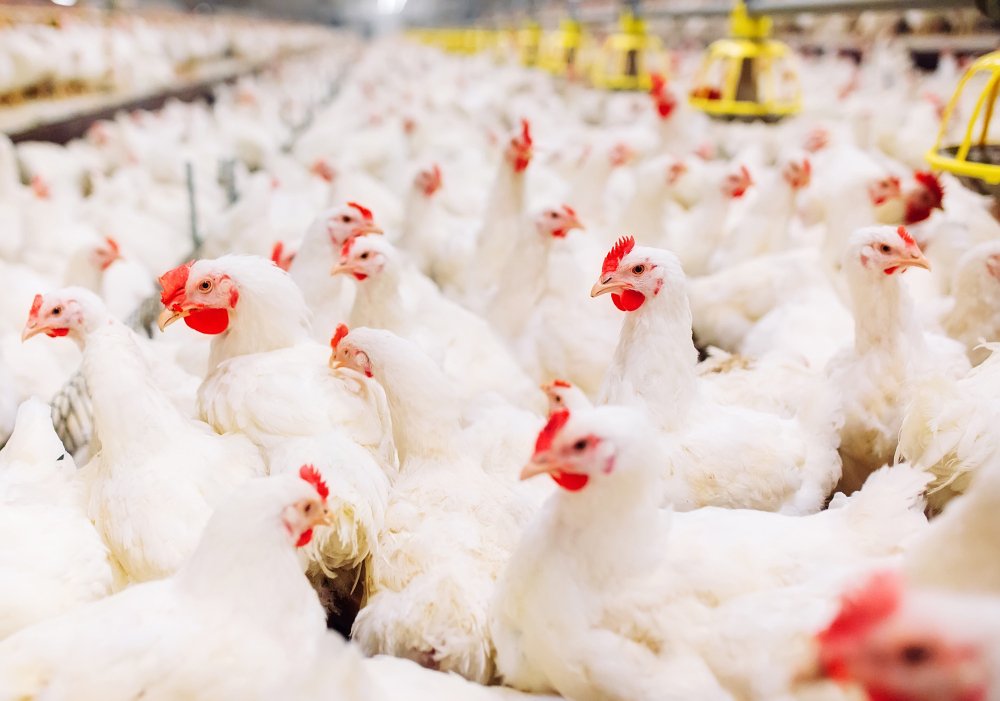
Wahdat Poultry Farm Limited, a major Pakistani egg producer, has announced plans to list on the Pakistan Stock Exchange (PSX) through an initial public offering (IPO). Read More: https://theboardroompk.com/honda-faces-first-annual-loss-of-15-7-billion-in-70-years-with-massive-ev-restructuring-charge/ The company aims to raise approximately Rs637 million (around USD 2.3 million) to fuel expansion and diversification into value-added products. The IPO involves offering 53.1 million ordinary shares, equivalent to 15.84% of the post-IPO paid-up capital. It features a floor price of Rs12 per share, including a Rs10 premium. Of the total proceeds, Rs600 million represents fresh capital injection into the company for growth initiatives, while Rs37.228 million comes from the sale of existing shares by sponsor shareholder Naved Ali Khan. IPO Structure and Allocation The offering will use a book-building mechanism. Seventy percent of shares target institutional investors and high-net-worth individuals, with the remaining 30% allocated to the general public. The retail portion is fully underwritten. Topline Securities Limited serves as the lead manager and book runner. The prospectus was submitted to the PSX on Friday, March 13, 2026. Company Background and Operations Founded in 2006 and later incorporated as a public limited company, Wahdat Poultry operates as a vertically integrated poultry business. It focuses on egg production, grading, packaging, and distribution under the “Farm Fresh Eggs” brand. The company runs four automated layer farms with a capacity of around 430,000 birds, yielding up to 400,000 eggs daily. Products reach about 1,500 retail outlets in major cities like Karachi, Lahore, and Islamabad. It also supplies multinational food chains and exports to select international markets. Financial Performance and Growth Trajectory Revenue has grown steadily from Rs1.23 billion in FY21 to Rs2.79 billion in FY25. Profit after tax stood at Rs241.9 million in FY25, reflecting solid operational performance. Management views the IPO as a step to transition Wahdat into a high-value food-tech enterprise. The strategy prioritizes capital-efficient expansion to meet unmet market demand, enhance resilience, and drive sustainable growth. Use of Proceeds and Expansion Plans Rs270 million will fund a new liquid egg pasteurisation plant to enable value-added products. Another Rs180 million targets expanding poultry capacity by adding roughly 100,000 birds. The remaining Rs150 million supports working capital and development of a farm licensing model. This move aims to diversify beyond traditional table eggs into processed offerings, capitalizing on rising demand for hygienic, value-added egg products in Pakistan.

Honda Faces First Annual Loss of $15.7 billion in 70 Years with Massive EV Restructuring Charge
Auto

Honda Faces First Annual Loss of $15.7 billion in 70 Years with Massive EV Restructuring Charge

Honda Motor Co. announced on March 13, 2026 (with initial reports on March 12), a massive restructuring of its electric vehicle (EV) business, expecting up to $15.7 billion (approximately 2.5 trillion yen) in expenses and losses over the coming years. Read More: https://theboardroompk.com/minister-leghari-74-local-power-reduces-impact-of-global-lng-disruption/ This includes canceling three planned battery-powered models for the U.S. market and writing down assets, leading to Honda’s first annual net loss in nearly 70 years as a listed company. The writedown stems from a reassessment amid slowing global EV demand, policy shifts in the U.S., and intense competition, particularly in China. Honda now forecasts a net loss of up to 690 billion yen for the fiscal year ending March 2026, reversing prior profit expectations. Massive Writedown and Model Cancellations Honda is scrapping three key EV projects: the Honda 0 Saloon sedan, the Honda 0 SUV, and the Acura RSX, all part of the “Honda 0 Series” unveiled in recent years with a planned 2026 North American launch. These were developed on Honda’s in-house platform, with significant investments in R&D, production capacity (including its Ohio EV Hub), and supplier commitments. The charges cover impairment of tangible and intangible assets, cancellation-related expenses, and supplier compensations, with cash outflows up to 1.7 trillion yen. Analysts noted the scale reflects overcommitment before adjusting to market realities, such as the end of U.S. EV subsidies under recent policy changes. Honda’s global EV sales in 2025 were only about 84,000 units, or 2.5% of total vehicle sales, highlighting the limited traction despite heavy investments. Challenges in Key Markets: U.S. and China In the U.S., EV demand has weakened sharply following subsidy removals and tariff impacts, prompting Honda to pivot toward hybrids for better market fit. The company aims to strengthen its lineup and cost competitiveness elsewhere, including India. China poses a longer-term threat, where Honda sold just 17,000 EVs out of 677,000 total vehicles in 2025 (about 2.5% penetration). The company cited an inability to match the value, software features, and rapid innovation from newer EV makers like BYD, amid shorter development cycles and shifting consumer preferences toward advanced driver-assistance and software-driven vehicles. Honda is impairing investments in its Chinese operations due to declining competitiveness, raising concerns about long-term technological edge. Financial Fallout and Market Reaction Shares dropped nearly 6% following the news, with U.S. shares down about 8% in premarket. Executives, including CEO Toshihiro Mibe, will take voluntary pay cuts for three months as part of cost controls. Analysts expressed shock at the writedown’s magnitude, describing it as a tough but necessary call made late in the process. This places Honda alongside other automakers facing billions in EV-related charges amid a broader industry slowdown. The joint venture with Sony for the Afeela sedan remains under review, with no final decisions announced. Outlook and Strategic Shift Honda emphasized returning its auto business to profitability through hybrids in the U.S., expanded presence in growth markets, and cautious EV investments. The move underscores the global EV transition’s challenges, including policy volatility and fierce competition from Chinese manufacturers. While painful short-term, the restructuring aims to position Honda more resiliently in a hybrid-heavy future while addressing gaps in pure EV competitiveness.

Minister Leghari: 74% Local Power Reduces Impact of Global LNG Disruption
Pakistan

Minister Leghari: 74% Local Power Reduces Impact of Global LNG Disruption

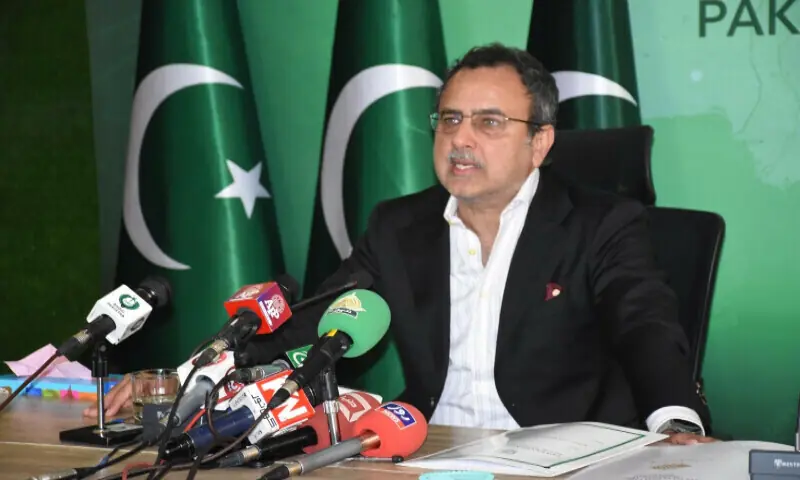
Pakistan’s Power Minister Awais Leghari stated in an interview on March 12, 2026, that the country’s growing dependence on domestic energy resources has significantly reduced vulnerability to disruptions in liquefied natural gas (LNG) supplies. This comes amid global tensions affecting key suppliers like Qatar. Read More: https://theboardroompk.com/ccp-authorizes-maple-leaf-cements-acquisition-of-shares-in-faysal-bank/ Leghari highlighted that approximately 74% of Pakistan’s electricity now comes from indigenous sources, including hydropower, nuclear, domestic coal, and surging renewables like solar and wind. The government targets raising this share above 96% by 2034. He described a “people-led solar revolution” alongside prior investments in nuclear, hydropower, and local coal as key drivers of self-reliance. Clean sources currently account for about 55% of generation, with plans to exceed 90% by 2034. Reduced Impact from LNG Disruptions LNG constitutes only around 10% of electricity generation, primarily for evening peak demand and grid stability. Leghari assured that even if LNG supplies were disrupted or prices soared, effects on industry, agriculture, or overall production would remain minimal. In a worst-case scenario of several months without LNG cargoes, Pakistan might experience one to two hours of load shedding during peak summer evenings in some areas. However, this would not broadly impact the economy. Recent global events, including Qatar’s temporary production halt due to Middle East conflicts, have caused shortages. Asian buyers, who take 80% of Qatar’s LNG, face challenges. Pakistan previously faced extended outages during the 2022 energy crisis after failing to secure spot cargoes. Domestic Strengths and Future Strategy Rooftop solar installations exceed 20 GW, with behind-the-meter capacity at 12-14 GW (possibly up to 18 GW), slashing daytime grid demand. Hydropower adds up to 7,000 MW in summer from increased river flows, aligning with higher air-conditioning needs. Annual outputs include hydropower at about 40 terawatt hours (TWh), nuclear at 22 TWh, and domestic coal at 12 TWh. Surplus generation capacity exists from added plants in coal, nuclear, and prior LNG investments, while demand growth has slowed. Pakistan recently cancelled 21 LNG cargoes for 2026-27 under a deal with Italy’s Eni, reflecting lower gas needs due to domestic shifts. Leghari emphasized future investments will prioritize indigenous clean power, including battery storage to shift excess solar to evenings, avoiding any sources risking energy security. Outages now stem mainly from theft, transmission losses, and financial issues rather than generation shortages. This shift positions Pakistan more resilient amid volatile global LNG markets influenced by geopolitical risks in the Middle East.

China's Mediation Delivers Ceasefire Lull in Pakistan-Afghanistan Border Clashes
Politics

China’s Mediation Delivers Ceasefire Lull in Pakistan-Afghanistan Border Clashes

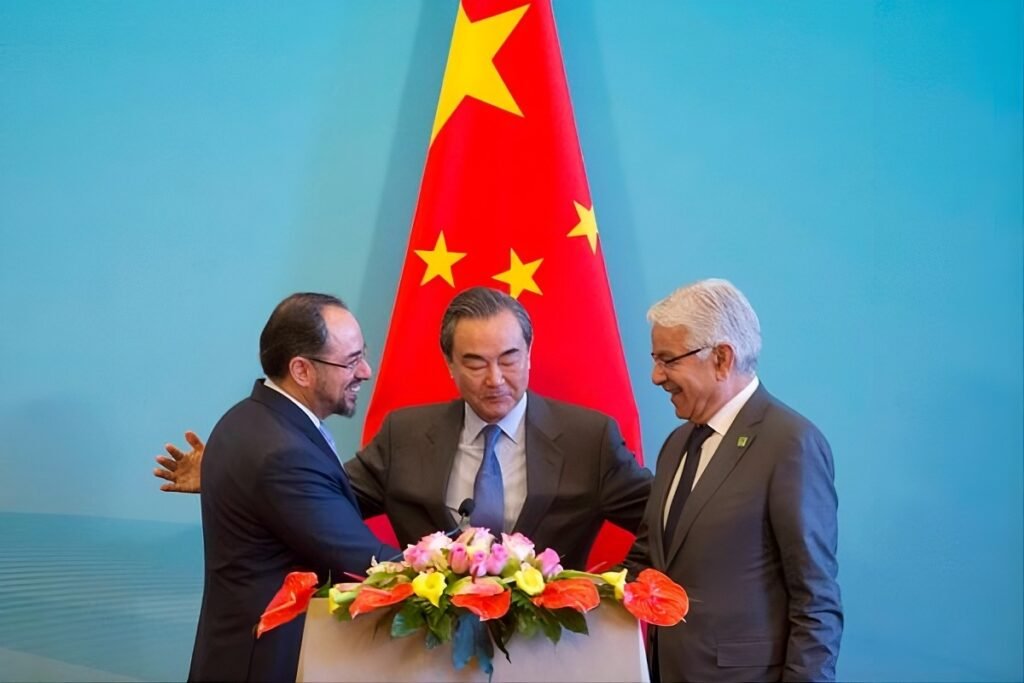
China’s diplomatic intervention has significantly reduced intense border clashes between Pakistan and Afghanistan. This marks the most severe fighting since the Taliban regained control in 2021. Escalation began with Pakistani airstrikes on February 26, 2026, targeting alleged militant hideouts in Afghanistan. Read More: https://theboardroompk.com/pm-sharif-assures-full-support-to-saudi-arabia-in-jeddah-meeting-amid-middle-east-tensions/ Chinese efforts, including a direct message from President Xi Jinping urging de-escalation, played a key role. Beijing’s special envoy shuttled between the two capitals, while embassies maintained ongoing contacts. Fighting has now tapered, with no recent Pakistani airstrikes reported and reduced ground engagements along the 2,600-km Durand Line border. Daily minor clashes persist, but the overall intensity has dropped markedly. China’s Active Diplomatic Role in De-escalation China positioned itself as a neutral mediator, leveraging strong ties with Pakistan (via the Belt and Road Initiative investments exceeding $65 billion) and growing economic interests in Afghanistan’s minerals. A late February meeting saw China’s ambassador to Pakistan, Jiang Zaidong, deliver Xi’s message to Prime Minister Shehbaz Sharif, calling for an end to hostilities. China’s Foreign Ministry confirmed shuttle diplomacy by Special Envoy Yue Xiaoyong and communications through embassies in Islamabad and Kabul. Foreign Minister Wang Yi spoke with Pakistan’s Deputy Prime Minister and Foreign Minister Ishaq Dar on March 11, 2026, emphasizing restraint. Meetings in Kabul involved China’s ambassador Zhao Xing and the envoy with Afghanistan’s acting Foreign Minister Amir Khan Muttaqi. Beijing stressed the urgency of preventing escalation and returning to talks, stating it would continue constructive efforts. This mediation fills a gap left by previous Gulf mediators (Qatar, Saudi Arabia, Turkey), now preoccupied with Middle East conflicts. Border Tensions and Path to Stability Pakistan accuses the Taliban of sheltering militants launching attacks inside Pakistan, prompting military operations to secure the border. Afghanistan denies safe havens, viewing militancy as Pakistan’s internal issue, and both sides have claimed heavy casualties without independent verification. The Durand Line remains disputed, fueling long-standing friction exacerbated since 2021. China’s involvement highlights its strategic stake in regional stability to protect investments and counter security threats. While clashes have eased, full resolution requires sustained dialogue. No formal negotiations are confirmed yet, but the lull offers a window for de-escalation. Pakistan’s military insists operations continue until objectives are met, signaling caution amid the fragile calm. This development underscores China’s rising influence in South and Central Asian diplomacy.

PM Sharif Assures Full Support to Saudi Arabia in Jeddah Meeting Amid Middle East Tensions
Pakistan

PM Sharif Assures Full Support to Saudi Arabia in Jeddah Meeting Amid Middle East Tensions

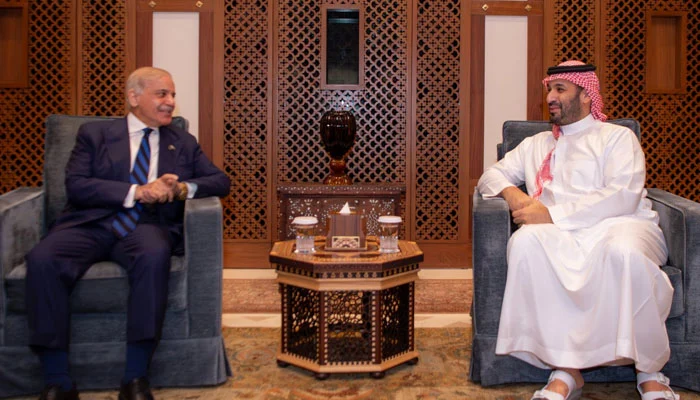
Pakistani Prime Minister Shehbaz Sharif met Saudi Crown Prince Mohammed bin Salman in Jeddah, Saudi Arabia. The leaders discussed recent regional developments amid escalating Middle East tensions, particularly involving Israel, the US, and Iran. They agreed to collaborate for peace and stability. Read More: https://theboardroompk.com/iran-targets-tankers-in-gulf-waters-16-ships-hit-since-conflict-began/ Sharif expressed Pakistan’s full solidarity with Saudi Arabia during these challenging times and assured the Crown Prince that Pakistan would always stand firmly by the Kingdom. This was shared via a press release from Sharif’s office on X by spokesman Mosharraf Zaidi. The brief visit, at the Crown Prince’s invitation, highlighted Pakistan’s diplomatic role in promoting dialogue and stability in the region. Strengthening Pakistan-Saudi Ties Amid Regional Turmoil The meeting underscores the deep-rooted strategic partnership between Pakistan and Saudi Arabia, built on historical, religious, and economic bonds. Pakistan has long viewed Saudi Arabia as a key ally, with millions of Pakistani expatriates working in the Kingdom and contributing significantly to remittances. In recent years, bilateral ties have expanded beyond labor migration to include defense cooperation, with Pakistan signing pacts to support Saudi security. The current discussions come against a backdrop of heightened Middle East instability, where Pakistan positions itself as a mediator favoring diplomacy over escalation. Sharif’s assurances of unwavering support signal Pakistan’s commitment to backing Saudi interests, especially as tensions rise involving Iran and other actors. This aligns with Pakistan’s foreign policy of balancing relations in the Gulf while advocating for de-escalation. The leaders’ agreement to work jointly for peace reflects shared concerns over the broader implications of ongoing conflicts, which could affect energy markets, migration, and regional security. Diplomatic Push for Peace in the Middle East Pakistan’s engagement with Saudi leadership follows closely after interactions with Iranian officials, indicating Islamabad’s active shuttle diplomacy to ease regional strains. By engaging both sides, Pakistan aims to contribute constructively to dialogue. The Jeddah talks focused on exchanging views on security dynamics and promoting stability through coordination. No specific agreements were announced, but the emphasis on solidarity and collaboration suggests potential for future joint initiatives. This visit reinforces Pakistan’s role as a responsible actor in West Asia, leveraging its ties with Saudi Arabia to push for peaceful resolutions. As conflicts persist, such high-level interactions remain crucial for fostering understanding and preventing wider fallout.

CCP Authorizes Maple Leaf Cement’s Acquisition of Shares in Faysal Bank
Pakistan

CCP Authorizes Maple Leaf Cement’s Acquisition of Shares in Faysal Bank

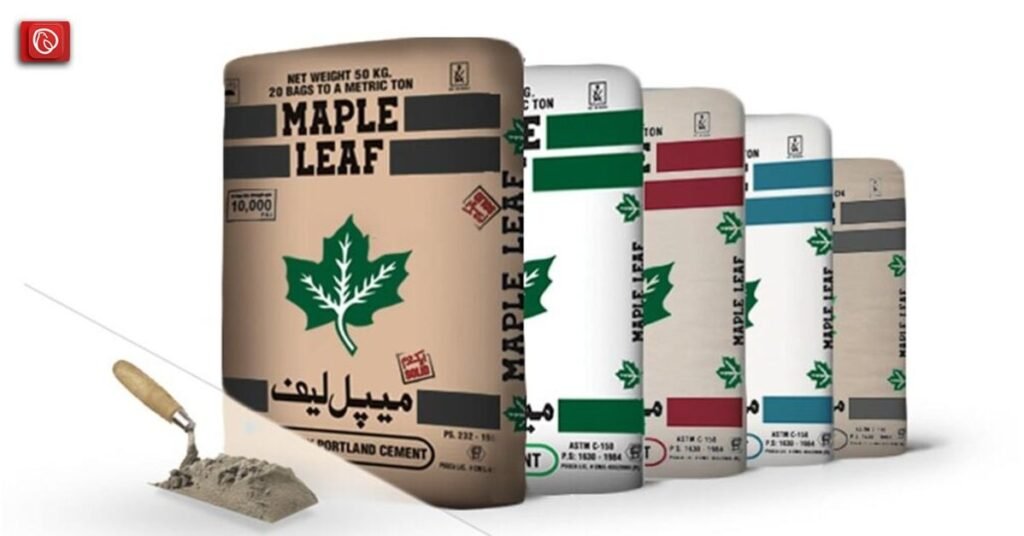
ISLAMABAD, 12 MARCH 2026: The Competition Commission of Pakistan (CCP) has authorized the acquisition of shares of Faysal Bank Limited by Maple Leaf Cement Factory Limited (MLCF) following a review under the Competition Act, 2010. Read More: https://theboardroompk.com/iran-targets-tankers-in-gulf-waters-16-ships-hit-since-conflict-began/ The transaction involves the purchase of shares of Faysal Bank by Maple Leaf Cement through open market transactions on the Pakistan Stock Exchange (PSX). The acquisitions were carried out through a series of share purchases during 2025 and form part of Maple Leaf Cement’s investment in the banking sector. In one of the cases, the Commission reviewed a transaction involving the acquisition of shares of Faysal Bank that had already been completed prior to obtaining the Commission’s approval. The Commission examined the matter and subsequently granted ex-post facto authorization after assessing that the transaction does not raise any competition concerns. The acquirer was directed to ensure strict compliance with the pre-merger approval requirements under the Competition Act and the Competition (Merger Control) Regulations, 2016 for future transactions. In a related transaction, the Commission also approved Maple Leaf Cement’s proposed acquisition of additional shares in Faysal Bank, which will increase the company’s overall shareholding in the bank. The CCP conducted Phase-I competition assessments in both matters to evaluate the potential impact of the transactions on competition in Pakistan. For the purposes of the review, the relevant market was identified as commercial banking in Pakistan. The Commission observed that Maple Leaf Cement operates in the cement manufacturing sector, while Faysal Bank operates in the banking sector, and therefore the business activities of the two entities are entirely distinct and unrelated. The Commission concluded that the transactions do not involve any horizontal or vertical overlap between the merger parties and are unlikely to create or strengthen a dominant position or substantially lessen competition in the relevant market. Accordingly, the Commission authorized both transactions under Section 31(1)(d)(i) of the Competition Act, 2010. Such investments in the financial sector support capital formation and strengthen investor participation in Pakistan’s banking industry.The CCP remains committed to facilitating investments that promote efficient markets while ensuring that mergers and acquisitions do not harm competitive dynamics.

Lahore-Sialkot Motorway Gets Green Light for 3-Lane Expansion
Pakistan

Lahore-Sialkot Motorway Gets Green Light for 3-Lane Expansion

Federal Minister for Communications Abdul Aleem Khan has presided over a high-level meeting of the National Highway Authority where key decisions were taken to strengthen Pakistan’s motorway network. The most significant announcement was the approval to expand the Lahore-Sialkot Motorway from two lanes to three lanes on each side. Lahore-Sialkot Motorway Expansion Begins Work on converting the existing two-lane Lahore-Sialkot Motorway into a three-lane facility will start soon. The Federal Minister directed the NHA to fast-track the project so that commuters can enjoy smoother and safer travel. This upgrade will directly ease congestion on one of the busiest corridors connecting two major industrial cities. Similar instructions were issued for the Sialkot-Kharian and Islamabad Motorway sections. Both stretches will now be built as full three-lane dual carriageways from the beginning. Officials believe these changes will improve traffic flow and reduce journey times significantly. New 6-Lane Policy for Future Projects The minister announced a clear policy shift: no future motorway will be constructed with fewer than three lanes on each side, making every new project a full six-lane highway. He stressed that Pakistan must plan infrastructure for tomorrow’s needs, not just today’s traffic. In the same meeting, the minister asked the NHA to speed up work on the Sialkot-Rawalpindi Motorway in collaboration with the Frontier Works Organization. Once completed, this route will cut the distance between Lahore and Islamabad by nearly 100 kilometres and save at least one hour of travel time. It will also take heavy pressure off the existing M-2 motorway. The decisions reflect the government’s commitment to modernising the national highway system. By building wider and safer roads, Pakistan aims to support faster economic growth and better connectivity between provinces. Experts say such upgrades will encourage more trade and tourism while giving citizens a world-class driving experience.

Scroll to Top