Author name: Web Desk

Small US Retailers Grapple with Black Friday Supply Shortages Amid Trump Tariff Turmoil
World

Small US Retailers Grapple with Black Friday Supply Shortages Amid Trump Tariff Turmoil

As Black Friday shoppers flood stores nationwide, small U.S. retailers are battling severe inventory shortages triggered by President Donald Trump’s escalating tariffs on Chinese imports. The policies, which spiked to 180% threats in April before settling at 20%, have upended supply chains, forcing mom-and-pop businesses to navigate delays, skyrocketing costs, and uncertain sourcing just as the holiday rush peaks.November and December typically generate a third of annual profits for these firms, but this year, chaos reigns. New York-based Loftie, a sleep wellness brand, sources sunrise lamps from China and now holds just 10% of needed stock. Founder Matt Hassett lamented, “It’s been very difficult to prepare. We could’ve made 50% more sales if we had enough inventory.” A late shipment arrives today, but shelves will remain sparse.Similarly, Brooklyn’s Lo & Sons, purveyors of travel bags, scouted factories in India and Cambodia but returned to China amid higher alternative costs. CEO Derek Lo said, “The uncertainty prevented us from placing purchase orders. Now we’re sitting on lower-than-ideal inventory.”Analytics firm RapidRatings reports small retailers (assets under $50 million) saw margins plummet to -20.7%, with 36% at bankruptcy risk—triple that of giants like Walmart. Executive Chairman James Gellert noted, “For the first time since the pandemic, average profit has dipped into negative territory, disproportionately impacting smaller companies.”Some, like jewelry brand Haus of Brilliance, shifted to Thailand and the U.S., but CEO Monil Kothari warns of lingering shortages into 2026. With early over-orders risking unsold stock and job cuts looming, experts urge policy clarity to avert a retail reckoning. Black Friday foot traffic surges, but for small sellers, the real bargain is survival.
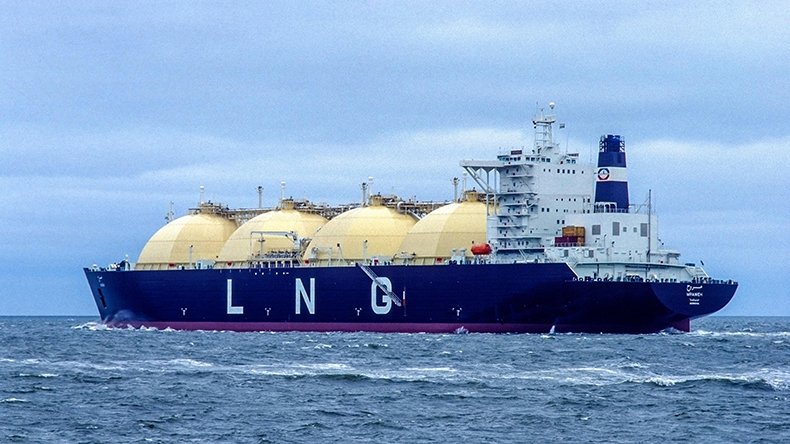
LNG, Solarization: Pakistan’s fuel oil exports smash record, cross 1.4 million tons in 2025
Pakistan

LNG, Solarization: Pakistan’s fuel oil exports smash record, cross 1.4 million tons in 2025

KARACHI: Pakistan has cemented its status as a net fuel oil exporter, with shipments hitting an all-time high of over 1.4 million metric tons (8.9 million barrels) in 2025 — up more than 16% from last year, according to Kpler and LSEG data.High domestic taxes and the rapid shift of power plants to coal, LNG and solar have made local sales unviable, pushing refiners to ship surplus high-sulphur fuel oil (HSFO) and very low-sulphur fuel oil (VLSFO) to Southeast Asia and the Middle East. The flood of Pakistani cargoes has added to Asia’s already oversupplied marine fuel market, further pressuring regional cracks.Cnergyico, the country’s largest refiner, exported ~247,000 tons in FY25 and expects at least 50% growth this fiscal year after switching to lighter crudes and tying up with Vitol for low-sulphur marine fuel supplies. Pak-Arab Refinery leads the export pack, followed by Attock, National and Pakistan Refineries.Industry officials say the trend will only strengthen. “Furnace oil has no future in power generation and is no longer profitable domestically after the latest budget taxes,” said Syed Nazir Abbas Zaidi, secretary general of the Oil Companies Advisory Council. “Exports will keep rising through 2026 and beyond.”From net importer in 2022 to record exporter in 2025, Pakistan’s fuel oil trade has flipped dramatically.

Chicken, Eggs Push Food Inflation to 7.2%
Uncategorized

Chicken, Eggs Push Food Inflation to 7.2%

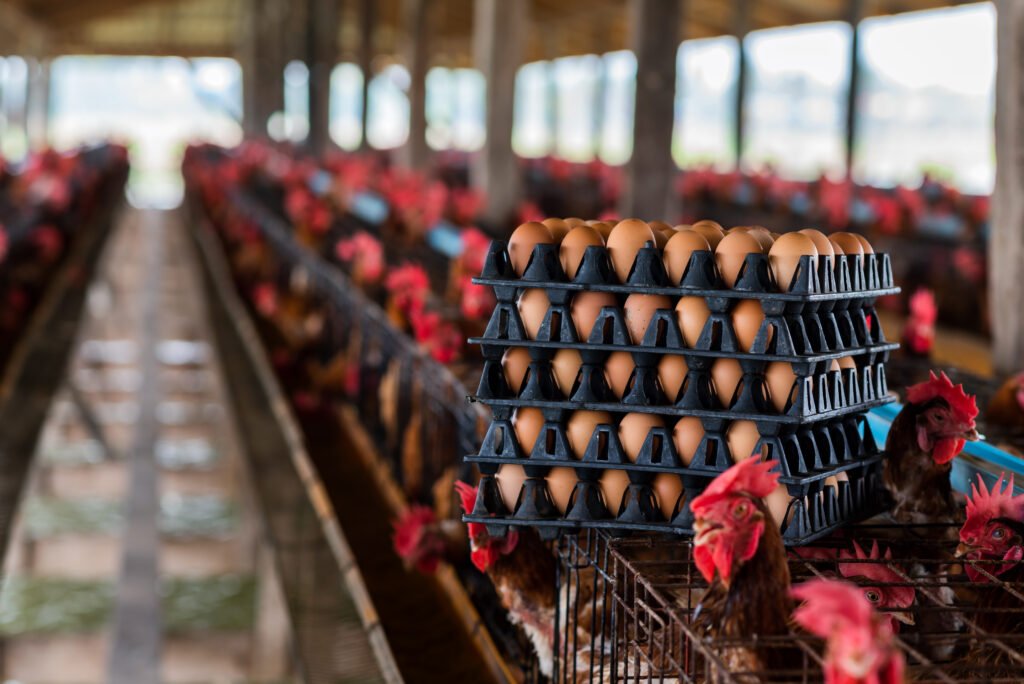
Pakistan’s inflation is expected to rise slightly to 6.3% in November 2025, up from 6.2% recorded in October.According to a latest report by JS Global Capital, the Consumer Price Index (CPI) for November 2025 is projected to stand at 6.3% year-on-year, with average inflation for the first five months of FY26 (July–Nov) likely to remain comfortable at around 5.0%, significantly lower than 7.9% during the same period last year.The modest uptick is largely driven by a 7.2% YoY increase in food inflation, fuelled by higher prices of chicken, eggs, and onions, contributing to a 1.3% month-on-month rise in food prices. However, a recent sharp decline in tomato prices provided some relief. Core inflation (excluding food and energy) is expected to remain steady at around 6.0% YoY.Meanwhile, the State Bank of Pakistan (SBP) kept the policy rate unchanged at 11% in its last Monetary Policy Committee meeting, citing risks from flood-related supply shocks in agriculture. Analysts believe the central bank will maintain the current rate at least until the next meeting in December, with most expecting no easing for the rest of FY26.

Netflix Collapses During Stranger Things 5 Release
Uncategorized

Netflix Collapses During Stranger Things 5 Release

Los Angeles: Netflix experienced a widespread outage across the United States on Wednesday evening, leaving millions of subscribers unable to stream just as the highly anticipated fifth and final season of Stranger Things launched globally at 3:00 AM ET (12:00 AM PT).The disruption, which lasted approximately one hour from 3:15 AM to 4:20 AM ET, affected users on smart TVs, mobile devices, gaming consoles, and web browsers. Thousands reported errors including “Netflix is not available” and endless buffering on DownDetector and social media.“Worst timing imaginable,” one user posted on X. “The Upside Down opened and took Netflix with it.”Netflix acknowledged the issue on its official status page, citing “a technical issue during a high-traffic event.” Service was fully restored by 4:25 AM ET. The platform has not confirmed if the surge in concurrent viewers attempting to watch Stranger Things triggered the crash. No data breach was reported.

Devastating Hong Kong Blaze Claims 44 Lives, Leaves Hundreds Missing
World

Devastating Hong Kong Blaze Claims 44 Lives, Leaves Hundreds Missing

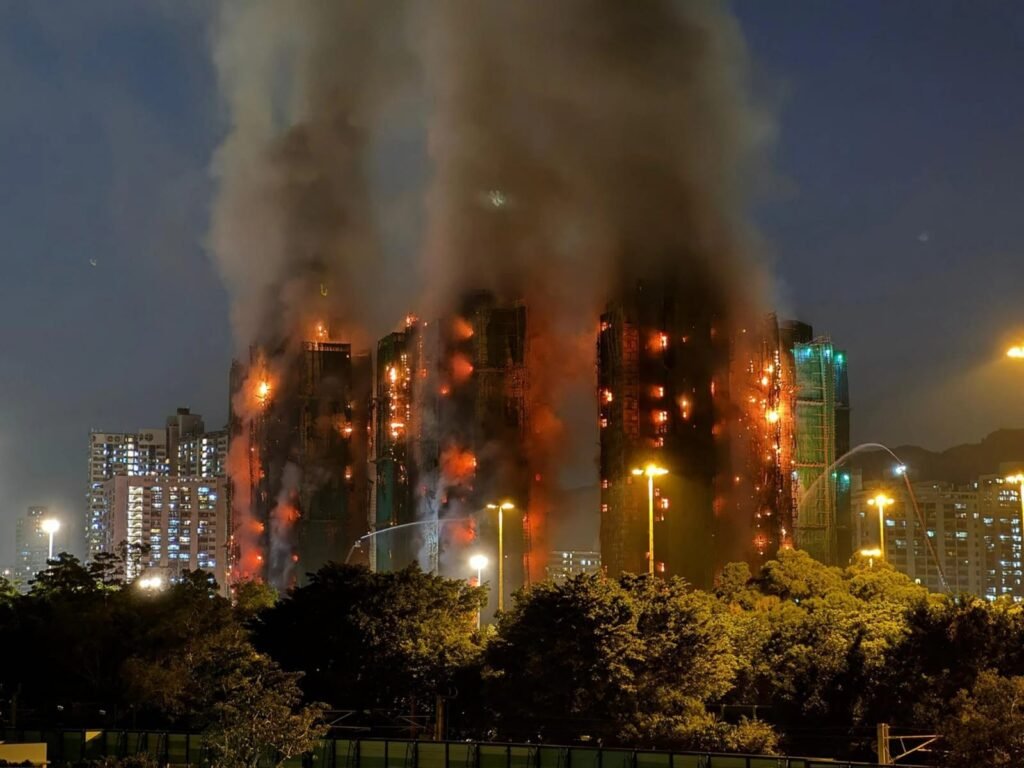
Tai Po, Hong Kong: A ferocious fire that erupted yesterday in a densely packed residential complex has claimed at least 44 lives, including a firefighter, and left 279 people unaccounted for, marking the city’s deadliest inferno in nearly three decades.The blaze tore through seven of eight 32-storey towers at Wang Fuk Court in the northern Tai Po district, starting around 2:50 p.m. local time. Flames, fueled by flammable bamboo scaffolding and substandard polystyrene foam used in renovations, spread rapidly, billowing thick black smoke across the skyline and trapping residents on upper floors.cc84bf0afb87Hong Kong Chief Executive John Lee called it a “massive catastrophe,” declaring a No. 5 alarm—the highest level. Over 900 residents were evacuated, with 45 hospitalized in serious condition. Rescue teams, battling falling debris and intense heat, began searching lower floors today, aided by 26 units and drones.Police arrested three construction firm executives on manslaughter charges, citing “gross negligence” in using non-fireproof materials.01511b Chinese President Xi Jinping offered condolences and 2 million yuan ($282,000) in aid.As searches continue amid smoldering ruins, questions swirl over building safety regulations. Officials vow spot checks on similar sites. Families cling to hope, but the toll rises.

🌍 Where Are the World’s Rare Earth Minerals? (Jan 2025)
World

🌍 Where Are the World’s Rare Earth Minerals? (Jan 2025)

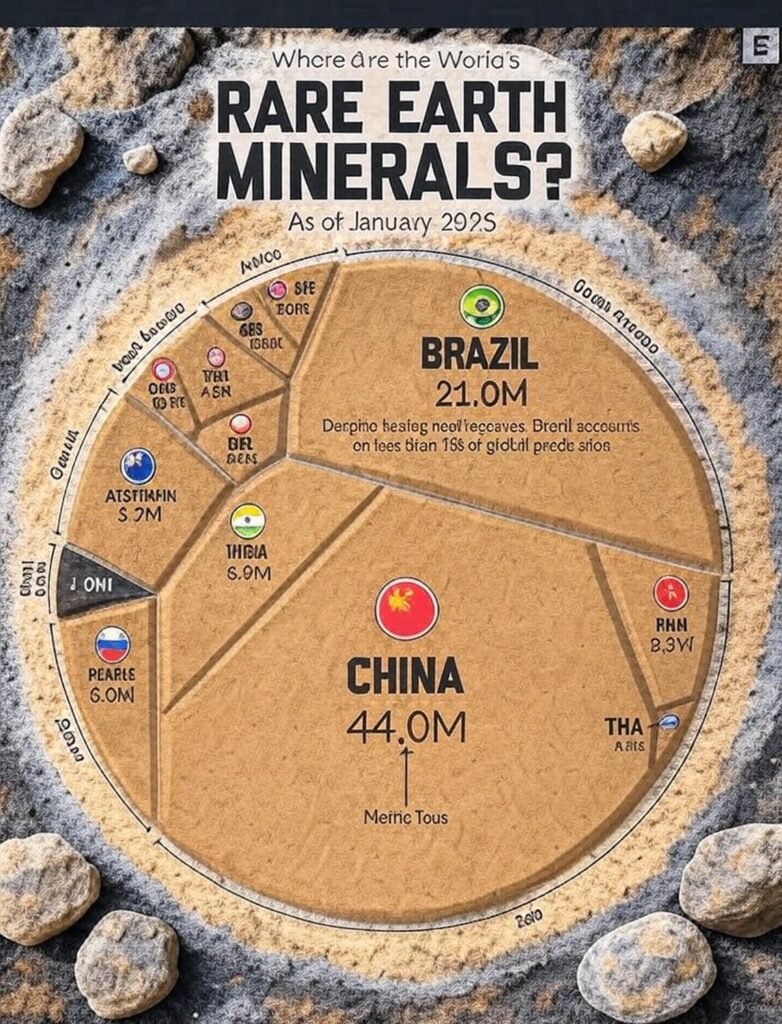
Where Are the World’s Rare Earth Minerals? (Jan 2025)One country dominates: China controls 44 million metric tons of reserves and ~70% of global production. That single red slice is bigger than the rest of the planet combined.Second place? Brazil with 21M tons… yet it produces less than 1% of world supply.The rest is scattered: India 6.9M, Australia 5.7M, Russia 3.8M, Vietnam 3.5M, USA 1.9M, and tiny Greenland 1.5M. Everyone else is a rounding error.Reality check: your smartphone, EV battery, wind turbine, and missile guidance system all depend on 17 obscure elements that mostly come from one geopolitical rival.Diversifying supply is now a national security issue for the West. Mines take 10–15 years to open. We’re late.Source: USGS 2025

PNSC Plans $500M Fleet Expansion, Adding 3 New Vessels by 2026
Pakistan

PNSC Plans $500M Fleet Expansion, Adding 3 New Vessels by 2026

KARACHI: Pakistan National Shipping Corporation Limited (PNSC) has received cabinet approval to expand its business, with plans to invest US$500 million in fleet modernization and growth, targeting a 20% return on capital employed (ROCE) from new projects. According to the company’s corporate briefing, addition of new vessels is expected to take three to four years to reach break-even. PNSC has already awarded contracts for two Aframax tankers (110–111k DWT at US$74.5 million each) and one MR tanker (50k DWT at US$44.5 million), totaling US$193 million, with 20–25% financed via equity and the remainder through local currency debt. Deliveries are expected by January 2026. The company is also exploring further fleet additions, including vessels equipped with fuel-efficient tier-3 engines. Management highlighted challenges including a 20% sales tax on vessel imports, although deferment in installments is under consideration. Freight revenues remain under pressure due to geopolitical unrest in the Red Sea, the Russia-Ukraine conflict, Iran tensions, and US tariffs, though the new vessels are expected to improve revenues, reduce fuel and maintenance costs. During FY25, PNSC reported a profit after tax of Rs6.6 billion (EPS Rs33.72) on revenues of Rs6.9 billion, despite a 25% year-on-year decline in sales, driven by gains on vessel sales and impairment reversals. Early FY26 performance shows an 11% rise in sales and a 3 percentage point improvement in gross margins. The company reaffirmed its commitment to stable dividend payouts while balancing capital expenditure requirements.

Over 90% of Pakistan’s $8–12B Gold Trade Occurs Outside Govt Record, CCP Report
Pakistan

Over 90% of Pakistan’s $8–12B Gold Trade Occurs Outside Govt Record, CCP Report

ISLAMABAD: Pakistan’s annual gold demand is estimated at 60 to 90 tonnes, valued at roughly $8–12 billion, yet over 90% of this trade occurs in the informal and undocumented market, according to the Competition Commission’s latest report. To put this in perspective, the total demand is comparable to the empty weight of a Boeing 767 airliner, which ranges between 80–82 tonnes depending on the model. The Competition Commission of Pakistan (CCP) has released its maiden Competition Assessment Study of the Gold Market in Pakistan, providing the first evidence-based analysis of the sector’s structure, regulatory landscape, and competitiveness challenges. The study, conducted by CCP’s Center of Excellence in Competition Law (CECL), maps a market historically dominated by informality, fragmented oversight, and pricing opacity. According to the report, Pakistan’s annual gold consumption ranges between 60 to 90 tonnes, driven largely by cultural demand, while over 90% of gold trading occurs outside formal channels. The market relies almost entirely on imports, with USD 17 million worth of gold imported in FY 2023-24. The study highlights the transformative potential of the Reko Diq copper-gold project, expected to generate up to USD 74 billion over its 37-year of useful life and significantly reshape domestic supply chains. The report identifies deep-rooted barriers that suppress competition and distort market functioning: Informal market dominance: Weak documentation and cash-based transactions allow large informal networks to set prices and influence supply. Opaque price-setting: Daily gold rates are largely influenced by associations rather than transparent market mechanisms. Fragmented regulation: Overlapping and unclear mandates of Ministry of Commerce, Federal Board of Revenue (FBR), State Bank of Pakistan (SBP), Pakistan Gems and Jewelry Development Company (PGJDC) , and Trade Development Authority of Pakistan (TDAP) create policy inconsistencies and enforcement gaps. High taxes and compliance costs: Complex procedures, and inconsistent taxation encourage smuggling and under-invoicing. Limited refining, assaying and hallmarking capacity: Pakistan has negligible refining capability and inadequate assaying and hallmarking facilities, leading to widespread purity issues and weak consumer protection. Data deficiencies: Absence of reliable import, traders registration, sales, and purity data prevents evidence-based policymaking. To address these challenges, CCP has proposed a comprehensive reform package: 1. Establish a unified regulator: CCP suggest to establish the Pakistan Gold & Gemstone Authority to harmonize rules, licensing, imports, and Anti Money Laundering (AML) and Counter Financing Terrorism (CFT) compliance. 2. Mandatory assaying and hallmarking nationwide to ensure purity, protect consumers, and enable exports. 3. Digital transformation of the gold value chain with blockchain-based traceability integrated with FBR’s Track & Trace system. 4. Creation of a Gold Banking System, inspired by the Türkiye, Gold Banking System to mobilize household gold into the formal sector. 5. Strengthen data governance through centralized reporting, market documentation, and scientific price-monitoring mechanisms. CCP emphasizes that modernizing the gold sector will boost transparency, safeguard consumers, reduce illicit trade, and unlock significant economic value, particularly as Pakistan prepares for the commercial rollout of Reko Diq.

PM Shehbaz to Inaugurate “Made in Pakistan MSME Clusters 2025” Mega Exhibition in Jan 2026
Pakistan

PM Shehbaz to Inaugurate “Made in Pakistan MSME Clusters 2025” Mega Exhibition in Jan 2026

Islamabad: In a major push to realise Prime Minister Shehbaz Sharif’s “Made in Pakistan” vision, the 35th Board meeting of the Small and Medium Enterprises Development Authority (SMEDA), chaired by Special Assistant to the Prime Minister on Industries & Production Haroon Akhtar Khan on Tuesday formally announced the landmark “Made in Pakistan MSME Clusters 2025” national exhibition, scheduled for January 2026. The high-profile event, to be personally inaugurated by the Prime Minister, will showcase hundreds of MSME products, feature dedicated exhibition stalls, host a prestigious national MSME awards ceremony, and include panel discussions with top national and international experts. A special high-level panel in collaboration with D-8 countries is also being formed, while invitations are being extended to global buyers and partners. Auto sector expert Mashood Ali Khan, who attended the meeting, welcomed the decisions, stating, “These steps will drive the Made in Pakistan initiative, enhance SME competitiveness and create millions of sustainable jobs.” The meeting was attended by Federal Secretary Industries & Production Saif Anjum, Acting CEO SMEDA Nadia Jahangir Seth and senior officials. SAPM Haroon Akhtar Khan described Pakistan’s SME clusters as possessing “immense untapped potential” and confirmed that a detailed SME Business Plan – prepared with strategic support from A.T. Kearney – will soon be presented to the Prime Minister. He announced that top 100 MSMEs will be shortlisted for national recognition. Key initiatives approved in the meeting include: Launch of a dedicated e-commerce portal exclusively for women-led enterprises Deployment of specialised designer and digital marketing teams to promote SME products globally Reserved 50–100 acres in upcoming Special Economic Zones (SEZs) for ready-to-use SME facilities Aggressive push for single-digit markup long-term financing to bridge the SME funding gap Full policy alignment across Ministries of Finance, Commerce and Industries Provincial coordination led by SMEDA Board members for nationwide implementation The Board was briefed that cluster-specific business models are being finalised for both urban and rural regions, while Pakistani handicrafts will receive facilitated access to international trade fairs. Reiterating government priorities, SAPM Haroon Akhtar Khan said enabling women entrepreneurs through digital commerce and boosting exports via stronger digital advertising remain at the top of the agenda.

Pakistan’s FDI Trap: Why Foreign Money Is Making Us Richer Consumers, Not Stronger Producers, Exporters
Opinion

Pakistan’s FDI Trap: Why Foreign Money Is Making Us Richer Consumers, Not Stronger Producers, Exporters

By Dr Jazib Mumtaz Pakistan has pursued foreign investment for years, but the economic payoff has been disappointingly small. Factories are shutting down, exports are stagnant or declining, and the country continues to import far more than it produces or sells abroad. A recent study published in the Lahore Journal of Economics titled “Impact of Efficiency-Seeking FDI on the Economy” explains why. The real issue is not the volume of foreign money flowing in, but its nature. Most foreign investors come to Pakistan primarily to tap its large and growing domestic consumer market, not to build new factories or strengthen the country’s ability to manufacture and export. These investors concentrate in non-tradable or import-heavy sectors such as banking, telecommunications, retail chains, and consumer services. While these businesses can be profitable and create some jobs, they rely heavily on imported equipment, technology, and services. As they grow, they actually widen Pakistan’s trade deficit: more dollars leave the country than enter it. In effect, Pakistan becomes an attractive sales market for multinational corporations rather than a competitive global producer. The study contrasts this with “efficiency-seeking” foreign direct investment (FDI) focused on manufacturing sectors where Pakistan already has a foundation—textiles, food processing, metals, chemicals, engineering goods, and similar industries. When foreign firms bring advanced technology and management practices into these tradable sectors, the benefits spread widely: productivity rises, local suppliers upgrade, quality improves, exports grow, and import dependence falls. One improved factory can lift an entire value chain of farmers, component makers, workers, and supporting industries. The central conclusion is straightforward: Pakistan must become far more selective about the type of foreign investment it courts. Policy should prioritize projects that build production capacity, transfer technology, create skilled employment, and integrate local firms into global supply chains—rather than projects that simply sell imported or import-dependent goods and services to Pakistani consumers. Current incentives, regulations, and the overall business environment still favor the easier, quick-return consumer-market investments. Unless Pakistan deliberately shifts toward export-oriented, efficiency-enhancing FDI—through better-targeted incentives, lower input costs, transparent rules, and a level playing field between foreign and domestic firms—it will remain stuck in the same cycle: a growing market for foreign products, a shrinking industrial base, and a chronic balance-of-payments problem. Pakistan is at a critical juncture. It can continue expanding as a consumption-driven economy dependent on imports and foreign brands, or it can pivot to becoming a production and export hub powered by smart, productive foreign investment. The difference is not how much money comes in, but what that money is used for. The wrong kind of FDI keeps Pakistan dependent; the right kind helps Pakistan stand on its own. The choice, as the study makes clear, is now. Jazib Mumtaz is an applied economist and social scientist with a strong focus on welfare economics, income distribution, and trade policy research.

Scroll to Top