Author name: Web Desk

FPCCI Expresses Deep Concern Over Massive Surge in Trade Deficit
Business

FPCCI Expresses Deep Concern Over Massive Surge in Trade Deficit

Karachi: Atif Ikram Sheikh, President of the Federation of Pakistan Chambers of Commerce and Industry (FPCCI), has voiced severe alarm over the massive deterioration in Pakistan’s trade balance; which saw the trade deficit widen sharply on a month-on-month (MoM) basis to hit $4.53 billion in June 2026. Atif Ikram Sheikh reiterated that the apex trade body had previously warned government over the last couple of years that the effect of plunging exports poses a critical threat to the country’s external account stability and foreign exchange reserves. FPCCI Chief explained that according to data from the Pakistan Bureau of Statistics (PBS), exports in June 2026 plummeted by 16.73% to $2.24 billion; while, imports surged by 24.07% to $6.77 billion compared to the previous month. Atif Ikram Sheikh termed the June 2026 trade figures a wake-up call for the economic team of the government. A nearly 17% drop in exports in a single month is not just a statistical decline; it is a clear indicator that our export-oriented industries are being pushed to the wall. The sheer cost of doing business – driven by prohibitive energy tariffs, high interest rates, and an unpredictable taxation environment – has severely crippled Pakistan’s competitiveness in the export markets. FPCCI President has urgently appealed to the government to rationalize energy costs, reinstate the Final Tax Regime (FTR) for exporters, and lower the policy rate to prevent widespread industrial closures and decline in exports. The cumulative trade deficit for the just ended fiscal year (FY26) reached a staggering $39.47 billion – showing a 21.57% year-on-year (YoY) increase compared to FY25. Saquib Fayyaz Magoon, SVP FPCCI, highlighted the unsustainability of the current import-export gap. Ending the fiscal year with a trade deficit approaching $39.47 billion puts immense and immediate pressure on our macroeconomic stabilization efforts. Saquib Fayyaz Magoon stressed that the government must strike a delicate balance – curbing luxury and non-essential imports while ensuring that the raw materials required by our export manufacturers remain accessible and free from unnecessary regulatory hurdles. Abdul Mohamin Khan, VP FPCCI & Regional Chairman Sindh, FPCCI, emphasized the localized impact of the deteriorating trade metrics on the country’s largest industrial hub. The industries in Sindh, particularly in Karachi’s manufacturing zones, are bearing the brunt of this export contraction. Unbearable electricity tariffs, dilapidated infrastructure, and exorbitant land prices are making it impossible to scale up production. Abdul Mohamin Khan called upon the provincial and federal governments to immediately abolish redundant levies and establish fast-track business facilitation centers across Sindh to lower operational frictions. The FPCCI leadership unanimously urged the Ministry of Finance and the Ministry of Commerce to sit down with the business community immediately to devise a crisis-response strategy that transitions the economy from a strict stabilization model to an export-led growth model.

Pakistani Football Manufacturing Showcased at FIFA World Cup 2026 Event in Tashkent
Pakistan

Pakistani Football Manufacturing Showcased at FIFA World Cup 2026 Event in Tashkent

Pakistan’s renowned football manufacturing industry received prominent international exposure during the live screening of the FIFA World Cup 2026 match between Uzbekistan and Portugal in Tashkent. The event highlighted the country’s export excellence. Sialkot’s Craftsmanship in Spotlight Trade Diplomacy Boosts Exports Federal Minister for Commerce Jam Kamal Khan praised the Pakistan Trade Mission in Tashkent for effectively promoting national manufacturing capabilities at this major sporting platform. He described it as smart public diplomacy. The initiative reached thousands of Uzbek football fans and international viewers. It projected Pakistan’s industrial strength, quality standards, and positive soft image abroad. Pakistan takes pride in its globally recognised football production, especially from Sialkot. The city’s artisans supply premium balls for top international tournaments. At Bunyodkor Stadium and Humo Arena, the Trade Mission showcased the “Trionda” – the official FIFA World Cup 2026 match ball. It was proudly manufactured in Sialkot by Forward Sports. A promotional documentary on Forward Sports was translated into Uzbek and screened before the match. This helped local audiences appreciate Pakistan’s expertise in high-quality sports goods. Minister Jam Kamal Khan emphasised that such events position Pakistan as a reliable, competitive manufacturing hub. They enhance export potential and build business confidence globally. The mission also presented a Pakistan-made Trionda football to Tashkent City Governor Shavkat Umurzakov. The gesture symbolised friendship and growing partnership between the two nations. This promotional activity strengthens trade and economic ties with Uzbekistan. It opens doors for further collaboration in sports goods and other sectors. Sialkot’s sports industry contributes significantly to Pakistan’s exports. Its products are used in major leagues and tournaments worldwide, earning the country a strong reputation. The Commerce Minister noted that visibility at high-profile events like the FIFA World Cup can drive higher orders and market expansion. It helps counter perceptions and highlights quality. The Trade Mission plans more such events in coming weeks. These will continue showcasing Pakistan’s manufacturing prowess to Uzbek businesses and consumers. For Pakistan’s economy, sports goods remain a key export category. Initiatives like this support diversification efforts and job creation in industrial hubs like Sialkot.

Karandaaz Pakistan collaborates with ‘D-Tech’ to nurture AI-based Digital Financial Services
Pakistan

Karandaaz Pakistan collaborates with ‘D-Tech’ to nurture AI-based Digital Financial Services

Karachi, 03 July, 2026 – Karandaaz Pakistan has partnered with D-Tech & Consultancy Private Ltd. (DTC) to develop a customer-friendly solution named ‘My Intelligent Assistant’ (MIA) for enriching its ‘AI in Digital Payments Program’. ‘MIA’ is a Context-Aware AI Companion that will make digital financial services more accessible, intuitive, and inclusive for users across Pakistan. Through this partnership, DTC will provide real-time, multilingual, and personalized guidance to users navigating Pakistan’s digital finance interfaces. Due to digital adoption and the speedy evolution of financial infrastructure, the number of users has grown rapidly. However, due to limited digital literacy, language barriers, and a lack of contextual support within applications, many customers continue to face challenges in completing digital transactions independently. Hence, the users’ confidence is hindered. By integrating intelligent, context-sensitive assistance directly within digital financial applications, the ‘MIA’ solution will address many of these barriers. MIA is designed to serve as an intelligent companion that empowers users through personalized guidance. It can help bridge gaps in digital literacy and the wider outreach of financial services. Together, Karandaaz and DTC aim to establish a scalable framework for the deployment of AI-powered solutions within Pakistan’s digital financial ecosystem to deliver more meaningful benefits for users. The CEO of Karandaaz, Waqas ul Hasan, said:“Artificial Intelligence has the potential to transform how people engage with digital financial services. We are exploring innovative ways to make digital payments more user-friendly for all segments. Karandaaz Pakistan is committed to fostering innovation in digital finance and supporting the responsible adoption of emerging technologies.” The Founder and CEO of D-Tech & Consultancy (Pvt.) Ltd, Adeel Dayo stated that:“We are honored to partner with Karandaaz Pakistan in bringing My Intelligent Assistant (MIA) to life. As Pakistan’s digital financial ecosystem continues to grow, millions of users still face challenges in navigating digital interfaces of mobile wallets, and payment services. MIA is designed to bridge this gap by leveraging Context-Aware Artificial Intelligence to make digital financial interactions more accessible, intuitive, and inclusive. We believe this initiative has the potential to redefine how people interact with digital applications and contribute meaningfully to Pakistan’s financial inclusion and digital transformation agenda.” Through MIA, Karandaaz Pakistan and DTC aim to leverage responsible AI adoption to build trust, improve digital engagement, and create a more inclusive financial ecosystem where technology delivers meaningful value for users.

The KSE-100 Index has emerged as Pakistan's undisputed investment champion for fiscal year 2025-26, delivering an impressive 44% annual return and leaving traditional safe-haven assets and cryptocurrencies far behind. The Pakistan Stock Exchange's benchmark index not only outperformed gold and the US dollar but also eclipsed Bitcoin, proving that local equities have become the country's most rewarding asset class. According to data compiled by Mettis Global, the KSE-100 Index generated a return that exceeded gold's 22% gain, while the US dollar lost 2% against the Pakistani rupee and Bitcoin suffered a staggering 42% decline during the fiscal year. The remarkable performance reflects a dramatic turnaround in investor confidence, fueled by improving macroeconomic fundamentals, IMF-backed reforms, easing financial conditions and renewed foreign investor optimism. Why the KSE-100 Index Dominated Every Major Asset Class FY26 marked one of the strongest years for Pakistan's equity market in recent history. While investors across the globe struggled with volatile commodity and cryptocurrency markets, the KSE-100 Index consistently rewarded investors with steady gains. Gold remained a preferred hedge against inflation but failed to match the pace of stock market returns. The US dollar, which had delivered exceptional gains during previous years of currency depreciation, weakened as Pakistan's external position improved. Bitcoin, after years of extraordinary rallies, entered a deep correction that wiped out much of its previous gains. The KSE-100 Index, however, benefited from a combination of stronger corporate earnings, lower financing costs and renewed investor confidence. IMF Reforms Sparked a Powerful Stock Market Rally One of the biggest catalysts behind the KSE-100 Index's rise was Pakistan's continued progress under the International Monetary Fund programme. The approval of the IMF Executive Board tranche in December 2025 strengthened confidence that Pakistan was successfully implementing difficult economic reforms. Investors viewed the development as a signal that macroeconomic stability was gradually returning after years of uncertainty. The stock market responded positively, with the benchmark index posting an extraordinary 38.55% return during the first half of FY26, laying the foundation for its record annual performance. Lower Interest Rates and Economic Recovery Boosted Investor Confidence Falling borrowing costs played a critical role in lifting equity valuations throughout FY26. The policy rate remained at 11.5%, significantly lower than the record-high levels seen in previous years. Lower interest rates encouraged investors to shift money from fixed-income investments into equities while also reducing financing costs for listed companies. Pakistan's economic recovery further strengthened market sentiment. Gross Domestic Product expanded by 3.7%, while large-scale manufacturing rebounded by 6.4%, indicating that industrial activity had regained momentum despite persistent inflation of 11.1%. Meanwhile, record overseas remittances pushed the current account into surplus, easing pressure on the country's external finances. Foreign exchange reserves recovered to approximately $16 billion, providing additional reassurance to investors concerned about Pakistan's balance of payments. Political and Global Events Tested the Market but Failed to Derail the Rally The KSE-100 Index was not immune to geopolitical uncertainty. Flood-related disruptions and rising tensions along the Pakistan-Afghanistan border periodically created volatility. Pakistan also faced the challenge of repaying a $3.5 billion UAE deposit in April, raising temporary concerns over external financing. However, those fears quickly subsided after renewed financial support from Saudi Arabia, successful access to international debt markets through a $750 million Eurobond and a $250 million Panda Bond, and continued progress on fiscal reforms. Investor optimism received another major boost following the US-Iran ceasefire and record remittance inflows of $4.3 billion in May, allowing the KSE-100 Index to climb back toward the historic 180,000-point level by the end of the fiscal year. The government's continued privatization agenda, including progress on Pakistan International Airlines (PIA), also reinforced confidence that structural reforms would continue. KSE-100 Index Outperformed Every Major Asset Over Six Years Historical performance highlights how dramatically investment trends have shifted. The KSE-100 Index gained 38% in 2021 before declining 12% in 2022 and remaining nearly flat in 2023. It staged a remarkable comeback with an 89% rally in 2024, followed by a 60% gain in 2025 and another strong 44% return in FY26. Gold delivered modest returns in earlier years before rising sharply by 42% in 2025, although its gain slowed to 22% in FY26. The US dollar experienced major appreciation against the Pakistani rupee during 2022 and 2023 but weakened over the past two fiscal years as economic conditions stabilized. Bitcoin remained the most volatile asset among all four investment classes. After soaring 283% in 2021 and 106% in 2024, the cryptocurrency suffered a steep 42% decline during FY26, highlighting the risks associated with speculative investments. Will the KSE-100 Index Continue Its Winning Streak? The strong FY26 performance has positioned the KSE-100 Index as Pakistan's leading investment destination. However, sustaining future gains will depend on the government's ability to continue implementing IMF-backed reforms, maintain fiscal discipline and attract foreign investment. With improving macroeconomic indicators, stronger corporate profitability, recovering foreign exchange reserves and growing investor confidence, Pakistan's equity market enters the new fiscal year from one of its strongest positions in recent memory. Whether the rally continues will largely depend on political stability, inflation management and consistent economic policymaking. For now, however, the KSE-100 Index has firmly established itself as Pakistan's best-performing asset, outperforming gold, the US dollar and Bitcoin in one of the country's most remarkable stock market years. Focus Keyword: KSE-100 Index Focus Keyphrase: KSE-100 Index outperforms gold, US dollar and Bitcoin Meta Description: The KSE-100 Index surged 44% in FY26, outperforming gold, the US dollar and Bitcoin. Discover what fueled Pakistan's stock market rally and why investors are turning bullish. Tags/Keywords: KSE-100 Index, Pakistan Stock Market, PSX Rally, FY26 Economy, Pakistan Economy, IMF Programme, Bitcoin Crash, Gold Price Pakistan, Investment in Pakistan, Stock Market News, PSX Performance, Pakistan Business News, Investor Confidence, GDP Growth Pakistan
Business

KSE-100 Index Outperforms Gold, Dollar and Bitcoin to Become Pakistan’s Best-Performing Asset in FY26

The KSE-100 Index has emerged as Pakistan’s undisputed investment champion for fiscal year 2025-26, delivering an impressive 44% annual return and leaving traditional safe-haven assets and cryptocurrencies far behind. The Pakistan Stock Exchange’s benchmark index not only outperformed gold and the US dollar but also eclipsed Bitcoin, proving that local equities have become the country’s most rewarding asset class. According to data compiled by Mettis Global, the KSE-100 Index generated a return that exceeded gold’s 22% gain, while the US dollar lost 2% against the Pakistani rupee and Bitcoin suffered a staggering 42% decline during the fiscal year. The remarkable performance reflects a dramatic turnaround in investor confidence, fueled by improving macroeconomic fundamentals, IMF-backed reforms, easing financial conditions and renewed foreign investor optimism. Why the KSE-100 Index Dominated Every Major Asset Class FY26 marked one of the strongest years for Pakistan’s equity market in recent history. While investors across the globe struggled with volatile commodity and cryptocurrency markets, the KSE-100 Index consistently rewarded investors with steady gains. Gold remained a preferred hedge against inflation but failed to match the pace of stock market returns. The US dollar, which had delivered exceptional gains during previous years of currency depreciation, weakened as Pakistan’s external position improved. Bitcoin, after years of extraordinary rallies, entered a deep correction that wiped out much of its previous gains. The KSE-100 Index, however, benefited from a combination of stronger corporate earnings, lower financing costs and renewed investor confidence. IMF Reforms Sparked a Powerful Stock Market Rally One of the biggest catalysts behind the KSE-100 Index’s rise was Pakistan’s continued progress under the International Monetary Fund programme. The approval of the IMF Executive Board tranche in December 2025 strengthened confidence that Pakistan was successfully implementing difficult economic reforms. Investors viewed the development as a signal that macroeconomic stability was gradually returning after years of uncertainty. The stock market responded positively, with the benchmark index posting an extraordinary 38.55% return during the first half of FY26, laying the foundation for its record annual performance. Lower Interest Rates and Economic Recovery Boosted Investor Confidence Falling borrowing costs played a critical role in lifting equity valuations throughout FY26. The policy rate remained at 11.5%, significantly lower than the record-high levels seen in previous years. Lower interest rates encouraged investors to shift money from fixed-income investments into equities while also reducing financing costs for listed companies. Pakistan’s economic recovery further strengthened market sentiment. Gross Domestic Product expanded by 3.7%, while large-scale manufacturing rebounded by 6.4%, indicating that industrial activity had regained momentum despite persistent inflation of 11.1%. Meanwhile, record overseas remittances pushed the current account into surplus, easing pressure on the country’s external finances. Foreign exchange reserves recovered to approximately $16 billion, providing additional reassurance to investors concerned about Pakistan’s balance of payments. Political and Global Events Tested the Market but Failed to Derail the Rally The KSE-100 Index was not immune to geopolitical uncertainty. Flood-related disruptions and rising tensions along the Pakistan-Afghanistan border periodically created volatility. Pakistan also faced the challenge of repaying a $3.5 billion UAE deposit in April, raising temporary concerns over external financing. However, those fears quickly subsided after renewed financial support from Saudi Arabia, successful access to international debt markets through a $750 million Eurobond and a $250 million Panda Bond, and continued progress on fiscal reforms. Investor optimism received another major boost following the US-Iran ceasefire and record remittance inflows of $4.3 billion in May, allowing the KSE-100 Index to climb back toward the historic 180,000-point level by the end of the fiscal year. The government’s continued privatization agenda, including progress on Pakistan International Airlines (PIA), also reinforced confidence that structural reforms would continue. KSE-100 Index Outperformed Every Major Asset Over Six Years Historical performance highlights how dramatically investment trends have shifted. The KSE-100 Index gained 38% in 2021 before declining 12% in 2022 and remaining nearly flat in 2023. It staged a remarkable comeback with an 89% rally in 2024, followed by a 60% gain in 2025 and another strong 44% return in FY26. Gold delivered modest returns in earlier years before rising sharply by 42% in 2025, although its gain slowed to 22% in FY26. The US dollar experienced major appreciation against the Pakistani rupee during 2022 and 2023 but weakened over the past two fiscal years as economic conditions stabilized. Bitcoin remained the most volatile asset among all four investment classes. After soaring 283% in 2021 and 106% in 2024, the cryptocurrency suffered a steep 42% decline during FY26, highlighting the risks associated with speculative investments. Will the KSE-100 Index Continue Its Winning Streak? The strong FY26 performance has positioned the KSE-100 Index as Pakistan’s leading investment destination. However, sustaining future gains will depend on the government’s ability to continue implementing IMF-backed reforms, maintain fiscal discipline and attract foreign investment. With improving macroeconomic indicators, stronger corporate profitability, recovering foreign exchange reserves and growing investor confidence, Pakistan’s equity market enters the new fiscal year from one of its strongest positions in recent memory. Whether the rally continues will largely depend on political stability, inflation management and consistent economic policymaking. For now, however, the KSE-100 Index has firmly established itself as Pakistan’s best-performing asset, outperforming gold, the US dollar and Bitcoin in one of the country’s most remarkable stock market years. Focus Keyword: KSE-100 Index Focus Keyphrase: KSE-100 Index outperforms gold, US dollar and Bitcoin Meta Description: The KSE-100 Index surged 44% in FY26, outperforming gold, the US dollar and Bitcoin. Discover what fueled Pakistan’s stock market rally and why investors are turning bullish. Tags/Keywords: KSE-100 Index, Pakistan Stock Market, PSX Rally, FY26 Economy, Pakistan Economy, IMF Programme, Bitcoin Crash, Gold Price Pakistan, Investment in Pakistan, Stock Market News, PSX Performance, Pakistan Business News, Investor Confidence, GDP Growth Pakistan

PM Shehbaz Sharif, Army Chief Arrives in Tehran for Late Iranian Supreme Leader’s Funeral
Breaking News, Pakistan

PM Shehbaz Sharif, Army Chief Arrives in Tehran for Late Iranian Supreme Leader’s Funeral

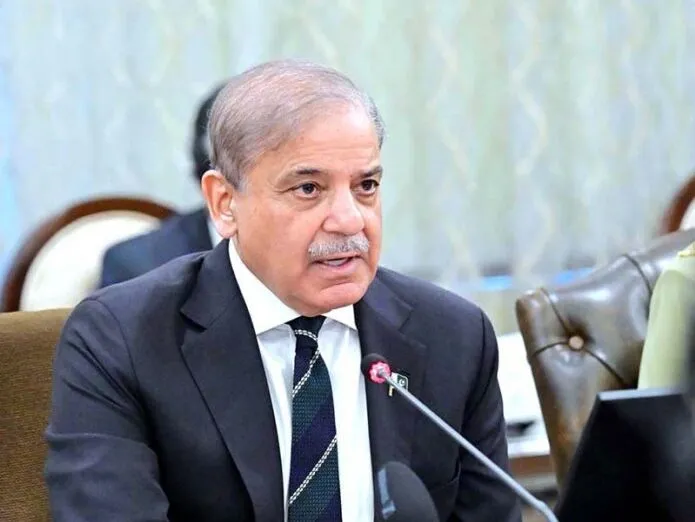
Prime Minister Shehbaz Sharif landed in Tehran on Friday for a one-day visit to attend the funeral of Iran’s late Supreme Leader Ayatollah Seyyed Ali Khamenei. He is leading a high-level Pakistani delegation.Chief of Army Staff Field Marshal Syed Asim Munir has also arrived in Tehran to attend the funeral of Iran’s late Supreme Leader Ayatollah Ali Khamenei, highlighting strong military and bilateral relations between Pakistan and Iran. Strong Bilateral Solidarity Pakistan’s High-Level Representation The prime minister was accompanied by National Assembly Speaker Sardar Ayaz Sadiq, Deputy Prime Minister and Foreign Minister Senator Muhammad Ishaq Dar, Minister for Information Attaullah Tarar, PPP Chairman Bilawal Bhutto Zardari, PPP Secretary General Nayyar Hussain Bukhari, Sindh Chief Minister Syed Murad Ali Shah, and several parliamentarians. Upon arrival at Tehran’s Mehrabad International Airport, PM Shehbaz was received by Iranian Interior Minister Eskandar Momeni, Pakistan’s Ambassador Imran Ahmed Siddiqui, and senior officials from both sides. During his brief stay, the prime minister will participate in the last rites and extend condolences on behalf of the Pakistani government and people. This gesture underscores Islamabad’s deep solidarity with its neighbour during this time of mourning. Chief of Army Staff and Chief of Defence Forces Field Marshal Syed Asim Munir had already reached Tehran to attend the funeral ceremonies. Delegations from nearly 100 countries, including heads of state, civil society groups, and public figures, are participating in the state funeral. The visit reflects Pakistan’s consistent policy of maintaining close ties with Iran. Both nations share historical, cultural, and geographical bonds that remain vital for regional stability. After concluding engagements in Tehran, PM Shehbaz will travel to Istanbul on a bilateral visit to Türkiye at the invitation of President Recep Tayyip Erdogan. In Istanbul, he will hold high-level meetings with Turkish leadership and address a business conference. The event will highlight investment opportunities in Pakistan’s Special Economic Zones, energy, IT, trade, and privatisation sectors. This dual visit comes at a critical time for Pakistan’s foreign policy and economic diplomacy. Strengthening relations with key neighbours and partners remains central to addressing security and economic challenges. Iran’s loss of its long-serving Supreme Leader has drawn global attention. Pakistan’s prominent participation signals strong fraternal ties and shared commitment to mutual support. Observers see the trip as an opportunity to discuss bilateral issues, including trade, energy cooperation, and border security. Enhanced connectivity could benefit both economies in the coming years. PM Shehbaz’s itinerary blends solemn diplomatic duties with forward-looking economic outreach. It demonstrates Pakistan’s proactive engagement on multiple fronts.

Urea Sales Recover 39% MoM to 584k Tons as Kharif Demand Picks Up
Business

Urea Sales Recover 39% MoM to 584k Tons as Kharif Demand Picks Up

Pakistan urea sales in June 2026 is expected to remain almost flat on YoY basis with 584k tons volumes, while up by 39% MoM. We believe the MoM recovery in June 2026 is primarily driven by the peak of the Kharif application season, compelling farmers to resume purchases after the temporary pause and delayed buying observed in May 2026, said Muhammad Abdur Rafay, fertiliser analyst at Topline Research. We also believe, the surge is due to the advance procurement at dealer level ahead of the federal budget to hedge against potential price hikes. The current industry urea inventory is likely to clock in at 0.84mn tons in June 2026 vs 0.99mn in May 2026. Company wise, Engro Fertilizers (EFERT) holds the highest inventory of 652k tons followed by Fatima Group (FATIMA) 173k tons, and Fauji Fertilizer Company (FFC) 18k tons. Cumulatively, the urea sales is expected to clock in at 2.5mn tons up by 6% YoY in 1H2026. Among the companies, on YoY basis, FFC and FATIMA’s urea sales are expected to witness increase of 12% and 3.4x reaching 301k tons and 140k tons in June 2026, while EFERT is likely to witness a decline of 50% YoY to 103k tons during the month. Similarly, in 1H2026, FFC and FATIMA are likely to record a surge of 25% YoY and 89% YoY with 1.4mn tons and 391k tons, while, EFERT is likely to record a negative growth of 23% YoY with 533k tons, respectively. Total DAP sales during June 2026 is likely to be down by 59% YoY and 23% MoM to ~47k tons. This takes 1H2026 DAP sales to 484k tons up by 6% YoY. To recall, during 2Q2026, DAP prices remained higher in the range of ~Rs15-16k/bag, in-line with international market. Company wise data suggests, FFC and EFERT are estimated to record DAP sales of 37k tons and 3k tons in June 2026. Closing inventory of DAP is likely to be around 252ktons in June 2026. Outlook: Going forward, we expect urea sales to remain resilient, backed by steady agricultural demand and improved farmers income amidst higher crop prices.

inDrive announces STEM and AI education initiative to empower Pakistani youth and drivers’ families
Auto

inDrive Launches STEM and AI Education Initiative for Pakistani Youth and Drivers’ Families

Global mobility platform inDrive has announced a new education initiative in Pakistan aimed at equipping school-age children and young people with skills in Science, Technology, Engineering, and Mathematics (STEM), coding, and Artificial Intelligence (AI). The program is designed to promote digital literacy and create future opportunities for children, with a special focus on families connected to Pakistan’s growing gig economy. 80% of Seats Reserved for Drivers’ Children The initiative will prioritize children of inDrive’s driver partners, with 80% of program seats reserved exclusively for drivers’ families. The remaining 20% will be allocated to children from marginalized communities. Students will be enrolled across three age groups to ensure age-appropriate learning and skill development. According to the company, the program is being introduced in Pakistan after the successful implementation of a similar pilot project in Egypt. Passengers Can Support the Initiative Through Loyalty Rewards As part of the initiative, inDrive has integrated a donation feature into its inDrive MAX loyalty program. Passengers using the app earn digital loyalty coins through their rides and can choose to donate those coins to support the STEM education program. The donated rewards will help fund learning materials, equipment, technology resources, and training infrastructure for participating students. The feature allows users to contribute to the educational initiative without making direct monetary donations. Focus on Technology for Social Impact Speaking about the initiative, Muhammad Awais Saeed, Country Lead for inDrive Pakistan, said the objective extends beyond teaching technical skills. He explained that the program is designed to help students use technology to solve real-world problems within their own communities while encouraging critical thinking, creativity, and responsible innovation. According to Saeed, the initiative aims to demonstrate how technology can become a practical tool for positive social change. Program Targets More Than 400 Students During its initial rollout, the education program plans to train more than 400 students across Pakistan. Approximately 100 students will be enrolled at each regional location, with classes organized into four to five specialized learning groups to maintain effective classroom sizes and personalized instruction. The structured approach is intended to maximize learning outcomes while providing students with practical exposure to STEM, coding, and AI technologies. Supporting Digital Inclusion in Pakistan Through the initiative, inDrive says it aims to strengthen digital inclusion by creating educational opportunities for children who may have limited access to technology-focused learning. By combining its mobility platform, loyalty program, and community engagement efforts, the company seeks to support the next generation of digital talent while contributing to the long-term development of Pakistan’s technology ecosystem. The initiative also reflects a broader effort to empower families participating in the gig economy by investing in education and future-ready skills.

Consumers Paying the Price for Power Companies Failures, Debt Service Surcharge Must be Reviewed After AGP Audit 2025-26 : Khurram Ijaz
Pakistan

Consumers Paying the Price for Power Companies Failures, Debt Service Surcharge Must be Reviewed After AGP Audit 2025-26 : Khurram Ijaz

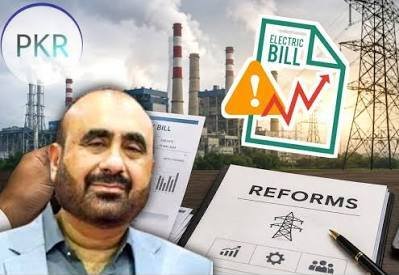
Pakistan’s electricity consumers continue to bear the financial burden of years of inefficiency, delayed reforms, and weak governance in the power sector, according to Khurram Ijaz, Secretary General of the Businessmen Panel Progressive (BMPP) and former Vice President of the Federation of Pakistan Chambers of Commerce & Industry. Referring to the Auditor General of Pakistan (AGP) Audit Report 2025-26, Ijaz urged the federal government to immediately review the Debt Service Surcharge (DSS), arguing that the Rs3.23-per-unit levy unfairly shifts the cost of institutional failures onto households and businesses. Debt Service Surcharge Under Fire Ijaz said the AGP report highlights a troubling reality in Pakistan’s power sector, where consumers continue to shoulder the financial burden instead of seeing meaningful structural reforms. He argued that the government has relied on surcharges and borrowing to manage the sector’s financial problems rather than addressing the underlying causes of inefficiency. “The audit lays bare an uncomfortable reality: instead of fixing the power sector, consumers are repeatedly being asked to pay for its failures,” he said. AGP Report Questions Effectiveness of Power Sector Reforms According to Ijaz, the audit exposes a significant gap between the government’s reform agenda and the actual performance of the electricity sector. While the National Electricity Policy and National Electricity Plan (2023-27) aim to create a competitive, financially sustainable, and consumer-focused electricity market, the audit found that the sector recorded average deficits of 2.8 percent of GDP between FY2014 and FY2024. He noted that although circular debt declined from Rs2.39 trillion in June 2024 to Rs1.61 trillion by June 2025, the reduction resulted primarily from commercial borrowing and fiscal interventions rather than genuine structural reforms. According to Ijaz, borrowing merely postpones the crisis while electricity consumers continue paying higher tariffs. High Transmission Losses Continue to Drive Circular Debt The AGP report also highlighted persistent operational inefficiencies across public-sector electricity distribution companies (DISCOs). During FY2024-25: Ijaz said these figures demonstrate that the root causes of Pakistan’s circular debt remain unresolved. He argued that electricity theft, technical losses, weak recoveries, and poor governance continue despite repeated promises of reform. K-Electric Consumers Face Fairness Questions Ijaz also referred to the AGP’s observations regarding the application of the Debt Service Surcharge to customers of K-Electric. He said the audit questioned the fairness of imposing the surcharge on K-Electric consumers despite the utility not contributing to Pakistan’s circular debt. According to him, the issue raises broader concerns regarding transparency, consumer rights, and equitable tariff policies. Electricity Theft and Billing Issues Remain Major Challenges The AGP report found that actual transmission and distribution losses climbed to 17.55 percent during FY2024-25, well above the 11.77 percent benchmark approved by the National Electric Power Regulatory Authority. Ijaz attributed the higher losses to: He added that persistent overbilling complaints and billing inaccuracies have further weakened public confidence in electricity distribution companies. Weak Transmission Network Raises Costs Ijaz also criticized Pakistan’s ageing transmission infrastructure, saying it contributed to approximately Rs1.9 trillion in capacity payments during FY2024-25. He argued that delays in upgrading the transmission network have prevented the country from fully utilizing available electricity generation, forcing consumers to pay for idle capacity. While welcoming the government’s proposed 800MW market allocation and wheeling initiative, he said the measure remains too limited to introduce meaningful competition or reduce reliance on Pakistan’s single-buyer electricity model. Call for Comprehensive Power Sector Reforms Ijaz stressed that Pakistan’s industrial competitiveness cannot improve while electricity tariffs continue reflecting inefficiencies instead of actual production costs. He urged the federal government to: He concluded that lasting reforms—not temporary fiscal measures—are essential to protect consumers and place Pakistan’s electricity sector on a financially sustainable path.

Children are adopting AI technologies more than three times faster than adults, UNICEF
Breaking News, Pakistan

Children Are Adopting AI Technologies More Than Three Times Faster Than Adults, UNICEF Warns

Artificial Intelligence (AI) is rapidly becoming a part of children’s daily lives, creating new opportunities for learning and creativity while raising serious concerns about safety, privacy, and online protection, according to UNICEF. In a statement released ahead of the first Global Dialogue on AI Governance, UNICEF said AI is already transforming childhood worldwide, with new evidence revealing both the scale of children’s adoption of the technology and the growing risks associated with its use. Millions of Children Are Already Using AI Drawing on new data from 10 countries, UNICEF estimates that at least 20 million children have used Artificial Intelligence, with young people adopting the technology at rates more than three times faster than adults. The findings show that AI is increasingly becoming part of children’s everyday activities. According to the analysis: UNICEF said the rapid adoption of AI highlights both its educational potential and the urgent need for stronger safeguards. AI Governance Is Struggling to Keep Pace UNICEF warned that while children’s use of AI continues to grow rapidly, the legal and regulatory frameworks governing AI have failed to keep pace. The organization said children are increasingly exposed to AI systems, including how they are designed, the business models behind them, and how their personal data is collected and used. Despite being among the most affected users, children have limited ability to understand, avoid, or challenge these systems. UNICEF stressed that most current AI governance frameworks do not adequately prioritize children’s rights or protection. Opportunities Come With Emerging Risks While AI offers significant opportunities for education, creativity, and entertainment, UNICEF cautioned that evidence regarding its long-term effects on children’s cognitive development, emotional well-being, and exposure to harmful content is still emerging. The organization described the current situation as one in which an entire generation is effectively “growing up inside a global experiment.” UNICEF emphasized that more research is needed to fully understand AI’s impact on child development. Children Express Growing Concerns About AI The report also found that children themselves recognize many of the risks associated with Artificial Intelligence. Among respondents across the 10 countries: UNICEF warned that too many AI systems remain accessible to children without adequate safety measures or built-in protections. UNICEF Calls for Child-Centered AI Governance Ahead of the Global Dialogue on AI Governance, UNICEF has urged governments, technology companies, and international partners to place children’s rights at the center of AI regulation and development. The organization called for: A Critical Moment for the Future of AI UNICEF concluded that decisions being made today regarding Artificial Intelligence will have lasting consequences for children’s safety, privacy, education, and equal access to opportunities. The organization emphasized that embedding child rights into global AI governance is essential to ensuring future generations can safely benefit from technological innovation while minimizing potential harm.

PTA Monitors Internet Traffic Disruption Following SMW5 Submarine Cable Fault
Pakistan

PTA Monitors Internet Traffic Disruption Following SMW5 Submarine Cable Fault

Islamabad (2 July 2026): The Pakistan Telecommunication Authority (PTA) is closely monitoring internet traffic disruption caused by a fault in the SEA-ME-WE 5 (SMW5) international submarine cable system. As a result, some internet users may experience intermittent degradation in service quality and connectivity. Read More: https://theboardroompk.com/k-solar-chinas-mingyang-sign-mou-to-bring-advanced-wind-energy-and-bess-solutions-to-pakistan/ Trans word Associate ( TWA) is coordinating with the SMW5 Consortium to identify the root cause of the fault and determine the estimated time for restoration (ETTR). In the meantime, internet traffic is being rerouted through alternate international links to minimize the impact and ensure service continuity to the greatest extent possible. PTA remains in close coordination with the concerned stakeholders and will continue to monitor the situation to facilitate the earliest possible restoration of normal internet services across the country.

Scroll to Top