Uncategorized

How the AI Revolution Is Reshaping Global Energy Strategy, Why Carbon Removal Is Becoming the Next Big Investment Frontier
Uncategorized

How the AI Revolution Is Reshaping Global Energy Strategy, Why Carbon Removal Is Becoming the Next Big Investment Frontier

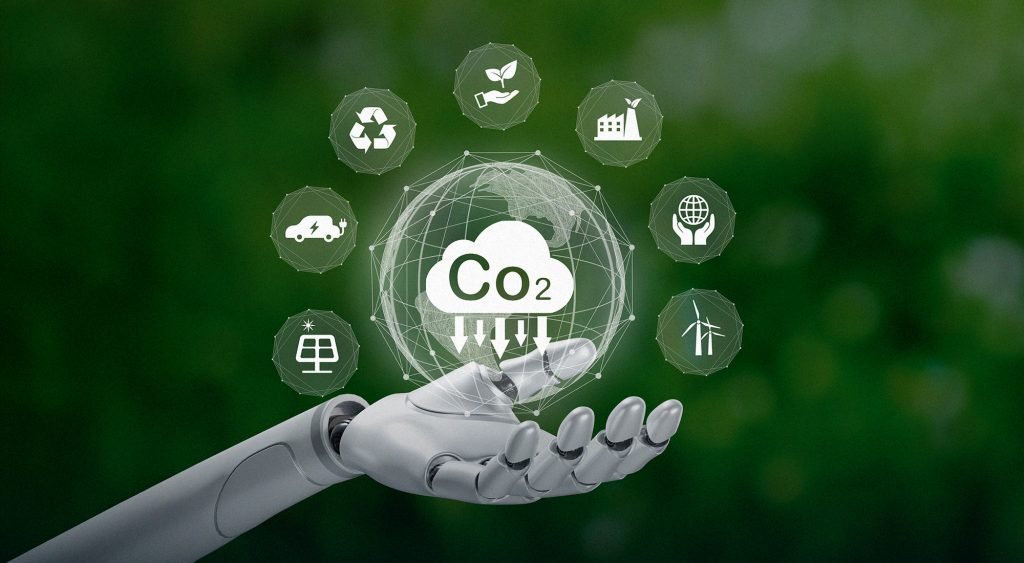
As artificial intelligence (AI) accelerates at unprecedented speed, it is not just transforming industries, it is reshaping global energy demand, climate strategy, and trillion-dollar investment priorities. The world is entering a new era where AI growth and climate commitments intersect, creating both a massive challenge and a high-value business opportunity. At the center of this transformation is a hard truth: the AI boom is building a global carbon debt that can no longer be ignored. AI’s Energy Surge: The New Demand Curve: By 2030, worldwide data center electricity consumption is expected to reach nearly 1,000 terawatt-hours, double today’s levels, and more than Japan consumes in an entire year. Even with renewable energy capacity hitting record growth, clean power simply cannot expand fast enough to feed the explosive demand from AI training and inference workloads. As a result:• Fossil fuels, gas, oil and coal, are poised to deliver more than 50% of global data-center power through 2030.• Annual emissions from data centers could exceed 300 million tonnes of CO₂, according to the International Energy Agency (IEA).• Hyperscalers like Microsoft, Google, Meta and Amazon are moving toward net-zero targets, but emissions are still rising as deadlines approach.The race to scale AI is outpacing the world’s ability to scale clean energy. The Decarbonization Paradox: AI Growth vs. Net-Zero Commitments: No company illustrates this tension more than Microsoft.• Investing $80 billion in new data centers in 2025• Clean-energy contracts in 24 countries• Bets on both nuclear and emerging fusion technologies Yet, its energy consumption has surged 168% since 2020, and total emissions continue to climb. As Microsoft’s Chief Sustainability Officer Melanie Nakagawa said, when talking about the 2030 carbon-negative goal:“The moon has gotten further away.” Even the most aggressive climate-leading tech companies are struggling to keep pace with AI’s power demands. Why Carbon Removal Is Becoming the Next Multibillion-Dollar Market: Reaching net zero is not just about cutting emissions. The world must also begin removing carbon already in the atmosphere. This is where Carbon Dioxide Removal (CDR) becomes a crucial and fast-growing market. Why CDR Matters:• Avoidance offsets don’t remove carbon, they shift responsibility.• CDR captures CO₂ and stores it in soils, oceans, biomass, or deep geological formations.• The IPCC says the world needs 5–10 billion tonnes of carbon removed annually by 2050.• There is no net-zero scenario without carbon removal at scale. Microsoft is leading the way, having already purchased over 30 million tonnes of high-quality carbon removal, representing ~80% of the global market as of October 2025. But to sustain AI growth without breaching climate commitments, other hyperscalers must match that ambition. Why Tech Companies Are Investing in Carbon Removal Now:Contrary to perception, these investments aren’t purely environmental. They’re strategic. The Role of Governments: Public Policy Must Match Private Investment: Tech giants are now operating at nation-state scale, influencing global markets for energy, materials, and carbon. But even with their massive capital power, private investment cannot solve the carbon-removal challenge alone. Governments must:• Establish clear regulatory frameworks• Fund early CDR demonstration projects• Accelerate permitting for storage sites• Integrate CDR into mandatory compliance markets• Invest in carbon infrastructure: measurement, transport, and storageThis mirrors how governments helped scale:• Renewable energy• Broadband• COVID-19 vaccinesA similar public-private model is essential for carbon removal. A Once-in-a-Generation Opportunity: Balancing AI Innovation with a Livable Planet: AI has fundamentally redrawn the global emissions curve. But carbon removal provides a viable pathway to pay down the carbon debt created by the exponential rise in compute power.For businesses, investors, and policymakers, the next five years will define whether AI and net zero can grow togPlane, or collide. One thing is certain:Carbon removal is emerging as one of the most important investment markets of the next decade.Companies that act now will not only protect their AI-driven future, they will help build a sustainable one.

Pakistan Removes Major Barrier to Kinnow & Potato Exports via Iran, New Route to CIS & Russia Opens
Uncategorized

Pakistan Removes Major Barrier to Kinnow & Potato Exports via Iran, New Route to CIS & Russia Opens

Karachi: In a major development for Pakistan’s agricultural export sector, the government has removed the key financial obstacle that had long hindered the export of kinnow (mandarin) and potatoes via the Iran land route. Acting on the special directives of the Prime Minister, the Ministry of Commerce and the State Bank of Pakistan (SBP) have jointly issued an important circular granting exporters one-time exemption from submitting the mandatory Financial Instrument (FI) for these shipments. According to the official notification signed by Maria Kazi, JS FT-II, exporters will now be able to ship kinnow and potatoes to Central Asian States (CIS) and Russia through Iran’s land corridor without the previously required banking documentation. Commerce Ministry Circular: A Landmark Facilitation for Exporters: The circular states: Exporters of kinnow and potatoes are exempted from submitting the Financial Instrument in banks for the ongoing export season. This relaxation has been granted under the Export Policy Order 2022 as a one-time special permission. The State Bank of Pakistan has instructed all banks not to demand FI-Documents from exporters. The move addresses long-standing logistical challenges and provides an immediate relief to exporters who faced disruptions through the Afghan transit route. The Iran land route is now formally reinstated as a viable and streamlined export corridor. Pakistan’s Export Performance, And Growth Expected This Year: Export data reveals: Pakistan exported 55,000 tons of kinnow, earning USD 22 million last year. The country also exported 300,000 tons of potatoes to CIS markets, earning USD 50 million. Exporters are highly optimistic about 2025: A bumper kinnow crop has been recorded this season. Shipments to CIS countries are expected to increase by 30% compared to last year. The opening of the Iran corridor is expected to significantly reduce transportation costs, shorten transit time, and enable exporters to serve regional markets more efficiently. PFVA Welcomes the Government’s Decision “A Unique Opportunity for the Sector” Waheed Ahmed, Patron-in-Chief of the All Pakistan Fruit & Vegetable Exporters, Importers and Merchants Association (PFVA), expressed deep appreciation for the government’s timely intervention. He stated: “We express our deepest gratitude to the Honourable Prime Minister, Minister of Commerce, and Governor SBP for resolving the Financial Instrument issue expeditiously for the export of kinnow to CIS countries via Iran. This reflects their strong commitment to boosting this vital export sector.” He added: “Our exporters will leave no stone unturned in utilizing this unique opportunity. With a bumper kinnow crop this year, we are fully prepared to maximize exports and generate valuable foreign exchange for Pakistan.” A Game-Changer for Pakistan’s Agricultural Supply Chain This development carries important implications for: Exporters targeting CIS & Russian marketsLogistics and cold-chain operators using Iran’s land routesPakistan’s kinnow and potato export clustersInvestors looking to expand in the fresh produce sector By relaxing banking requirements and enabling smoother transit routes, the government has unlocked new momentum for Pakistan’s fruit and vegetable export industry. The government’s decision is being hailed as a strategic breakthrough for Pakistan’s agricultural exports. With improved cross-border logistics, reduced documentation barriers, and a bumper harvest season, Pakistan is positioned to significantly enhance its footprint across Central Asia and Russia. This policy shift is expected to: Boost foreign exchange earningsStrengthen Pakistan’s trade competitivenessImprove sustainable market access for key horticultural products Pakistan’s kinnow and potato exporters are ready, and the regional markets are waiting. The State Bank of Pakistan has instructed all banks not to demand FI-Documents from exporters. The move addresses long-standing logistical challenges and provides an immediate relief to exporters who faced disruptions through the Afghan transit route. The Iran land route is now formally reinstated as a viable and streamlined export corridor. Pakistan’s Export Performance, And Growth Expected This Year: Export data reveals: Pakistan exported 55,000 tons of kinnow, earning USD 22 million last year. The country also exported 300,000 tons of potatoes to CIS markets, earning USD 50 million. Exporters are highly optimistic about 2025: A bumper kinnow crop has been recorded this season. Shipments to CIS countries are expected to increase by 30% compared to last year. The opening of the Iran corridor is expected to significantly reduce transportation costs, shorten transit time, and enable exporters to serve regional markets more efficiently. PFVA Welcomes the Government’s Decision “A Unique Opportunity for the Sector” Waheed Ahmed, Patron-in-Chief of the All Pakistan Fruit & Vegetable Exporters, Importers and Merchants Association (PFVA), expressed deep appreciation for the government’s timely intervention. He stated: “We express our deepest gratitude to the Honourable Prime Minister, Minister of Commerce, and Governor SBP for resolving the Financial Instrument issue expeditiously for the export of kinnow to CIS countries via Iran. This reflects their strong commitment to boosting this vital export sector.” He added: “Our exporters will leave no stone unturned in utilizing this unique opportunity. With a bumper kinnow crop this year, we are fully prepared to maximize exports and generate valuable foreign exchange for Pakistan.” A Game-Changer for Pakistan’s Agricultural Supply Chain This development carries important implications for: Exporters targeting CIS & Russian marketsLogistics and cold-chain operators using Iran’s land routesPakistan’s kinnow and potato export clustersInvestors looking to expand in the fresh produce sector By relaxing banking requirements and enabling smoother transit routes, the government has unlocked new momentum for Pakistan’s fruit and vegetable export industry. The government’s decision is being hailed as a strategic breakthrough for Pakistan’s agricultural exports. With improved cross-border logistics, reduced documentation barriers, and a bumper harvest season, Pakistan is positioned to significantly enhance its footprint across Central Asia and Russia. This policy shift is expected to: Boost foreign exchange earningsStrengthen Pakistan’s trade competitivenessImprove sustainable market access for key horticultural products Pakistan’s kinnow and potato exporters are ready, and the regional markets are waiting.

PSX Market Closing: KSE-100 Surges Past 167k on Strategic Appointments and Saudi Deposit Rollover
Uncategorized

PSX Market Closing: KSE-100 Surges Past 167k on Strategic Appointments and Saudi Deposit Rollover

Karachi:The Pakistan Stock Exchange (PSX) ended the trading week on a high note, continuing its aggressive upward trajectory. On the last business day of the week, the benchmark KSE-100 index gained a massive 802.03 points (0.48%), closing at an impressive 167,085.58. Driven by major developments in national stability and economic support from Saudi Arabia, investor confidence returned to the trading floor, pushing volumes significantly higher than the preceding session. Key Market Triggers: Why the Bulls Took Charge: According to the evening market data, two primary catalysts fueled today’s rally: Market Statistics: Volume & Value Breakdown: The liquidity crunch seems to be easing as participation widened across the board. Indices Summary: Index: KSE-100Current Level: 167,085.58 pointsChange (Points):+802.03Change (%): +0.48% Index: KSE-30Current Level: 50,772.01 pointsChange (Points): +235.95Change (%): +0.47% Index: KMI-30Current Level: 239,923.34 PointsChange (Points):+1,634.32Change (%): +0.69% Note: The KMI-30 (Islamic Index) outperformed the benchmark, indicating strong buying flows in Shariah-compliant equities. Top Performers: The Heavyweights Lifting the Index: The rally was led by the Fertilizer and Exploration & Production (E&P) sectors. Fauji Fertilizer Company (FFC) was the star of the show, contributing a massive 175 points to the index single-handedly. Top 5 Positive Index Contributors: On the flip side, banking stocks saw some profit-taking, with MCB (-33.48 pts) and FABL (-29.00 pts) acting as the primary drags on the index. Volume Leaders: Tech & Penny Stocks Dominate: Retail favorites dominated the volume charts, with the Technology and Communication sector seeing massive churn. Telecard Limited (TELE) led the volumes, contributing nearly 8.5% of the total market volume alone. Sector Watch & Technical Outlook:The Sector Performance chart highlights that Investment Banks and Technology stocks commanded the highest interest relative to market capitalization, followed closely by Cement and Banks. The Top Advancers list was dominated by stocks hitting their upper circuit breakers, with companies like FPJM (+10.87%), SBL (+10.04%), and SINDM (+10.02%) providing handsome returns for day traders. What to Expect Next Week? With the KSE-100 closing firmly above the 167,000 psychological barrier and the “Weekend Effect” likely to be positive due to the confirmed Saudi rollover, the market is poised to test new highs. Traders should watch for a continuation in the E&P sector and potential recovery in Banking stocks that saw correction today.

SBP Governor: Women's Financial Inclusion Soars to 52% in Pakistan; Rs230B Loans Lent to Female Entrepreneurs
Uncategorized

SBP Governor: Women’s Financial Inclusion Soars to 52% in Pakistan; Rs230B Loans Lent to Female Entrepreneurs

Governor State Bank of Pakistan (SBP) Mr. Jameel Ahmad has said that there is now widespread understanding that no nation can grow when half of its population is excluded from the financial system. He said that SBP has pursued a deliberate, multi-pronged strategy to expand women’s financial inclusion, and to sustain the progress made so far, we must continue building the ecosystem, where women-led businesses can access finance, markets, and mentorship. He was delivering his keynote address at the Pakistan Women Entrepreneurship Day (PWED) 2025.During his keynote address, Governor Mr. Jameel Ahmad emphasized the event as a celebration of the creativity, determination, and success of women who are driving economic transformation in Pakistan. He highlighted the significant progress made in providing financing to women entrepreneurs. He shared that because of our collective efforts, women’s financial inclusion has risen from 4 percent to 52 percent, and we have succeeded in narrowing the gender gap from 47 percent in 2018 to 30 percent in 2025. More than 17.6 million new women-owned bank accounts have been added since 2021, reflecting active engagement in the financial system. While sharing the progress on loans to women led business, he said that over 974,000 loans have been disbursed amounting to Rs. 230.3 billion between November 2024 and October 2025. Governor Ahmed highlighted that increase in financial inclusion for our female population would not be possible without support from our banking industry. He acknowledged the ongoing institutional shift within the banks. Over 14,600 women have joined the banking workforce in the last three years, raising the overall ratio of female employees from 13 to 17 percent.Governor Ahmad also said that ‘At the State Bank, we recently hired a batch of young female graduates under our Emerging Women Leaders Initiative. And now we also have a female member on the SBP’s Board. At the national level, Pakistan became a global signatory to the Women Entrepreneurs Finance Code in February 2025, becoming the 19th member, worldwide. SBP, along with 22 banks, has pledged to share data, introduce new actions, and appoint leadership to improve women’s access to finance. Furthermore, Pakistan’s banking industry is continuing to play a crucial role in turning policy into action. This year, with the support of our banking industry and partner institutions, we conducted more than 300 awareness and mentorship programs across 55 districts, engaging over 45,000 women across the country. This puts Pakistan on the global map in terms of turning inclusion commitments into measureable accountability’.The event highlighted Pakistan’s advancements in women-focused financing and the increasing commitment to inclusion, leadership, and ecosystem support. Held at SBP Karachi and mirrored in 16 Field Offices nationwide, PWED 2025 served as a platform to celebrate the ambition, resilience, and economic participation of women in Pakistan.Pakistan Women Entrepreneurship Day 2025 was a testament to the growing role of women in driving economic growth and inclusion in Pakistan, and a step towards fostering a more inclusive and supportive ecosystem for women-led businesses in the country. The Governor congratulated the award winners of Women of Impact Awards, Business Idea Competition and Empower Her Campaign Awards.The event featured insightful contributions from guest speakers including Dr. Zeelaf Munir, Chairperson Pakistan Business Council, Ms. Saira Awan Malik, CEO TCS Group and Ms. Shabista Bakhtiar, President Women Chamber of Commerce, Karachi who shared their expertise on women entrepreneurship, business opportunities, and the challenges faced by women entrepreneurs in Pakistan.The SBP and the Banking Services Corporation (SBP BSC) came together to commemorate PWED 2025, showcasing the successes and achievements of women entrepreneurs across the country. This national celebration brought together a diverse range of stakeholders including policymakers, financial institutions, development partners, business leaders, and inspiring women entrepreneurs.

OMC Sales Dip 10% But PDL Collection Races Towards PKR 1.47 Trillion Target
Uncategorized

OMC Sales Dip 10% But Levy Collection Races Towards PKR 1.47 Trillion Target

OMC Sales Dip 10% But PDL Collection Races Towards PKR 1.47 Trillion TargetPakistan’s Oil Marketing Companies (OMCs) reported a significant speed bump in November 2025, with industry-wide sales volume for petroleum products falling by 10% year-on-year (YoY). The dip, however, is being viewed by analysts as a temporary correction against a strong sales base from the previous year, rather than a sign of a sharp economic contraction.The total sales for the month clocked in at 1.418 million metric tons (MT), a figure that still represents a modest 1% cumulative growth for the first five months of the fiscal year (5MFY26). Crucially, this slight volume increase is helping the government successfully meet its ambitious revenue targets through the Petroleum Development Levy (PDL).The November Downturn Explained:The most notable declines were seen in the core retail fuels:• High-Speed Diesel (HSD): Sales plummeted by 13% YoY to 683,000 MT. HSD, which fuels the transport and agricultural sectors, faced a high comparison base from November 2024, a month that had seen unusually high volumes.• Motor Spirit (MS/Petrol): Volumes dropped 9% YoY to 643,000 MT.• Furnace Oil (FO): Continuing a long-term structural trend, FO sales saw a drastic decline of 32% YoY as the power sector prioritizes cheaper alternatives like Regasified Liquefied Natural Gas (RLNG) and coal.“While the headline figure of a 10% decline looks startling, it’s a high base effect at play,” commented a lead analyst from a prominent brokerage firm. “The fact that sales excluding Furnace Oil ‘the true measure of economic activity’ are still up 4% in 5MFY26 shows the underlying demand remains resilient, supported by the ongoing crackdown on smuggled Iranian fuel.” PDL Collection- The Government’s Success Story:Despite the volumetric volatility, the government’s fiscal health remains robust, largely due to strong PDL collections.The federal government has set an ambitious PDL collection target of PKR 1.47 trillion for the full Fiscal Year 2026. Data indicates that an estimated PKR 621 billion, approximately 42% of the annual target has already been collected in the first five months of the fiscal year (5MFY26).This impressive collection rate is a direct result of consistently high PDL rates charged on petroleum products, which are crucial for the government to manage its fiscal deficit and secure external financing. The steady inflow of PDL revenue provides a stable, non-tax revenue stream necessary for macroeconomic stability.Market Dynamics: PSO’s Resilience and WAFI’s Rise:The sales report also highlighted shifting market share dynamics:• Pakistan State Oil (PSO): The market giant saw its sales drop by 19% YoY but managed to increase its overall market share to 45.36% (up from 42.95% in October), cementing its leadership position in the High-Speed Diesel segment.• Wafi Energy (WAFI): The company continued its aggressive growth trajectory, posting a strong 8% YoY sales increase, underscoring the fierce competition and the success of newer players in capturing volume.• Attock Petroleum (APL): APL recorded a significant 17% YoY drop in sales, mainly due to underperformance in the HSD category, leading to a slight contraction in its market share.Industry observers expect OMC sales to rebound, forecasting an annual sector growth in the range of 7-10% for the full FY26, underpinned by stabilizing domestic prices and continued efforts to formalize the fuel supply chain.

Build Up 2025 by Invest2Innovate (i2i): Founders Urge New Entrepreneurs to Focus on Strategy, Systems, Persistency and Self-Care
Uncategorized

Build Up 2025 by Invest2Innovate (i2i): Founders Urge New Entrepreneurs to Focus on Strategy, Systems, Persistency and Self-Care

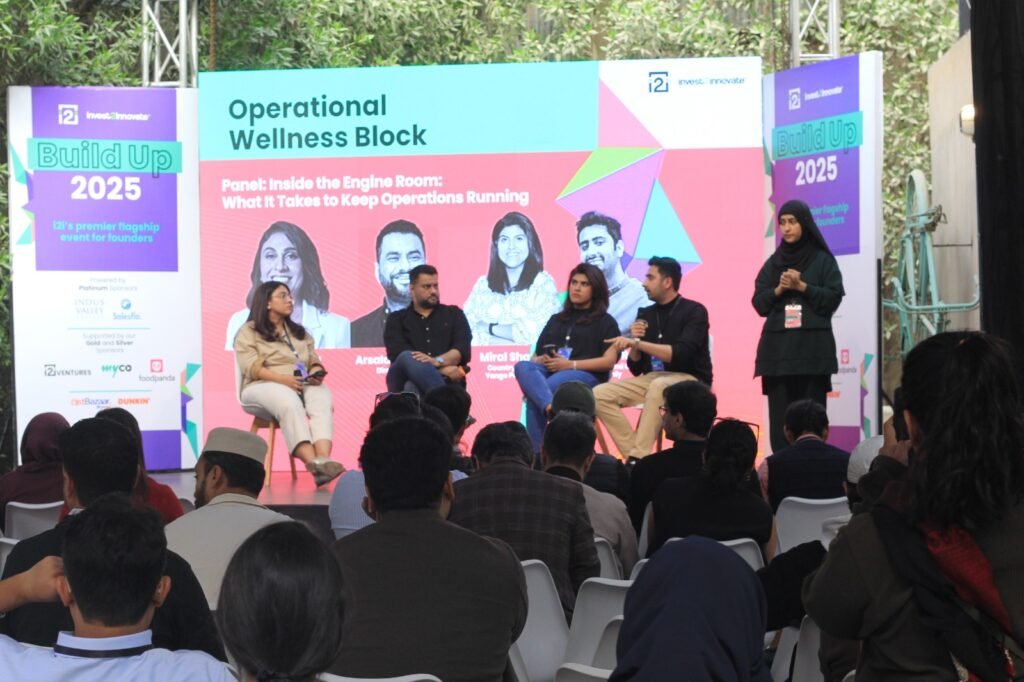
Invest2Innovate (i2i) hosted the inaugural Build Up 2025, a one-day founder conference aimed at addressing the operational, financial, and mental challenges faced by entrepreneurs in Pakistan. The event gathered founders, investors, operators, and ecosystem experts to provide actionable insights for navigating the country’s complex business environment. Pakistan’s startup ecosystem operates under significant economic uncertainty, limited access to capital, and operational constraints. Entrepreneurs frequently face financial pressure, bottlenecks in scaling operations, and personal burnout, highlighting the need for practical guidance beyond conventional networking events. Build Up 2025 sought to address these gaps through focused sessions on capital raising, operational systems, and founder mental wellbeing. Financial sessions explored fundraising strategies, alternative funding options, and investor readiness. Operational workshops covered process optimization, leadership development, team alignment, and automation. Mental wellness sessions emphasized resilience, stress management, and techniques for maintaining focus in high-pressure environments. Notable discussions included a fireside chat with Asif Makhani, Co-Founder of Infino AI, and Sarah Munir, CEO of i2i, who shared insights on scaling businesses in challenging markets. The financial panel, The Art of Selling, offered strategies for pitching to customers, partners, and investors. Investors from Fatima Gobi Ventures, i2i Ventures, YouPitchLive, Sturgeon Capital, Endeavor Pakistan, and several angel investors conducted office hours, providing targeted advice to founders. Over 25 speakers contributed to the program, sharing real-world strategies for sustaining and growing startups. Participants highlighted the value of structured guidance on financial planning, operational efficiency, and mental health, areas often overlooked in traditional startup events. Following positive feedback, i2i announced plans to expand Build Up into an annual conference across multiple cities, with the objective of creating safe and structured learning spaces for founders nationwide.

PARIS – Airbus has successfully mitigated a potential crisis by rapidly implementing software updates across approximately 6,000 A320-family aircraft, following the discovery of a vulnerability to solar flares. The issue came to light after a mid-air incident involving a JetBlue A320, prompting an urgent recall and regulatory mandate for the retrofit. Airlines worldwide, from Asia to the United States, reported completing the snap software changes over the weekend, with operations resuming toward normal on Monday. Initial fears of widespread disruptions proved unfounded, as the fixes were rolled out faster than anticipated, minimizing downtime for carriers and passengers alike. The vulnerability, linked to space weather phenomena like solar flares, could potentially interfere with onboard computer systems. Airbus's proactive response highlights a significant shift in crisis management, drawing lessons from the Boeing 737 MAX saga. Industry experts praise the European planemaker for transparent communication and swift action, which helped contain reputational damage. Airbus Fixes Software Issue in 6,000 Recalled Jets
Uncategorized

Airbus Fixes Software Issue in 6,000 Recalled Jets

PARIS – Airbus has successfully mitigated a potential crisis by rapidly implementing software updates across approximately 6,000 A320-family aircraft, following the discovery of a vulnerability to solar flares. The issue came to light after a mid-air incident involving a JetBlue A320, prompting an urgent recall and regulatory mandate for the retrofit. Airlines worldwide, from Asia to the United States, reported completing the snap software changes over the weekend, with operations resuming toward normal on Monday. Initial fears of widespread disruptions proved unfounded, as the fixes were rolled out faster than anticipated, minimizing downtime for carriers and passengers alike. The vulnerability, linked to space weather phenomena like solar flares, could potentially interfere with onboard computer systems. Airbus’s proactive response highlights a significant shift in crisis management, drawing lessons from the Boeing 737 MAX saga. Industry experts praise the European planemaker for transparent communication and swift action, which helped contain reputational damage. However, the incident impacted markets: Airbus shares (AIR.PA) fell 2.9% in early trading, while supplier Thales dipped 2%. Analysts view this as a short-term setback, emphasizing Airbus’s robust safety protocols. Regulators continue monitoring compliance, underscoring the aviation sector’s growing focus on emerging risks from environmental factors.

Pakistan Stock Exchange (PSX) crosses 168,000 Milestone!
Pakistan, Uncategorized

Pakistan Stock Exchange (PSX) crosses 168,000 Milestone!

Pakistan Stock Exchange (PSX) crosses 168,000 Milestone! PSX kicked off Dec’25 on a strong note, with the KSE-100 Index closing at 168,062, up 1,385 points or 0.83%. “The market continued last week’s bullish momentum as investors further strengthened their equity positions,” said Ali Najib, Deputy Head of Trading at Arif Habib Ltd. Energy stocks led the rally amid expectations of a potential circular debt–related payment this week. As a result, HUBC, OGDC and MARI witnessed renewed buying interest, collectively contributing 448 points. Meanwhile, LUCK gained traction after announcing that its joint venture with the Rawji Group—Nyumba Ya Akiba, will expand cement production capacity in Congo from 1.31 million tons to 2.91 million tons annually. The stock advanced by Rs 7.11 (+1.55%) and added 106 points to the index. On the macro front, CPI eased to 6.1% in Nov’25 from 6.2% in Oct’25, mainly due to a decline in perishable food prices as supply chains normalized following earlier flood-related disruptions. Market activity remained strong, with 733.66 million shares traded and a turnover of Rs 46.1 billion. FNEL led the volumes with 70 million shares. Outlook:Looking ahead, the index is expected to extend its bullish trend in the next session and could challenge new all-time highs in the upcoming week, supported by strong momentum. However, on the downside, the 164-165k zone is likely to serve as the first key support zone.

AI Memory Chip Race: US Chip Maker Micron to Invest $1.5 trillion yen in Japan to Set up New Plant
Uncategorized, World

AI Memory Chip Race: US Chip Maker Micron to Invest $1.5 trillion yen in Japan to Set up New Plant

TOKYO: U.S. semiconductor giant Micron Technology is set to pour 1.5 trillion yen ($9.6 billion) into a cutting-edge facility in Hiroshima, western Japan, to manufacture advanced memory chips tailored for artificial intelligence applications, the Nikkei reported Saturday. The massive investment underscores Tokyo’s aggressive push to reclaim semiconductor supremacy as AI demand skyrockets worldwide. The new plant will focus on next-generation dynamic random-access memory (DRAM) and high-bandwidth memory (HBM) chips, critical for powering data centers and AI training models from firms like Nvidia and OpenAI. Construction is slated to begin soon, with production ramping up by late 2027, enabling Japan to produce these components domestically and reduce reliance on volatile global supply chains strained by U.S.-China trade frictions. Micron, already a fixture in Hiroshima with its existing plant operational since 1979, will leverage local expertise and government incentives. Japan’s industry ministry has pledged subsidies under its $13 billion Rapidus initiative, aiming to foster a “virtuous cycle” of innovation. “This bolsters our resilience in the AI era,” a ministry official noted, highlighting partnerships with domestic players like Kioxia. The move aligns with broader U.S.-Japan alliances to counter Beijing’s dominance—China controls over 50% of global memory production. Analysts predict the facility could add 1,000 high-tech jobs and boost Micron’s revenue by 20% annually post-launch. As AI chips evolve, Hiroshima’s revival signals Asia’s pivot toward self-sufficient tech ecosystems, potentially reshaping the $500 billion industry by 2030.

Chicken, Eggs Push Food Inflation to 7.2%
Uncategorized

Chicken, Eggs Push Food Inflation to 7.2%

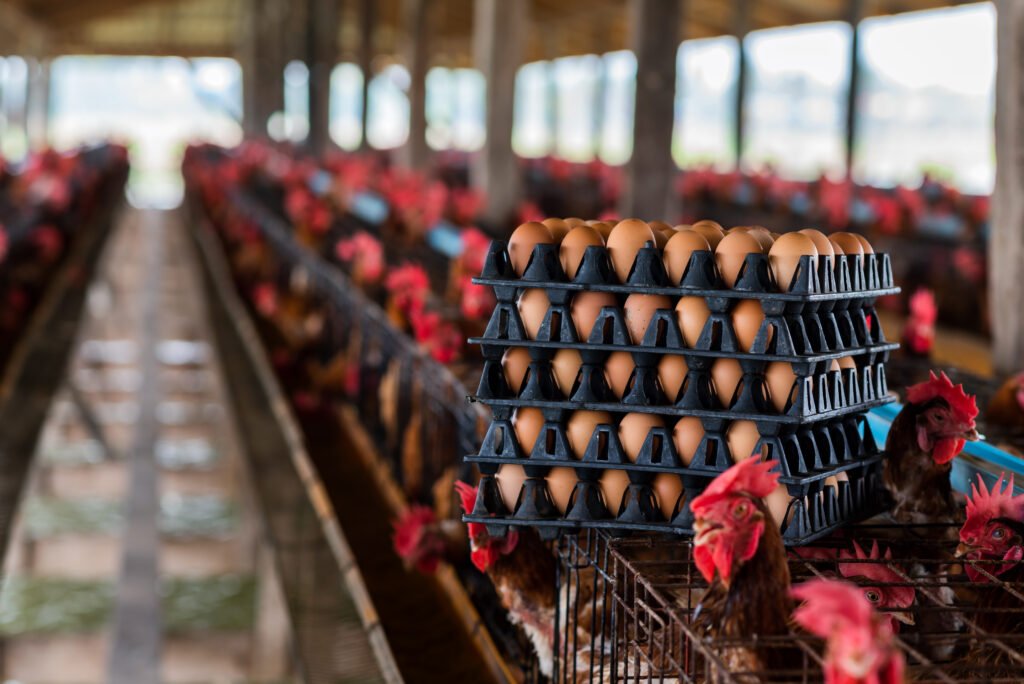
Pakistan’s inflation is expected to rise slightly to 6.3% in November 2025, up from 6.2% recorded in October.According to a latest report by JS Global Capital, the Consumer Price Index (CPI) for November 2025 is projected to stand at 6.3% year-on-year, with average inflation for the first five months of FY26 (July–Nov) likely to remain comfortable at around 5.0%, significantly lower than 7.9% during the same period last year.The modest uptick is largely driven by a 7.2% YoY increase in food inflation, fuelled by higher prices of chicken, eggs, and onions, contributing to a 1.3% month-on-month rise in food prices. However, a recent sharp decline in tomato prices provided some relief. Core inflation (excluding food and energy) is expected to remain steady at around 6.0% YoY.Meanwhile, the State Bank of Pakistan (SBP) kept the policy rate unchanged at 11% in its last Monetary Policy Committee meeting, citing risks from flood-related supply shocks in agriculture. Analysts believe the central bank will maintain the current rate at least until the next meeting in December, with most expecting no easing for the rest of FY26.

Scroll to Top